

The best dog foods for sensitive stomachs are highly digestible formulas with a short ingredient list, and the right one depends on what is actually upsetting your dog gut. A vet visit comes first, since loose stools and vomiting can come from parasites, pancreatitis, or a swallowed object, not from the food at all. Once the cause is clear, the food choice gets simple.
Sensitive stomach is a broad label, not a diagnosis. The AKC quotes vets who point out that the trouble can start in the stomach, the small intestine, the large intestine, or the immune system. Some dogs react to a protein, some cannot handle fat, and some just need more fiber. This guide explains how vets sort that out, what to look for on a label, and which formulas vets name most often.
What does a sensitive stomach mean in a dog?
A sensitive stomach in a dog means recurring digestive upset, such as loose stools, gas, stomach noises, or occasional vomiting, rather than a single bad day after a stolen snack. The pattern repeats over weeks, and the dog may also lose appetite, lick surfaces, or seem restless after meals.

Owners often use the phrase for any tummy trouble, yet the underlying cause varies a lot. Food sensitivity sits near the top of the list, along with eating table scraps that are too high in fat or spice. Stress can play a part too: a change in routine or travel can bring on stress colitis, which shows up as diarrhea and sometimes vomiting.
The phrase also covers real disease. Inflammatory bowel disease brings vomiting, diarrhea, appetite changes, and weight loss that persist or return over time. German Shepherds, Yorkshire Terriers, and Cocker Spaniels show up more often with it, though any breed can develop it. A food change alone will not fix a dog with parasites, an ulcer, or a blockage, so repeated symptoms always deserve a vet exam first.
How to tell food trouble from a vet visit
Food trouble and a vet emergency can look alike at first, so the deciding factors are timing, blood, and how the dog acts between episodes. A single loose stool after a new treat usually settles on its own, while vomiting and diarrhea that last more than a day, or blood in the stool, call for a vet the same day.
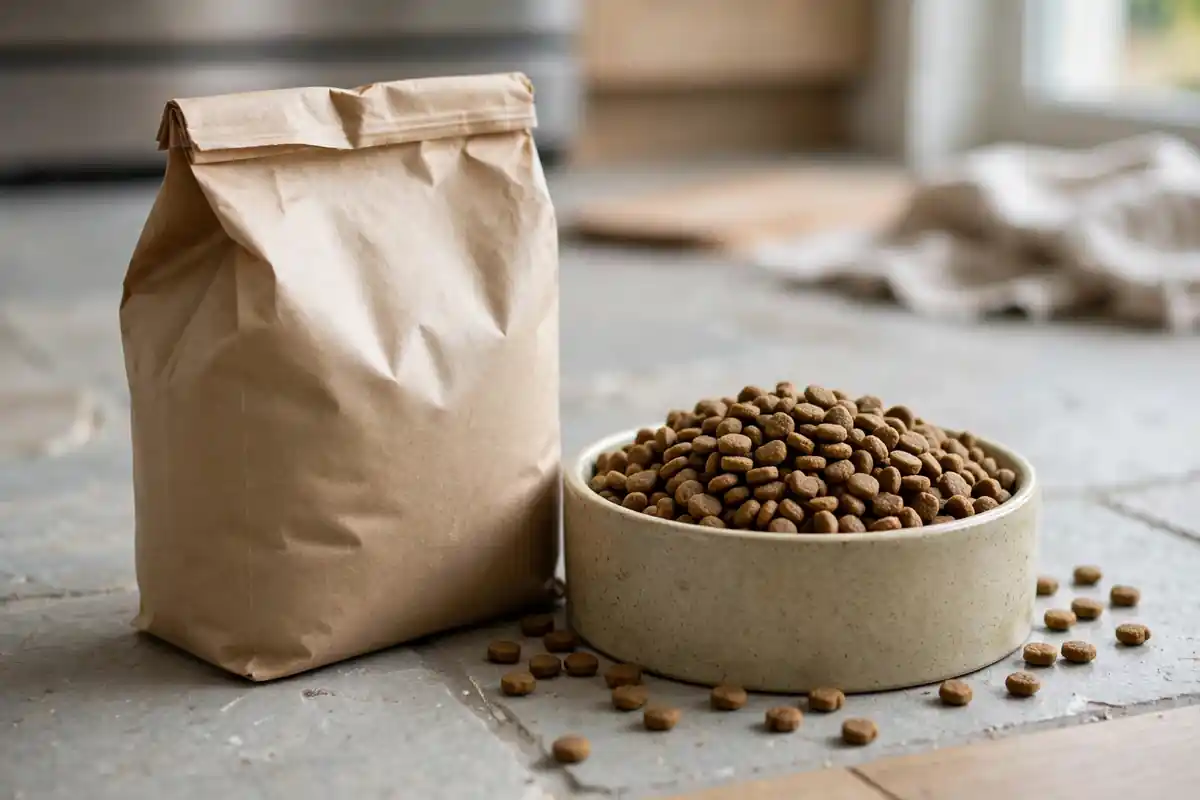
Watch the pattern across a week. Note what the dog ate, when the symptoms started, and whether the dog still drinks and plays between episodes. A food log sounds fussy, yet it gives your vet the one thing a memory cannot: a clean timeline. Bring the log and the current food bag to the visit.
Some signs never wait for a food trial. Prolonged vomiting and diarrhea can dehydrate a dog fast, and blood in the stool, a swollen belly, or a dog that will not drink needs urgent care. Our page on dog diarrhea lists the warning signs, and the page on dog vomiting explains when vomiting turns into an emergency. Puppies dehydrate faster than adults, so a puppy with diarrhea needs a vet sooner.
What makes a food easy to digest
A food is easy to digest when its ingredients break down well in the gut, so the dog absorbs more nutrition and passes less undigested residue in the stool. Vets look for lean protein, moderate fat, some fiber, and a short list of ingredients the dog has tolerated before.

Check the bag for a complete and balanced statement, which means the food meets AAFCO nutrient profiles for a life stage.
Digestibility starts with protein quality. Lean, named proteins such as chicken, turkey, lamb, or fish digest better than mixed meat meals with vague labels. Chicken is the most common protein in dog food, and plain cooked chicken suits many touchy stomachs, as our guide to whether dogs can eat chicken explains. A dog that reacts to chicken needs a different protein, not a different brand of chicken food.
Fat and fiber set the rest of the picture. Moderate fat keeps meals gentle, since high fat food can slow stomach emptying and trigger pancreatitis in some dogs. Fiber feeds gut bacteria and firms stools, and beet pulp, inulin, psyllium, and canned pumpkin all serve as fiber sources. Pumpkin is a popular pick, and the page on whether pumpkin is good for dogs covers plain preparation and portions.
Limited ingredient diets and single proteins
Limited ingredient diets and single protein formulas help a sensitive stomach by cutting the number of suspects in the bowl, so a reaction points to one ingredient instead of ten. These diets use one protein and one or two carbohydrate sources, and they suit dogs whose trouble traces to a specific food.

A limited ingredient label does not guarantee a clean food. The AKC notes that the most common allergens are proteins, and chicken, beef, and fish top the list. Cross contamination happens too: a beef food made on a line that just ran chicken can carry chicken traces. That is why vets often prefer prescription diets for a real diagnosis and keep over the counter limited ingredient foods for maintenance afterward.
Novel proteins give the vet a fresh start. Duck, venison, rabbit, and fish are common choices when a dog has eaten chicken and beef for years. Turkey is another option, and our page on whether dogs can eat turkey covers safe preparation. Pick one new protein, feed it alone for weeks, and judge the result before adding anything else.
Fiber, prebiotics, and probiotics in sensitive stomach food
Fiber, prebiotics, and probiotics in sensitive stomach food work as a team: fiber feeds gut bacteria, prebiotics feed the good bacteria, and probiotics add live bacteria that crowd out the troublemakers. Together they firm stools, cut gas, and make the gut more resistant to small insults.

Fiber comes in soluble and insoluble forms, and most sensitive stomach foods use both. Soluble fiber from oats and pumpkin slows digestion and feeds bacteria, while insoluble fiber adds bulk and keeps things moving. Oatmeal is a gentle fiber source, and our page on whether dogs can eat oatmeal explains how to serve it plain. Rice is another gentle carbohydrate, and the guide to whether dogs can eat rice covers the plain preparation that suits a touchy gut.
Probiotics need a note of caution. The AKC quotes vets who say probiotics in food can degrade during processing, storage, and shipping, so the dose that reaches the bowl is hard to pin down. Many vets advise giving probiotics separately from food, where the dose and storage are known. Ask your vet which strain and dose fit your dog, and do not expect a probiotic to fix a food allergy on its own.
Prescription diets for diagnosed gut problems
Prescription diets for diagnosed gut problems are veterinary formulas built for specific conditions, and they belong on the list only when a vet has named the condition. Royal Canin Gastrointestinal Low Fat and Hill’s Prescription Diet i/d Digestive Care are the two vets reach for most in chronic diarrhea and pancreatitis cases.

Royal Canin Gastrointestinal Low Fat cuts fat to ease the load on the pancreas, uses highly digestible protein and rice, and adds soluble fiber to normalize stool. Hill’s i/d focuses on easy digestion and gut flora support, and vets often use it while a dog recovers from a gut flare. Both need a vet prescription, and both cost more than a standard kibble.
A prescription diet is not a stronger version of a sensitive stomach kibble. The formulas are made in dedicated facilities with strict cleaning protocols, and the nutrient profile stays consistent from bag to bag. That consistency matters when the vet reads the response: a change in stool or appetite points to the dog, not to a batch difference. Stay on the prescription food for the full period your vet sets.
Dry, wet, and fresh food: which suits a touchy gut
Dry, wet, and fresh food each suit a touchy gut in different ways, and the format matters less than the recipe and how steadily the dog eats it. Kibble is convenient and consistent, wet food adds moisture and often smells more appealing, and fresh food offers short ingredient lists with gentle cooking.

Kibble wins on cost and consistency, and most sensitive stomach kibbles use one protein with rice or oatmeal. Wet food helps dogs that drink little water or pick at dry food, since the moisture softens the meal and the aroma draws a picky eater in. Fresh and frozen foods, such as gently cooked turkey and rice recipes, suit dogs that do well on simple, human grade ingredients, yet they cost several times more per day than kibble.
Picky eating complicates the choice. Dogs with gut upset often eat unreliably, and a missed meal can worsen the cycle. The AKC quotes vets who say palatability matters as much as the recipe, since a food the dog refuses helps no one. Try one format for two weeks, track stool and appetite, and switch formats only after talking with your vet.
How to switch foods without a flare-up
Switching foods without a flare-up takes 7 to 10 days of gradual mixing, because an abrupt change is the most common cause of stomach upset in dogs with sensitive digestion. Start with one quarter new food and three quarters old food, then move the ratio up every two or three days.

Keep everything else fixed while the food changes. Same treats, same meal times, same water bowl, same walk schedule. A new food plus a new treat plus a new routine leaves the vet guessing about which change caused the loose stool. If the stool softens at one step, hold that ratio for a few extra days before moving on.
Yogurt sometimes appears in switch advice, and plain yogurt can add probiotics and protein for some dogs. Our page on whether dogs can eat yogurt covers which kinds are safe and which to skip. Check any peanut butter treat for xylitol first, since the FDA warns that xylitol can drop a dog blood sugar within 10 to 60 minutes.
Do not add yogurt, pumpkin, or a probiotic in the same week as the food switch, since each addition muddies the result. One change at a time is the rule that makes a food trial readable.
Puppies and seniors with sensitive stomachs
Puppies and seniors with sensitive stomachs need more care than healthy adults, because puppies dehydrate fast and seniors often carry other health problems that shape the diet. A puppy with diarrhea needs a vet visit sooner than an adult with the same symptoms.

Puppy guts are still learning. A new home, a new food, and a new vaccine schedule can all upset a puppy stomach in the same week. Puppy sensitive stomach formulas exist, and they balance easy digestion with the extra protein and fat a growing dog needs. Never put a puppy on an adult limited ingredient diet without a vet check, since the nutrient levels may not fit growth.
Senior dogs bring a different set of trade offs. Kidney disease, dental pain, and slower digestion can all sit behind a senior dog loose stool, and a food that firms the stool may still miss the real problem. Senior sensitive stomach formulas add joint support and easier to chew kibble, yet the vet should rule out organ disease first. Weight matters too: a thin senior needs calories, while an overweight senior needs fiber and portion control.
Frequently asked questions about sensitive stomach dog food
Owners ask the same questions about sensitive stomach dog food, and the answers below cover the ones vets hear most. Each answer assumes a vet has ruled out parasites, pancreatitis, and other disease, since a food change cannot fix those problems on its own.

What is the best dog food for a sensitive stomach and diarrhea?
The best dog food for a sensitive stomach and diarrhea is a highly digestible formula your vet has matched to the cause, often a limited ingredient kibble or a prescription gastrointestinal diet. Purina Pro Plan Sensitive Skin and Stomach and Hill’s Science Diet Sensitive Stomach and Skin are the over the counter names vets mention most. Start with one food and judge it over two weeks.
Should I feed grain free food for a sensitive stomach?
Grain free food is not the automatic answer for a sensitive stomach, and the AKC quotes vets who advise against grain free diets in many cases. Grain free foods often run lower in fiber and swap grains for legumes, which can bring anti nutrients that block mineral absorption. A vet may still pick a grain free limited ingredient diet for a specific allergy, yet the choice should come from a diagnosis.
How long does it take for a new food to settle a sensitive stomach?
A new food usually takes 7 to 10 days to show a clear result, and a full food trial runs 8 to 12 weeks when a vet suspects an allergy. Stools often firm within the first week, while skin signs take longer. Judge the food after the transition ends, not during it, since the switch itself can loosen stools for a few days.
Can I give my dog pumpkin for a sensitive stomach?
Plain canned pumpkin can help a sensitive stomach, since it adds soluble fiber that firms loose stools and feeds gut bacteria. Use plain pumpkin puree, not pumpkin pie filling, and start with a spoonful mixed into the regular food. Our pumpkin guide gives serving sizes by dog weight, and your vet can set the amount for your dog.
Is chicken bad for dogs with sensitive stomachs?
Chicken is not bad for most dogs with sensitive stomachs, and plain cooked chicken is a standard bland diet ingredient. Some dogs do react to chicken, since it is one of the most common food allergens, and those dogs need a different protein such as fish or venison. A food trial is the only way to know whether chicken is the problem for your dog.
When should I see a vet about my dog sensitive stomach?
See a vet when vomiting or diarrhea lasts more than a day, when blood appears in the stool, when the dog will not drink, or when weight loss shows up over a few weeks. Puppies and seniors need a visit sooner. Bring the food log and the current food bag, since both speed up the diagnosis.
The best dog food for a sensitive stomach is the one your vet matches to the cause, fed on a steady schedule with one change at a time. Rule out disease first, pick a highly digestible formula, switch over 7 to 10 days, and track stool and appetite in a simple log. Bring that log to the next visit, and let the vet decide whether the food stays or the trial moves to a new protein.


