
Dogs should not drink lake water. A lake looks like nature’s water bowl, but it can carry three separate threats: blue-green algae toxins that kill within hours, leptospirosis bacteria that attack the kidneys and liver, and parasites like giardia that bring weeks of diarrhea. None of them are visible to the naked eye, and clear-looking water is no guarantee of safety. Bring fresh water from home and let the lake stay a playground, not a drink.
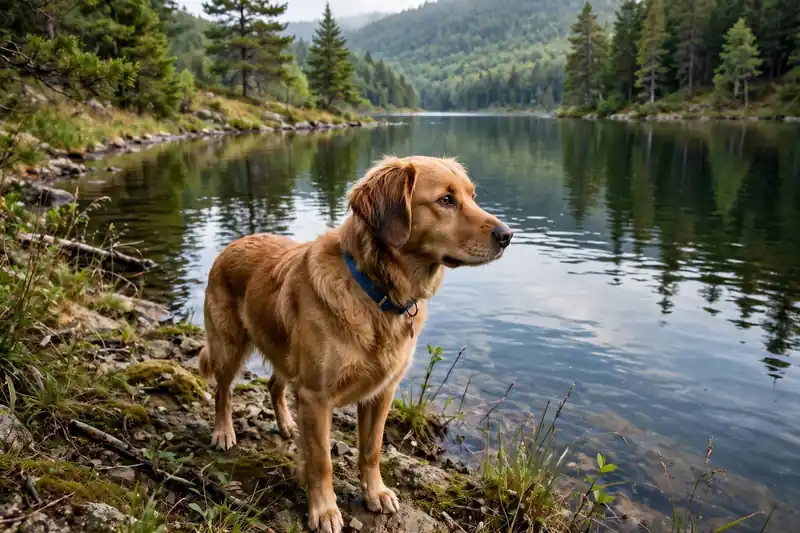
Can dogs drink lake water? The short answer
No, dogs should not drink lake water. Lakes and ponds can harbor blue-green algae (cyanobacteria) that produce fast-acting toxins, leptospira bacteria spread through wildlife urine, parasites like giardia, and chemical runoff from nearby land. A dog that only takes a quick lap can still get sick. Carry fresh water on every outing near lakes, rivers, or ponds.
The instinct to let them drink is understandable. Dogs have drunk from streams for thousands of years, and most of the time nothing happens. The problem is the minority of times. A single mouthful from a lake with a toxic algae bloom can be fatal, and leptospirosis from contaminated water can mean weeks of treatment or worse. “Usually fine” is a gamble with terrible odds on the losing side, and the prevention costs nothing more than a water bottle.

Blue-green algae: the fastest killer in the water
Blue-green algae are not actually algae. They are cyanobacteria, photosynthetic bacteria that bloom in warm, still freshwater, and some species produce toxins that attack the liver, the nervous system, or the skin. The VCA’s guide to cyanobacteria poisoning gives the number that matters: of more than 2,000 known cyanobacteria species, only about 80 produce toxins. The catch is that nobody can tell a toxic bloom from a harmless one by looking at it. Every bloom has to be treated as dangerous until proven otherwise.
The toxins work terrifyingly fast. Neurotoxins can sicken a dog within 60 minutes of exposure, and death can follow within minutes to hours. Hepatotoxins hit within about four hours as the liver fails. There is no antidote. The ASPCA’s blue-green algae guide lists the signs: seizures, panting, excessive drooling, respiratory failure, diarrhea, disorientation, vomiting, liver failure, and death. A dog does not even need to drink to be poisoned. Swimming through a bloom and licking the coat afterward can deliver a fatal dose, which is why VCA warns that simply licking contaminated water off the fur can kill.
Blooms thrive in warm, sunny, stagnant water, typically when temperatures pass 75°F, and they feed on nutrient runoff like fertilizer. Summer and early fall are peak season. If local health authorities have posted algae warnings for a lake, believe the sign and keep your dog out of the water entirely.
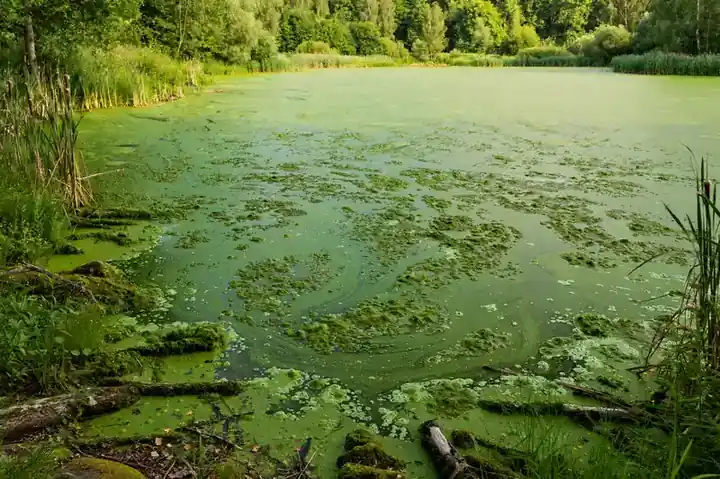
How to spot water your dog should avoid
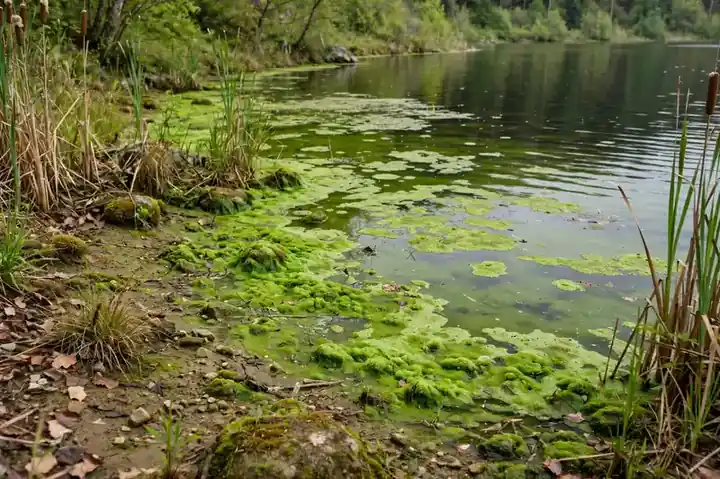
Toxic blooms often look like pea-green paint or slime floating on the surface, sometimes with green, blue, brown, or reddish streaks. But the visual test is unreliable in both directions. Some deadly blooms are nearly invisible, and some ugly green water is harmless. The safe rule uses suspicion, not certainty: avoid water that looks slimy, discolored, foamy, scummy, or foul-smelling, and avoid any lake with a posted warning.
Watch the shoreline most carefully. Wind pushes floating algae and toxins toward the edges, which is exactly where dogs wade in to drink. A lake that looks fine from the dock can have a concentrated scum line right where your dog’s nose goes. Stagnant ponds, slow coves, and warm shallow edges deserve the most suspicion. Moving water is not automatically safe either, since contamination can wash down from upstream, but fast, cold, clear streams carry far less algae risk than still summer ponds.
Leptospirosis: the bacterial threat you cannot see
Leptospirosis is a bacterial disease spread through the urine of infected wildlife, including raccoons and rats among others. The bacteria survive in water and wet soil, and dogs pick them up by drinking contaminated water or wading through it with a cut or through mucous membranes. The VCA’s leptospirosis guide describes what follows: severe damage to the kidneys and liver, sometimes fatal, with an incubation period of roughly four to twelve days before signs appear.
The early signs are easy to miss: fever and lethargy first, then appetite loss and vomiting, with changes in urination as the kidneys struggle. Because the signs overlap with a dozen other illnesses, exposure history is often what points the vet toward lepto. Treatment means antibiotics started early, plus supportive care for the kidneys, and severely affected dogs need hospitalization. The disease is zoonotic, meaning sick dogs can pass it to their people, which makes prevention a household matter, not just a dog matter.
The good news is real. A leptospirosis vaccine exists, and VCA recommends it as a routine vaccination for all dogs. It covers the four most common strains, though not every strain. If your dog hikes, swims, or drinks outdoors at all, ask your vet whether the lepto vaccine is current. Stagnant puddles and ponds carry the highest risk, since small volumes concentrate the bacteria more than a large lake does.
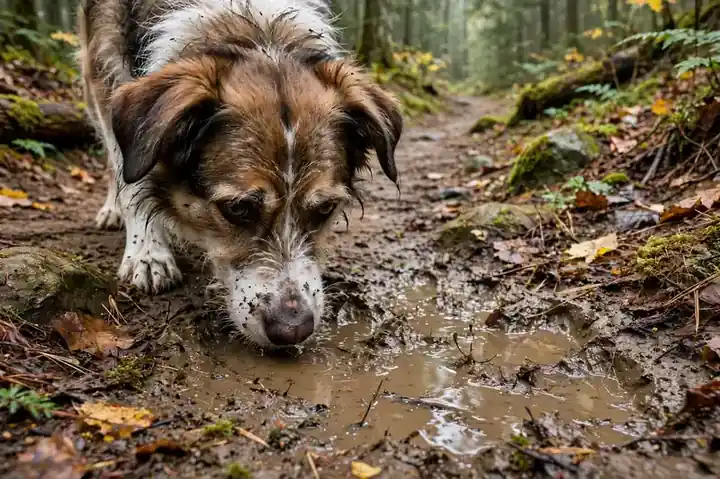
Giardia and the other waterborne parasites
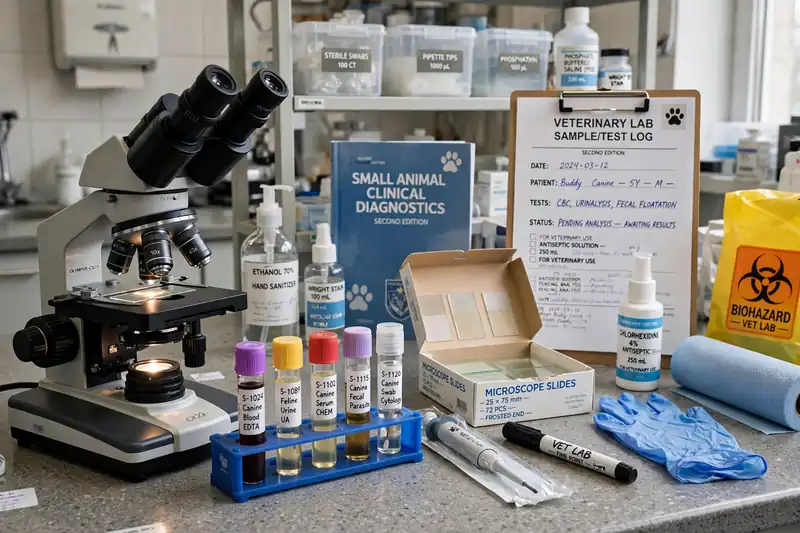
PetMD’s rundown of waterborne diseases names the usual suspects beyond bacteria and algae. Giardia is the most common: a microscopic intestinal parasite that causes explosive, foul-smelling diarrhea, often with mucus, sometimes with vomiting and weight loss. Dogs pick it up from contaminated water, and it spreads easily between dogs sharing bowls or yards. Diagnosis needs a fecal test, and treatment is straightforward once identified, but a dog can shed the parasite and reinfect itself for weeks.
Cryptosporidium rides along in the same waters with similar gut-wrecking effects. Neither parasite announces itself in the water. The water looks fine, the dog drinks, and the diarrhea starts days later, which is why owners rarely connect the two. Annual fecal tests catch these hitchhikers, and any bout of watery diarrhea after a lake trip deserves a vet visit with a stool sample, not a wait-and-see week.
Chemical runoff: the invisible fourth threat
Whatever gets sprayed uphill washes downhill. Farmland and lawns drain into lakes with every rain, carrying the chemicals with it. A lake edged by manicured lawns or crop fields collects whatever was sprayed uphill. Dogs drinking that water get low doses of chemicals meant to kill plants and insects, and while a single lap is unlikely to poison a dog outright, repeated exposure adds up, and some chemicals are acutely toxic in higher concentrations.
Road runoff adds its own cocktail near urban lakes: oil, antifreeze, and heavy metals wash off pavement straight into the water. Antifreeze deserves special fear. It tastes sweet, dogs lap it eagerly, and tiny amounts can destroy the kidneys. Any lake near a parking lot or road after rain deserves extra caution. None of this shows in the water. If the shoreline smells chemical or the water has an oily sheen, walk away.

What to do if your dog drank lake water
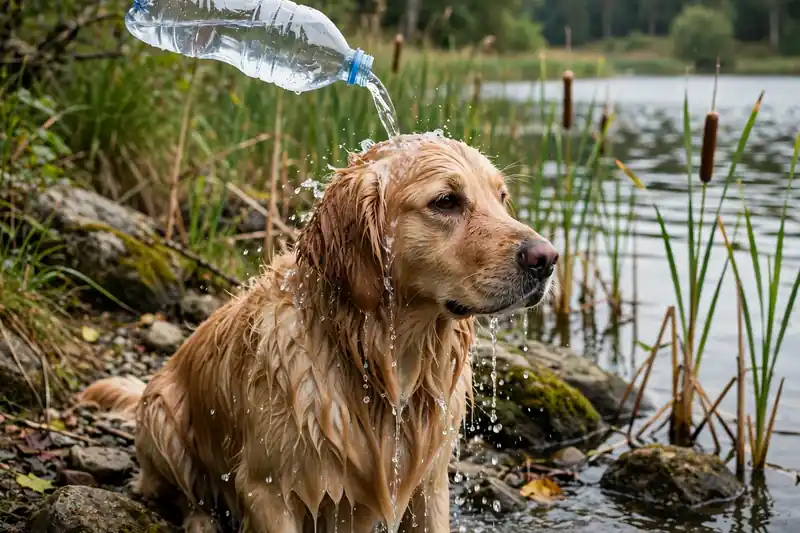
First, stay calm and act. Rinse your dog with fresh water as soon as possible, especially if there was any visible scum or discoloration, since toxins on the coat get licked off later. Offer fresh water from your bottle to dilute whatever was swallowed and to reduce the urge for another lake drink. If mild stomach upset follows, a bland diet for a day or two is the usual first step while you monitor.
Then watch, and know what you are watching for. Algae exposure is the emergency: drooling, vomiting, disorientation, weakness, or collapse within hours of swimming means an immediate emergency vet visit, because there is no antidote and speed is everything. Tell the vet exactly which lake and what the water looked like. For leptospirosis and giardia, the timeline is longer. Vomiting, diarrhea, fever, lethargy, or appetite loss in the days after a lake trip earns a vet visit with a mention of the water exposure. Save the location name. Vets tracking local outbreaks want to know where.
Safe water habits for lake days
The system is simple. Bring more fresh water than you think you need, plus a collapsible bowl, and offer it often. A dog that is not thirsty is a dog that ignores the lake. Take water breaks in the shade every half hour on hot days, and watch that the dog is not gulping huge amounts at once, since drinking too much water too fast brings its own emergency. Keep the dog leashed near shorelines with visible scum, and teach a solid “leave it” for ditch water and puddles on the trail.
Rinse the dog after swimming, every time. A quick fresh-water rinse removes algae cells and bacteria, plus chemical residue, from the coat before the dog’s tongue does the job. Check local advisories before you go: many health departments post algae bloom warnings online during summer, and a two-minute check beats a midnight emergency drive. After the trip, keep an eye on stool and energy for a few days, and mention any lake swimming at the next vet visit so it goes in the record.
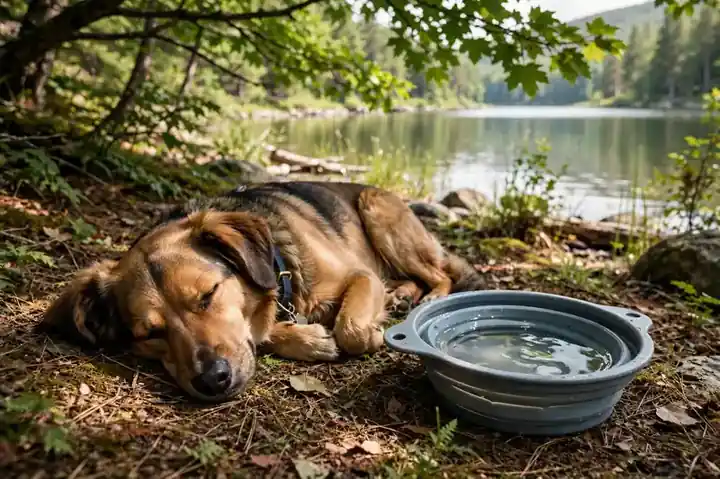
Lake days are for swimming and fetching, not drinking. The water looks clean and rarely is: algae, bacteria, and parasites do their work invisibly, and a dog that drinks while playing can swallow a dangerous dose before you notice. Bring fresh water from home, offer it often, and rinse the dog off after swimming so the coat does not become a secondhand drink. Learn what an algae bloom looks like, check local advisories before you go, and keep the emergency vet number saved. A little planning keeps the lake fun instead of frightening.
Frequently asked questions about dogs and lake water
Owners usually ask about clear water, rivers versus lakes, and what to do after a swim. The answers below cover the questions that come up most often.
Is it safe if the lake water looks clear?
Not necessarily. Leptospira bacteria and giardia are invisible, and so is chemical runoff, and some toxic algae blooms are nearly invisible too. Clear water rules out the obvious scum but guarantees nothing. Bring fresh water regardless.
Are rivers safer than lakes for dogs to drink from?
Somewhat, for algae, since moving water blooms less. But rivers carry the same leptospirosis and giardia risks, plus whatever washes down from upstream. Treat river water with the same caution and bring your own.
My dog swam in the lake but didn’t drink. Is that okay?
Mostly, but rinse the dog afterward. Dogs ingest water while swimming with open mouths, and they lick their coats dry. If the lake had any visible bloom, treat it as an exposure and watch closely.
How soon do blue-green algae symptoms appear?
Fast. Neurotoxin signs can begin within an hour of exposure, sometimes within minutes. Vomiting, drooling, disorientation, weakness, or seizures after swimming mean an emergency vet visit immediately.
Should my dog get the leptospirosis vaccine?
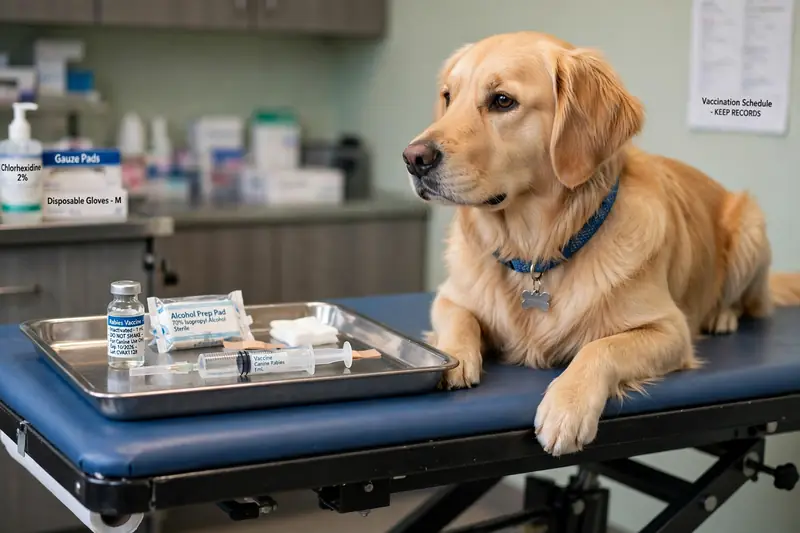
If your dog spends time outdoors near water, most vets say yes. The vaccine is recommended as routine for all dogs and covers the four most common strains. Ask your vet at the next visit.
What if my dog has diarrhea a few days after the lake?
See your vet and bring a stool sample, mentioning the lake trip. Giardia and other waterborne parasites are common culprits, and they need specific treatment, not just time.

Lakes are for playing in, not drinking from. The bottle in your pack weighs almost nothing, and it buys immunity from the threats no owner can see: the algae that kills in hours and the bacteria that wrecks kidneys in days, plus the parasites that ruin weeks. Let the dog swim, rinse the dog after, and keep the drinking water firmly in your hands.
*Disclaimer: This article is for general information only and is not veterinary advice. Suspected blue-green algae exposure is an emergency. Contact your veterinarian or the ASPCA Animal Poison Control Center at (888) 426-4435 immediately if your dog shows symptoms after contact with lake water.*


1 thought on “Can Dogs Drink Lake Water? The Hidden Dangers”