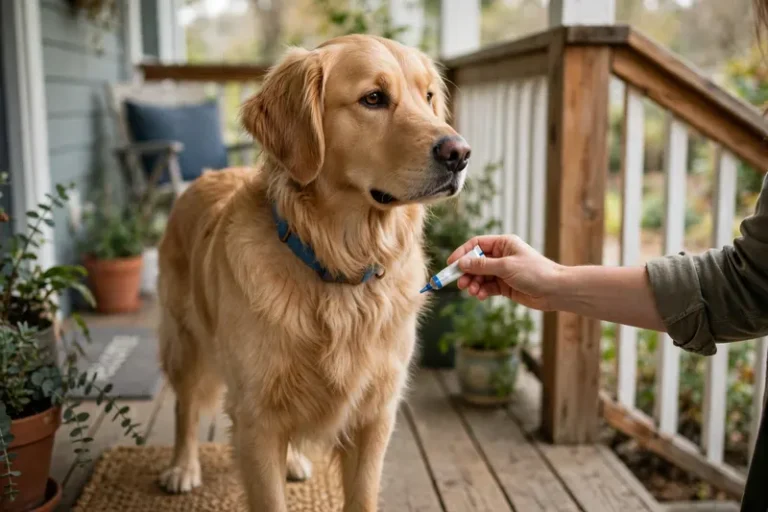
No, sticks are not safe for dogs to eat, and most vets say dogs should not chew them either. That surprises plenty of owners, because a dog with a stick looks like the most natural thing in the world. Dogs need to chew, and a stick is free and everywhere. Trouble starts when the stick breaks: wood splinters into sharp fragments that cut gums, wedge between teeth, and, when swallowed, can puncture the stomach or block the intestines. A dog that mouths a stick once on a walk will probably be fine. A dog that makes a habit of it gambles every time.
This guide covers what vets actually see go wrong, which situations are emergencies, and what to hand your dog instead. Keep the chewing, lose the stick.

Is it safe for dogs to eat sticks? The short answer
No, it is not safe for dogs to eat sticks. Wood splinters, cannot be digested, and can injure the mouth, throat, stomach, and intestines. Swallowed pieces can cause choking or a bowel blockage that needs emergency surgery. Chewing without swallowing still risks cut gums, cracked teeth, and splinters lodged in the mouth.
PetMD notes that sticks, mulch pieces, and similar debris rank among the most common foreign objects vets find embedded in dogs’ mouths, and owners sometimes have no idea anything is wrong because the dog keeps eating normally. A splinter works into the gum, the surface heals over it, and weeks later an abscess blooms. The PetMD guide to common mouth conditions in dogs describes exactly this pattern.
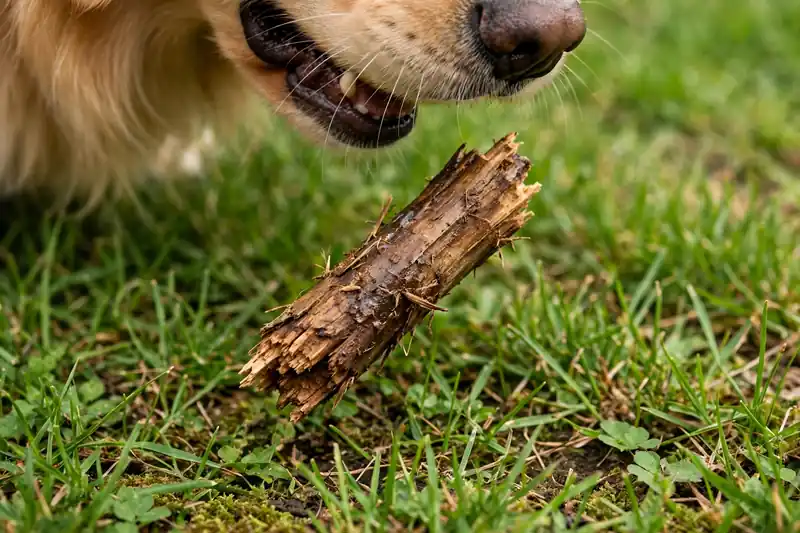
Dogs do not digest wood at all. A swallowed fragment either passes, which can take a day or two of anxious watching, or it lodges and you are dealing with an obstruction. Sharp fragments add a worse possibility: perforation of the gut wall, which spills bacteria into the abdomen: a life threatening emergency.
Why sticks splinter and why that matters
Sticks splinter because wood fails along its grain when a dog’s jaws shear it. A dog’s bite force, even in a medium dog, exceeds what a dead branch can handle cleanly, so the stick rarely snaps into two neat pieces. It shreds into slivers with sharp points and rough edges, and those slivers are the whole problem.
Fresh green sticks are slightly more flexible, but they still break. Dry dead wood is the worst: brittle, prone to shattering, and often carrying mold. A vet quoted by PetsRadar, Dr. Joanna Woodnutt, points out that some molds growing on dead vegetation can be toxic to dogs, adding a poisoning risk on top of the mechanical ones. The stick under the oak tree carries two hazards, and you cannot tell by looking which one will matter.
Size does not make a stick safe. A big branch still sheds splinters, and a big piece that breaks off can lodge across the roof of the mouth between the upper teeth, where it sits and rots. Small twigs go down easier, which sounds better until you remember that swallowed wood cannot be digested and sharp little pieces are exactly what puncture intestines. There is no safe size. There are only degrees of bad luck.

Mouth injuries vets see from stick chewing
The mouth takes the first hit. Splinters drive into the gums and under the tongue. Fragments wedge between teeth or jam across the hard palate. Dogs crack their big chewing teeth on wood that is harder than it looks, and puncture wounds happen when a running dog’s stick catches the ground.
The throat puncture deserves its own warning because it is the classic stick emergency. A dog sprinting with a stick in its mouth hits the end against the ground, and its own momentum drives the other end into the throat or neck. Vets describe wood breaking off under the skin while the surface wound closes, leaving a fragment inside that festers into an abscess days later. This is why the “never throw sticks” rule exists, and it applies even to dogs that never chew.
Watch for these signs after any stick session: extra drooling, pawing at the face, dropping food, bad breath from nowhere, or reluctance to open the mouth. Any of those earns a look inside with a flashlight, and anything you cannot clearly see and safely remove earns a vet visit. Do not yank on wood embedded in tissue. Pulling can tear blood vessels and turn a minor splinter into a bleeding emergency.

What happens when a dog swallows stick pieces
Swallowed wood goes one of three ways, and you do not get to choose. The lucky path is uneventful passage within 24 to 48 hours. The unlucky paths are obstruction, where a piece lodges and blocks the gut, and perforation, where a sharp fragment pierces the wall. Both are surgical emergencies.
An obstruction means a piece lodges in the digestive tract and nothing moves past it. Early signs look vague: vomiting, appetite loss, belly pain, and straining to poop with nothing coming out. Some dogs adopt the “prayer position,” chest down and rear up, which signals abdominal pain. Vets treat suspected obstructions as urgent because a blocked gut can cut off its own blood supply within hours.
Perforation is worse. A sharp fragment pierces the stomach or intestinal wall, spilling bacteria into the abdomen. That causes peritonitis, a body-wide infection that can kill even with aggressive treatment. The frightening part is that a dog can look okay for a while after swallowing a sharp piece, then crash. This is why vets say to call for advice rather than “wait and see” after a dog swallows wood. The fragment’s size and shape and the dog’s size all change the risk, and a phone call costs nothing.
One more thing people get wrong: do not induce vomiting at home unless your vet specifically tells you to. A sharp fragment coming back up can do as much damage on the way out as it did going down. The guide to inducing vomiting in dogs covers when vets actually recommend it, and stick ingestion is usually not one of those times.

The thrown stick problem
Throwing sticks for your dog deserves its own section because it injures dogs that never chew at all. A thrown stick tumbles unpredictably. The dog runs full speed with its mouth open. The stick’s end digs into the ground and stops, the dog does not, and the stick becomes a spear aimed at the throat.
Veterinary surgeon Rebecca MacMillan describes this as one of the most common stick injuries: the stick hits the ground end-on, the dog impales itself on the other end, and fragments break off into the throat or neck. Some injuries are immediately obvious and bloody. Some hide, with the entry wound closing over a retained fragment that abscesses later. Either way the treatment is sedation or anesthesia, imaging, and surgical removal.
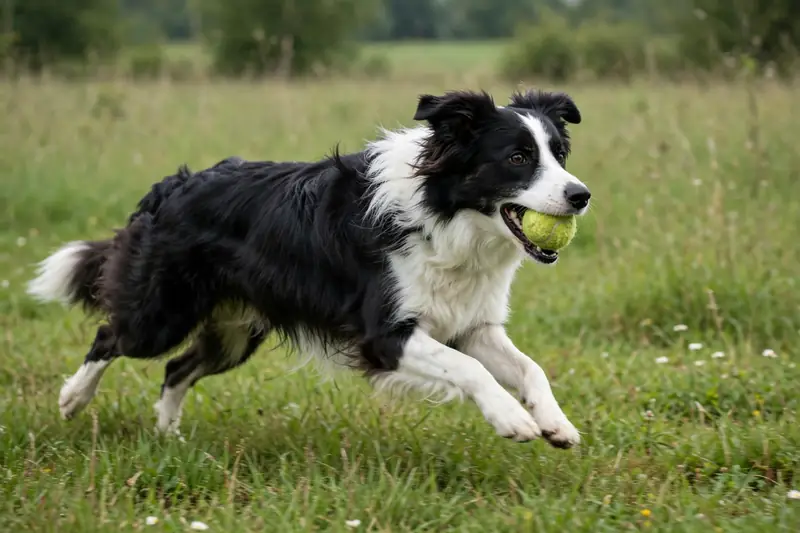
The fix is easy and costs nothing: throw a ball or a purpose-made fetch toy instead. The romance of the stick means nothing to dogs. The chase, the catch, and your reaction when they bring it back are what count. A rubber ball delivers all three without the spear physics.
Some woods are toxic to dogs
As if splinters were not enough, some trees make sticks actively poisonous. Black walnut, yew, red maple, and cherry come up most often in veterinary warnings. The poisons differ: yew contains taxines that affect the heart, black walnut carries juglone, and cherry wood and leaves contain cyanogenic compounds.
You cannot identify every tree in the park, and neither can your dog. That is the practical point. A stick is wood from a specific tree, possibly coated in whatever the lawn was sprayed with, possibly growing mold, and your dog has no way to evaluate any of that. The ASPCA keeps a toxic plant database for exactly this reason, and its list of people foods to avoid feeding pets shows how seriously the organization takes everyday exposures owners underestimate.
Mold is the hazard people dismiss. Dead wood on damp ground grows fungi, and some of those fungi produce tremorgenic mycotoxins that cause shaking, drooling, and seizures in dogs. A stick that has been lying in leaf litter for a month is a worse chew than a fresh one, which is exactly backwards from what most owners assume. When in doubt about a stick’s history, and you will always be in doubt, the answer stays no.

Why dogs love sticks so much
Dogs do not chew sticks to annoy you. Chewing relieves teething pain in puppies, exercises jaw muscles, scrapes plaque, and burns off boredom in adults. A stick is free, everywhere, interestingly textured, and makes a satisfying crunch. From the dog’s point of view, humans inexplicably object to the best toy in the park.
Some dogs eat sticks rather than just chewing them, and that is worth distinguishing. Occasional accidental swallowing during enthusiastic chewing is normal. Deliberate, repeated eating of wood and other non-food objects has a name, pica, and it can signal anemia, gastrointestinal trouble, or a diet that is not meeting the dog’s needs. A dog that suddenly starts eating sticks after ignoring them for years deserves a vet check, not just a scolding. The reasons dogs eat grass overlap here: nausea and gut discomfort drive dogs to mouth non-food things.
Boredom is the most fixable cause. A dog with two short walks and eight empty hours manufactures its own entertainment, and the yard is full of sticks. More exercise, training, and better chews solve most stick obsession.

Safe chew alternatives that satisfy the urge
The goal was never to stop your dog chewing. The goal is to redirect the urge onto things designed for jaws. Good alternatives share three traits: no sharp splintering, a size the dog cannot swallow whole, and enough interest to beat a stick.
Bully sticks top most vet-recommended lists for a reason the AKC spells out: they are digestible and resist splintering far better than bones and some chews. They are single-ingredient, they keep a power chewer busy, and the gnawing scrapes plaque. The AKC’s guide to bully sticks covers sizing and supervision. Rubber chew toys stuffed with food satisfy the same urge differently: the dog works for the payoff. For aggressive chewers, buy toys rated for power chewing and replace them when they wear down.
Coffee wood sticks deserve an honest mention because they are marketed as the safe stick. They are denser than regular branches and tend to come apart in soft fibers rather than sharp splinters. That is better than a random branch, but a determined chewer can still break off chunks, and no chew should be given unsupervised.

The AKC’s guide to choosing edible chews gives a practical safety checklist for any chew: right hardness, right size for the dog, and supervision every time. Rawhide deserves a careful look before you buy it, since power chewers can tear off and swallow large pieces. The rawhide breakdown and the pig ears guide cover the trade-offs, and the bones for dogs article explains why cooked bones are never okay. Chicken bones get their own warning in the chicken bones article.
How to stop your dog eating sticks
Stopping stick eating takes two tracks: management and training. Management means fewer sticks available. Pick up fallen branches in the yard regularly, especially after storms. Do not let the dog carry sticks into the house, where the habit gets rehearsed. On walks, keep the dog’s attention with training and sniff breaks so the ground is less interesting.
Training means teaching a rock-solid “leave it” and a happy trade. When you spot the dog mouthing a stick, do not chase. Chasing turns the stick into the most valuable object on earth and teaches the dog to gulp it to keep it. Instead, offer a trade: a high value treat or a favorite toy in exchange for the stick, then praise the drop. Over repetitions the dog learns that dropping wood produces better things, and the stick loses its shine.
For dogs that guard found objects, stiffening or growling when you reach for the stick, skip the confrontation and get help from a qualified trainer. Forcing a trade with a guarder escalates the guarding. And remember the boredom angle: a tired dog with a good chew walks past sticks.

When to call the vet
Call your vet right away if your dog is gagging and cannot clear it, drooling heavily with blood, pawing frantically at the mouth, or showing any sign of a throat injury after running with a stick. Those are emergencies, not wait-and-see situations.
Call the same day if your dog swallowed a piece of stick, even if it seems fine. Describe the size of the piece and the size of your dog. The vet may advise monitoring at home with clear instructions, or may want to see the dog. Repeated vomiting, appetite loss, abdominal pain, straining to defecate, or bloody stool after stick ingestion all mean a prompt visit. So does the prayer position, chest down and rear in the air, which signals gut pain.
For mild cases, a dog that crunched a twig and seems completely normal, watch closely for 48 hours and check the mouth with a flashlight. If anything seems off, the call costs nothing and buys certainty. Keep your vet’s number and the ASPCA poison control number saved in your phone before you need them.

Frequently asked questions about dogs and sticks
My dog ate a stick. Will he be okay?
Probably, if it was a small piece and he seems normal. Watch him closely for 48 hours for vomiting, appetite loss, belly pain, or trouble pooping. Call your vet for advice rather than just waiting, since the vet can judge the risk from the stick’s size and your dog’s size.
Can a stick cause a bowel blockage in dogs?
Yes. Swallowed wood cannot be digested, and a piece that is too large to pass can block the intestines. Blockages are surgical emergencies. Signs include repeated vomiting, no appetite, abdominal pain, and straining without results.
Are coffee wood chew sticks safe for dogs?
Safer than random branches, not risk-free. Coffee wood is dense and tends to break into soft fibers instead of sharp splinters, but determined chewers can still break off chunks. Supervise every session and take the chew away when it gets small enough to swallow.
Why does my dog eat sticks instead of just chewing them?
Accidental swallowing during chewing is common and usually harmless in small amounts. Deliberate, repeated eating of wood can signal pica, linked to anemia, gut problems, or nutritional gaps. A sudden new habit of eating sticks deserves a vet check.
Can puppies chew on sticks?
Puppies are the worst candidates for sticks. They chew harder, swallow more readily, and have smaller throats and intestines, so the same stick is more dangerous to them. Give teething puppies rubber toys and edible chews sized for puppies instead.
My dog gags after chewing sticks. What should I do?
Check the mouth with a flashlight for a lodged fragment, but do not pull on anything embedded in tissue. If gagging continues, if there is bleeding, or if the dog cannot swallow comfortably, see your vet the same day. A fragment across the roof of the mouth is a common cause.
Are sticks good for cleaning dogs’ teeth?
The crunching does scrape some plaque, but the price is too high: cracked teeth, cut gums, and embedded splinters are all common. Dental chews, bully sticks, and toothbrushing clean teeth without the shrapnel.
Sticks look like nature’s chew toy, but a dog’s mouth is not built for lumber. The splinters, blockages, and throat injuries vets see each year trace back to the same innocent-looking branch. Hand your dog a bully stick or a stuffed rubber toy instead, teach a clean “leave it,” and leave the sticks on the ground where they belong.
Disclaimer: This article is for general information only and is not veterinary advice. Every dog is different. If your dog has swallowed wood, is in pain, or shows any worrying symptoms, contact your veterinarian promptly.