Cherry season fills the fruit bowl, and a dog begs for one. The question owners actually type is specific: can my dog eat cherries without pits? **Dogs can eat cherries once the pit, stem, and leaves are removed, in small amounts, as an occasional treat.** The flesh is not toxic. The pit is the problem: it can choke a dog, block the intestine, or crack a tooth, and the kernel inside holds amygdalin, a compound that turns into cyanide when chewed. PetMD’s guide to cherries for dogs gives the same line: pitted flesh yes, pits never. This guide focuses on the pitted-cherry question only: how to remove pits reliably, the pit fragments even “pitted” cherries can hide, safe portions, and the processed cherry products to avoid.
Can dogs eat cherries without pits?
**Dogs can eat pitted cherries in small amounts.** Remove the pit, the stem, and any leaves, then offer two or three cherries for a small dog or a small handful for a large dog. The flesh brings water, fiber, and vitamins A and C. The sugar in cherries can loosen stool, so keep the serving at treat size and the occasion rare.

“Pitted” has to mean fully pitted. A cherry with the pit still inside is a whole different food for a dog, and this article’s companion piece, the full guide to cherries for dogs, covers the whole-cherry risks in depth. Your dog’s regular food already covers its nutrition, so cherries are a sweet extra, nothing more. If you share fruit often, the list of human foods dogs can eat is worth bookmarking. Offer one cherry first. A dog that has never had them may get gassy or produce soft stool, and that reaction sets the real portion limit.
Why the pit is the whole story
**Cherry pits carry amygdalin, which converts to cyanide when chewed, and they are hard enough to choke a dog or block the gut.** The flesh never had this problem. Three hazards live in the pit: the chemical one, the choking one, and the blockage one. Stems and leaves carry the same cyanide compounds in smaller amounts.

The nuance people skip: a swallowed whole pit and a chewed pit are different emergencies. An intact pit passes through many dogs without releasing much cyanide, because the amygdalin stays locked inside the hard shell. A chewed pit releases it. Veterinary sources note that dogs have lower rhodanese activity than many other animals, which is the enzyme pathway that detoxifies cyanide, so dogs are more vulnerable than people to the same dose. A handful of chewed pits can sicken a small dog. The mechanical risk needs no chewing at all: a pit can lodge in the throat or the intestine of any size dog, and a cracked molar from biting one means a dental extraction. Chewed pits are a poisoning question. Whole pits are a plumbing question. Both end at the vet.
Pit fragments: the part even pitted cherries can hide
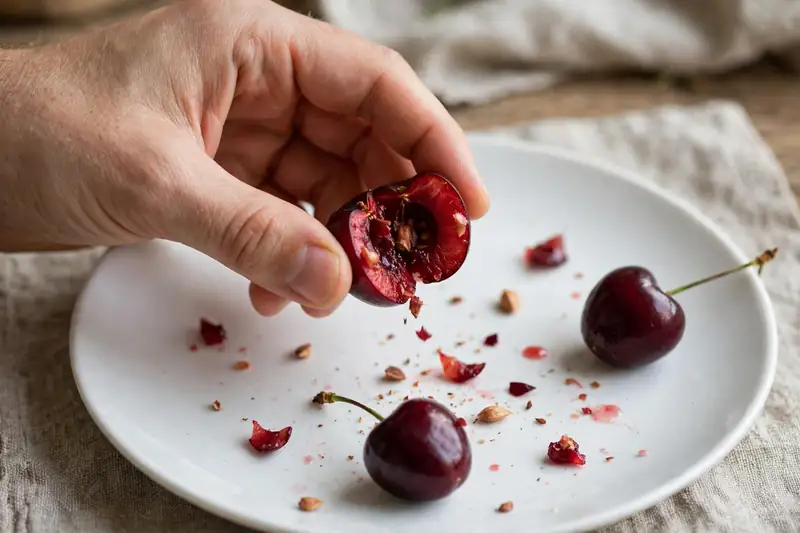
**Pit fragments can hide in “pitted” cherries, so check each cherry before it reaches the dog.** Home cherry pitters occasionally leave a shard of pit in the flesh. Commercially pitted frozen cherries can contain fragments too, since the pitting machines miss a small percentage. A fragment is sharper than a whole pit and small enough to swallow unnoticed, which makes it a sneaky choking and gut-irritation risk.

Halving each cherry solves it. Cut every cherry open, run a fingertip over the flesh, and flick out anything hard. It takes an extra minute for a dog-size portion, and it is the single most useful safety step in this article. Frozen pitted cherries need the same check after thawing, because freezing does not soften fragments. Dried cherries deserve a squeeze test, since their shriveled flesh can hide a shard. If you find fragments regularly in one brand of frozen cherries, switch brands. The pitting quality varies, and the dog cannot report a bad batch.
How to pit cherries for your dog
**Use a cherry pitter, then halve each cherry and check for fragments.** Wash the cherries first. Press each one through the pitter over a bowl, then cut the pitted flesh in half and inspect it. Halving also shrinks the choking risk, since a whole cherry is round and smooth enough to lodge in a small dog’s throat.

No pitter? A sturdy straw or the tip of a piping nozzle pushed through the stem end pops most pits out. A paring knife works too: cut around the cherry, twist, and lift the pit. Whatever the method, the check step stays. Bin the pits in a sealed container, not the open kitchen trash. Dogs raid trash with enthusiasm, and a bowl of pits is a concentrated hazard. Stems go in the same bin. Rinse the pitter before it dries, since cherry juice stains fast.
How many pitted cherries are safe
**Keep pitted cherries under 10 percent of daily calories: two or three for a small dog, five or six for a large dog, a few times a week at most.** A single sweet cherry carries about 5 calories, nearly all sugar. Five cherries are 25 calories, which is most of the treat budget for a 15 lb dog. Cherries earn no exemption from the VCA’s feeding guidelines on treats.
| Dog size | Safe amount | Frequency |
|---|---|---|
| Small (under 20 lbs) | 2 to 3 cherries, halved | A few times a week at most |
| Medium (20 to 50 lbs) | 3 to 5 cherries, halved | A few times a week at most |
| Large (over 50 lbs) | 5 to 6 cherries, halved | A few times a week at most |
The fiber in cherries is gentle in these amounts and disruptive above them. Fiber in a dog’s diet works best from the regular food, and fruit fiber stacked on top can cause gas or diarrhea. Start with one cherry on the first try and watch the day. Dogs with diabetes or weight problems should skip cherries, since the sugar delivers nothing they need. Puppies can have a single halved cherry, but their calories belong in balanced puppy food.
Maraschino, canned, dried, and cherry pie filling
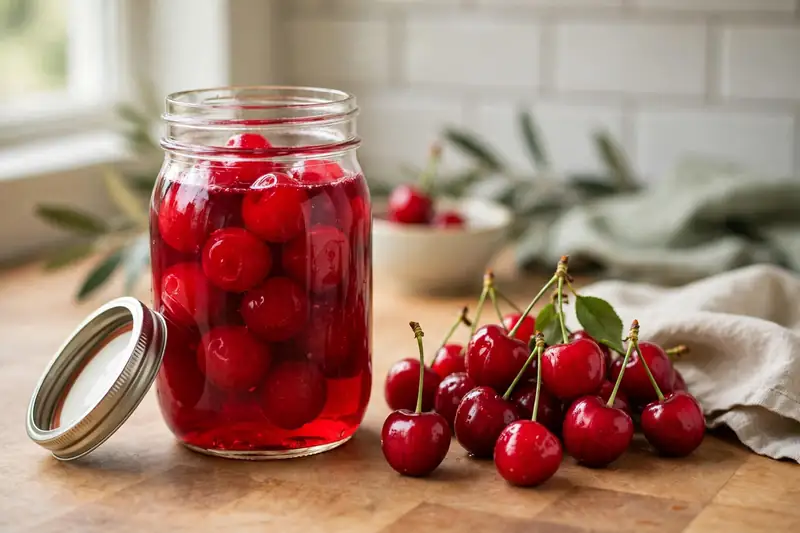
**Skip maraschino cherries, canned cherries, cherry pie filling, and sweetened dried cherries.** Maraschino cherries are the worst of the bunch: they are bleached, dyed, and packed in syrup that often contains high sugar and sometimes artificial sweeteners. Some sugar-free cherry products use xylitol, which is lethally toxic to dogs in tiny amounts. ASPCA’s list of people foods to avoid names xylitol among the items that never belong in a dog’s bowl.

Canned cherries in syrup carry the same sugar problem as canned peaches, with none of the fiber benefit intact. Cherry pie filling adds butter, sugar, and spice blends to the mix. Dried cherries concentrate the sugar and often hide pit fragments in their shriveled flesh, so they fail on two counts. If a label lists xylitol, birch sugar, or anything ending in “itol,” the product is an emergency risk, not a treat. Fresh pitted cherries or nothing.
Cherry juice, cherry flavoring, and dog treats
**Cherry juice and cherry-flavored products are not dog treats.** Juice strips the fiber and concentrates the sugar, so it delivers the worst of the cherry without the good part. Tart cherry juice, sold as a sleep or recovery drink for people, is just as sugary. Cherry-flavored candy, soda, and cough syrup are worse: artificial cherry flavor often rides along with xylitol or massive sugar loads.

Dog treats marketed as “cherry flavored” usually contain no real cherry at all, just flavoring and sugar. They are not dangerous in the way pits are, but they are not food either. A dog that likes the taste of real cherries gets the real thing, pitted and halved. Water stays the right drink, and a complete dog food stays the right meal.
Stems, leaves, and the cherry tree in your yard
**Cherry stems and leaves contain the same cyanide compounds as the pits, and wilting leaves concentrate them.** A dog that strips leaves from a backyard cherry tree or chews fallen branches ingests a real dose. Fence the tree or supervise the dog during fruit season, and sweep fallen fruit before the dog finds it.

Windfall cherries ferment fast. Fermenting fruit contains alcohol, and a dog that eats a pile of rotting cherries can show wobbly, drunk behavior within an hour. Moldy fruit can carry mycotoxins that cause shaking. A dog that raids the ground under the tree and turns wobbly needs a vet call the same day. Teach a solid leave-it for anything on the grass during cherry season, and bag pruned branches immediately, since chewed cherry wood releases the same compounds as the leaves.
Cherries vs grapes, blueberries, and strawberries
**Cherries sit between blueberries and grapes on the safety scale.** Blueberries are the easy win: no pit, no prep, safe in generous handfuls. Strawberries need only the green top removed. Cherries need pitting and checking, which makes them the highest-effort berry in the bowl. Grapes sit at the far end: toxic to dogs in any amount, with kidney failure as the stakes.

The practical takeaway: if pitting cherries feels like work, switch to blueberries. The dog gets the same kind of treat with zero pit risk and less sugar per bite. Cherries remain a fine occasional fruit for owners who enjoy the prep, but no dog misses out nutritionally by skipping them. Apple seeds carry the same amygdalin compound as cherry pits, which is why apples get cored before sharing too. AKC’s list of fruits dogs can and cannot eat lines these fruits up side by side.
When to call the vet
**Call the vet if your dog eats cherries with pits, chews pits open, eats stems or leaves, or shows repeated vomiting, wobbliness, or collapse.** A few pitted cherries in a healthy dog need no call. Anything involving pits, stems, leaves, or symptoms does.

Cyanide signs include bright red gums, rapid breathing, drooling, and collapse, and they mean an emergency clinic, not a phone wait. For a swallowed whole pit, describe the dog’s size and when it went down; the vet will advise watching or imaging. Blockage signs develop over 24 to 48 hours: vomiting, appetite loss, belly pain, straining, or no stool. For mild stomach upset after plain pitted cherries, a bland diet for a day or two usually settles things. Keep your vet’s number and the ASPCA poison control number saved in your phone.
Frequently asked questions about pitted cherries for dogs
Owners usually ask about swallowed pits, puppies, frozen cherries, and dried cherries. The answers below cover the questions that come up most often.
Can dogs eat cherry pits if they swallow them whole?
A swallowed whole pit often passes without chemical harm, since the amygdalin stays locked inside the shell. The blockage and choking risk remains, so call your vet, describe the dog’s size, and watch for vomiting or appetite loss over 24 to 48 hours.
Can puppies eat pitted cherries?
A single halved pitted cherry will not harm a puppy, but puppies under six months do best on their complete puppy food alone. Keep it to one cherry at most, and watch for soft stool afterward.
Can dogs eat frozen pitted cherries?
Yes, once thawed and checked. Thaw them fully, halve each one, and feel for pit fragments, since commercial pitting misses some. Serve at room temperature, since frozen chunks can hurt teeth and throats.
Can dogs eat dried cherries?
Skip them. Dried cherries concentrate the sugar, often contain added sweeteners, and can hide pit fragments in their shriveled flesh. Fresh pitted cherries are the better choice in every way.
My dog ate cherries with pits. What should I do?
Count how many, note whether the pits were chewed or swallowed whole, and call your vet. Chewed pits are a poisoning question; whole pits are a blockage question. Watch for vomiting, wobbliness, bright red gums, or collapse, and go to an emergency clinic if any appear.
Are black cherries safe for dogs?
Yes, with the same rules. Black, red, Rainier, or sour cherries all have safe flesh and dangerous pits. Pit them, halve them, check for fragments, and keep the portion small.
Pitted cherries earn a careful yes. The flesh is safe, the pit is not, and the fragment check is the step that turns a risky fruit into a safe treat. Pit them, halve them, check them, and keep the portion small.
Disclaimer: This article is for general information only and is not veterinary advice. Every dog is different, and dogs with health conditions, puppies, and nursing dogs may need different guidance. If you are unsure, or if your dog shows symptoms after eating cherries, contact your veterinarian.