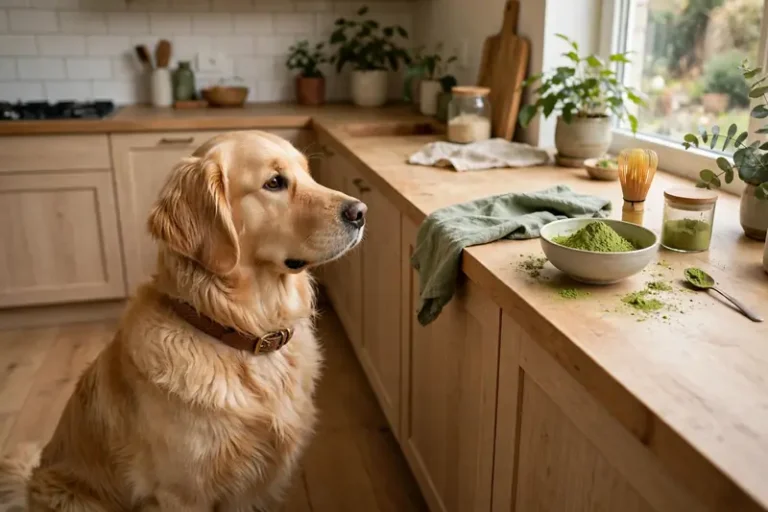
The loaf is cooling on the rack, the crust is crackling, and your dog is performing the full stare-down from the kitchen doorway. Sourdough smells like a treat worth begging for, and the question arrives right on schedule.

The answer splits cleanly in two. Baked, plain sourdough bread is safe for dogs in small amounts as an occasional treat. Raw sourdough dough is a different story entirely, and it is the one that sends dogs to the emergency vet. Dogs can eat baked sourdough bread in small amounts, but raw sourdough dough is dangerous and needs emergency care.
Sourdough earns its tang from fermentation: wild yeast and lactic-acid bacteria work the flour for hours before baking. The oven heat finishes the job, killing the yeast and setting the crumb. Once baked, the loaf is just bread with a sour note, and the fermentation worries end at the crust.
Can dogs eat sourdough bread? The short answer
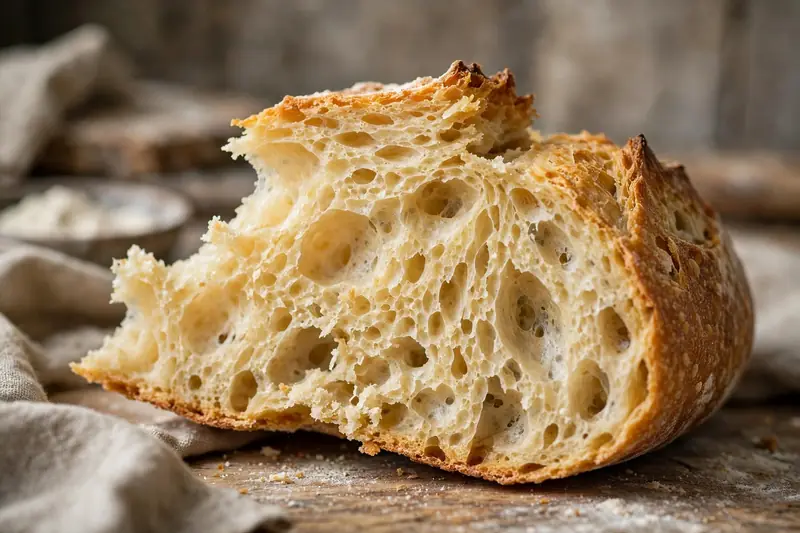
Baked, plain sourdough bread is safe for dogs in small amounts as an occasional treat, one or two small pieces a few times a week at most. The bread must be fully baked and cooled, free of add-ins like garlic, onion, or raisins. Raw dough and active starter are never safe. The published bread guide covers the broader topic.
Why baked sourdough is safe for dogs
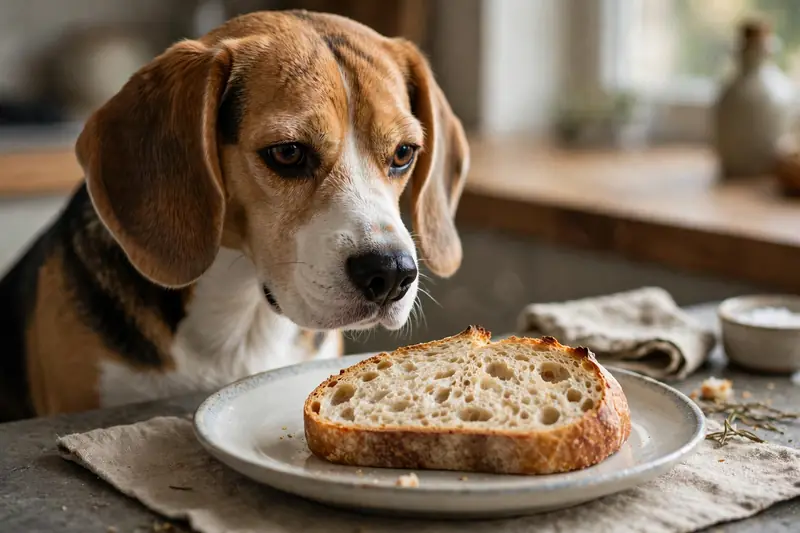
Baking changes everything about dough. Oven heat kills the yeast and stops fermentation, driving off the alcohol that fermentation produced. The finished loaf contains no live yeast and no meaningful alcohol, which is why veterinary sources treat baked bread as safe in small quantities. PetMD’s bread guide agrees, listing plain baked bread as safe in small quantities.
Sourdough’s long fermentation even gives it a small edge over quick breads. During those hours, the bacteria consume a share of the flour’s sugars and produce lactic acid, which is what gives the crumb its signature tang and slightly firmer texture. None of that survives baking as a hazard. The crumb is mostly starch and water with some salt and lactic acid, none of which trouble a healthy dog in treat-sized amounts.
The safety line sits at the crust. Underbaked centers and doughy middles mean the loaf is not finished, and such loaves keep enough live yeast to matter. A loaf that looks done on the outside but feels gummy inside is not finished. Bake it through, cool it fully, and the risk profile matches any plain bread.
Raw sourdough dough: a real emergency

Raw dough is where sourdough turns dangerous. A dog’s stomach runs warm and moist and stays dark, exactly the environment yeast needs to keep working. The Merck Veterinary Manual, cited by PetMD, explains that the stomach promotes expansion of the dough mass and production of ethanol by the yeast. Two emergencies grow from that single fact.
Veterinary toxicologists rank raw dough as one of the more time-sensitive food emergencies because the dough does not stop growing once swallowed; every minute adds gas, mass, and alcohol while the window for simple treatment narrows.
The first is gastric dilation. The dough keeps rising inside the stomach, stretching it with gas and mass. A bloated, painful belly, retching without producing vomit, and restlessness are the classic signs. The bloat signs guide covers what to watch for, and bloat can turn surgical fast.
The second is ethanol toxicosis, which is alcohol poisoning. Fermenting yeast produces ethanol, and a dog’s bloodstream absorbs it from the stomach. Disorientation and stumbling follow, plus vomiting and depression. Small dogs reach dangerous blood-alcohol levels from smaller amounts of dough, which makes puppies and toy breeds the highest-risk group.
Here is the complicating fact many articles skip: raw sourdough dough may be worse than ordinary bread dough, not better. Sourdough’s wild-yeast culture is selected for vigorous, long fermentation, which means it can keep producing gas and ethanol in the stomach longer than commercial yeast. The artisan quality that makes the bread good makes the raw dough a longer-lasting threat. Any raw dough is an emergency, but sourdough dough deserves zero benefit of the doubt.
If your dog eats raw dough, call your vet or the ASPCA Animal Poison Control Center immediately. Do not wait for symptoms. Vets may induce vomiting if the dough was eaten very recently, and they will monitor for bloat and alcohol poisoning. Time matters more than anything else you can do at home.
How much sourdough bread is safe
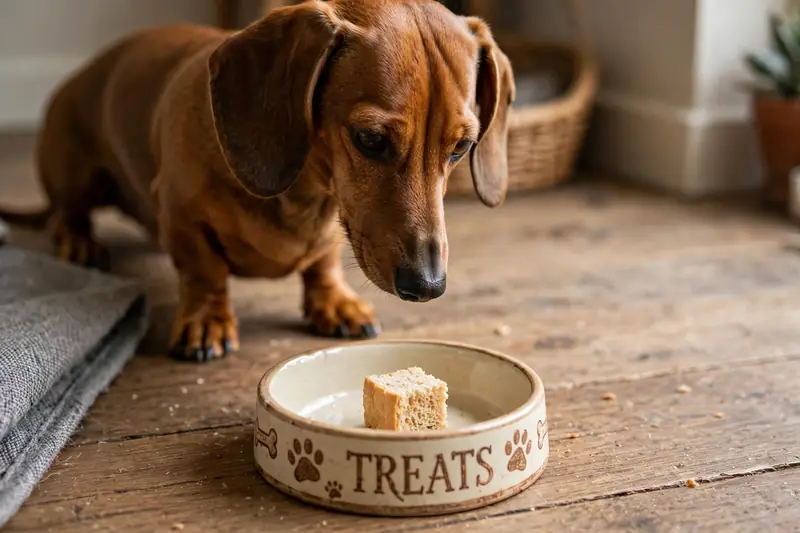
Bread counts as a treat, never as food. The treat rule governs every serving: treats stay under 10 percent of daily calories, which keeps bread portions small by design. For most dogs, that means one or two bite-sized pieces of sourdough, a few times a week at most.
Tiny. Infrequent.
The calorie math explains the caution. Bread is dense energy with little a dog actually needs. A complete dog food already supplies every nutrient, so bread adds calories without adding nutrition.
Dogs that get bread regularly tend to gain weight quietly, and owners rarely connect the daily crust with the creeping waistline. The VCA feeding guidelines keep treats in the extras column for exactly this reason.
Serve the bread plain and cooled. No butter, no jam, no olive oil drizzle, no sandwich fillings. Toppings add fat, sugar, or salt that the dog does not need, and some, like xylitol-sweetened spreads, are toxic.
Tear the bread into small pieces for gulpers and small breeds. The crust is fine, but very hard crusts can be tough for dogs with dental problems.
Harmful add-ins: garlic, onion, raisins, xylitol
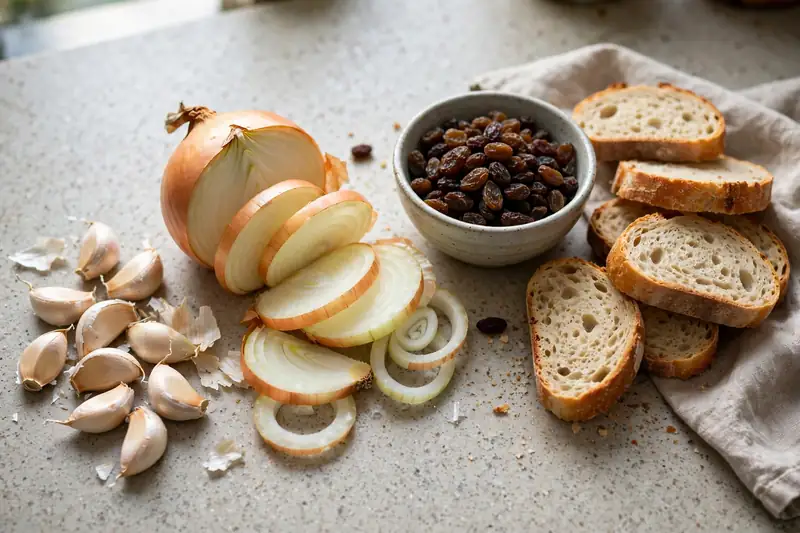
Plain sourdough is safe, but sourdough with extras often is not, and bakery loaves hide more extras than homemade ones. Garlic and onion damage red blood cells in dogs, and the effect is cumulative. The garlic guide explains the dose risk, which builds silently over repeated small exposures.
Garlic bread, onion-topped loaves, and everything-seasoning blends all fail the safety test. A dog that steals a corner of garlic bread every week can end up anemic without any single dramatic incident to blame.
Raisins and grapes are toxic to dogs, and raisin-studded sourdough or fruit loaves are an emergency if eaten. The toxic dose varies by dog, and no safe threshold is established, so any raisin ingestion means a vet call. Cinnamon-raisin sourdough from the bakery aisle is the usual suspect.
Xylitol hides in sugar-free spreads, some peanut butters, and sugar-free baked goods. It triggers a rapid insulin release in dogs that can cause liver failure. Check labels on anything you spread on the bread before sharing a bite.
Chocolate chips and macadamia nuts, plus heavy salt toppings, complete the bakery danger list. When in doubt, the ingredient list decides, not the smell.
Sourdough starter: keep it away from dogs
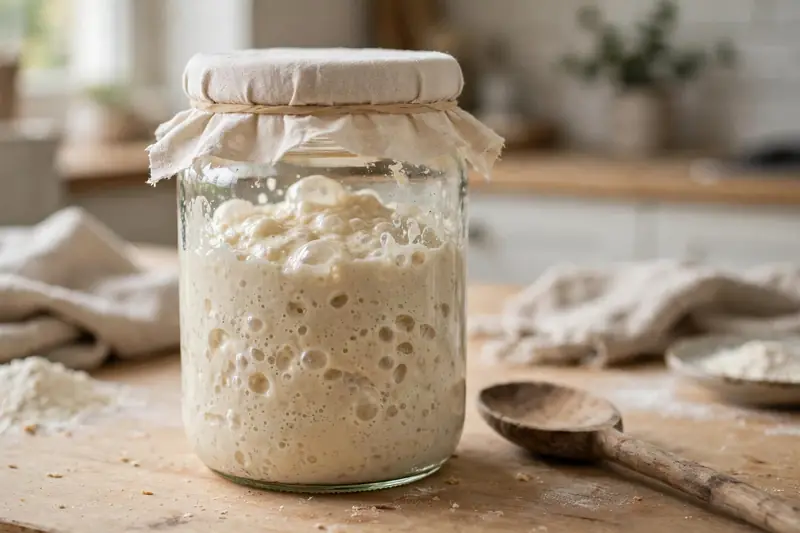
The starter jar on the counter deserves the same caution as raw dough. Active starter is a concentrated culture of wild yeast and bacteria, always ready to ferment. A dog that laps up spilled starter gets a dose of live, hungry yeast straight into a warm stomach.
Starter is arguably riskier per spoonful than raw dough, because it contains no flour bulk to slow things down. The yeast goes to work immediately on whatever the stomach holds.
Store the starter jar sealed and out of reach, the same way you would store any hazard. Counter-height means nothing to a determined large dog, so a closed pantry or the fridge is better. A large dog’s nose reaches further than most owners estimate when something on the counter smells like food.
Discard from starter feedings goes in a sealed bin, not an open trash can. Dogs raid trash with professional skill, and a pile of discarded starter smells like food to a nose that can detect a crumb through a closed bin. Wipe up spills promptly. The feeding routine that keeps your starter alive is the same routine that keeps it away from your dog.
Signs of trouble after eating dough
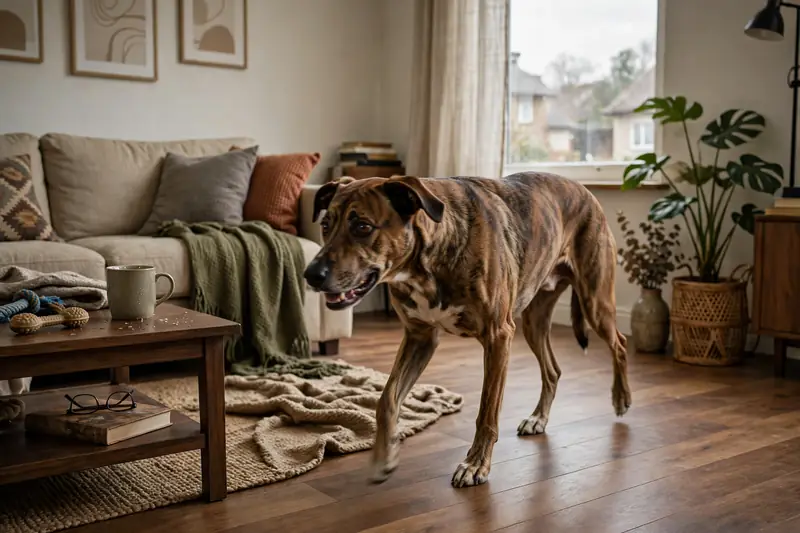
Speed matters with raw dough, so knowing the warning signs ahead of time is the whole game. Bloat signs come first: a swollen or tight belly, drooling, pacing, and retching without bringing anything up. These signs mean the stomach is distending, and distension can cut off blood flow fast.
Ethanol poisoning signs follow a different pattern. Stumbling and disorientation come first, then vomiting and excessive drooling; severe cases bring depression, slowed breathing, or collapse. The dog looks drunk because, biochemically, it is. Small dogs show these signs sooner and harder, which is why a puppy that steals dough needs help even faster than an adult.
Mild stomach upset from too much baked bread looks different and less urgent. Soft stool, gas, or a skipped meal after a bread binge usually resolves on its own. The gastroenteritis guide covers when gut upset needs a vet.
But any dough ingestion, any raisin ingestion, or any bloat sign skips the home-observation step entirely. When the signs point to dough, the phone call comes before the internet search, because bloat and alcohol poisoning both reward speed and punish hesitation. Call first, decide later.
Puppies and senior dogs

Puppies can have tiny pieces of baked sourdough once they eat solid food well, but the portion stays minimal. Their stomachs are small and their calorie needs are precisely balanced for growth. Keep pieces pea-sized and infrequent. Raw dough is an extreme emergency for puppies.
Senior dogs follow the same baked-bread rules with extra attention to weight and digestion. Older dogs gain weight more easily and digest rich foods less forgivingly. A senior with kidney disease, diabetes, or chronic digestive trouble should skip bread unless the vet approves it. Soft bread is easier on old teeth than hard crusts, so tear off the soft interior for dogs with dental problems.
For both ends of life, the vet’s word settles edge cases. For puppies under eight weeks, nursing dogs, or any dog with a diagnosed condition, new foods wait for professional approval before entering the bowl. There is no developmental window that requires bread, so there is no reason to rush the introduction.
Sourdough vs regular bread for dogs
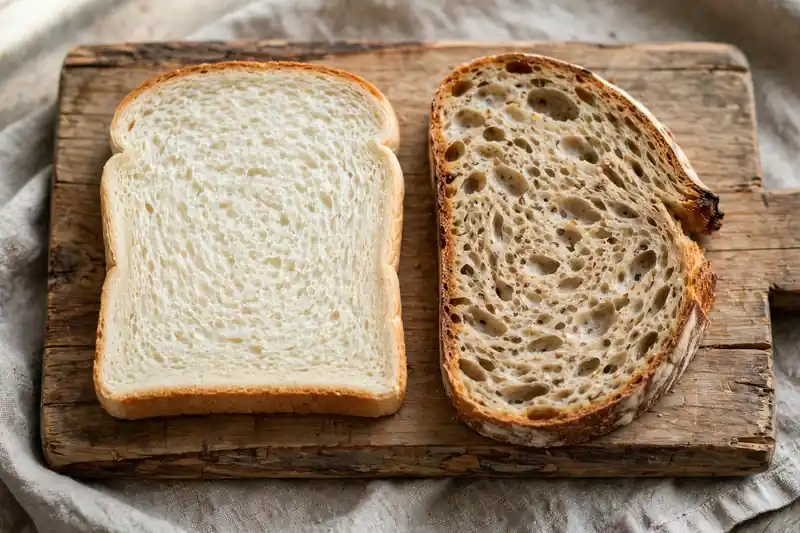
Owners often ask whether sourdough is healthier for dogs than white bread, and the plain fact is that the difference is small. Sourdough’s fermentation breaks down some sugars and may lower the glycemic impact slightly, but baked bread is baked bread in a dog’s diet. Neither is nutritious enough to matter, and neither is dangerous when plain and fully baked.
Whole wheat sourdough adds a little fiber, which some owners like, but the fiber difference is trivial at treat-sized portions. White sourdough, whole wheat sourdough, and plain white bread all sit in the same category: safe extras with no nutritional job to do. Pick whichever you have; the safety rules do not change.
Forget the sourdough-versus-white-bread debate. Baked versus raw is the comparison that matters.
A fully baked white dinner roll is safer than an underbaked artisan sourdough boule with a gummy center. Bake completion beats flour type every time. Check the crumb, not the label, because the inside of the loaf tells the truth about bake completion that the crust only hints at.
Frequently asked questions about dogs and sourdough bread

Can dogs eat sourdough toast?
Yes, if the toast is plain and fully baked. Toasting does not add risk; it only crisps the bread. Serve it without butter, jam, or spreads, and keep portions to treat size. Burnt toast is fine in small amounts but offers nothing, so light toast is the better choice.
Is sourdough crust safe for dogs?
The crust is safe when the loaf is fully baked through. Hard, thick crusts can be difficult for small dogs and dogs with dental problems, so break them into small pieces or offer the soft interior instead. Discard any crust from underbaked loaves along with the rest.
What should I do if my dog ate raw sourdough dough?
Call your vet or the ASPCA Animal Poison Control Center immediately. Do not wait for symptoms to appear. Note how much dough the dog ate and when, and keep the dog calm and still while you get advice. Vets may induce vomiting or monitor for bloat and alcohol poisoning.
Can dogs eat sourdough with seeds on top?
It depends on the seeds. Plain sunflower or pumpkin seeds in small amounts are generally fine, but many seeded loaves also contain onion flakes or heavy salt. Check the ingredient list first. When the topping mix is unclear, tear off a plain piece from the middle of the slice.
Does sourdough bread help a dog’s digestion?
No meaningful evidence supports that claim. The probiotics in raw starter do not survive baking, so the finished loaf offers no live cultures, because the oven heat that makes sourdough safe also destroys every probiotic the starter contained. Plain sourdough is gentle enough for most stomachs in small amounts, and vets sometimes include plain bread in bland diets, but the bread is filler, not medicine.
Can dogs eat frozen sourdough dough?
They should not. Frozen dough thaws into raw dough, and the yeast wakes up as it warms. A dog that steals a frozen dough ball gets the full raw-dough emergency once it thaws in the stomach. Store frozen dough sealed and out of reach, the same as fresh dough.
Baked sourdough earns its place as an occasional treat with a simple rulebook. Small pieces. Plain. Done.
Bake it fully, serve it plain, keep pieces small, and read the ingredient list on bakery loaves. Dough and starter stay behind a hard line: none for dogs, ever, with emergency care if the line gets crossed.
The human foods guide covers the broader safe list, and the ASPCA’s people-foods list flags what to avoid. Keep the starter jar sealed, the dough out of reach, and the baked slices small.
Disclaimer: This article is general information, not veterinary advice; call your vet if your dog has a health condition or shows symptoms after eating sourdough.