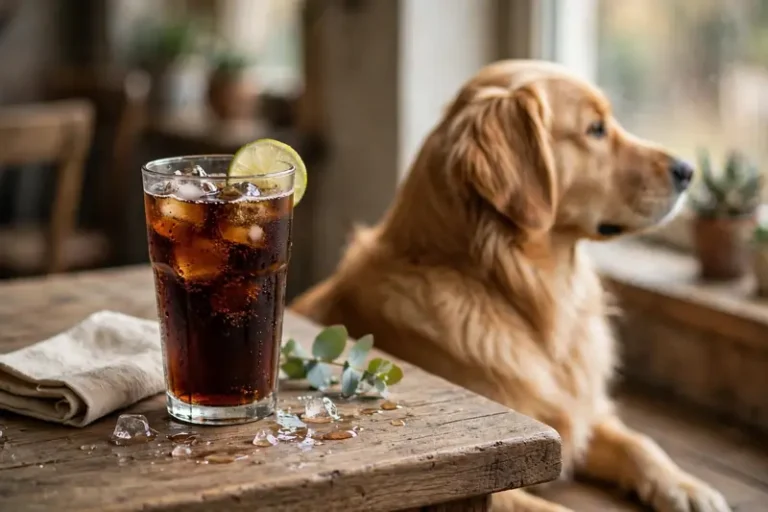
Gravy can run 10 to 20 percent fat by weight, and a single 100 ml serving can carry 400 to 800 mg of sodium, which is a full day’s worth for many dogs or more. Those numbers explain the short answer before any ingredient list does. Most gravy is concentrated drippings, butter, flour, and salt, often with onion or garlic powder mixed in for flavor. None of that belongs in a dog’s bowl, and the rich pour that makes dry kibble exciting is exactly what makes it risky.

Can dogs eat gravy? The direct answer
No, dogs should not eat gravy made for people. Human gravy packs too much fat and salt into every spoonful, and most recipes include onion or garlic powder, which damage a dog’s red blood cells. Gravy should never be poured over a meal. Plain, unsalted meat broth is the safe swap.
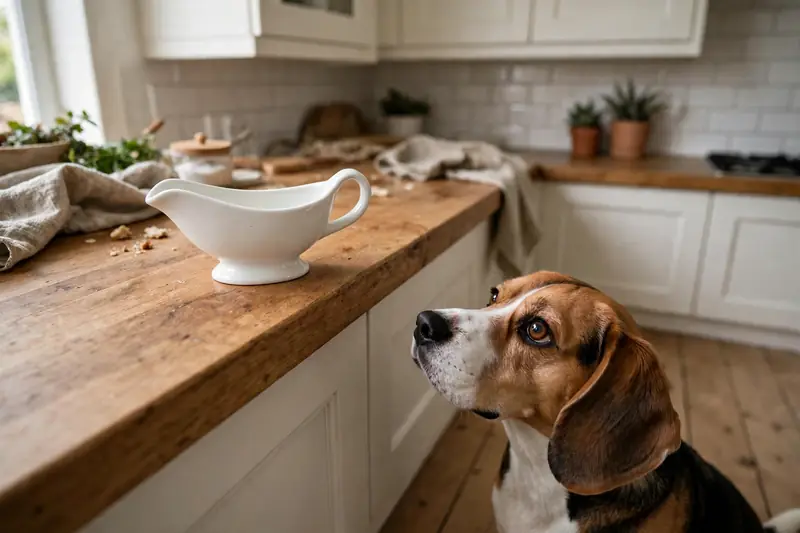
The Farmer’s Dog veterinary team puts gravy on the firm no list for Thanksgiving, noting that it is concentrated fat, salt, and flour, often with garlic and onion powder mixed in. If a dog begs while the gravy boat goes around, offer a bite of plain turkey meat instead, and check the AKC’s advice on feeding turkey for where the safe line sits.
What is actually inside the gravy boat
Traditional gravy starts with pan drippings, the fat and browned juices left after roasting meat. Cooks whisk in flour or cornstarch to thicken, add butter for richness, and season with salt, pepper, and often onion or garlic. Jarred and packet gravies add preservatives and more salt per serving than homemade. Some recipes even include a splash of wine.
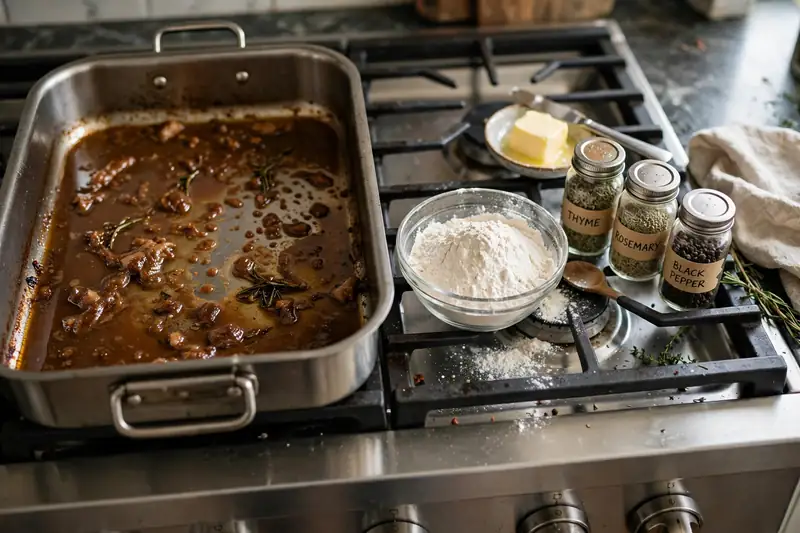
Every one of those building blocks is fine for people and wrong for dogs. The flour adds empty calories. The butter and drippings add saturated fat. The seasoning adds sodium and, too often, alliums. Reading a gravy like a recipe instead of a sauce is the fastest way to see why the answer is no. Nothing in the boat was measured with a dog’s body in mind.
Fat first: the pancreatitis connection
Fat is gravy’s biggest threat. Rich, fatty meals are a well-known trigger for pancreatitis, a painful inflammation of the pancreas that causes vomiting, loss of appetite, belly pain, and dehydration. Thanksgiving and Christmas produce a spike in pancreatitis cases every year, and vets point at the same culprits: turkey skin, drippings, butter-heavy sides, and gravy poured over everything.

Dogs with a history of pancreatitis, and breeds prone to it like Miniature Schnauzers, should never get gravy at all. Even dogs with no history can react to a single rich meal. Pancreatitis ranges from a rough couple of days to a hospital stay, and the bill and the suffering both dwarf the pleasure of a gravy-topped dinner. A dog that vomits repeatedly or hunches with belly pain after a fatty meal needs a vet, not home watching.
Salt: a full day’s sodium in one pour
Gravy is one of the saltiest things on the holiday table. A single serving can hold 400 to 800 mg of sodium, double what many dogs need for the whole day. One generous pour delivers it all at once. The result is extreme thirst, and larger loads can cause vomiting. Dogs with heart or kidney disease handle sodium spikes badly.
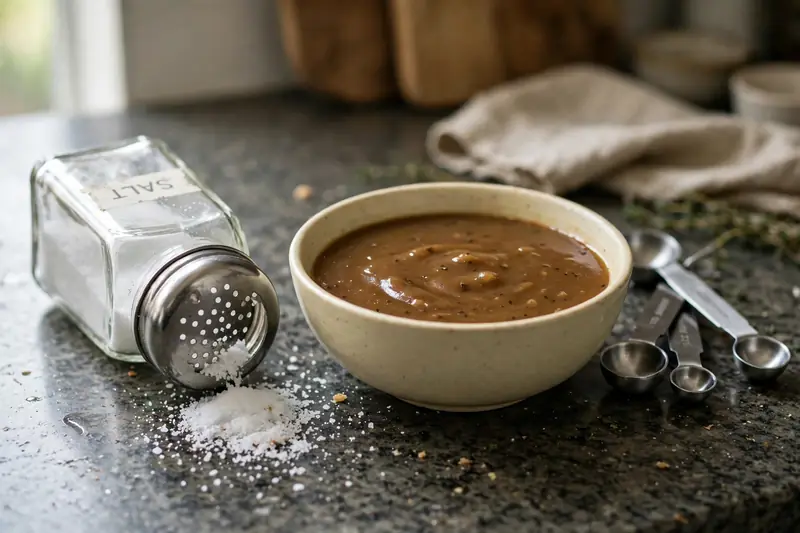
Packet and jar gravies tend to run saltier than homemade, because salt is doing the flavor work that drippings do in a from-scratch recipe. Either way, the sodium math never favors the dog. VCA’s feeding guidelines for dogs keep treats and extras at a small fraction of daily calories, and a salty, fatty sauce blows past that fraction before the spoon is empty.
Dogs cope with a salty meal by drinking extra water, so a dog that got into gravy may empty the water bowl and ask for more. That thirst is the body trying to rebalance. Refill the bowl freely and watch for vomiting, which can follow a heavy salt load. Dogs with heart disease or kidney disease cannot rebalance as easily, and a salty episode can worsen their condition. Those dogs should never get gravy at all, not even the dog-safe broth version in large amounts, without the vet’s say-so.
The onion and garlic hiding in the mix
Many gravy recipes call for onion or garlic outright, and plenty of mixes hide them as powder. Onion powder is toxic to dogs just like fresh onion, and the same goes for garlic in any form. These alliums damage red blood cells and can cause anemia that shows up days after the meal, long after the gravy is forgotten.

The Pet Poison Helpline’s garlic toxicity page is worth a read if your gravy came from a mix, since commercial seasoning blends lean on garlic and onion powder heavily. Powdered forms are concentrated, so a spoonful of mix carries more allium than the same spoonful of fresh-cooked gravy. When the ingredient list is unknown, which is true of most restaurant and jar gravy, assume the alliums are in there.
How much gravy turns a lick into a problem
A dog that licks a dropped spoonful off the floor will most likely be fine, because one lick cannot deliver enough fat, salt, or allium to harm a healthy medium or large dog. The problem starts with deliberate servings: gravy poured over kibble, a bowl licked clean, or a dog that reaches the gravy boat on the counter.

Small dogs cross the line faster because every risk scales with body weight. Dogs with pancreatitis, kidney disease, or heart conditions have no safe serving at all. Frequency matters as much as amount. A spoonful once at Thanksgiving is one thing, but gravy as a regular kibble topper is a habit that quietly loads a dog with fat and sodium meal after meal.
If your dog ate a real portion, watch for vomiting, diarrhea, belly pain, and unusual thirst over the next 24 to 48 hours, and call the vet if any of them show up or repeat. When pancreatitis is suspected, vets typically rest the gut, provide fluids, and manage pain and nausea, hospitalizing severe cases. Home care is not a substitute when a dog keeps vomiting or refuses food. The earlier a dog is seen, the simpler the treatment tends to be.
A dog-safe gravy you can make in ten minutes
Dogs love a warm topper, and you can give them that joy without the gravy boat. Simmer plain, boneless chicken or turkey in water with no salt, no onion, and no garlic, then use the cooled liquid as a pour-over. It smells like a feast to a dog, with a fraction of the fat and none of the seasoning.

For a thicker texture, whisk a teaspoon of plain flour or cornstarch into a cup of the cooled broth and warm it gently until it just thickens. Serve it lukewarm, never hot, and keep the portion small: a tablespoon or two for a small dog, a few tablespoons for a large one. Plain chicken broth from the store works too, as long as the label shows no onion, no garlic, and low sodium. Homemade bone broth made without seasoning is another excellent base, and it keeps in the fridge for three to four days.
Store-bought dog gravy toppers: read before you pour
Pet brands now sell gravy-style toppers made for dogs, and they are a far better choice than human gravy. They are formulated with dog-appropriate sodium and no onion or garlic. Still, read the label. Some toppers are mostly water and flavoring with real nutrition, while others are calorie-dense sauces that can unbalance a diet if poured freely.

Treat any topper, homemade or store-bought, as part of the daily treat allowance, not a free addition. The 10 percent rule for extras still applies. And skip any product with vague “natural flavors” plus onion or garlic anywhere on the panel. A topper should make the ingredient list shorter than human gravy, not just differently worded.
When you compare labels, look for three things. First, a named meat or broth as the first ingredient, not water and flavoring. Second, sodium under 100 mg per serving, since many toppers still run salty. Third, no onion, garlic, or mystery “natural flavors” on the panel. A short, readable ingredient list beats a long one every time. The best topper is the one you could almost make in your own kitchen, because then you know exactly what the dog is getting.
Puppies, seniors, and dogs with health conditions
Puppies should never get human gravy. Their digestion is still maturing, and rich food causes outsized upsets. Senior dogs often carry the exact conditions that gravy punishes: weaker kidneys, heart strain, and touchier pancreases. For both groups, the dog-safe broth version is the only version.
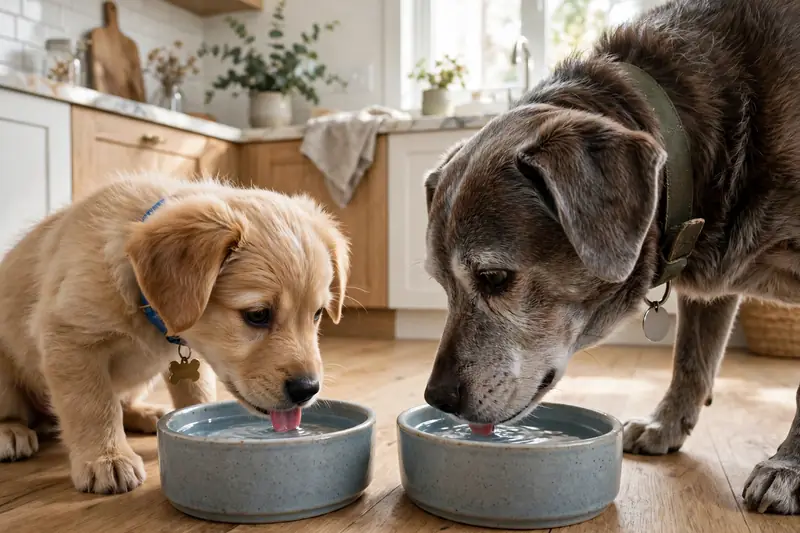
Dogs on low-sodium diets for heart disease, dogs with kidney disease, and any dog with a pancreatitis history need a hard no on all gravy, including the dog-safe kind in large amounts. When in doubt, ask the vet at the next visit what toppers fit the dog’s specific condition. A thirty-second question beats a holiday emergency.
Frequently asked questions about dogs and gravy
Owners ask about specific brands, turkey gravy, fast-food gravy, and what counts as an emergency. The answers below cover the gravy questions that come up most around the holidays, from the Thanksgiving table to the drive-through window, plus the safe homemade alternative.
Can dogs eat turkey gravy?
No. Turkey gravy is still made from fatty drippings with salt and usually onion or garlic. The turkey base does not make it safer than any other human gravy.
Can dogs eat KFC gravy?
No. Fast-food gravy is very salty and calorie-dense, and the seasoning blend is not made with dogs in mind. Keep it far from the dog’s bowl.
What about Bisto or other gravy granules?
No. Gravy granules and mixes are high in salt, and many contain onion. A very diluted spoonful is unlikely to poison a dog, but it is not something to serve on purpose.
Can dogs have brown gravy from a jar?
No. Jarred gravy carries the same fat, salt, and seasoning problems as homemade, often with more sodium per serving. Check the label and you will see why.
My dog licked gravy off the floor. Should I worry?
Probably not. A single lick is a tiny dose. Watch for mild stomach upset over the next day, and call the vet if vomiting repeats or your dog seems uncomfortable.
Can dogs eat gravy made with just meat juices?
Plain, unseasoned meat juices are closer to safe, but drippings are still very fatty. A small spoonful of defatted, unsalted juices is the most you should offer, and the plain broth recipe above is the better choice.
Is gravy a choking or bloat risk?
Gravy itself poses no choking hazard, but rich food eaten fast can contribute to stomach upset. Learn the signs of bloat anyway, since holiday meals bring several risk factors together at once.
Gravy is the holiday table’s most tempting topper and one of its least dog-friendly. Fat, salt, and hidden onion or garlic stack up in every spoonful, and the dogs that suffer most are the small, the young, the old, and the already ill. Pour the gravy for the people, simmer a plain broth for the dog, and check the human foods that are safe for dogs list plus the ASPCA’s list of people foods to avoid before anything else crosses the table. When in doubt, the plain option is the safe option, and a calm plan beats a panicked vet call every time.

A spoonful of warm low-sodium broth poured over kibble gives most dogs the same excitement as gravy, with none of the fat, salt, or hidden onion powder that makes the real thing risky.
Disclaimer: This article is for general information only and is not veterinary advice. If your dog eats a large amount of gravy or shows repeated vomiting, belly pain, or extreme thirst, contact your veterinarian promptly.