
Salmonella can turn up in dog food, and raw diets and raw treats carry the most risk. Some dogs get visibly sick with vomiting, diarrhea, and fever. Others look completely fine while shedding the bacteria in their stool, which puts everyone in the house at risk too. The food in the bowl is only half the story. How you store it, serve it, and wash up matters just as much.

Salmonella in dog food: the short answer
Yes, dog food can carry Salmonella, the bacterium behind a common foodborne illness. Raw meat diets and raw treats carry the highest risk, though kibble and canned food have been recalled too. Many infected dogs never look sick yet still shed the bacteria in their stool, so safe handling protects the whole household.
Salmonella lives in the intestines of many animals and reaches pet food through contaminated ingredients. Pet food recalls for Salmonella happen regularly, and the FDA’s Center for Veterinary Medicine publishes them. Dogs resist Salmonella better than people do, which is what makes the situation tricky. A dog can carry the bacteria for weeks, feel fine, and pass it to a child who pets the dog or an owner who scoops food without washing up afterward.

How salmonella gets into dog food
Contamination usually starts with the ingredients. Raw meat, poultry, and eggs can carry Salmonella before they ever reach a pet food plant, and cross-contamination during manufacturing or at home can spread it further. The cooking step in kibble and canned food kills the bacteria, which is why cooked products are affected far less often than raw ones.
Meat and poultry ingredients can arrive at a plant already carrying bacteria from the slaughterhouse. Dry kibble goes through extrusion, a high-heat cooking process that destroys Salmonella, and canned food is heat-sterilized in the can. Both work well, which is why Salmonella recalls of cooked products are uncommon.
Raw pet food skips that kill step entirely. Freeze-dried and frozen raw diets, raw treats, and raw chews are never heated enough to destroy bacteria. Contamination can also happen after cooking: a safe batch of kibble can pick up bacteria from equipment or from flavor coatings sprayed on after the heat step. That is rare, but it is how cooked products end up recalled.
At home, the transfer points are your kitchen. Salmonella from a raw diet can move from the food to the bowl, the counter, the sponge, and then to your hands. A splash of thaw water on the counter is enough.
Which dog food products carry the highest risk
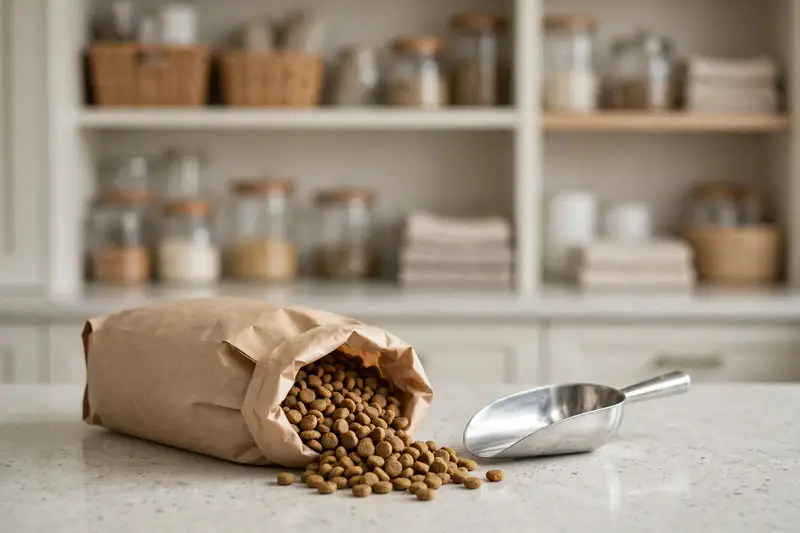
Raw frozen and freeze-dried diets sit at the top of the risk list, followed by raw treats and chews. Freeze-drying does not kill Salmonella, despite what some marketing suggests. Kibble, canned food, and baked treats sit much lower on the list because heat processing destroys the bacteria.
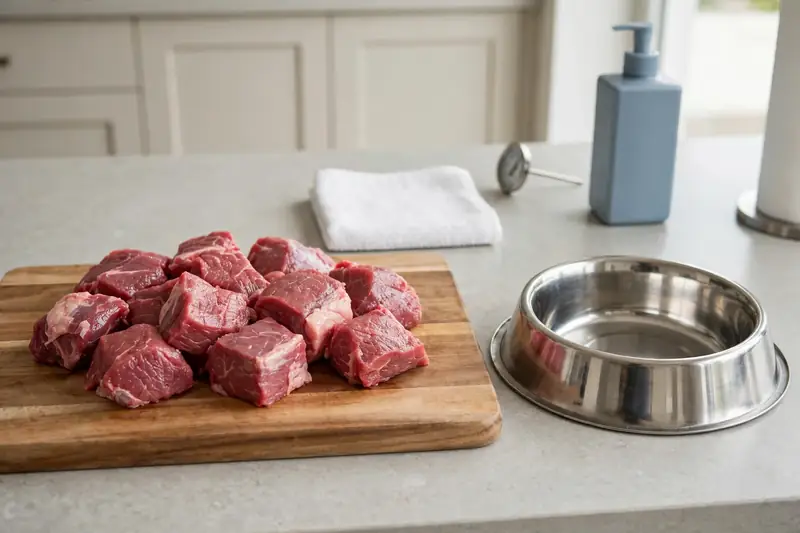
Raw meat diets, commercial or homemade, carry the most consistent risk. Testing has repeatedly found Salmonella in raw pet food at far higher rates than in cooked products. Home kitchens add a second problem: grinding or portioning raw meat spreads contamination across cutting boards, knives, and fridge shelves.
Raw treats deserve their own warning. Pig ears, raw bones, dried tendons, and bully sticks have triggered some of the largest pet food recalls on record. Dogs chew these slowly, then drop the half-chewed treat on the rug or the couch. The bacteria travel with it. In a house with small children, elderly people, or anyone with a weakened immune system, raw chews are a poor trade.
Freeze-drying removes water, which slows bacteria down, but it does not kill them. Rehydrate a contaminated freeze-dried product and the Salmonella wakes right back up. “Raw” on the label means what it says, whatever the texture.
Recalled kibble still makes the news because it is unusual. When you read about one, check the lot numbers and act on it, but do not treat every bag of kibble as suspect. Owners weighing raw feeding can read more about the practice itself in our guide to raw meat for dogs.
Symptoms of salmonella in dogs
Infected dogs may show vomiting, diarrhea that sometimes contains blood or mucus, fever, loss of appetite, and lethargy. But a large share of infected dogs show no signs at all and still shed the bacteria in their stool for weeks. Puppies, senior dogs, and dogs with weakened immune systems are the most likely to become visibly ill.
A dog that was fine at breakfast starts vomiting, develops watery or bloody diarrhea, refuses food, and feels warm. Some dogs cramp and strain when they try to go. This looks like many other gut problems, which is why owners often assume it is a passing stomach bug. The Merck Veterinary Manual’s food hazards section describes the range of signs vets look for.
The silent carriers are the part owners miss. Healthy adult dogs can pick up Salmonella from food, show nothing, and excrete the bacteria in their feces for weeks afterward. The dog seems fine. The yard, the paws, the bedding, and the owner’s hands carry the story instead. This is the main reason safe handling rules apply even when the dog looks perfectly healthy.
When diarrhea turns bloody, our article on bloody diarrhea in dogs walks through the possible causes and when the symptom alone warrants an urgent vet visit. For the broader picture of gut inflammation, gastroenteritis in dogs covers how vets work up these cases.

When salmonella becomes an emergency
Call your vet promptly if your dog has bloody diarrhea, keeps vomiting and cannot hold water down, refuses to drink, shows signs of dehydration, runs a high fever, or belongs to a high-risk group. Sepsis, where the bacteria enter the bloodstream, is uncommon but serious, and severe dehydration can develop fast in small dogs and puppies.
Dehydration is the danger that sneaks up first. A dog with ongoing vomiting and diarrhea loses fluid fast. Dry gums, sunken eyes, skin that stays tented when pinched, and unusual sleepiness all point to fluid loss that needs professional treatment, usually intravenous fluids.
Blood in the stool changes the calculus. A streak of blood in otherwise formed stool can often wait for a regular appointment. Repeated bloody, watery diarrhea with vomiting or lethargy should not wait. Puppies and small breeds dehydrate quickly, and a moderate illness in the morning can be an emergency by evening.
A dog’s normal temperature runs roughly 101 to 102.5 degrees Fahrenheit. Panting, warm ears, and lethargy hint at fever but do not prove it. If you suspect fever along with gut signs, one vet visit answers both questions.
The high-risk groups need a lower threshold for calling. A puppy under six months, a senior dog, a dog on steroids or chemotherapy, or a dog with an immune disorder should be seen early rather than watched at home. When in doubt, call the clinic and describe the symptoms. It takes two minutes.

What to do if your dog ate contaminated food
Stop feeding the product, save the packaging with the lot number, and call your vet. Do not try to make your dog vomit. Watch for vomiting, diarrhea, fever, and appetite loss over the next few days, and clean the bowls, scoop, and feeding area with hot soapy water.
Recalls identify products by brand, product name, size, and lot number. Without the lot number you cannot tell whether your bag matches. Photograph the lot code and best-by date, then seal the food in its bag and set it aside. Do not toss it in the kitchen trash where the dog might fish it out.
Calling the vet is the right move even if the dog looks fine. The vet may want a stool sample to test and will tell you whether the dog needs to come in. Do not try to make your dog vomit. Vomiting does not clear bacteria from the gut, and it adds aspiration risk on top of the infection.
While you wait, feed normally if the dog is eating and the vet has not said otherwise. If mild stomach upset appears, many vets recommend a short course of plain, easy food. Our bland diet for dogs guide covers the standard approach, usually plain boiled chicken and rice; our article on chicken for dogs covers safe preparation. Skip the next raw meal, wash everything the food touched, and wash your hands after handling the dog’s stool until the all-clear.
Safe handling rules for dog food and bowls
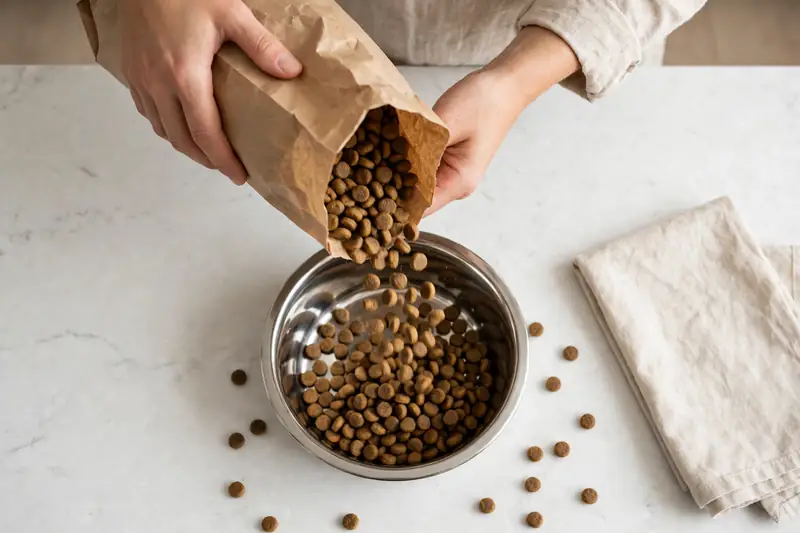
Wash your hands before and after handling dog food. Wash bowls, scoops, and feeding surfaces with hot soapy water. Store food sealed, cool, and dry. Keep pet food and pet feeding gear away from human food and food prep areas. Thaw raw food in the refrigerator, never on the counter.
Start with hands. Wash before you scoop and after, with soap, for a full twenty seconds. It sounds basic because it is, and it is the step people skip most.
Wash bowls daily, not weekly. Old food film grows bacteria between meals. Stainless steel sanitizes more easily than plastic, which develops scratches where bacteria hide. Give scoops, storage bins, and the feeding area the same treatment with hot water and dish soap.
Keep dry food in its original bag, sealed, inside a clean container in a cool dry place. Do not dump kibble into a bin and toss the bag, because the bag carries the lot number you need if a recall ever hits. Wash the container between bags.
Raw food adds strict rules. Thaw it in the refrigerator on a tray that catches drips, never on the counter. Use separate utensils or wash everything immediately after. Keep children, elderly family members, and anyone with a weakened immune system away from raw pet food. The VCA pet care library has practical feeding-hygiene guides that echo these points.

How dog food recalls work and where to check them
When contamination is found, the manufacturer or the FDA announces a recall identifying the exact products and lot numbers. The FDA’s Center for Veterinary Medicine lists pet food recalls and withdrawals on its website. Check your product’s lot number against any notice, and follow the instructions in the notice exactly.
Recalls start when a company’s own testing finds contamination, when a state lab pulls a product from a store shelf and tests it, or when vets and owners report illnesses that point to a common food. The FDA investigates, and the company recalls the product, sometimes voluntarily and sometimes at the agency’s urging.
A recall notice is specific. It names the brand, the product, the package sizes, the lot numbers or date codes, and the reason. It tells you what to do: stop feeding it, return it or throw it out safely, and watch your pet. Read the notice itself rather than a social media summary, which sometimes gets the lot numbers wrong.
The place to check is the FDA Center for Veterinary Medicine recalls and withdrawals page, which lists current pet food recalls. You can also sign up for FDA recall alerts by email, so the news reaches you without hunting for it. Keep the bag or photograph the lot number until the bag is finished. That thirty-second habit is what makes a recall notice useful instead of just alarming.

Raw diets and the dogs at highest risk
Puppies, senior dogs, and dogs with weakened immune systems face the worst outcomes from Salmonella. Healthy adult dogs often carry the bacteria without any symptoms. If your household includes anyone vulnerable, or your dog is in a high-risk group, a cooked diet is the safer choice, and your vet can help you decide.
A young puppy’s immune system is still developing, a senior dog’s defenses are declining, and dogs on steroids, chemotherapy, or immune-suppressing drugs handle bacterial infections poorly. In these dogs, Salmonella can move beyond the gut into the bloodstream, turning a stomach illness into a life-threatening one.
Even if your dog is a healthy adult that would shrug off the bacteria, the people around the dog may not. Toddlers who crawl on the floor, elderly relatives, pregnant women, and anyone going through chemotherapy share the kitchen and the living room with the dog. Feeding raw in that house raises everyone’s exposure.
A cooked diet from a reputable manufacturer, stored and handled properly, feeds the dog well with a fraction of the pathogen risk. If you are choosing food for a small breed, our guide to the best dog food for small dogs can help you compare options. If you are set on raw feeding, talk to your vet first, follow every handling rule in this article, and never feed raw to a puppy, a senior, or an immunocompromised dog on your own judgment. The FDA’s egg safety guidance covers balanced-diet principles for any feeding style.
Frequently asked questions about salmonella in dog food
The answers below cover the questions owners ask most often. Your vet’s guidance beats any general article for your specific dog.
Can dogs get salmonella from kibble?
Yes, but it is uncommon. The extrusion cooking process kills Salmonella, so contamination usually happens after cooking, through equipment or post-cook coatings. Most Salmonella recalls involve raw products. Still, kibble recalls do happen, which is why keeping the lot number until the bag is finished matters.
Can my dog give me salmonella?
Yes. An infected dog sheds the bacteria in its stool and can carry it on fur, paws, and mouth. People get exposed handling contaminated food, touching the dog, or cleaning up stool without washing up. Children under five, elderly people, and anyone with a weakened immune system face the highest risk. Handwashing after contact with the dog’s food, bowls, and stool is the main defense.
How do vets diagnose salmonella in dogs?
The vet examines the dog and usually tests a stool sample with a bacterial culture or PCR test. Blood work may show dehydration or inflammation. Because the signs overlap with many other gut problems, testing is what confirms it. Cultures can take a few days, so treatment for the symptoms often starts first.
How long does salmonella last in dogs?
Visible illness usually passes in several days to a couple of weeks with supportive care. Shedding lasts longer: dogs can excrete Salmonella in stool for weeks after recovery, sometimes six weeks or more. Keep up the hygiene routine until your vet says the dog has cleared it.
Does cooking make contaminated raw dog food safe?
Thorough cooking kills Salmonella, but cooking a recalled raw product is not a reliable fix. You cannot verify every part reached a safe temperature, and the product has already contaminated your kitchen and tools during handling. Follow the recall notice, which usually says to stop feeding it and dispose of it safely.
Should I switch my dog off raw food after a recall?
A recall is a good moment to reconsider. If your dog is a puppy, a senior, or immunocompromised, or if vulnerable people live in your home, switching to a cooked diet is the safer move. Talk to your vet about the change rather than switching abruptly, since sudden diet changes upset digestion. Keep the recalled product’s packaging until the situation is resolved.
Salmonella in dog food is a manageable risk once you know where it hides. Raw diets and raw treats carry the most danger, silent carriers make hygiene non-negotiable, and the recall system works only if you keep your lot numbers. Feed carefully, wash up every time, and check the recall list before you stock the pantry.


1 thought on “Salmonella in Dog Food: Symptoms, Risks, and What to Do”