

FortiFlora for dogs is the probiotic supplement veterinarians hand out more than any other. Made by Purina Pro Plan Veterinary Supplements, it contains a single well-studied bacterial strain, Enterococcus faecium SF68, and it is designed for one job: settling digestive upset and diarrhea. One packet a day, sprinkled on food, is the whole routine. This guide explains how it works, when it helps, how fast to expect results, and the situations where diarrhea needs a vet instead of a powder.
What is FortiFlora for dogs?
FortiFlora is a canine probiotic nutritional supplement from Purina Pro Plan Veterinary Supplements, built around a single bacterial strain, Enterococcus faecium SF68. It comes in single-serve packets of powder, is labeled for both puppies and adult dogs, and is one of the most widely recommended digestive supplements in veterinary practice.

If your dog has ever had diarrhea and your vet sent you home with a small box of packets, this is almost certainly what was in it. FortiFlora has been around for years and earned its place through consistency: a defined strain, a guaranteed level of live microorganisms per packet, and manufacturing from one of the largest pet nutrition companies in the world. The product is a supplement, not a drug, so it does not cure disease. What it does is help restore balance in the gut during the episodes that throw it off: a sudden diet change, the stress of boarding, a course of antibiotics, or a bout of dietary indiscretion, which is the polite veterinary term for eating garbage. PetMD notes that this particular strain is commonly used to support stool quality and short-term digestive balance during bouts of diarrhea. It is the plain, single-strain workhorse of the probiotic world, and that simplicity is its strength.
How does FortiFlora work?
FortiFlora delivers live beneficial bacteria that help rebalance the gut microbiome, crowding out harmful organisms and supporting normal intestinal function. A healthy gut lining absorbs nutrients properly and produces firmer stools, so when stress, illness, or antibiotics disrupt the bacterial balance, replenishing the good strains helps the system settle back down.
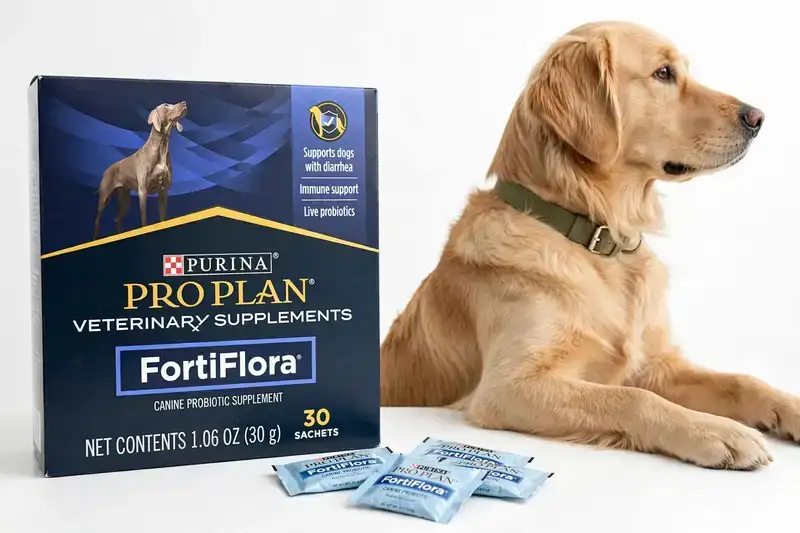
Your dog’s intestines host billions of bacteria, and most of them are supposed to be there. This community helps digest food, produces compounds that nourish the gut lining, and keeps potentially harmful microbes in check. Anything that disturbs the neighborhood, antibiotics, stress hormones from boarding or travel, a sudden food switch, can let the wrong bacteria gain ground, and the visible result is loose stool or diarrhea. FortiFlora’s Enterococcus faecium is one of the “good neighbor” strains: it is a normal inhabitant of the canine gut, it survives the trip through stomach acid in sufficient numbers, and it helps re-establish the balance while producing short-chain fatty acids that feed the intestinal cells. It does not work like an anti-diarrhea drug that slows the gut down. It works by helping the gut fix itself, which is slower but addresses the actual problem. That is also why vets pair it with bland food and patience rather than expecting overnight miracles.
When do vets recommend FortiFlora?
Vets reach for FortiFlora for acute diarrhea, digestive upset from diet changes, stress-related loose stool from boarding or travel, weaning puppies with unsettled digestion, and gut disruption during or after antibiotics. It is a supportive measure for mild to moderate episodes, not a treatment for serious or bloody diarrhea on its own.

The pattern is familiar to anyone who has boarded a dog. You pick up a happy dog with terrible stool, and the vet explains that stress hormones and a new environment scrambled the gut. That is textbook FortiFlora territory. The same goes for the puppy that just came home and is adjusting to new food, the dog finishing antibiotics for an ear infection, or the garbage-raider who is otherwise acting fine. In each case the gut balance is temporarily off and the dog is otherwise stable. What FortiFlora is not for is the dog with bloody diarrhea, repeated vomiting, lethargy, or a painful belly. Those signs point to something the powder cannot fix: infections, blockages, pancreatitis, or worse. A good rule of thumb is that FortiFlora supports the recovery; it does not replace the diagnosis. If the episode is more than mild, or if you are unsure, the vet visit comes first and the packets come with it.
FortiFlora dosage: how much and how often
The label directions are simple: one packet daily for dogs of all sizes, including puppies. There is no weight-based chart to calculate and no loading phase. Give it once a day, every day, for as long as your vet recommends for the episode, which is often one to two weeks for a bout of diarrhea.
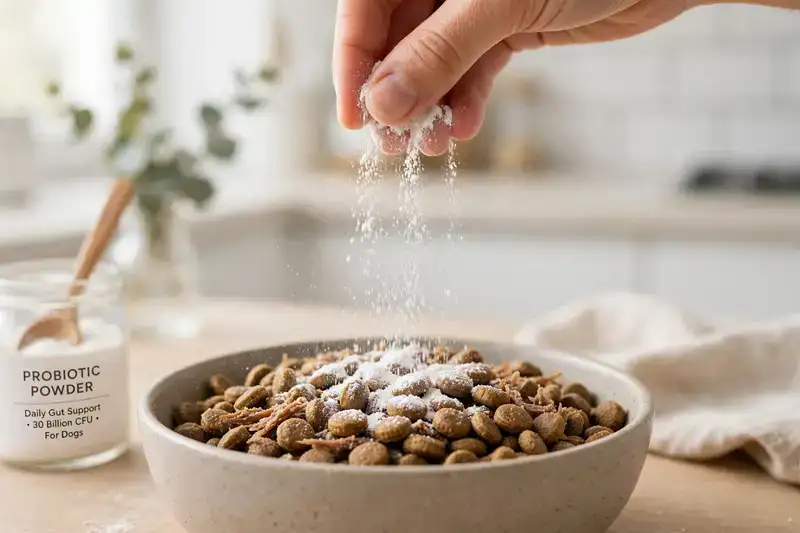
The simplicity of the dosing is one reason vets like it. One packet, once a day, regardless of whether the patient is a Chihuahua or a Great Dane. The guaranteed level of live bacteria per packet is set to be effective across sizes, so there is nothing to measure and nothing to get wrong. Duration depends on the situation. For a simple stress-related episode, many vets suggest continuing for a week or two, a few days past the point where the stool looks normal, to let the gut fully stabilize. For dogs on long antibiotic courses, the vet may run it alongside the medication and briefly after. Do not just keep buying boxes indefinitely without a reason. If the diarrhea keeps returning the moment you stop, that is information, not a cue to restock. Recurring episodes mean the underlying cause has not been found, and the next step is diagnostics, not more packets.
How to give FortiFlora to your dog
Tear open one packet and sprinkle the powder over your dog’s regular food once daily. The powder has a meaty flavor most dogs accept readily. If your dog eats around it, mix it into a spoonful of wet food, plain yogurt, or pumpkin puree first, then add the meal on top.

Administration could hardly be easier, which matters when you are already dealing with a dog with digestive trouble. The powder is palatable by design, and the great majority of dogs eat it without noticing. A few practical tips make it foolproof. Sprinkle it on just before serving, not hours ahead, since the live bacteria do best fresh. If your dog is on a bland diet of chicken and rice for the episode, that works fine as the vehicle. For the rare dog that sniffs and walks away, the wet-food trick almost always works: a tablespoon of canned food or plain pumpkin as the “sauce” hides the powder completely. Do not mix it into very hot food, since heat can harm live cultures. And if your vet prescribed it alongside antibiotics, ask about timing. Some vets prefer the probiotic given a few hours apart from the antibiotic dose so the drug does not immediately wipe out the bacteria you just added.
How fast does FortiFlora work?
For mild digestive upset, many owners notice firmer stools within 2 to 5 days of daily use. More significant episodes can take a full week or two. It works gradually by rebalancing gut bacteria, so steady daily dosing matters more than any single packet. If there is no improvement after several days, call your vet.

Set your expectations by the mechanism. Because FortiFlora rebuilds the gut community rather than drugging the symptom, the timeline is days, not hours. A dog with mild stress-related loose stool often turns the corner within a few days, and that is the scenario where owners become lifelong fans. A dog recovering from antibiotics or a real dietary disaster may need the full two weeks. Track what matters: stool consistency, frequency, appetite, and energy. If the stool is improving, even slowly, the plan is working. If nothing has changed after four or five days, or if things are getting worse at any point, stop waiting and call the vet. The powder is not failing; the diagnosis may be incomplete. And remember the bland diet connection: FortiFlora plus a gentle diet outperforms either one alone, because you are simultaneously calming the gut and restocking it.
Side effects and safety
FortiFlora is considered very safe, and side effects are uncommon. Some dogs get mild gas or slightly softer stool for a day or two when starting, which usually resolves on its own. It is labeled for puppies and adult dogs. As with any supplement, stop and consult your vet if digestive signs worsen instead of improving.

The safety profile is one of the product’s selling points. Enterococcus faecium is a normal resident of the canine gut, so you are supplementing with something the body already knows, not introducing an exotic organism. That is why vets are comfortable recommending it even for young puppies with weaning-related upset. The brief adjustment period some dogs show, a little extra gas or a day of softer stool, is the gut community reorganizing and typically passes quickly. Genuine adverse reactions are rare. The cautions are about context, not the product itself. Severely immunocompromised dogs should only use probiotics under direct veterinary supervision, since any live bacteria deserve caution in those patients. And the standard supplement rules apply: buy from reputable sources, check expiration dates, because live cultures lose potency over time, and store the box correctly.
FortiFlora vs FortiFlora SA vs Calming Care
The original FortiFlora is the single-strain probiotic for digestive upset. FortiFlora SA adds prebiotics for synbiotic action, aimed at dogs needing stronger microbiome support. Purina Pro Plan Calming Care is a different product entirely, a probiotic strain studied for anxiety-related behaviors, not a diarrhea remedy. Match the product to the problem.

Purina’s naming causes genuine confusion, so here is the map. Classic FortiFlora in the brown box: Enterococcus faecium, for diarrhea and digestive balance. FortiFlora SA, the synbiotic version: adds prebiotic fiber to feed beneficial bacteria alongside the probiotic strain, intended for dogs that need more robust gut support. Calming Care: a completely different strain, Bifidobacterium longum, studied for reducing anxious behaviors like excessive vocalization and spinning. It is not a digestive product and will not firm up stool. Buying Calming Care for diarrhea, or classic FortiFlora for anxiety, is a common and completely understandable mix-up that wastes time and money. Read the box, match it to the symptom, and when in doubt ask your vet which one they meant. They have a specific product in mind when they say “probiotic,” and it is worth confirming.
Dogs who should skip it
Healthy dogs with consistently normal digestion do not need a daily probiotic. Severely immunocompromised dogs should only use live bacterial products under direct veterinary supervision. And if your dog’s digestive issues keep recurring, the answer is a diagnosis, not a permanent subscription to packets.

Probiotics have a health halo now, and some owners keep their dog on them forever “for gut health.” For a healthy dog eating a complete diet with perfect stools, there is no evidence of benefit and no reason for the expense. Save the packets for the episodes they were designed for. The immunocompromised caution is the serious one: dogs on strong immunosuppressive therapy or with severe immune deficiencies should not get live bacterial supplements without the specialist’s explicit approval. Finally, the recurring-diarrhea trap deserves emphasis. If every month brings another bout that resolves with FortiFlora and returns without it, the powder is masking a pattern. Food sensitivities, chronic intestinal disease, parasites, or pancreatic issues could be behind it, and each needs its own diagnosis and treatment. A supplement that works every time can paradoxically delay the real answer by making the symptom manageable.
When diarrhea needs the vet instead
Call the vet promptly for bloody or black stool, repeated vomiting, lethargy, refusal to drink, abdominal pain or bloating, diarrhea lasting more than 48 hours, or any digestive upset in a very young puppy or a senior dog. Dehydration can develop fast in small dogs. FortiFlora supports recovery; it does not treat emergencies.

Knowing the line between “manage at home” and “call now” is the most valuable part of this guide. Mild, short-lived loose stool in an otherwise bright, hungry, hydrated adult dog is home-management territory: bland food, FortiFlora, watch and wait. Everything else escalates. Blood in the stool, whether red streaks or dark tarry color, always warrants a call. Vomiting plus diarrhea together dehydrates fast, especially in small dogs and puppies. A painful, swollen, or hard belly can signal blockage or bloat, both emergencies. Lethargy, meaning the dog will not get up or play, is never “just an upset stomach.” And duration matters: anything persisting beyond two days without improvement needs professional eyes. Puppies under a few months old and frail seniors get a shorter leash on all of this, because they have less reserve. When you call, report the stool appearance, frequency, and the dog’s energy and appetite. That information gets you better guidance than any description of the powder.
FortiFlora earns its place in the medicine cabinet: simple dosing, a studied strain, and a safety record that lets vets recommend it with confidence. For related digestive support, plain pumpkin is the classic fiber helper for mild upset, our electrolytes guide covers keeping a dog hydrated through digestive episodes, and yogurt explains probiotic foods and their limits.
Frequently Asked Questions
How long should my dog stay on FortiFlora?
For a typical bout of diarrhea, one to two weeks, continuing a few days past normal stool. For longer situations like antibiotic courses, follow your vet’s timeline. Recurring issues need a diagnosis, not indefinite packets.
Can puppies have FortiFlora?
Yes. FortiFlora is labeled for puppies as well as adult dogs, and vets commonly use it for weaning-related digestive upset. Use the same one-packet daily dose unless your vet says otherwise.
Does FortiFlora need to be refrigerated?
No. Store the packets in a cool, dry place at room temperature. Avoid heat and moisture, check the expiration date, and do not use packets from a box that has been open for many months past its prime.
Can I give FortiFlora with antibiotics?
Yes, vets often prescribe them together. Ask your vet about timing, since some prefer the probiotic given a few hours apart from the antibiotic dose so the medication does not immediately reduce the live bacteria.
What is the difference between FortiFlora and Calming Care?
FortiFlora is a digestive probiotic for diarrhea and gut balance. Calming Care uses a different bacterial strain studied for anxiety-related behaviors. They are not interchangeable, so match the product to the problem.
My dog’s diarrhea came back after stopping FortiFlora. What now?
That pattern suggests an underlying cause that needs diagnosing, such as food sensitivity, parasites, or chronic intestinal disease. Call your vet rather than restarting the packets on your own.
Are there side effects of FortiFlora in dogs?
Side effects are uncommon. Some dogs have mild gas or slightly softer stool for a day or two when starting. If digestive signs worsen instead of improving, stop and consult your vet.
This article is general information only and is not a substitute for veterinary advice. If your dog has a health condition, is on medication, or you are unsure about any supplement, check with your veterinarian first.



1 thought on “FortiFlora for Dogs: The Probiotic Vets Reach For”