

Can dogs eat cream cheese? The careful answer is: a tiny taste of the plain kind, very occasionally, and nothing more. Cream cheese is not poisonous to dogs, but it is essentially fat and lactose with no nutritional job to do in a dog’s diet. Worse, the flavored varieties sitting next to it in the dairy aisle can hide ingredients that are genuinely dangerous. This guide draws the line between a harmless lick and a real risk.
What cream cheese is
Cream cheese is a soft fresh cheese made from milk and cream. A standard two-tablespoon serving carries about 10 grams of fat along with lactose and sodium, yet gives your dog nothing that regular dog food does not supply. It is not dog food; treat it as a rare, tiny taste for a clear purpose, never as an everyday snack.
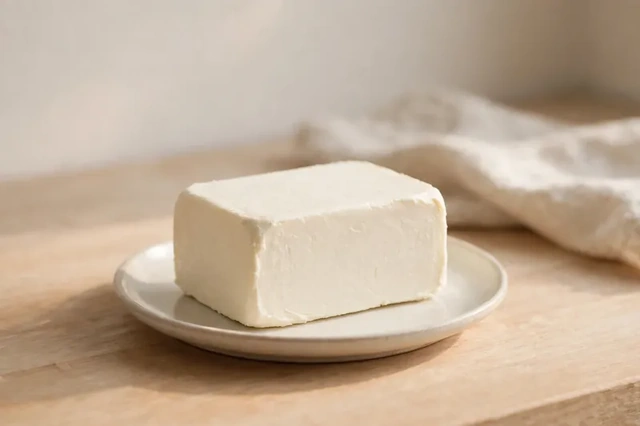
It is a fresh, unaged cheese, and the recipe explains the profile: a standard two-tablespoon serving carries roughly 10 grams of fat, a heavy load for a small dog, plus lactose (milk sugar) and a fair amount of sodium. It brings no vitamin, mineral, or protein benefit that complete dog food does not already cover.
The point is simple: stop thinking of it as “a little cheese” and start thinking of it as a tool in the drawer, and the risks shrink to a manageable size.
The fat problem: pancreatitis risk
The main risk of cream cheese is its fat. Feeding high-fat foods regularly can lead to obesity and, more seriously, pancreatitis, a painful inflammation of the pancreas that can turn dangerous. A dog that finishes a whole tub is a genuine pancreatitis candidate. Keep any portion tiny and rare, and skip cream cheese entirely for dogs with a pancreatic history.

Fat is where this food stops being harmless. Rich, fatty foods fed regularly can contribute to obesity, but the sharper worry is pancreatitis, a painful and potentially dangerous inflammation of the pancreas. A dog that wolfs down a whole tub is squarely in the risk zone.
Watch for these signs after a fatty indulgence: repeated vomiting, diarrhea, loss of appetite, abdominal pain (the classic hunched posture), lethargy, or bloating. If they appear, call your veterinarian promptly rather than waiting to see if the episode passes.
Dogs with a history of pancreatitis, dogs on low-fat prescription diets, and overweight dogs should not get cream cheese at all; the risk outweighs a moment of pleasure by a wide margin.
Lactose and digestion
Many adult dogs digest lactose poorly because they produce less lactase, the enzyme that breaks down milk sugar, than they did as puppies. Even a small dairy serving can bring gas, bloating, loose stools, or vomiting. Tolerance varies from dog to dog, so start with a crumb-sized taste, watch for several hours, and only offer it again if nothing happens.

Puppies make plenty of lactase, the enzyme that digests milk sugar, but most adult dogs make much less. That is why a non-toxic food can still leave a dog miserable: the stomach cannot process the lactose, and gas, bloating, loose stools, or vomiting follow.
Tolerance varies enormously between dogs. Some handle a dab with no visible effect; others react to a teaspoon. If your dog has never had dairy, start with an extremely small amount and watch for several hours before ever offering it again. Lower in lactose than milk is not the same as none.
Signs of intolerance show up within a few hours: gas, a bloated belly, a gurgling stomach, loose stools, or vomiting. It is uncomfortable but usually passes within a day, so withhold rich foods, offer water, and feed blandly until stools normalize.
True dairy allergy is different and rarer: itchy skin, ear inflammation, or paw-chewing that flares after dairy. If that pattern repeats, mention it to your vet rather than running your own elimination experiments.
Flavored varieties: the real danger
Plain cream cheese is the only kind that should ever come near a dog. Flavored versions can carry alliums like garlic, onion, and chives, which damage red blood cells, or xylitol, a sweetener that crashes blood sugar and injures the liver. Read every label first; if the tub is not plain and simple, keep it out of reach.

Plain cream cheese from a simple block is a mild, manageable risk. The flavored tubs beside it are where this food turns genuinely dangerous:
- Chive, onion, and garlic cream cheese: alliums destroy dogs’ red blood cells, causing hemolytic anemia. Even the small amount of dried chive or onion powder in a savory spread can cause harm, and the damage is cumulative, meaning repeated small exposures add up.
- “Light,” “sugar-free,” or dessert spreads: some use xylitol (also labeled birch sugar), an artificial sweetener that is extremely toxic to dogs, triggering a rapid, dangerous drop in blood sugar and risking liver failure. Always read the ingredient label.
- Chocolate or cocoa swirls: theobromine, which dogs cannot metabolize properly.
- Strawberry and fruit varieties: usually just unnecessary sugar, sometimes paired with the sweeteners above.
The rule is absolute: if it is not plain, full-fat, additive-free cream cheese, it does not go near your dog.
Frosting, dips, and prepared foods
The danger zone extends to everything cream cheese becomes in human cooking. Frosting is cream cheese plus a mountain of sugar, a recipe for vomiting and diarrhea. Savory dips add the real toxins: onion and chive dip, garlic-herb spread, and spinach-artichoke dip (garlic again) are all off-limits. Check bagel-shop flavored tubs every time. Cheesecake combines sugar and fat with sometimes chocolate or xylitol. The plain block is the only version that ever touches a dog’s bowl, and only in a dab.
How much is safe
Keep it deliberately tiny: a pea-sized dab for a small dog, about half a teaspoon for a medium dog, up to a teaspoon for a large dog. Once or twice a week at most, inside the 10 percent treat allowance. Think of it like a single chocolate chip for yourself: a taste, not a serving.
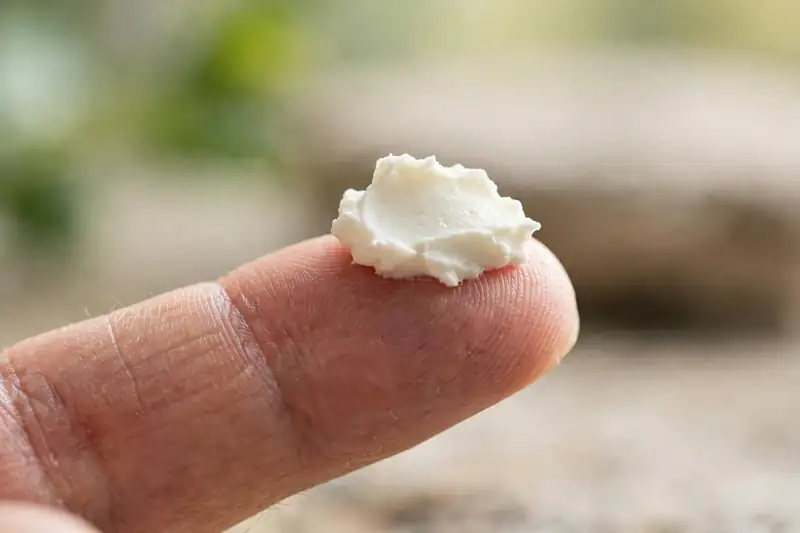
The portion rules are simple on purpose:
- Small dogs: a pea-sized dab, at most.
- Medium dogs: about half a teaspoon.
- Large dogs: up to one teaspoon.
Frequency matters as much as amount: once or twice a week at most, inside the 10 percent treat allowance, and never a daily item. If you find yourself reaching for it every day, ask your vet about a lower-fat alternative.
Do not try to solve the fat problem with “light” spreads: those versions sometimes replace the missing fat with unfamiliar sweeteners or thickeners, and xylitol is the one to fear. A smaller amount of plain full-fat is the safer choice because you know what is in it (see the FAQ below).
The genuinely good uses
Cream cheese has two real jobs for dog owners: hiding pills and paying for hard training work. A pea-sized ball molded around a tablet fools most dogs because the smell is strong and the texture is sticky. A tiny dab can also buy cooperation in recall or vet-visit training, but only the plain kind, in the smallest amount that works.
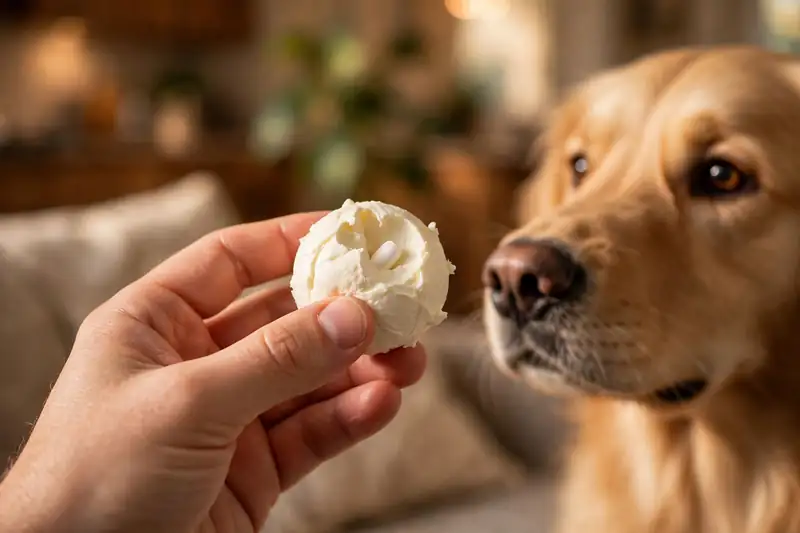
Both jobs work with almost none of it, which is why they are the only ones worth mentioning.
Hiding pills
A pea-sized ball of plain cream cheese molded around a tablet is one of the most reliable ways to get medication into a reluctant dog. The strong smell and sticky texture hide both the pill’s taste and its shape, and most dogs swallow it without a second thought.
Keep the dab as small as the pill allows, use it only when medication is actually due, and confirm the cream cheese is plain, with no chive, garlic, or “light” formulation carrying unfamiliar sweeteners. For dogs on daily medication, ask your vet about lower-fat alternatives: a tiny habit repeated every day for years still adds up.
High-value training rewards
For a difficult behavior, recall training, or cooperation at the vet, a tiny dab of something the dog finds irresistible can outperform a whole pocket of biscuits. The amount stays minimal and the purpose stays specific, which is the only context in which this food makes sense.
What to do if your dog eats too much, or the wrong kind
For too much plain cream cheese, watch your dog for a day and call the vet if vomiting, diarrhea, or lethargy persist. For any flavored kind, check the label; xylitol, onion, garlic, chives, or chocolate mean calling your vet immediately or the ASPCA Animal Poison Control Center at 888-426-4435. With xylitol, never wait for symptoms, because its effects begin fast.

Two scenarios, two responses.
Too much plain cream cheese: watch for vomiting, diarrhea, or lethargy over the next 24 hours. Mild, passing upset often resolves on its own; persistent symptoms mean a vet call. Note how much was eaten and your dog’s weight, since the vet will ask. Repeated vomiting, belly pain, or a hunched posture should be treated as urgent rather than waited out.
Any amount of flavored cream cheese: check the label immediately. If it contains xylitol, onion, garlic, chives, or chocolate, call your veterinarian right away, or the ASPCA Animal Poison Control Center at 888-426-4435 in the US. With xylitol, never wait for symptoms; its effects begin fast, and early treatment matters.
Better dairy options
If you want a dairy treat with a wider safety margin, plain cottage cheese is the usual veterinary suggestion: lower in fat and lactose than cream cheese, with useful protein and calcium. A spoonful of plain unsweetened yogurt is another reasonable occasional treat. Both follow the same rules: plain only, small amounts, and watch for lactose reactions.

Cream cheese lands near the indulgent end of the dairy scale. If dairy treats are regular in your house, know the better options:
- Plain cottage cheese: lower in fat and lactose than cream cheese, with useful protein and calcium. This is the dairy treat most vets reach for first.
- Plain unsweetened yogurt: lower in lactose, with live cultures that agree with some dogs better.
- Hard cheeses like cheddar: less lactose than soft, fresh cheeses, though still fatty, so portions stay small.
Cream cheese is high in fat with moderate lactose: fine as a rare dab for a specific job, but the least sensible regular dairy treat. Make yogurt or cottage cheese in small amounts your default, and save cream cheese for pill-hiding.
Dogs who should skip cream cheese entirely
Some dogs should never get cream cheese at all: puppies, dogs with a pancreatitis history, obese dogs, dogs with kidney or heart conditions, dogs with known lactose intolerance, and dogs on prescription diets. For them, even a pea-sized taste is a pointless gamble. Ask your vet about safe training rewards instead.

For healthy adult dogs, a rare pea-sized dab is a manageable risk. For the dogs below, it is not worth any risk at all:
- Puppies, whose sensitive stomachs have no need for high-fat dairy.
- Dogs with a history of pancreatitis, for whom any rich food is a real threat.
- Dogs on low-fat prescription diets, where a fatty treat can undo the diet’s purpose.
- Obese dogs, who need calories cut, not added.
- Dogs with kidney or heart conditions, which the sodium and fat do no favors.
- Dogs with known lactose intolerance, who will only end up uncomfortable.
For these dogs, the tiny pleasure is never worth it. Plain cream cheese is a “can, but barely” food: the fat threatens the pancreas, the lactose threatens the stomach, and the flavored varieties threaten much worse. Your dog will never miss it, and the safest cream cheese is the one that stays on your bagel.
Frequently asked questions
Owners ask the same questions about dogs and cream cheese again and again: puppies, low-fat versions, frosting, garlic and chive flavors, safe portions, pill-hiding, lactose intolerance, and the Philadelphia brand. The answers all follow one rule used through this entire guide: plain only, tiny amounts, rarely, and never for dogs with health problems.

Can puppies eat cream cheese?
No. Puppies have sensitive stomachs and no need for high-fat dairy. Stick to puppy-appropriate treats and complete puppy food.
Is low-fat cream cheese safer for dogs?
Not necessarily. Some “light” or “sugar-free” spreads replace fat with artificial sweeteners, and xylitol is extremely toxic to dogs. A tiny amount of plain full-fat cream cheese is the safer choice, because you know what is in it. “Light” products sometimes contain extra thickeners, stabilizers, or sweeteners to fake the texture, so always read the label.
Can dogs eat cream cheese frosting?
No. Frosting adds large amounts of sugar to the fat, and commercial frostings may contain unexpected flavorings or sweeteners. Keep all frosting away from dogs.
Can dogs eat garlic or chive cream cheese?
Absolutely not. Garlic, onion, and chives damage red blood cells and can cause hemolytic anemia, even in the small amounts in flavored spreads. If your dog eats any, call your vet.
How much cream cheese can I give my dog?
A pea-sized dab for a small dog, up to a teaspoon for a large dog, once or twice a week at most. If you need a number to remember: less than you think.
Is cream cheese good for hiding pills?
Yes, this is its best legitimate use. A pea-sized ball of plain cream cheese molded around a tablet works very well. Make sure it is plain, with no flavorings or sweeteners, and ask your vet about a lower-fat option for daily medication.
Can dogs be lactose intolerant?
Yes, many adult dogs are. Signs include gas, bloating, loose stools, or vomiting after dairy. Tolerance varies by dog, so start tiny and observe.
Can dogs eat Philadelphia cream cheese?
The plain original version follows the same rules as any plain cream cheese: a tiny taste is fine, more is not. Check that it is the plain variety, because the brand also sells chive, garlic, and sweet flavors that are unsafe. The brand does not change the rules.
For the same plain-only, small-portion thinking across the foods dogs meet most often, see our wider guide to what human food dogs can eat. For another rich treat that demands strict limits, our honey guide makes the same case about sugar, and our blueberry guide offers a treat with actual nutritional upside.
This article is general information only and is not a substitute for veterinary advice. If your dog has a health condition, is on a prescription diet, or you are unsure about any food, check with your veterinarian first.


2 thoughts on “Can Dogs Eat Cream Cheese? Tiny Tastes Only”