

Yes, dogs can eat sweet potatoes, and they are one of the better vegetables you can share. Served fully cooked, plain, and in sensible portions, sweet potatoes are safe, nutritious, and easy on most dogs’ stomachs. The catch, as with every shared food, is in the preparation: raw sweet potato is hard to digest, and the sugary, buttery ways humans usually serve it are off the table. This guide covers exactly how to get it right.
Why sweet potatoes are good for dogs
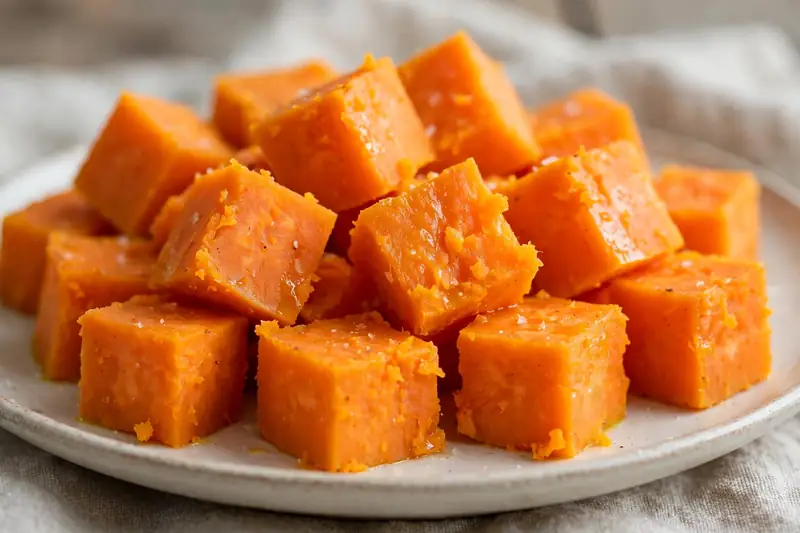
Sweet potatoes earn their reputation honestly. The American Kennel Club notes they are low in fat and rich in dietary fiber plus vitamins A, B6, and C, along with minerals such as potassium, calcium, and iron. Each of those plays a real role in everyday canine wellness: fiber keeps digestion moving, potassium supports muscle function, and the B vitamins help with energy metabolism.
The standout nutrient is beta-carotene, the pigment behind the orange flesh. A dog’s body converts beta-carotene into vitamin A, which supports healthy eyes, skin, coat, muscles, and nerves. “The health benefits are the same for canines as they are for people,” says Dr. Rachel Barrack, a licensed veterinarian quoted by the AKC. Sweet potatoes also show up as a staple carbohydrate in many commercial dog foods, precisely because they are a gentle, whole-food energy source, the AKC describes them as gentle on the digestive tract.
One honest caveat on vitamin A: it is fat-soluble, which means the body stores it rather than flushing the excess. More is not better, the AKC cautions that too much vitamin A over time can contribute to bone and muscle weakness. That is one more reason portions stay modest, even for a food this wholesome.
Sweet potatoes vs white potatoes: an important difference

Dog owners often lump all potatoes together, but the two are different plants with different risk profiles, and sweet potatoes come out safer. White potatoes belong to the nightshade family and contain solanine, a natural toxin concentrated in raw and green potatoes. Sweet potatoes contain no solanine at all.
That single difference removes the biggest danger. With white potatoes, the rule is absolute: never raw, never green, only fully cooked and plain, our potato guide covers that cooked-only rule in detail. Sweet potatoes skip the toxin question entirely. They still need to be cooked (raw sweet potato is tough, hard to digest, and a choking hazard), but there is no solanine clock ticking if a piece is slightly underdone.
Sweet potatoes also bring more to the bowl nutritionally: more fiber and significantly more beta-carotene than white potatoes, which is why many dog food manufacturers prefer them. If you are choosing one potato to share, sweet potato is the better pick.
The cooked-only rule
Raw sweet potato is not poisonous, but it is a bad idea. The dense, hard flesh is difficult for dogs to digest and can cause stomach upset, gas, or vomiting. Large raw chunks are also a genuine choking hazard, especially for small dogs and enthusiastic gulpers.
Cooking solves all of it. Boiling, baking, or steaming until completely soft breaks down the tough starches and makes the nutrients easier to absorb. The test is simple: it should be soft enough to mash with a fork. If you would hesitate to mash it, it is not cooked enough for your dog.
What “cooked” must never include: butter, brown sugar, marshmallows, maple syrup, cinnamon sugar, or any seasoning. A Thanksgiving-style sweet potato casserole is a completely different food from a plain baked sweet potato, the added ingredients are the problem, not the potato. Cook your dog’s portion separately, before anything gets added for the humans.
How to prepare sweet potatoes safely

The method matters less than the plainness, but here is the reliable routine:
- Wash and peel. Scrub off dirt; peeling removes any tough skin and surface residue.
- Cut into even pieces before cooking so they cook through uniformly.
- Boil, bake, or steam until completely soft. No oil, no salt, no seasoning in the cooking water or on the tray.
- Cool fully and cut into bite-size cubes suited to your dog’s size. A hot chunk can burn a mouth; a large chunk can choke.
- Serve plain. On its own, mashed into their regular food as a topper, or mixed with another dog-safe vegetable.
Steaming is arguably the best method: it cooks the flesh soft without waterlogging it and preserves more nutrients than a long boil. Baking works well too, just skip the oil drizzle you would use for yourself. However you cook it, the finished product going into the dog’s bowl should contain exactly one ingredient: sweet potato.
How much is safe
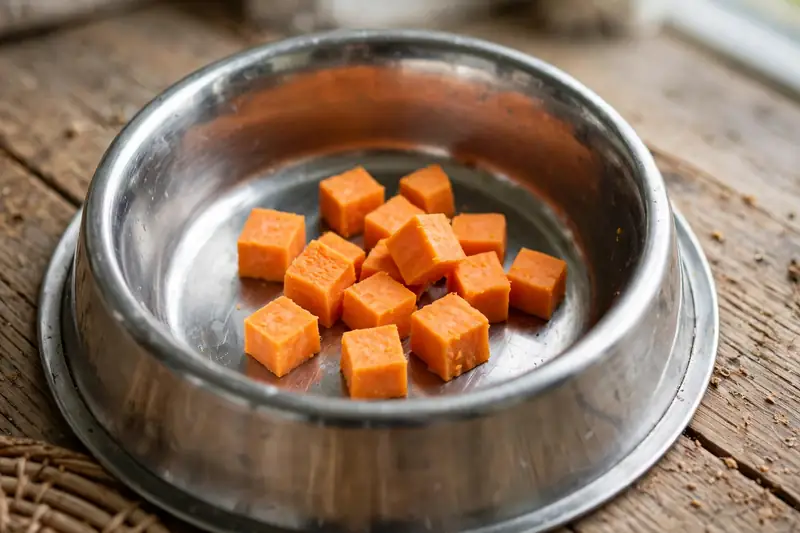
The 10% treat rule applies here as it does to every extra: all treats combined, sweet potato included, should stay within about 10% of your dog’s daily calories, with the rest coming from balanced dog food. Sweet potatoes are carbohydrate-dense, so the calories add up faster than with watery vegetables like cucumber.
As a rough guide for plain, cooked sweet potato cubes:
- Small dogs: a tablespoon or two.
- Medium dogs: two to three tablespoons, or a few small cubes.
- Large dogs: up to a quarter cup.
A few times a week is plenty. Sweet potato works well as an occasional topper or training reward, not as a daily side dish. When you offer it for the first time, start with a small amount and watch for digestive upset over the next day, most dogs handle it well, but every gut is different.
Sweet potato chews and treats
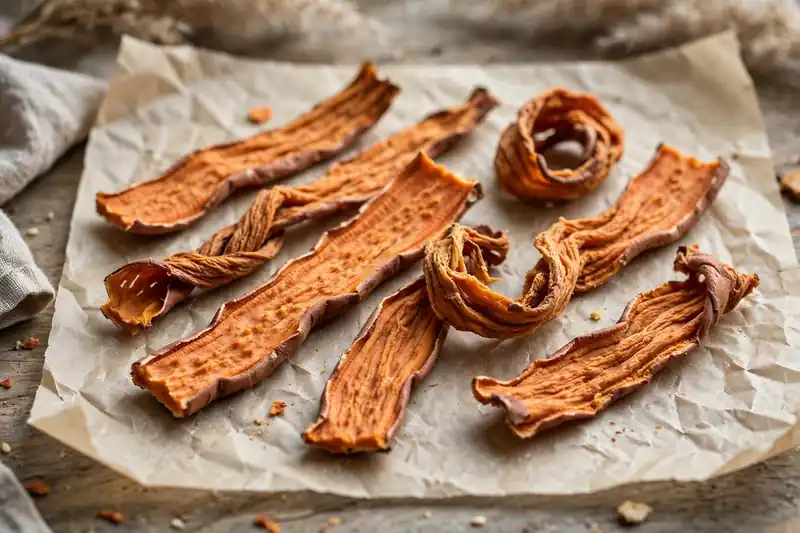
Beyond the bowl, sweet potato has a second life as a chew. “Sweet potato treats can be as simple as a dehydrated sweet potato chew,” says Dr. Gary Richter, MS, DVM, quoted by the AKC. Sliced thin and dehydrated (or baked low and slow until leathery), sweet potato becomes a chewy, long-lasting treat that most dogs love.
If you buy commercial sweet potato treats, read the label: the ingredient list should be short, ideally just sweet potato. Skip anything with added sugar, glycerin-heavy “soft” textures loaded with sweeteners, or vague “natural flavors.” And as with any chew, supervise the first few sessions, particularly with power chewers who might try to swallow large pieces.
A note on the FDA and DCM
Honesty requires mentioning this: the U.S. Food and Drug Administration has issued alerts about reports of canine dilated cardiomyopathy (DCM), a serious heart muscle disease, in dogs eating certain pet foods containing peas, lentils, other legume seeds, or potatoes as main ingredients. The AKC carries this update on its sweet potatoes page, quoting the UC Davis School of Medicine.
Context matters. The concern is about these ingredients as main ingredients in commercial diets fed exclusively over long periods, not about a spoonful of plain sweet potato as an occasional treat. The FDA has not established causation, and genetics remain the most common cause of DCM. Still, it is worth knowing: sweet potato is a treat and a topper, never the foundation of the diet. If your dog eats a grain-free or legume-heavy commercial food, that is a conversation for your veterinarian, not something a treat guide can settle.
Sweet potatoes for puppies and seniors
Age changes the calculation slightly, in both directions.
For puppies, plain cooked sweet potato is safe in tiny amounts: a teaspoon of mash mixed into their meal or offered as a training tidbit. Keep it truly minimal. Puppy growth formulas are precisely balanced for calcium, phosphorus, and dozens of micronutrients in exact ratios; every spoonful of extras dilutes that precision. Sweet potato will not harm a puppy, but it should never displace real meals. Cut pieces extra small, puppy throats are narrow and puppy enthusiasm is high.
For senior dogs, sweet potato can be genuinely useful. Older dogs often face two issues sweet potato addresses: sluggish digestion (the fiber helps keep things moving) and declining appetite (a spoonful of mash mixed into kibble makes dinner interesting again). The soft texture suits seniors with dental problems or missing teeth, no hard chewing required. The same portion discipline applies, with one addition: senior dogs gain weight easily as metabolism slows, so keep the carbohydrate-dense portions on the smaller side of the guide above. If your senior is on a kidney-support or other therapeutic diet, check with the vet first, potassium and phosphorus content matter more in old age.
Dogs who should be careful
Sweet potatoes suit most healthy dogs, but a few need extra caution. Dogs with diabetes should get a vet’s okay first, sweet potatoes contain natural sugars and starches that can affect blood sugar, even though their fiber slows absorption compared to white potatoes. Overweight dogs need strict portions, since the calories are denser than they look.
Dogs with chronic kidney issues should also check with the vet: sweet potatoes are relatively high in potassium, which matters for dogs on potassium-restricted diets. And dogs on prescription or therapeutic diets should get approval before any extras, since many such diets leave no nutritional room to spare. Puppies can have small amounts of plain cooked sweet potato, cut appropriately tiny, but their growth diet should stay the priority.
Signs of too much
Overdoing sweet potato usually announces itself gently: gas, soft stools, or mild stomach upset from the fiber and starch load. These signs typically resolve within a day once you cut back.
Call your veterinarian if you see repeated vomiting, diarrhoea that does not ease, blood in the stool, or a dog that becomes lethargic or refuses food. Those signs point beyond “too many treats” and deserve professional attention. Note roughly how much was eaten and your dog’s weight before you call, both help the vet assess the situation quickly.
The honest summary: sweet potato is one of the genuinely good vegetables for dogs, fiber-rich, nutritious, no solanine, and easy to prepare safely. It is also completely optional; a complete dog food already covers the nutrition. If you share, share cooked, plain, and modest, and skip the marshmallows.
For the same plain-only, small-portion thinking across the foods dogs meet most often, see our wider guide to what human food dogs can eat. For the stricter rules around its white cousin, see our potato guide, and for another crunchy vegetable treat, our carrot guide.
Frequently Asked Questions
Can dogs eat raw sweet potatoes?
They should not. Raw sweet potato is very hard, difficult to digest, and a choking hazard. Always cook it fully, boiled, baked, or steamed until soft enough to mash, and serve it plain.
Are sweet potatoes better than white potatoes for dogs?
Yes. Sweet potatoes contain no solanine (the toxin in raw/green white potatoes) and offer more fiber and beta-carotene. Both must be cooked and served plain, but sweet potato is the safer and more nutritious choice.
Can dogs eat sweet potato skin?
The skin is not toxic, but it is tough and harder to digest. Peeling is the safer habit, it removes surface residue and any fibrous bits that could upset a sensitive stomach.
How often can dogs eat sweet potatoes?
A few times a week at most, inside the 10% treat allowance. It works well as an occasional topper or training reward, not as a daily staple.
Can puppies eat sweet potatoes?
Yes, in tiny amounts, plain, fully cooked, and cut very small. Keep the portion minimal and make sure their growth-formula food remains the dietary priority.
Are sweet potato treats from the store safe?
Check the label: the ingredient list should be essentially just sweet potato. Avoid added sugars, heavy sweeteners, and vague flavorings. Dehydrated single-ingredient chews are the best commercial option.
My dog ate a raw sweet potato chunk, what should I do?
Do not panic, it is not poisonous. Watch for vomiting, gas, or digestive upset over the next day, and call your vet if symptoms persist, if your dog is small, or if a large hard piece was swallowed whole (choking/blockage risk).
Can dogs eat sweet potato fries?
Not the human kind. Restaurant and homemade fries bring oil, salt, and often seasoning, the potato is the least of the problems. If you want a fry-shaped treat, cut plain sweet potato into sticks, bake with no oil until soft, cool completely, and serve those. Same shape, none of the risk.
This article is general information only and is not a substitute for veterinary advice. If your dog has a health condition, is on a prescription diet, or you are unsure about any food, check with your veterinarian first.



2 thoughts on “Can Dogs Eat Sweet Potatoes? Benefits, Safety & Serving Guide”