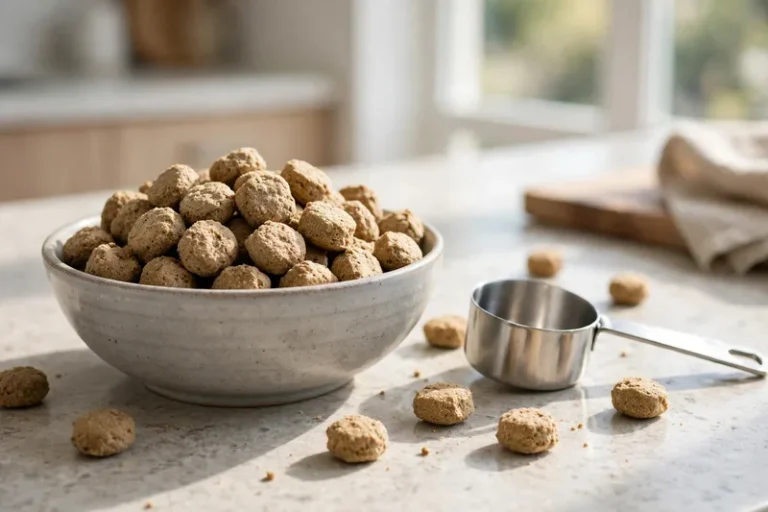
Diabetic dog food is not one single product, and no bag alone controls diabetes. The food that helps most is a complete and balanced diet fed in the same amount, at the same times, every day, matched to insulin injections. Your vet picks the formula for your dog, and the routine around the food does as much work as the recipe in the bag.
Diabetes in dogs usually means the pancreas no longer makes enough insulin, so sugar stays in the blood instead of moving into cells. Cornell notes that up to 1 percent of dogs may develop diabetes in their lifetime, and most need insulin for life. Food cannot replace insulin, but the right food fed on a steady schedule keeps blood sugar swings smaller and makes insulin dosing more predictable. This guide covers what vets look for in a diabetic dog diet, which foods to skip, and how to feed around injections.
What is the best food for a diabetic dog?
The best food for a diabetic dog is a complete and balanced diet your vet has approved for your dog, fed in measured amounts on a fixed schedule that lines up with insulin injections. Most vets start with a higher fiber, lower fat formula, and overweight dogs often do best on one built for weight control.

No single brand suits every diabetic dog. VCA Animal Hospitals states the point plainly: there is no one diet that helps all diabetic dogs. Your vet weighs your dog’s weight, body condition, other health problems, and how the diabetes responds to insulin before naming a food.
A dog with a history of pancreatitis may need an ultra low fat diet, while a thin diabetic dog may need more calories and less fiber. The label matters less than the fit.
Prescription diets built for glucose control exist for a reason. Hill’s Prescription Diet w/d Multi-Benefit and Royal Canin Glycobalance are the two names vets mention most often, and both pair fiber with controlled fat and complex carbohydrates. Your vet may also pick a good over the counter food when the diabetes is stable and the dog has no other problems. Either way, the choice belongs in a vet visit, not in a pet store aisle.
How diabetes changes the way a dog handles food
Diabetes changes the way a dog handles food because insulin no longer moves sugar from the blood into cells on schedule, so every meal sends blood sugar up and the body cannot bring it down alone. Food still supplies energy, but the timing and makeup of each meal shape how high the sugar climbs and how fast it falls.

The Merck Veterinary Manual describes diabetes mellitus as a chronic disorder of carbohydrate metabolism caused by too little insulin or by cells that resist insulin. Middle aged dogs get it most often, and females are affected about twice as often as males. Small breeds such as Miniature Poodles, Dachshunds, Schnauzers, Cairn Terriers, and Beagles show up more often in the records, though any breed can develop it.
Signs often build slowly, and owners miss the early ones. Increased thirst and urination come first for many dogs, along with a bigger appetite and weight loss at the same time. Cataracts appear often in dogs whose diabetes stays poorly controlled. A vet diagnosis rests on high sugar in blood and urine after fasting, and treatment combines weight control with diet and insulin injections.
Why feeding times matter as much as the food
Feeding times matter as much as the food because insulin works on a clock, and a meal that arrives late or gets skipped leaves the insulin with nothing to act on, which can push blood sugar dangerously low. Cornell puts it simply: feed the same diet, at the same time, every day.

Most diabetic dogs eat two equal meals a day, about 12 hours apart, with insulin given around each meal. VCA advises feeding most of the daily food around the time of the injection to cut the risk of low blood sugar. If your dog eats only half the meal, ask your vet how to adjust that dose, since the usual guidance is to give only half the insulin, and a skipped meal often means skipping the dose.
Free feeding has no place in a diabetic dog routine. A bowl left down all day makes it impossible to know how much the dog ate or when, and the vet cannot set an insulin dose against a moving target. Measure each meal with a cup or a scale and write down what the dog ate. Keep the schedule even on weekends, since that record helps your vet read the glucose curve and fine tune the dose.
Fiber and blood sugar: what the research shows
Fiber and blood sugar connect because fiber slows digestion, so sugar from a meal enters the blood more slowly and the rise after eating stays flatter. Higher fiber food helps many diabetic dogs, yet the research is mixed, and a high fiber, low calorie diet can work against a thin dog that needs to hold weight.
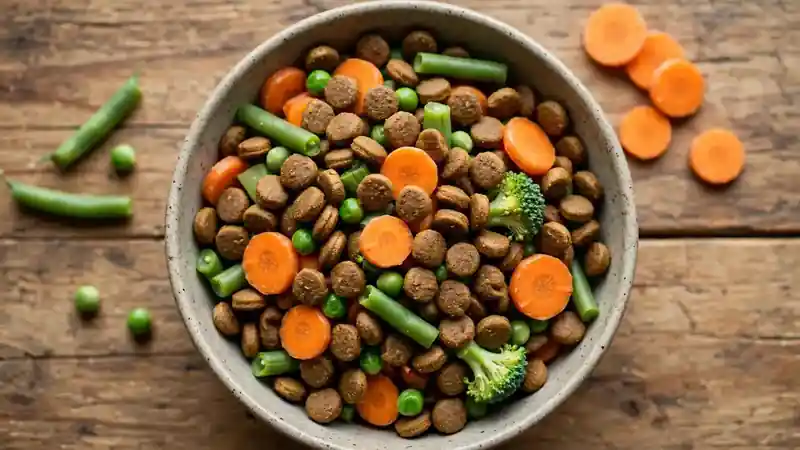
One small study often cited by vets found that switching diabetic dogs to a high fiber diet lowered mean 24 hour and post meal blood sugar. Other vets point out that soluble and insoluble fiber behave differently, and insoluble fiber shows more promise in dogs. The honest picture is that fiber helps some dogs a lot, helps others a little, and suits overweight dogs best.
Cornell and VCA both stress that the feeding routine outranks any single nutrient. A complete and balanced food fed on time beats a high fiber food fed at random hours. If your vet suggests a higher fiber formula, ask whether the goal is glucose control, weight loss, or both, and ask what to watch for in the first two weeks.
Protein and fat in a diabetic dog diet
Protein and fat in a diabetic dog diet need balance, not extremes, because lean protein protects muscle while excess fat adds weight and can worsen insulin resistance. Most diabetic dog foods carry moderate to high protein, moderate fat, and carbohydrates from slow digesting sources such as barley, oats, and sweet potatoes.

Lean proteins such as chicken, turkey, white fish, and eggs give a diabetic dog amino acids without a heavy fat load. Chicken is a common pick, and plain cooked chicken without skin or seasoning fits many diabetic diets, though the portion still counts toward the daily total. Our guide to whether dogs can eat chicken covers safe preparation in more detail.
Fat deserves a closer look than most owners give it. A high fat diet can raise insulin resistance, and fatty table scraps can trigger pancreatitis, which damages the same pancreas that already struggles. Keep fat moderate, skip fried foods and greasy treats, and check the fat line on the label before switching foods. Your vet may set a fat target when the dog also has pancreatitis or high blood triglycerides.
Prescription diets your vet may suggest
Prescription diets your vet may suggest for a diabetic dog include Hill’s Prescription Diet w/d Multi-Benefit and Royal Canin Glycobalance, two formulas built around fiber, controlled fat, and complex carbohydrates to steady blood sugar after meals. Both need a vet prescription, and both work best inside a fixed feeding and insulin schedule.

Hill’s w/d pairs soluble and insoluble fiber with low fat and moderate protein, and it carries L-carnitine to support fat metabolism. Royal Canin Glycobalance uses a prebiotic and fiber blend with complex carbohydrates chosen to moderate the glycemic response. Vets often start with one of these two when a dog is newly diagnosed or overweight.
Over the counter options exist, and some owners use lower carbohydrate foods such as Ketona, yet these were not built as clinical diets for diabetes. A food that claims low carbs on the bag may still spike blood sugar when the portion or the timing is off. Ask your vet before buying any food that markets itself for diabetes, and bring the bag or a photo of the label to the visit.
Foods and treats to keep out of the bowl
Foods and treats to keep out of a diabetic dog bowl include sugary snacks, semi moist foods with added sugars, table scraps, and anything sweetened with xylitol, since these push blood sugar up fast or, in the case of xylitol, can poison a dog. Treats still have a place, but they must fit inside the daily calorie count.

Semi moist dog foods often hide fructose, sucrose, or simple carbohydrates that raise blood sugar quickly. Added sugars, corn syrup, white rice in large amounts, and sweetened treats belong on the skip list too. Plain cooked vegetables make better treats: carrots add crunch and fiber with few calories, and our page on whether dogs can eat carrots explains safe serving sizes.
Xylitol deserves a warning of its own. The FDA explains that xylitol can drop a dog blood sugar within 10 to 60 minutes, and some peanut butters contain it. Check every label for xylitol, birch sugar, or wood sugar, and read the peanut butter guide on what peanut butter is safe for dogs before using any jar as a treat or a pill pocket. A dog that eats xylitol needs a vet or an emergency clinic right away.
How to switch a diabetic dog to a new food
Switching a diabetic dog to a new food takes a slow transition over 7 to 10 days, because a sudden change can upset the stomach and shift insulin needs before the vet has data to adjust the dose. Tell your vet first, then mix the new food in a little at a time.

Start with about one quarter new food and three quarters old food for two or three days, then move to half and half, then three quarters new, then all new. Watch appetite, stool, thirst, and energy at each step, and keep the meal times and the insulin schedule fixed while the food changes. If the dog refuses the new food, call your vet instead of skipping insulin on your own.
Rice often appears in transition diets because plain cooked rice is gentle on the stomach, and our guide to whether dogs can eat rice covers the plain preparation that suits a sensitive gut. Sweet potatoes offer another slow digesting carbohydrate, and the page on whether dogs can eat sweet potatoes explains how to cook them plain. Keep portions measured through the whole switch so the glucose readings stay comparable.
Signs the diet is working, and signs it is not
Signs the diet is working show up in daily life first: steadier thirst, normal urination, a stable weight, good energy, and an appetite that matches the meals you serve. Blood sugar readings and fructosamine tests at the vet confirm what you see at home, and a glucose curve maps the rise and fall across a day.

Watch for the signs that the plan needs a change. Drinking more than usual, urinating more often, weight loss despite a good appetite, or new lethargy all point to poor control. Vomiting, refusal to eat, weakness, or trouble breathing need a vet visit the same day, since these can signal diabetic ketoacidosis, a medical emergency. Our page on dog vomiting lists the warning signs that call for urgent care.
Low blood sugar is the other danger, and it can follow a missed meal or too much insulin. Weakness, lack of coordination, trembling, seizures, or collapse mean the dog needs sugar fast and a vet right away. Cornell notes that rubbing corn syrup or honey on the gums can raise blood sugar quickly while you call the clinic. Never adjust the insulin dose on your own after a low reading.
Frequently asked questions about diabetic dog food
Dog owners ask the same questions after a diabetes diagnosis, and the answers below cover the ones that come up most in vet clinics. Each answer assumes your dog already has a vet plan, since food choices change with insulin dose, weight, and other health problems.

Can a diabetic dog eat regular dog food?
A diabetic dog can eat regular dog food when the food is complete and balanced, the portions are measured, and the vet agrees the formula fits the dog. VCA notes that the feeding routine often matters more than the diet itself. A prescription formula helps many dogs, yet a steady schedule on a good regular food can work when the diabetes is stable.
What is the best diabetic dog food for weight loss?
The best diabetic dog food for weight loss is usually a high fiber, low fat prescription formula such as Hill’s w/d, paired with measured meals and a weight target set by your vet. Fiber adds fullness without calories, and a fixed portion keeps the plan honest. Weigh the dog monthly on the same scale and report the trend to your vet.
Can diabetic dogs have treats?
Diabetic dogs can have treats when the treats are low in sugar, counted inside the daily calories, and given at consistent times. Plain vegetables, a small piece of lean meat, or a vet approved biscuit all work. Skip sugary biscuits, semi moist treats, and table scraps, and never use a treat sweetened with xylitol.
How many times a day should a diabetic dog eat?
Most diabetic dogs eat two equal meals a day, about 12 hours apart, with insulin given around each meal. Some vets split the food into a main meal plus a small snack at the insulin peak. Your vet sets the pattern from the glucose curve, and the pattern should stay the same every day.
Can homemade food work for a diabetic dog?
Homemade food can work for a diabetic dog only when a vet or a board certified veterinary nutritionist formulates the recipe and checks that it meets nutrient needs. A home cooked bowl without a supplement almost always misses calcium, iodine, and vitamins D and E. Ask your vet before cooking for a diabetic dog.
Does diabetic dog food cure diabetes?
Diabetic dog food does not cure diabetes, and no diet sends a diabetic dog into remission the way some cats recover. Food, insulin, weight control, and monitoring manage the disease together. Most diabetic dogs need insulin for life, and a good diet makes that treatment steadier and safer.
Diabetic dog food works when the food, the clock, and the insulin all pull in the same direction. Pick the formula with your vet, feed it at the same times every day, measure every meal, and keep treats inside the daily count. Bring your feeding log and your glucose notes to each visit, and let the vet adjust the plan from real data. That steady routine gives a diabetic dog the best shot at a long, active life.