Most dogs vomit once in a while over something minor, and a single episode in a bright, hungry dog usually settles on its own within a day. Vomiting still rattles every owner, because the same symptom can mean a stolen sock, a rich meal, or a blocked gut. This guide sorts the mild cases from the emergencies, explains what vets look for, and lays out the home steps that help without hiding a real problem. Read the red flags first if your dog is vomiting right now.
Why dogs vomit: the common causes
Dogs vomit for reasons that range from a stolen snack to a blocked gut. Mild triggers include dietary indiscretion, a sudden food change, and parasites. Motion sickness and an empty stomach also trigger it. Serious triggers include infections and toxins. Pancreatitis, a swallowed object, and liver or kidney disease also belong here.
Dietary indiscretion tops the list for most family dogs. Dogs eat garbage and table scraps. They swallow spoiled food and plants from walks, and the stomach rejects the lot. Food intolerance and a sudden diet swap cause the same result without any scavenging at all. Motion sickness hits dogs that drool and vomit on every car ride, and it fades once the ride ends.
Serious causes behave differently. They repeat and they come with other signs. They linger for days. This group holds infections and swallowed toxins. Pancreatitis, a blocked gut, and bowel disease sit here too, along with cancer. One episode points at the mild end. Repeat vomiting points at the serious end instead, and the vet sorts out which one applies.

Vomiting vs regurgitation: how to tell the difference
Vomiting is an active event with belly heaving and retching, while regurgitation is passive, with food sliding back up from the food pipe. Vomit holds partly digested food with bile or stomach acid. Regurgitated food looks mostly undigested and often comes up in a tube shape.
The distinction matters because each points at a different part of the body. Regurgitation points at the esophagus, the tube that carries food to the stomach. Vomiting points at the stomach, the intestines, or a body wide problem. Timing helps too. Regurgitation often happens right after eating, while vomiting can strike hours after a meal.
Tell your vet which one you saw, because the workup changes completely. A dog that regurgitates gets its food pipe checked. A dog that vomits gets its stomach, gut, and blood values checked. Mix the two up and the vet starts down the wrong path, so describe the heaving and the timing, plus what came up.

What the vomit itself tells you
Vomit contents give the vet useful clues, so look before you clean up, unpleasant as that sounds. Undigested food hours after a meal suggests the stomach is not emptying right. Yellow or green foam usually means bile from an empty stomach. Red blood or dark grainy material points at bleeding.
White foam can follow eating grass or a bout of coughing. A foul smell, visible worms, or a foreign object in the vomit each change the urgency on the spot. Yellow foam in the morning often means bilious vomiting syndrome, where bile irritates an empty stomach overnight, and a small late evening meal sometimes settles it once the vet rules out other causes.
Take a photo if you can stomach it. Vets read vomit the way mechanics read an engine noise, and a photo beats a vague description every time. Note the time and the number of episodes, plus what the dog ate in the last day. That history does more work than any single test.
Red flags that need a vet now
Dog vomiting turns into an emergency with blood in the vomit, repeat episodes, or a dog that cannot keep water down. Retching without bringing anything up, a swollen or tight belly, fever, lethargy, belly pain, diarrhea at the same time, pale gums, weakness, or collapse all mean the vet hears about it now.
Retching with a swollen belly can mean bloat, a twisted stomach that kills without fast surgery. Cornell University’s guide to bloat lists nonproductive retching, a bloated belly, drooling, restlessness, pale gums, and collapse among the signs. Large deep chested breeds face the highest risk. Once the stomach twists, minutes count. Blood in the vomit, whether red or dark and grainy like coffee grounds, means bleeding somewhere in the gut and needs same day care.
Any suspicion of poison or a swallowed object is a red flag on its own. The AKC guide to intestinal blockage in dogs notes that vomiting from a lodged object often persists for more than a day, turns severe, or carries blood or coffee ground material. Puppies and unvaccinated dogs get no waiting period at all, since parvovirus moves fast and looks exactly like this at the start.

How long to watch a dog that vomited once
A single vomit in an adult dog that stays bright and keeps its appetite needs watching, not a midnight dash. VCA Animal Hospitals notes that many cases of sudden vomiting improve on their own within 24 hours without medical treatment or a found cause. Keep the dog quiet and offer small sips of water.
Skip the next meal for a few hours so the stomach rests. If the vomiting stops and the dog acts normal, feed a small bland meal and watch the next day. A dog that eats and plays normally after one episode has most likely cleared the problem on its own.
If vomiting continues past one or two days, even in a dog that seems fine, book a vet visit. Puppies get no waiting period at all, since a young dog can dehydrate in hours. Ongoing vomiting can point at a deeper problem and can cause dehydration and electrolyte trouble on its own. The 24 hour mark is the line between patience and a phone call, and the two day mark is the line between a phone call and a visit.

What to do at home after a mild episode
Home care after mild dog vomiting means rest, water, and patience. Take away food for a few hours so the stomach settles, and leave fresh water down in small amounts rather than a full bowl the dog can gulp. A dog that gulps a full bowl often vomits it straight back up.
Clean up with an enzyme cleaner so the smell does not draw the dog back to the same spot. Watch appetite and energy over the next 24 hours, and check that stools return to normal. Keep the dog calm and skip walks that pass bins, bones, and dropped food.
Do not give human stomach medicine unless your vet tells you to, and never try to make your dog vomit again unless the vet instructs it. The VCA guide to vomiting in dogs sets out the same watch and wait approach for mild cases. If the dog vomits again after water or a small meal, stop feeding and call the vet.

Food and water after vomiting: the safe restart
Food returns slowly after dog vomiting, in small meals that test the stomach instead of challenging it. Wait a few hours after the last vomit, then offer a small amount of a bland diet for dogs, usually boiled chicken and rice in the proportions your vet suggests.
Plain white rice and lean chicken suit most dogs for a day or two, and plain cooked chicken without skin or seasoning is the usual protein. Feed three or four small meals across the day instead of one normal bowl. Return to the regular diet over two or three days, mixing a little more of it in at each meal.
Water stays available throughout, in small amounts at first. Offer a few laps every half hour rather than a full bowl at once. If food or water comes back up, stop feeding and call the vet, since a stomach that rejects water needs professional help. A dog that holds down small meals for a full day can usually go back to normal feeding the next day.

Vomiting in puppies and senior dogs
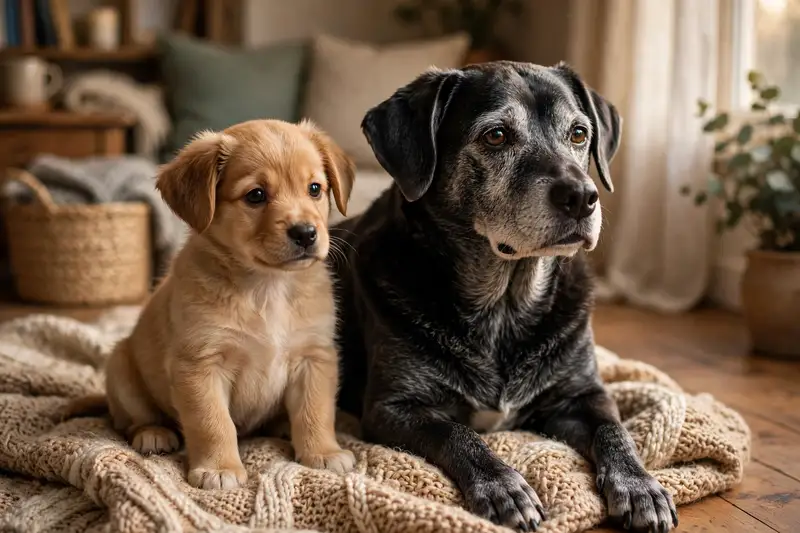
Puppies and senior dogs get a shorter leash with vomiting, because both dehydrate faster and hide illness better than a healthy adult. A puppy that vomits, especially one that has not finished its vaccines, needs a vet the same day. Parvovirus strikes unvaccinated puppies hard, and vomiting with bloody diarrhea is its classic opening.
Senior dogs carry more hidden disease, and vomiting can be the first visible sign of kidney trouble, liver trouble, or cancer. A senior that vomits more than once, skips food, or seems tired deserves a visit even if the episode looks mild. Small breeds dehydrate fast too, so size counts alongside age.
The rule is simple: the younger, older, or smaller the dog, the sooner the vet hears about it. Puppies need same day care for repeat vomiting. Seniors need a visit when vomiting repeats or pairs with appetite loss. Neither group should ride out a vomiting episode at home for two days.
What your vet checks and how vomiting gets diagnosed
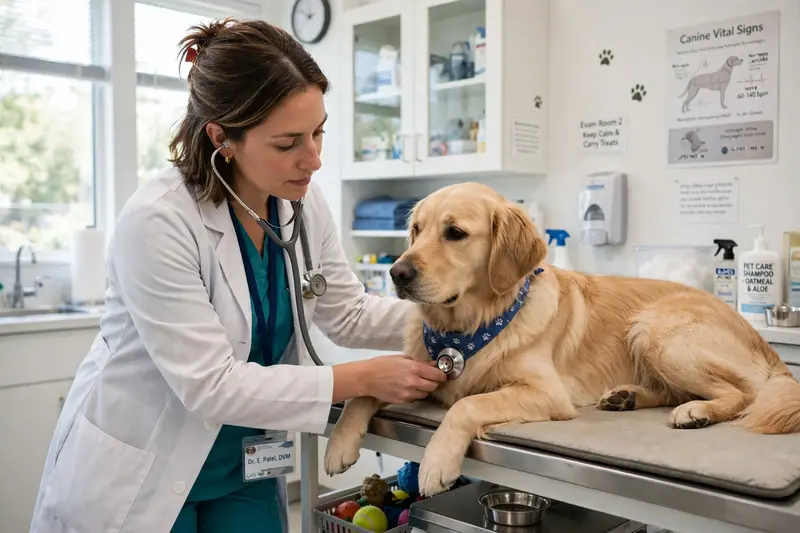
Vets diagnose dog vomiting by pairing your history with a hands on exam and targeted tests. The vet asks what the dog ate and when the vomiting started. The vet also asks how often it happens, what the vomit looked like, and whether diarrhea or lethargy came with it, plus any appetite loss.
The exam checks hydration and belly pain, plus temperature and gum color. Blood work shows kidney and liver values. It also shows electrolytes and signs of infection. X rays or ultrasound look for a swallowed object or a blockage. A fecal test checks for parasites. The Merck Veterinary Manual page on vomiting in dogs describes the same workup, from history through imaging.
Treatment follows the cause. Fluids treat dehydration, anti nausea medicine settles the stomach, and surgery removes a blockage when one shows up. A dog with a simple stomach upset may need nothing more than fluids, rest, and a bland diet for a few days while the gut settles on its own. Ask the vet to explain the plan in plain words before you leave, and ask what signs should bring you back sooner.
Preventing the next episode
Prevention beats cleanup, and most dog vomiting episodes trace back to something the dog ate. Keep garbage behind a latched lid, pick up fallen food in the yard, and store human medicine, chocolate, and grapes where a dog cannot reach them. Onions, garlic, and xylitol products need the same treatment.
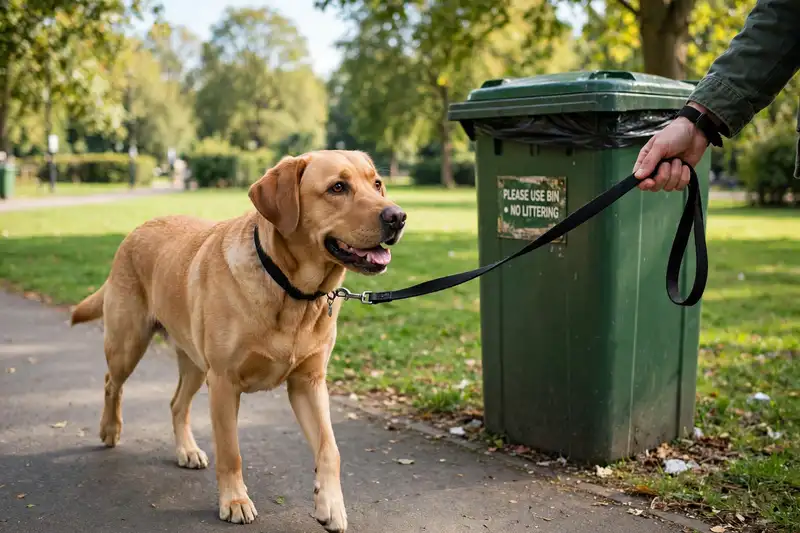
Change foods slowly over a week instead of swapping bowls overnight. Feed measured meals rather than leaving food down all day, and keep table scraps off the menu, since rich scraps trigger pancreatitis in prone dogs. Fatty meals are the classic trigger, which is why rich scraps are the first thing to cut. Dogs that scavenge on walks need a solid leave it cue and a short leash near bins.
A dog that vomits after every car ride may need motion sickness help from the vet. Dogs that gulp food can use a slow feeder bowl, which also cuts down on swallowed air. Small habits, repeated daily, stop most of the mess before it starts, and a dog proofed kitchen is worth more than any medicine cabinet.
Frequently asked questions about dog vomiting
Why does my dog vomit yellow foam in the morning?
Yellow foam is usually bile from an empty stomach, and it shows up most in dogs that go too long between dinner and breakfast. A small late evening snack often fixes it, once the vet has ruled out other causes.
My dog vomited once and seems fine. Is that normal?
A single vomit in a bright adult dog that eats and drinks normally is common and usually settles within a day. Watch the next 24 hours, and call the vet if it repeats or other signs appear.
When should I worry about dog vomiting?
Worry when vomit contains blood, when vomiting repeats or the dog cannot keep water down, when the belly looks swollen, or when vomiting comes with fever, lethargy, diarrhea, or weakness. Puppies get a vet visit the same day.
Can I give my dog medicine for vomiting at home?
Only if your vet tells you to. Human stomach medicines can harm dogs, and the wrong one can hide a serious problem. Call the vet first and describe the symptoms.
Should I make my dog vomit after it eats something bad?
Never induce vomiting on your own. Some swallowed things cause more damage coming back up, and the wrong timing makes it worse. Call your vet or poison control first for instructions.
What does vomiting with diarrhea mean?
Vomiting plus diarrhea drains fluid from both ends at once, so dehydration comes fast. It often means gastroenteritis, an infection, or a swallowed toxin. A dog with both symptoms and any red flag needs a vet the same day, and bloody diarrhea always earns a prompt visit.
Can stress make a dog vomit?
Stress can upset a dog stomach, and boarding, travel, fireworks, or a new home sometimes trigger a vomit or two. If the vomiting repeats or the dog goes off food, the cause needs a vet check rather than a stress label.
Dog vomiting is common, and most of the time it ends with a cleanup and a quiet evening. The skill lies in spotting the episode that does not fit the pattern, and acting on it early. Blood, repeat vomiting, a swollen belly, or a puppy in trouble all mean the vet hears about it now, not tomorrow. For everything milder, rest the stomach, restart food slowly, and keep the vet number where you can reach it. A calm owner who watches closely gives the vet the history that solves the case fastest, and a dog that feels better by morning is the best outcome of all.
Disclaimer: This article is for general information only and is not veterinary advice. If your dog vomits blood, cannot keep water down, or shows any red flag listed above, contact your veterinarian promptly.