
Simparica Trio for dogs is a prescription monthly chewable that protects against fleas, ticks, heartworm disease, roundworms, and hookworms in a single dose. Three active ingredients do the work: sarolaner kills fleas and ticks, moxidectin prevents heartworm disease, and pyrantel clears roundworms and hookworms. The FDA approved it in 2020 for dogs at least 8 weeks old and weighing at least 2.8 pounds. Most dogs take it without trouble, but the flea and tick ingredient belongs to a drug class the FDA has linked to rare neurologic reactions, so owners of dogs with a seizure history need a vet conversation first.

What Simparica Trio covers in one monthly chew
Simparica Trio covers five parasite problems with one monthly chewable tablet. The chew prevents heartworm disease, kills adult fleas and treats flea infestations, treats and controls six tick species, and treats and controls roundworms and hookworms. That breadth is the whole point of the product.
Owners who once juggled a flea treatment, a separate tick product, and a heartworm pill can cover all five with one tablet, given on the same day each month.
The six tick species on the label are the lone star tick, the Gulf Coast tick, the American dog tick, the black-legged tick (also called the deer tick), the brown dog tick, and the Asian longhorned tick. Coverage of the black-legged tick carries a bonus: the product is FDA approved to help prevent Lyme disease infections by killing the ticks that carry the bacteria. Killing fleas carries a second bonus: it helps prevent flea tapeworm infections, since fleas spread that tapeworm to dogs who swallow them while grooming.
One tablet a month sounds simple, but the dose must land on schedule every month, all year. Mosquitoes do not take winters off in most of the United States, and a missed month leaves a gap.
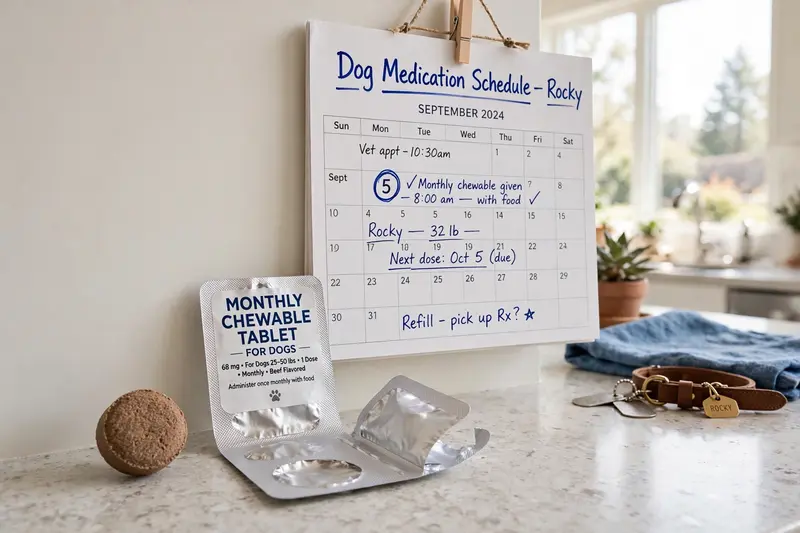
The three ingredients and what each one does
Simparica Trio combines sarolaner, moxidectin, and pyrantel, and each ingredient has one job. Sarolaner belongs to the isoxazoline class and kills fleas and ticks by disrupting nerve signals in the parasites after they bite. Moxidectin belongs to the macrocyclic lactone class and kills heartworm larvae before they can grow into adult worms in the heart and lungs.
Pyrantel paralyzes roundworms and hookworms so the dog passes them in the stool.
That split matters because no single chemical could do all three jobs well. Sarolaner acts on the outside parasites, moxidectin acts on the heartworm larvae circulating inside, and pyrantel acts on the intestinal worms. The combination is why the product needs a prescription: a vet confirms the dog is a fit candidate, weighs the dog for the right tablet size, and orders the heartworm test that must come first.
Owners sometimes ask why the chew is liver flavored. A chew a dog eats willingly is a dose that actually gets in, and a spit-out tablet is a missed dose. Hiding the tablet in a small piece of food usually solves a refusal.

How to give it and when to start
Simparica Trio is given by mouth once a month, and the dog must be at least 8 weeks old and weigh at least 2.8 pounds. The vet picks the tablet strength from the dog’s current weight, so a puppy that is growing fast needs reweighing and a new tablet size as it grows.
A tablet sized for a 10 pound dog does not protect a 40 pound dog, and a tablet sized for a large dog is an overdose for a small one.
Start the chew on a date you can remember, then repeat on the same day each month. The first of the month works for many owners, or pick the day of an existing routine, like the day the rent is due. A phone reminder beats memory. Year-round dosing is the standard advice from vets, because heartworm risk follows mosquitoes, and fleas and ticks survive indoors through winter in heated homes.
Give the chew according to the label and your vet’s direction, and watch the dog for a few minutes to make sure the whole tablet went down. Puppies can start at 8 weeks, so a new puppy can begin parasite protection at the same visit as its first vaccines.

The heartworm test rule before the first dose
Simparica Trio prevents heartworm disease, but it does not treat adult heartworms, so a heartworm test must come before the first dose. The reason is plain: moxidectin kills heartworm larvae, not the adult worms already living in the heart and lungs.
A dog that already carries adult heartworms needs a different treatment, an adulticide, and starting a preventive without knowing the dog’s status can mask the problem while the disease advances.
The test is a simple blood test at the vet clinic, and adult dogs need it repeated on the schedule the vet sets, usually once a year. Puppies under 7 months can often start prevention without a test, because heartworm takes about 6 months to mature, but the vet decides that case by case. A rescue dog with an unknown history always gets tested first.
Heartworm disease itself is worth understanding, because the stakes explain the rule. Mosquitoes spread the larvae, the larvae grow into worms up to a foot long, and the worms damage the heart and lungs, plus the blood vessels. Treatment for adult heartworms is expensive and risky, and it involves months of strict rest. Prevention costs far less and carries far less risk. The VCA guide to heartworm disease in dogs explains the life cycle and why a single missed season can end in a serious diagnosis.

Common side effects owners actually see
Simparica Trio is generally well tolerated, and the side effects owners see most are digestive and mild. In the main field study, 272 dogs took the chew once a month for 11 months, and the most frequent reactions were vomiting in 14.3 percent of dogs, diarrhea in 13.2 percent, lethargy in 8.5 percent, and loss of appetite in 5.1 percent.
Those numbers include reactions that may have had nothing to do with the drug, since vomiting and diarrhea also showed up in dogs taking the comparison product.
A single vomit or a soft stool the day after the dose is the typical pattern when anything happens at all. Most dogs have no reaction, and most reactions that do appear resolve on their own within a day or two. A dog that vomits repeatedly, refuses food for more than a day, or seems flat and weak after a dose deserves a vet call. Gastroenteritis is the general term for the stomach upset you are watching for, and bloody diarrhea is the sign that always earns a prompt vet visit.
Keep a short note after each dose for the first few months: date given, any vomiting or soft stool, appetite the next day. A dog that vomits after every dose has a problem worth solving. A dog that vomited once in six months does not.

The FDA warning about seizures and tremors
Simparica Trio carries an FDA class warning that every owner should know before the first dose. Sarolaner belongs to the isoxazoline class, and in 2018 the FDA alerted pet owners and vets that isoxazoline flea and tick products have been linked to neurologic reactions, including muscle tremors, loss of coordination, and seizures.
These reactions are uncommon, and the FDA still considers the products safe and effective for most dogs, but the warning is real and it is on the label for a reason.
Seizures have been reported in dogs receiving isoxazoline drugs even when those dogs had no history of seizures. That sentence surprises owners, and it should. Seizures stay uncommon. A dog with no seizure history still carries a small risk, and an owner should know what a seizure looks like: sudden collapse, stiffening, paddling legs, loss of bladder control, then confusion as the dog comes around. A first seizure is an emergency vet visit, not a wait-and-see event.
The FDA’s own announcement on Simparica Trio repeats the warning plainly, noting that the product is prescription only because professional expertise is required to monitor for and respond to these reactions. Read the FDA announcement on Simparica Trio for the agency’s exact wording. Owners who understand the warning before they start are calmer and faster to act when something unusual happens.

Dogs who need extra caution
Dogs with a history of seizures or a known neurologic disorder need a vet conversation before starting Simparica Trio. The label advises caution in those dogs, and the vet may choose a different class of flea and tick preventive instead. That gap calls for a different product, not for skipping parasite protection.
Several non-isoxazoline options exist, and the vet can pick one that fits the dog.
Very small dogs need care too. The product is labeled only for dogs weighing at least 2.8 pounds, and the safe use has not been established below that weight. Puppies under 8 weeks are also outside the label. Breeding, pregnant, and nursing dogs need a vet decision as well, since the label does not cover those cases with the same confidence.
Dogs with a known sensitivity to any of the three ingredients should not take the chew, and owners should tell the vet about every other medication the dog takes. Drug interactions are uncommon with this product, but the vet is the one who checks. A dog that takes other medicines for seizures, for example, deserves a careful review before adding an isoxazoline to the mix. When in doubt, the vet visit is the place to raise it, not the pharmacy counter.

The gaps in Simparica Trio coverage
Simparica Trio covers a lot, but the gaps matter. Whipworms sit outside the label, a tapeworm infection a dog already has needs a different treatment, and adult heartworms need an adulticide. A dog with a whipworm infection needs a different dewormer, and a dog with tapeworms needs a treatment that targets tapeworms directly.
It also does not repel ticks. The chew kills ticks after they bite, which means a tick can attach before it dies. That is enough to prevent Lyme disease in most cases, because the bacteria need time attached to transmit, but it is not the same as a repellent that keeps ticks off entirely. Owners in heavy tick country still check the dog after walks, run hands through the coat, and look between toes and inside ears. The AKC guide to Lyme disease in dogs explains how transmission works and why prompt tick removal still matters.
Flea control has a similar gap. The chew kills fleas on the dog, but it does nothing for fleas living in carpet, bedding, or the yard. A home with an established flea infestation needs environmental treatment too: washing bedding in hot water and vacuuming, plus treating the home. Benadryl for dogs is sometimes discussed for flea allergy itch, but it treats the itch, not the fleas, and it needs a vet’s word first. The chew is the foundation, not the whole house.

Missed doses, overdoses, and switching products
Simparica Trio protects for one month, so a missed dose leaves the dog unprotected until the next one. Give the missed dose as soon as you remember, then return to the monthly schedule from that new date. Do not double up to catch up.
A double dose is an overdose risk, not a shortcut, and the label is clear that the chew is one tablet per month.
An accidental double dose or a dog that steals a second tablet calls for a vet call, not panic. Safety studies tested the product at higher than label doses, and most dogs tolerate an extra dose without serious harm, but vomiting and diarrhea become more likely, along with lethargy, and the vet may want to watch the dog. Keep the packaging so you can tell the vet exactly how much the dog ate and when.
Switching from another preventive to Simparica Trio is common, and the vet sets the timing. The usual rule is to start the new chew when the old product’s month runs out, so the dog has no gap and no overlap. Never stack two full preventives without a vet’s direction, and never split a chew between two dogs. Each tablet is dosed for one dog’s weight band, and a half tablet protects neither dog properly. VCA’s flea control guide for dogs covers the broader picture of keeping a home flea free while a preventive does its job.

Frequently asked questions about Simparica Trio for dogs
Is Simparica Trio safe for puppies?
Yes, for puppies at least 8 weeks old and weighing at least 2.8 pounds. The vet weighs the puppy at each visit and adjusts the tablet size as the puppy grows. Puppies under 8 weeks or under the weight limit should not take it.
Can I give Simparica Trio to a dog with seizures?
Ask your vet first. The isoxazoline ingredient carries an FDA warning about tremors, loss of coordination, and seizures, and the label advises caution in dogs with a seizure history. The vet may pick a different preventive for that dog.
What is the difference between Simparica and Simparica Trio?
Plain Simparica covers fleas and ticks only. Simparica Trio adds heartworm prevention plus roundworm and hookworm treatment in the same monthly chew. The two products are not interchangeable.
What if my dog vomits after the chew?
One vomit shortly after the dose may mean the tablet came back up, so call the vet before redosing. The vet decides whether to repeat the dose. A bland diet for a day or two is the usual recovery path for mild stomach upset once the vet rules out anything serious.
Does Simparica Trio kill ticks already on my dog?
Yes, it kills attached ticks of the six species on the label. It does not repel ticks, so check the dog after walks and remove any ticks you find. Dead ticks may stay attached briefly, so removal is still worth doing.
Can I buy Simparica Trio without a prescription?
Prescription only. A heartworm test must come first and the vet must confirm the dog’s weight and health. Online sellers offering it without a prescription are not selling it legally.
Can I split one chew between two small dogs?
Each tablet is dosed for one dog’s weight band. Splitting gives each dog the wrong dose and leaves both underprotected. Buy the right size for each dog.
My dog has diarrhea after the dose. Is that normal?
Mild diarrhea is one of the most common side effects and usually clears within a day or two. Call the vet if it lasts longer, if there is blood in the stool, or if the dog stops eating or drinking. Never give Imodium for dogs without the vet’s word.
Simparica Trio earns its place as the one chew that covers fleas, ticks, heartworm, roundworms, and hookworms, and most dogs take it month after month without a problem. The honest picture includes the FDA neurologic warning, the heartworm test that must come first, and the gaps in coverage that owners still need to manage. Get the test, give the chew on the same day each month, watch the dog for a day after each dose, and keep the vet in the loop when anything looks off. Fish oil for dogs can support skin and coat health alongside parasite protection, but it never replaces it. A monthly chew plus a watchful owner keeps parasites away.

Disclaimer: This article is for information only and is not a substitute for veterinary advice. Simparica Trio is a prescription medication. Talk to your veterinarian before starting, stopping, or switching any parasite preventive.



1 thought on “Simparica Trio for Dogs: Coverage, Safety, and Side Effects”