Yummy Combs dog dental treats are honeycomb-shaped dental chews from Pet’s Best Life, carrying 44% minimum protein, added glucosamine and chondroitin, and a place on the VOHC accepted-products list for dogs. The pitch is a dental treat that works like floss: hexagonal ridges scrub around each tooth while the dog chews. The brand backs it with a 60-day feeding trial claiming over 25% tartar reduction. This review checks the design, the ingredient panel, the dosing rules, and where the claims hold up.

What Yummy Combs are and who makes them
Pet’s Best Life, a company based in North Kansas City, Missouri, makes Yummy Combs as a daily dental treat for adult dogs, in sizes from X-Small to X-Large. The founder story on the packaging centers on a team of doctors focused on pet oral health, and the shape went through refinement with Dr. Jan Bellows, a past president of the American Veterinary Dental College, according to retailer listings. The U.S. Patent and Trademark Office has issued multiple design patents on the shape, which is why nothing else on the shelf looks like it.
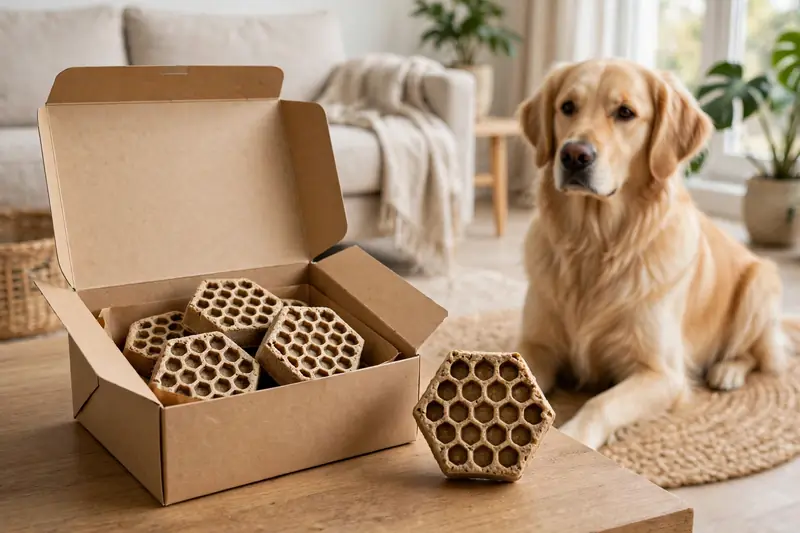
The line comes in chicken and fish-and-egg recipes, with the chicken version the widely stocked one. Sizes run X-Small (up to about 12 pounds) through X-Large (over 100 pounds), and the brand stresses matching the treat to the dog’s weight. A 12-ounce X-Small bag holds around 48 treats, which works out to roughly seven weeks at the prescribed one-a-day dose.

“Made in the USA with quality ingredients from around the world” is the origin line on the label. The formula avoids artificial colors, flavors, and preservatives, plus lactose, grains, GMOs, and gluten. Those free-from claims are table stakes in the premium treat aisle now; the shape and the protein level are what actually distinguish the product.
The honeycomb design: flossing or marketing?
The wide, flat, six-sided honeycomb shape is engineered to slow gulping and keep the treat against the teeth longer, and that mechanical idea is sound. Most dental treats fail on speed: dogs crunch twice and swallow, and two crunches clean nothing. Yummy Combs’ width forces the dog to work the piece, and the hexagonal ridges present edges to the tooth surface from multiple angles as the dog repositions it. The brand calls it 360-degree cleaning.

The Slick’M ingredient is the safety half of the design. It is a patented component that turns slippery on contact with saliva or stomach fluids, so a swallowed chunk slides rather than lodges. No ingredient can make gulping safe, but a treat designed for gulp-prone dogs that also plans for the gulp is more honest engineering than most competitors manage.
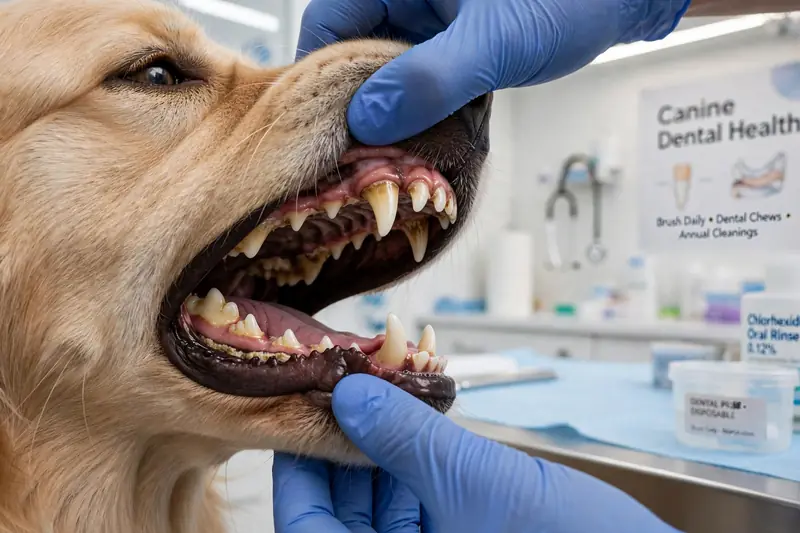
That said, shape is not floss. Real flossing (or brushing) cleans below the gumline where periodontal disease starts; a chew cleans the crown surfaces it touches. The design maximizes what a chew can do. It does not change what a chew is. Owners who buy the shape and skip the toothbrush still leave the gumline uncleaned.
The ingredient panel: 44% protein and joint extras
Chicken meal and spray-dried chicken lead the ingredient list, crude protein hits 44% minimum, and the formula adds glucosamine and chondroitin at joint-supplement levels. That protein figure is roughly two and a half times the average dental treat, and it changes the product’s role: this is a protein-rich daily chew that also cleans teeth, not a starchy biscuit with a dental claim attached.
The supporting ingredients read like a supplement label: honey, salmon oil (omega-3 and 6), turmeric, yucca, plus a full vitamin and mineral premix. The fish oil guide covers what those omega fatty acids do for skin and coat. Sodium hexametaphosphate and sodium tripolyphosphate are the tartar-fighting actives; they bind calcium in saliva so it cannot harden into tartar as fast. The formula contains no wheat, rice, potato, or pea flour, which matters for dogs with those sensitivities.
The joint ingredients create the dosing rule. Glucosamine runs about 100 mg per ounce and chondroitin about 90 mg per ounce, and the feeding directions cap the treat at one per day for adult dogs because more would exceed sensible supplement levels. The glucosamine guide for dogs explains typical joint-supplement dosing. That cap is a feature disguised as a limit: it stops owners from doubling up on dental treats the way they do with biscuits.
VOHC acceptance: what the seal actually proves
Yummy Combs appears on the Veterinary Oral Health Council’s accepted-products list for dogs, which means trial data showed it reduces plaque or tartar to the council’s preset standards. VOHC awards its seal when a product demonstrates at least a 10% plaque reduction or a 20% tartar reduction against a control in a controlled trial. The seal is about efficacy, not safety, and it covers the specific claim tested.

Check the current list before buying any dental product, because the list changes. Products get added and dropped as companies submit new data or let acceptances lapse. The official VOHC accepted-products page is the source of truth; third-party roundups go stale. Yummy Combs’ presence there puts it in tested company alongside Greenies, OraVet, and WHIMZEES.
One nuance the seal does not cover: VOHC tests the product as directed, which for Yummy Combs means the right size for the dog’s weight, one per day. A Great Dane eating an X-Small comb gets no tested benefit. Size matching is part of the efficacy, not just a suggestion.
The 25% tartar claim, unpacked
The brand’s 60-day clinical trial reports over 25% hardened-tartar reduction, a plausible result for a daily abrasive chew that still leaves questions a buyer should ask. Twenty-five percent sits comfortably above VOHC’s 20% tartar threshold, which is consistent with the seal. The trial ran 60 days with daily feeding, which matches real use.

What the headline number does not show: the trial population (breed mix, starting tartar levels, ages), whether brushing was controlled, and how the measurement handled the back teeth where tartar hides. Brand-run trials are standard in this industry; VOHC acceptance means the council reviewed the data and found it adequate. That is a meaningful filter, but it is not the same as an independent university study.
The practical read: expect visibly cleaner tooth crowns over two months of daily use, not a dental cleaning in a bag. Heavy existing tartar still needs a professional cleaning first; no chew removes calcified tartar well. Buy the treat for maintenance after a cleaning, not instead of one.
One treat a day: the dosing rule that matters
Yummy Combs are formulated for adult dogs at one treat per day, because the glucosamine and chondroitin levels make doubling up unwise. This is the rare treat with a real ceiling. Most dental chews can be fed freely within calorie limits; this one carries supplement-level joint ingredients that set the cap.

The adult-only label matters too. Puppies, pregnant dogs, and nursing dogs should not get the product; growing and reproducing animals have different supplement needs, and the formula was not built for them. Puppy owners should stick to puppy-appropriate chews and start dental routines with brushing.
Calorie-wise, one treat fits easily into the VCA’s 10-percent treat guideline for most dogs. The protein density means the treat is more satiating than a starchy chew of similar size, which helps with begging. One and done is also simpler to remember than the sliding scales some competitors print.
Who should skip them
Dogs with chicken sensitivity should avoid the chicken recipe, puppies and nursing dogs are excluded by the label, and dogs that need strictly hypoallergenic treats should look elsewhere. Chicken meal is the first ingredient, so the main recipe is wrong for the many dogs with poultry issues. The chicken guide for dogs notes poultry is among the more common sensitivities. The fish-and-egg recipe exists for that case, but availability is spottier; confirm it is actually in stock before switching a sensitive dog.

Dogs with a history of gulping foreign objects need supervision with any chew, Slick’M included. The ingredient is a backup plan, not a permission slip. And dogs already taking joint supplements should run the combined glucosamine math past their vet; the treat’s contribution is real enough to count.
Price-sensitive buyers should do the per-day math without flinching. A premium daily treat costs more per month than a bag of biscuits, and the value depends on the dental benefit actually materializing. If the dog will not chew it properly, the money buys expensive protein, not cleaner teeth.
Yummy Combs vs Greenies and the rest
Against Greenies, Yummy Combs offer more protein and joint ingredients at a higher price; against OraVet, they offer a simpler daily routine without the two-step system. Greenies remain the benchmark: VOHC-accepted for plaque and tartar, widely stocked, and cheaper per day. Their texture is chewier and less structured, which suits dogs that like to gnaw but does less to slow gulpers.

OraVet takes a different approach with delmopinol, a barrier ingredient, in a two-part system (chew plus sealant). It is the choice for owners who want chemistry alongside abrasion. WHIMZEES and VeggieDent compete on natural positioning and fun shapes. The Greenies review covers the benchmark in detail for direct comparison.
PetMD’s treats guide lists dental chews among its recommended treat types. The honest ranking: no dental treat has proven superiority over the others for the average dog. VOHC acceptance is the quality floor, and beyond it the choice comes down to the dog’s chewing style, sensitivities, and what the owner will actually buy every month. Consistency beats brand. Pair the chew with brushing for the best results. Daily brushing still does the heavy lifting for plaque control.
Frequently asked questions about Yummy Combs
Buyers usually ask about the flavors, the daily limit, and whether the treats replace brushing. The answers below stick to the label and the VOHC listing.

What flavors do Yummy Combs come in?
Chicken is the main recipe and the widely available one. A fish-and-egg recipe exists for dogs avoiding chicken, per retailer listings. Confirm availability before switching a sensitive dog, since the fish recipe stocks less consistently.
Can puppies have Yummy Combs?
Puppies should skip them. The label formulates the treat for adult dogs only, because of the supplement-level glucosamine and chondroitin. Puppies need puppy-appropriate chews and a brushing routine instead.
Do Yummy Combs replace tooth brushing?
They do not. No chew replaces brushing. Yummy Combs clean the tooth crowns they touch; brushing cleans the gumline where periodontal disease starts. The AKC’s dental care tips shows the technique takes a few minutes once the dog accepts it. Use the treat for maintenance between brushings, not instead of them.
Are Yummy Combs VOHC accepted?
Yes, they appear on the VOHC accepted-products list for dogs. The seal means trial data met the council’s standards for plaque or tartar control. Verify on the current list at vohc.org before buying, since the list updates.
Why only one treat per day?
The glucosamine (about 100 mg per ounce) and chondroitin (about 90 mg per ounce) are dosed at supplement levels, so a second treat would push intake past sensible daily amounts. One per day is the formulated dose, not a suggestion.
What if my dog swallows one whole?
The Slick’M ingredient is designed to turn slippery on contact with saliva and stomach fluids so chunks pass more easily. Watch the dog for gagging or distress anyway, and call the vet if vomiting repeats or the dog seems uncomfortable. Size the treat to the dog to make this unlikely.
Yummy Combs earn their shelf space: a shape unlike anything else on the shelf, a protein-rich panel, VOHC-tested efficacy, and a dosing rule with a real reason behind it. Buy them for daily maintenance after a professional cleaning, size them to the dog, brush the teeth too, and the honeycomb does the rest.
Disclaimer: This article is for general information only and is not veterinary advice. Dental treats do not replace professional cleanings or tooth brushing. If your dog has dental disease, bad breath, or mouth pain, see your veterinarian.