Can dogs eat protein powder? The powder is the wrong question. The label is the question. Human protein powder is not safe for dogs as a routine extra, because the additives decide the risk: xylitol can kill, caffeine and chocolate flavorings poison, and even plain whey upsets most canine stomachs. A scoop of pure unflavored whey is a stomachache. A scoop of the wrong flavored blend is an emergency. Read the label before you panic, and panic fast if the label names the wrong sweetener.

Can dogs eat protein powder? The short answer
Dogs should not eat human protein powder. The protein itself is rarely the acute danger; the sweeteners, flavorings, caffeine, and concentrated additives are. Xylitol, also labeled as birch sugar, is the deadliest ingredient: tiny amounts cause a blood sugar crash and can destroy the liver. If your dog eats protein powder, check the label for xylitol first and call your vet immediately if it appears.
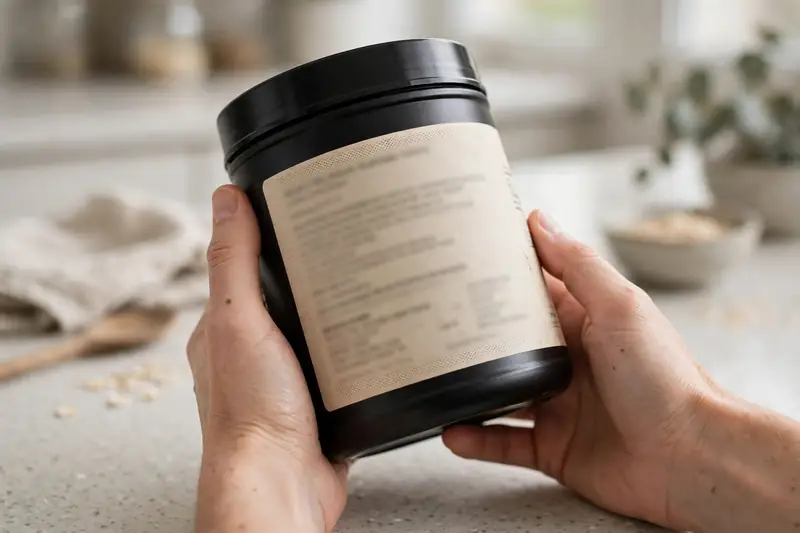
Protein powder exists for human fitness goals, not canine nutrition. Scoops are engineered around human digestion, human sweet preferences, and human workout recovery, with ingredient doses scaled to a 70-kilogram athlete. None of that maps to a dog. A complete dog food already delivers the right protein amount for the species, which makes human powder a solution to a problem most dogs do not have. The VCA’s feeding guidelines frame treats and extras as a small fraction of the diet, and a concentrated supplement blows past that fraction by design.
Owners reach for protein powder because “protein is good for dogs,” but the dose, the source, and the company it keeps decide everything. A chicken breast is protein. A scoop of cookies-and-cream whey isolate with sweeteners is a chemistry set, and this article sorts that chemistry set by danger level.
Xylitol and birch sugar: the sweetener that kills
Xylitol is the ingredient that turns a spilled scoop into a race against the clock. In people, xylitol barely moves blood sugar. In dogs, it triggers a massive insulin release, crashing blood glucose within 10 to 60 minutes. The FDA’s xylitol warning for dog owners exists because the margin is brutally thin: as little as 0.1 grams per kilogram of body weight can cause hypoglycemia, and 0.5 grams per kilogram can cause liver failure. For a 10-kilogram dog, that is about one gram and five grams respectively, amounts easily hiding in a single serving of sweetened powder.
The labeling trap is the name. Xylitol increasingly appears on labels as “birch sugar,” its source material, and some products list it deep in the ingredient panel where tired eyes skip. Check for both names, every time, on every new tub. Sugar-free and “no sugar added” formulas are the highest-risk category, since xylitol is the standard sugar replacement in fitness products. If the marketing brags about sweetness without sugar, assume xylitol until the label proves otherwise.
Symptoms arrive in two waves. The blood sugar crash comes first: weakness, staggering, vomiting, collapse, or seizures within minutes to hours.

The liver damage comes second, unfolding over 24 to 72 hours, and it can kill dogs that seemed to recover from the first wave. That two-wave pattern is why “he seems fine now” is never the end of a xylitol story. The Pet Poison Helpline’s xylitol page stresses immediate veterinary care even for dogs that look normal, because the liver clock is already running.
What is actually in a scoop
A typical protein powder contains a protein base plus a support cast of sweeteners, flavors, thickeners, and extras. The base is usually whey concentrate or isolate, casein, or a plant blend of pea, rice, or soy protein. The support cast is where dogs get hurt: xylitol or sucralose for sweetness, cocoa for chocolate flavors, caffeine or green tea extract in “energy” blends, plus gums, emulsifiers, and vitamin premixes dosed for humans.
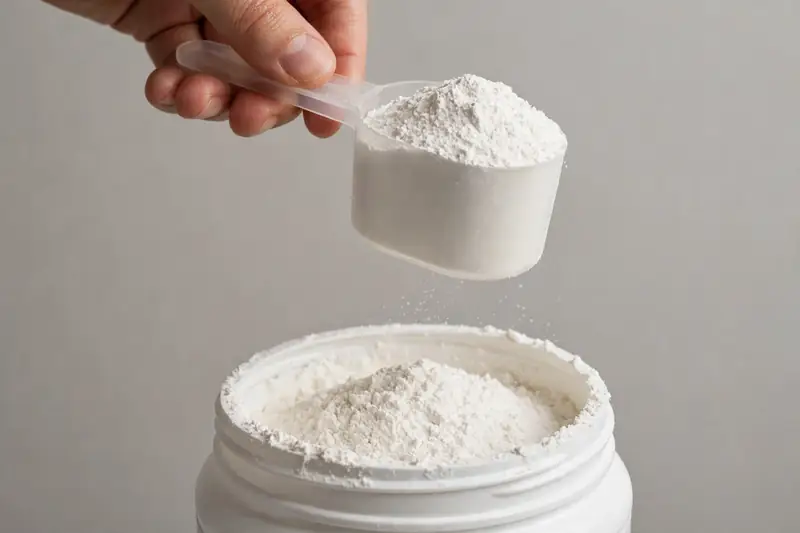
Plant-based powders carry an extra concern beyond their ingredient lists. A Consumer Reports investigation of 23 protein products found more than two-thirds exceeded the group’s daily lead limit, with plant-based powders containing up to nine times more lead than whey-based ones. Lead is a neurotoxin with no safe exposure level, and a dog’s smaller body concentrates the dose. “Plant-based” reads as wholesome on the tub. In the lab results, it read as the most contaminated category.
Whey, lactose, and the dog’s stomach
Whey is a dairy protein, and most adult dogs are lactose intolerant to some degree. Puppies produce lactase, the enzyme that digests milk sugar, but production drops after weaning, leaving adult dogs poorly equipped for dairy. Whey concentrate retains enough lactose to cause gas, bloating, and diarrhea in sensitive dogs. Whey isolate is filtered harder and carries less lactose, but “less” is not “none,” and concentrated powder delivers a bigger lactose load than the equivalent splash of milk.
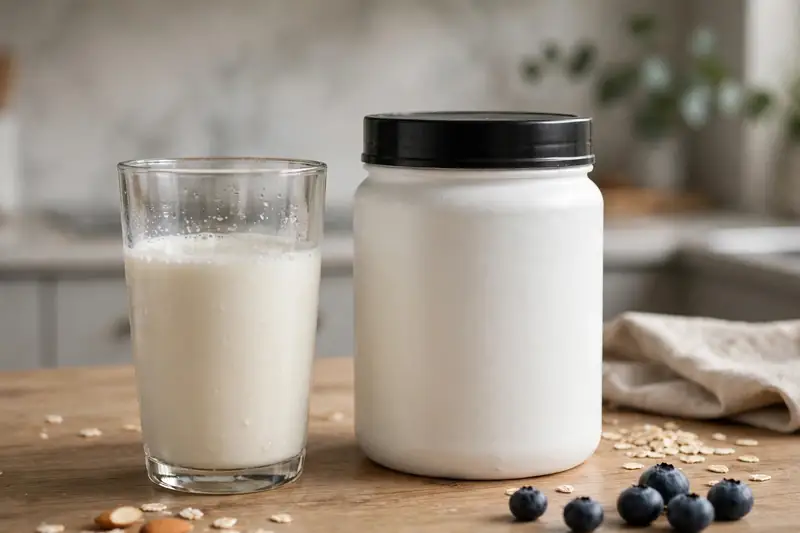
Here is the complicating fact the panic skips: plain unflavored whey, with no sweeteners or additives, is not acutely toxic to dogs. A dog that licks a scoop of pure whey will likely get a stomachache and diarrhea, not a poisoning. The danger ranking runs xylitol first, caffeine and chocolate second, heavy metals third, and plain whey a distant fourth as a digestive nuisance. That ranking matters because it tells you where to look on the label. Owners who fixate on “protein” while missing “birch sugar” in the fine print are guarding the wrong door.
Concentration is whey’s other problem. Powder is protein with the water removed, so a small volume delivers a large dose. A dog’s stomach handles a chicken breast’s worth of protein spread through a meal; the same protein as a dry powder bolus hits differently, drawing water into the gut and speeding transit. The result is the classic too-rich-too-fast diarrhea. Unpleasant, usually self-limiting, and entirely avoidable.
Caffeine, chocolate, and flavorings
Pre-workout style powders and “energy” protein blends often contain caffeine, and chocolate-flavored powders contain cocoa. Both are genuine dog toxins, not just stomach irritants. Caffeine overstimulates the canine nervous system and heart: restlessness, rapid heartbeat, tremors, and in high doses seizures. Cocoa brings theobromine, the same compound that makes chocolate dangerous for dogs, with vomiting, diarrhea, and cardiac effects scaling to the dose.
The dose question is real but uncomfortable. A single lick of mocha-flavored powder will not poison a Labrador. The same lick could matter more for a tiny dog, and a determined chewer that eats multiple scoops of an energy blend is in real danger. Caffeine content varies wildly between products, from negligible to pre-workout levels, which is why the label check matters more than any general reassurance. If the tub says “energy,” “thermogenic,” or lists guarana, green tea extract, or yerba mate, treat it as a caffeine product.
Artificial colors and flavors round out the support cast. They are the least dangerous ingredients in the tub, but they signal a heavily formulated product, and heavily formulated products are where the dangerous ingredients hide. A powder with a short ingredient list of whey and sunflower lecithin is a different risk object than a powder with twenty ingredients and a flavor system. Simplicity on the label correlates with safety for dogs, even though neither was designed with dogs in mind.
Heavy metals: the contamination problem
The Consumer Reports findings deserve their own section because they change the “pure whey is harmless” story. When more than two-thirds of tested products exceed a strict daily lead limit, and some servings carry 6 to 7 micrograms against a 0.5-microgram benchmark, the product category has a contamination problem, not just a formulation problem. Dogs are smaller than people, their detox systems handle heavy metals no better, and chronic low-dose exposure is the hardest kind to notice.
Plant-based powders tested worst, at up to nine times the lead levels of whey products. The likely reason is the plants themselves: pea, rice, and soy absorb heavy metals from soil, and concentrating the plant into protein concentrates the metals too. The vegan powder that looks cleanest in marketing tested dirtiest in the lab.
No label discloses heavy metals. Third-party testing seals help, but most tubs lack them, and no certification guarantees zero contamination. The practical takeaway is simple: keep all protein powder away from dogs as a default, not just the sweetened kinds. The acute poisons get the headlines, but the chronic contaminants are the reason “unsweetened” is not a synonym for “safe.”
Too much protein and the kidneys
Healthy adult dogs tolerate extra protein well, but “tolerate” is not “benefit from.” The kidneys filter protein’s waste products, and while a healthy kidney handles the load, a compromised one struggles. Older dogs and dogs with early kidney disease, often undiagnosed, are the group where routine protein supplementation does quiet harm. Kidney disease in dogs is managed with controlled protein levels, and an owner scooping powder into the bowl can undo a prescription diet’s careful balance without realizing it.

Weight gain is the more common consequence. Protein powder is calorie-dense, and a tablespoon here and there becomes a pound over months. If the goal is a shinier coat, fish oil formulated for dogs does the job without the toxin roulette.
The underlying point is that dogs on complete commercial diets do not have protein gaps. AAFCO-compliant dog food is formulated to meet protein requirements with margin, and healthy dogs eating enough of it need no supplementation. Supplementation makes sense only for specific medical situations, diagnosed by a vet, using products formulated for dogs. Everything else is marketing crossing the species barrier.
What to do if your dog eats protein powder
Secure the tub first, then read the label like a detective. The single most important line is the sweetener: xylitol or birch sugar means emergency, no waiting for symptoms. Note the product name, the flavor, the estimated amount eaten, and the time. Photograph the ingredient panel with your phone; you will read it to the vet or poison control, and a photo beats memory under stress.

If xylitol is present, call your vet or an emergency clinic immediately, even if the dog looks fine. Xylitol’s second wave, liver failure, arrives after the dog seems to recover, so early treatment is the whole game. Do not induce vomiting on your own: the decision depends on timing, amount, and the product’s other ingredients, and inducing vomiting is only safe under veterinary direction. For non-xylitol powders, the vet will likely advise monitoring for GI upset, with a bland diet if diarrhea develops.
Watch for 24 to 72 hours after any significant ingestion, not just the first evening. The xylitol liver window extends to three days, and heavy-metal or vitamin concerns are longer still. Keep the dog’s water available, note appetite and energy, and save the tub. If symptoms escalate at any point, the vet needs the product in hand, not just its name.
Safe ways to add protein for dogs that actually need it
Some dogs have a real need for extra protein: underweight rescues, dogs recovering from illness, and canine athletes in actual training. For those dogs, the answer is real food or veterinary products, not human powder. Plain cooked chicken breast, boiled eggs, and cottage cheese in moderation are the classic veterinary recommendations: complete proteins, no sweeteners, no caffeine, no label detective work required.

Dog-formulated protein supplements exist for cases where food alone is not enough. These are made to canine nutritional standards, without xylitol or human-scale additives, and your vet can recommend one matched to the dog’s condition. The higher price buys a product designed for the actual patient.
For the everyday owner whose dog is healthy and eating complete food, the best protein supplement is no supplement. A dull coat, low energy, or slow recovery deserves a diagnosis, not a scoop.
When to call the vet
Call immediately for any xylitol or birch sugar ingestion, any energy-blend powder with caffeine, chocolate-flavored powder eaten in quantity, or symptoms like staggering, collapse, seizures, or repeated vomiting. The xylitol call happens before symptoms, not after. For plain whey with no dangerous additives, a call is still wise for small dogs or large amounts, but monitoring at home is often reasonable once the vet agrees.
Bring the tub or a photo of the full ingredient panel, the estimated amount, the time of ingestion, and the dog’s weight. Mention any symptoms in order with times. If your regular vet is closed, the emergency clinic or poison control takes the same information. Speed matters most with xylitol and caffeine; completeness matters most with everything else.

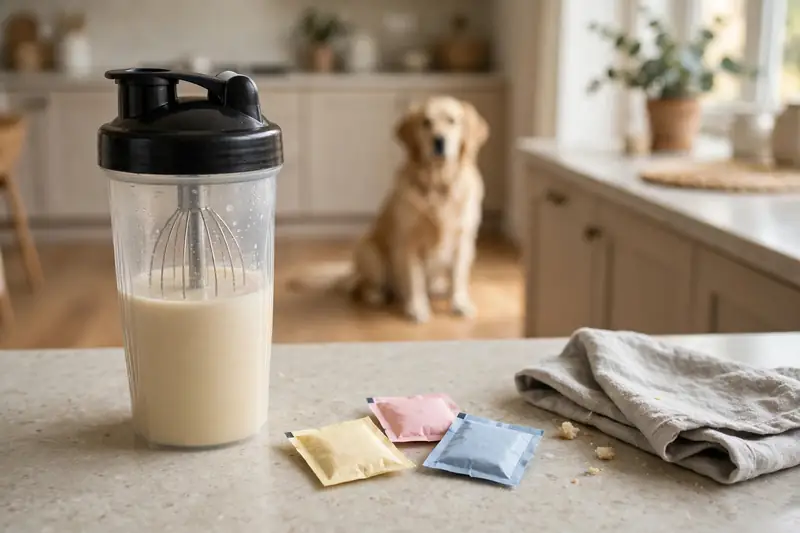
Store every supplement like a medication from now on. High closed cabinets, sealed tubs, shaker bottles rinsed and put away. Dogs counter-surf with professional dedication, and a gym bag on the floor is a puzzle box with a protein reward inside. The cheapest emergency is the one that never happens.

Frequently asked questions about dogs and protein powder
Owners usually ask about whey isolate, plant powders, licks, and related supplements. The answers below cover the repeat questions.
Is whey protein isolate safe for dogs?
Safer than concentrate but not safe as a routine extra. Isolate has less lactose, so the stomach upset is milder, but it is still a human-dosed product that may contain sweeteners or contaminants. Check the label and do not feed it deliberately.
Can dogs have plant-based protein powder?
This is the riskiest category for chronic exposure. Plant-based powders showed the highest heavy metal contamination in independent testing, and they often contain more additives and sweeteners. Keep them away from dogs entirely.
My dog licked my protein shake. Should I worry?
Check what was in the shake. A lick of plain whey and milk is a probable non-event. A lick of a xylitol-sweetened or caffeinated shake needs a vet call. The shake’s recipe decides, not the size of the lick.
Can dogs eat collagen powder?
Plain unflavored collagen is low-risk in small amounts, but most commercial collagen products add flavors, sweeteners, or vitamin blends. The same label rules apply: check for xylitol first, and prefer products made for pets.
What about creatine or pre-workout?
Keep them far from dogs. Pre-workout blends concentrate caffeine and stimulants at levels dangerous to dogs, and creatine products often share the same sweetener and flavor systems as protein powders. Treat the whole gym stack as off-limits.
Is peanut butter powder safe for dogs?
Only if xylitol-free. Some peanut butter products, including powdered ones, use xylitol as a sweetener. Read the label the same way: no xylitol, no birch sugar, minimal ingredients. Plain peanut butter without xylitol remains the simpler choice.
Protein powder is a human tool that does not cross the species barrier gracefully. The protein is the least of it; the sweeteners, stimulants, and contaminants are the story. Read every label, store every tub like medication, and feed your dog’s protein needs with food made for dogs.
Disclaimer: This article is for general information only and is not veterinary advice. Xylitol poisoning is a medical emergency: if your dog eats any product containing xylitol or birch sugar, contact your veterinarian or an emergency clinic immediately.