
Yes, dogs can eat cantaloupe. The soft orange flesh is safe, hydrating, and full of vitamins that most dogs enjoy. The rest of the melon is a different story. The rind is tough, hard to digest, and can block a dog’s intestines, and the seeds are a choking risk. Cut the flesh into small cubes, keep the serving modest, and this summer melon makes a fine occasional treat. This guide covers what is inside the fruit, the sugar question, how much suits your dog’s size, and what to do if the rind disappears off the counter.

Can dogs eat cantaloupe? The short answer
Yes, dogs can eat cantaloupe if you serve only the ripe orange flesh. Remove the rind and seeds, cut the flesh into small pieces, and offer it as an occasional treat. It is not toxic to dogs, but it is sweet, so overweight or diabetic dogs should skip it or check with a vet first.
The melon itself causes no harm. Problems come from the parts around it and the amount served. The rind can cause choking or an intestinal blockage, and too much flesh at once brings stomach upset and a sugar load a dog does not need. Most vet sources agree on the same simple rule: flesh only, small pieces, small amounts. The AKC’s guide to cantaloupe for dogs calls it safe in moderation and a reasonable lower-calorie stand-in for processed treats.

Is cantaloupe good for dogs? What is inside the melon
Cantaloupe is genuinely nutritious. It packs vitamins A, C, and B6, niacin, folate, potassium, fiber, and beta-carotene, which the body converts into vitamin A. It is about 90 percent water, so it hydrates, and it runs lower in calories than most commercial treats.
Each nutrient earns its place. Vitamin A supports vision, skin, and immune function. Vitamin C works as an antioxidant, though dogs make their own, so it is a bonus rather than a necessity. Potassium helps muscles and nerves do their jobs. Fiber supports steady digestion. Beta-carotene gives the flesh its orange color and runs unusually high in cantaloupe for a fruit.
The water content is the quiet benefit. A few cool cubes on a hot day give a dog hydration along with the flavor, and many dogs take cantaloupe eagerly as a reward. It is not a superfood and it does not replace balanced dog food. But as an occasional treat, it brings more nutrition than an empty biscuit.

The sugar side of cantaloupe: why moderation matters
Cantaloupe is sweet because it holds about 8 grams of sugar per 100 grams of flesh, which is high for a treat fruit. A few cubes now and then trouble no healthy dog. A big bowl daily can add weight, raise blood sugar, and loosen stools. Cantaloupe, like all treats, should stay within about 10 percent of daily calories.
Sugar in fruit is not poison. It is just energy with no job to do in a dog that already eats a complete diet. The practical effect of too much cantaloupe is ordinary: softer stools, gas, maybe vomiting if the dog eats a lot at once. Long term, steady sugary treats contribute to weight gain, and extra weight brings joint strain and shorter healthy years.
Overweight dogs are the clearest case for restraint. The AKC specifically notes that cantaloupe is high in sugar and may not suit diabetic dogs, and advises checking with a vet when a dog has a metabolic condition. If your dog is watching its weight, fruit should be the first treat to shrink, not the last. A single cube as a reward still counts as a treat in a diet plan.

Why the cantaloupe rind is dangerous for dogs
Never feed your dog the rind. It is thick, fibrous, and nearly impossible for a dog to digest. Swallowed pieces can lodge in the throat or intestines and cause a blockage, which is a surgical emergency. Even when it passes, it usually brings vomiting and diarrhea. The AKC compares cantaloupe rinds directly to watermelon rinds.
Blockage is the danger that matters most. Dogs gulp. A rind wedge that slides down whole can get stuck, and the first signs are vomiting that keeps coming, a tender or swollen belly, loss of appetite, and straining without passing stool. Those signs mean a vet visit, fast. Small dogs face the highest risk because their intestines are narrower, but a determined large dog can choke on a rind piece too.
There is a hygiene angle as well. The netted rind traps dirt and bacteria on its surface, which is why food-safety guidance tells people to wash whole melons before cutting. Slice on a dirty rind and the knife drags that contamination straight through the flesh. Wash the outside under running water before you cut, and keep the rind pieces off the floor where a dog can grab them.
Cantaloupe seeds: scoop them out
Cantaloupe seeds are not toxic to dogs, but they should still come out before serving. They are small, hard, and slippery, which makes them a choking hazard for small dogs and fast eaters. Swallowed in a cluster, they can irritate the stomach. The old claim that melon seeds contain cyanide belongs to apple seeds and stone-fruit pits, not cantaloupe. Scoop the seeds out with a spoon and discard them with the rind, along with the stringy fibers and pale green flesh near it.

How to serve cantaloupe to your dog, step by step
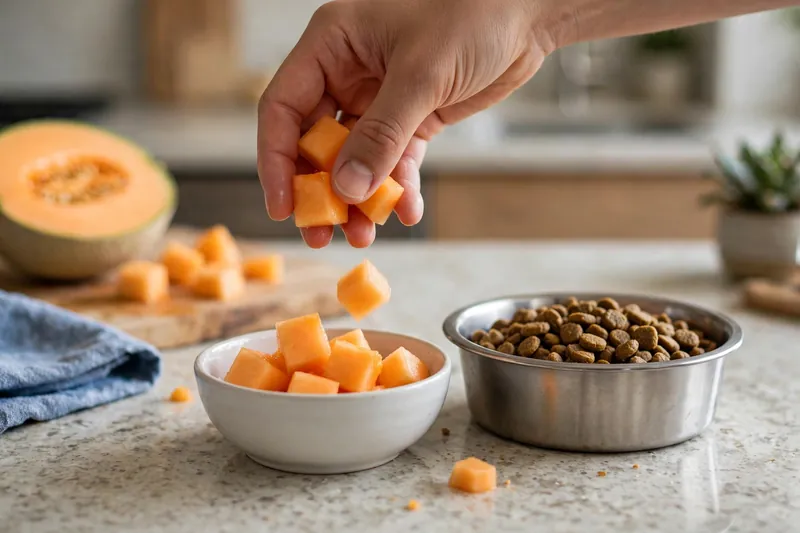
Wash the whole melon under running water and dry it. Cut it in half and scoop out the seeds. Slice into wedges, cut the orange flesh away from the rind, and dice it into half-inch cubes. Serve a few cubes plain and refrigerate the rest in a sealed container for up to three days.
Plain is the rule. No sugar, no whipped cream, no fruit salad with grapes mixed in. Grapes are toxic to dogs, and a mixed fruit bowl is how accidents happen. If you buy pre-cut cantaloupe, check the container for other fruits you did not intend to share. Melon balls work fine if you make them yourself, though cubes are simpler and no less appealing to a dog.
Offer the cubes as a standalone snack between meals rather than piled on top of dinner. A treat between meals reads as a reward and keeps the dog’s main diet unchanged. The VCA’s guidance on feeding fruits and vegetables to pets says the same: introduce one new food at a time, in moderation, and watch how your dog handles it before making it a habit.

How much cantaloupe can a dog have?
Keep servings small and occasional, a few cubes a couple of times a week. Small dogs under 20 pounds do well with two or three cubes, medium dogs with four or five, and large dogs with six to eight. All fruit and treats together should stay near 10 percent of daily calories.
| Dog’s weight | Cantaloupe cubes per serving |
|---|---|
| Under 20 lb | 2 to 3 small cubes |
| 20 to 50 lb | 4 to 5 small cubes |
| Over 50 lb | 6 to 8 small cubes |
A one-inch cube of cantaloupe carries only about 5 to 7 calories, so these amounts sit well inside the treat budget for most dogs. The limit is less about calories and more about sugar and fiber. Too much fiber at once loosens stools, and too much sugar at once can bring on vomiting in sensitive dogs. Start with one cube the first time. If the stool stays normal for a day, the serving above is safe to continue.
Frequency counts as much as portion. Two servings a week is plenty. If cantaloupe becomes the dog’s daily expectation, it has quietly moved from treat to diet ingredient, and a diet needs a vet’s input, not a fruit bowl. Rotate with other safe fruits to keep any single treat from dominating.
Puppies, senior dogs, and dogs with diabetes
Healthy adult dogs handle cantaloupe best. Puppies can have a cube or two once they eat solid food well, but their small stomachs fill fast and balanced puppy food comes first, so fruit stays a rare extra. Seniors enjoy the hydration and soft texture, though dogs with kidney issues or weight problems need a vet’s go-ahead first.
Diabetic dogs should skip cantaloupe unless the vet approves it. The sugar can spike blood glucose, and managing diabetes is hard enough without sweet surprises. Dogs on weight-loss plans face a similar call: the calories are low, but every treat counts, and the plan works only if the vet knows about all of them. Mention the fruit bowl at the next visit before it becomes a habit.
Dogs with sensitive stomachs deserve a cautious first try. Melon fiber is gentle for most dogs, but a dog that already struggles with loose stools does not need a new variable. One cube, then wait a day. If everything looks normal, a small serving now and then is fine. When in doubt, lower-sugar fruits like apples are the safer first experiment.

Cantaloupe vs watermelon and other dog-safe fruits
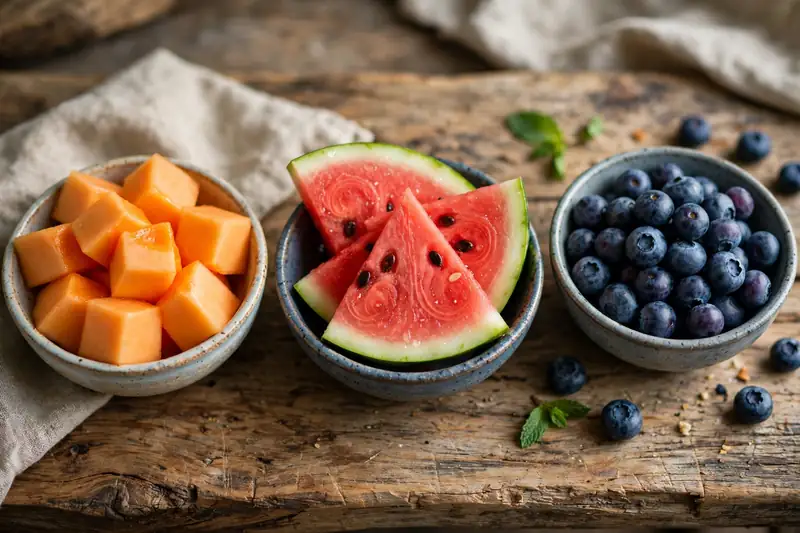
Cantaloupe and watermelon are close cousins. Both are hydrating, low-calorie, and safe as flesh only, with rinds that must stay out of the bowl. Watermelon runs lower in sugar and higher in water. Cantaloupe answers with more vitamin A and beta-carotene. Either one works as a summer treat.
Other fruits fill different niches. Blueberries are the antioxidant pick and come pre-portioned by nature, which makes them the easiest training reward of the bunch. Apples bring crunch and fiber with less sugar, though the seeds and core must go. Bananas are richer in potassium but also higher in sugar and starch, so they suit active dogs better than couch companions. Mango is the closest match to cantaloupe: sweet, vitamin-rich flesh with a pit and skin that stay out of reach. Pineapple sits at the sweet end and should be rarer still.
| Fruit | Sugar level | Standout nutrient | Main thing to remove |
|---|---|---|---|
| Cantaloupe | Medium-high | Vitamin A, beta-carotene | Rind and seeds |
| Watermelon | Medium | Water, lycopene | Rind and seeds |
| Blueberries | Low-medium | Antioxidants | Nothing, serve whole |
| Apples | Low-medium | Fiber, vitamin C | Seeds and core |
| Bananas | High | Potassium | Peel |
| Mango | High | Vitamin A, vitamin C | Pit and skin |
| Pineapple | High | Vitamin C, manganese | Tough core and skin |
Variety beats loyalty to one fruit. Rotating safe fruits keeps any single sugar load small and gives the dog a wider mix of nutrients. None of them replace balanced food, and all of them follow the same 10 percent treat rule.
What to do if your dog ate too much or ate the rind
If your dog ate a lot of flesh, watch and wait. Too much cantaloupe usually causes vomiting, diarrhea, or gassy discomfort that passes within a day. Offer water, skip the next treat, and feed the next meal plain and light. Call the vet if vomiting repeats, diarrhea turns bloody, or the dog seems painful or lethargic.
Rind is the case that needs action. If your dog swallowed rind pieces, call your veterinarian right away, even if the dog looks fine. Do not try to make the dog vomit unless the vet directs it. Note how much rind was eaten and when, because the vet will ask. Warning signs of a blockage include repeated vomiting, a swollen or tender belly, no appetite, straining without results, and unusual restlessness or whining.
Keep the ASPCA Animal Poison Control number saved in your phone for after-hours emergencies. Cantaloupe is not a poisoning case, but a suspected blockage at midnight still needs professional guidance, and the line is staffed around the clock. Fast action is what turns a scary evening into a routine vet visit.

Frequently asked questions about dogs and cantaloupe
Owners usually ask about daily feeding, puppies, rind accidents, and how cantaloupe compares with watermelon. The answers below cover the questions that come up most often. For anything unusual, your vet’s judgment beats any general article, so ask when in doubt.

Can dogs eat cantaloupe every day?
They should not. Cantaloupe works as an occasional treat a couple of times a week, not a daily habit. Daily fruit adds sugar and fiber the dog does not need on top of a complete diet, and habits formed at the fruit bowl are hard to break. Keep it a sometimes food.
Is cantaloupe or watermelon better for dogs?
Both are safe when served as flesh only, and neither is clearly better. Watermelon is slightly lower in sugar and higher in water, while cantaloupe brings more vitamin A and beta-carotene. Pick whichever your dog prefers and rotate between them. The rind rules are identical for both.
Can puppies eat cantaloupe?
Yes, in tiny amounts once the puppy is eating solid food reliably. One or two small cubes are plenty. Puppies have small stomachs and precise nutritional needs, so balanced puppy food must come first and fruit stays a rare extra. Skip it entirely for very young puppies still nursing.
My dog ate cantaloupe rind. What should I do?
Call your vet right away, even if your dog seems fine. Do not induce vomiting unless the vet tells you to. Tell the vet how much rind was eaten and when. Watch for repeated vomiting, belly swelling or tenderness, loss of appetite, and straining without passing stool, which can signal a blockage.
Can dogs eat cantaloupe seeds?
They should not, though the seeds are not poisonous. Remove them before serving because they are a choking hazard and can irritate the stomach. The old claim that melon seeds contain cyanide applies to apple seeds and stone-fruit pits, not to cantaloupe seeds.
Can diabetic dogs eat cantaloupe?
Only with a vet’s approval, and most vets will say no. Cantaloupe is high in natural sugar and can raise blood glucose, which complicates diabetes management. Lower-sugar treats like green beans or cucumber slices are usually the safer choice for diabetic dogs.
Is frozen cantaloupe safe for dogs?
Yes. Frozen cubes make a good cooling treat on hot days, and freezing changes nothing about the safety rules. Serve small pieces a dog can manage without choking, and skip any frozen product with added sugar or syrup. Let very hard frozen chunks soften slightly for small dogs and seniors.
Cantaloupe earns its spot in the treat rotation. The flesh is safe, hydrating, and full of vitamins, while the rind and seeds stay in the trash. Keep servings small and occasional, wash and cut carefully, and skip it for diabetic dogs. For the full picture of what else from the kitchen is fair game, see the AKC guide to human foods dogs can and cannot eat and our rundown of what human food dogs can eat.
*Disclaimer: This article is for general information only and is not veterinary advice. Every dog is different, and dogs with health conditions, puppies, and nursing dogs may need different guidance. If you are unsure, or if your dog shows symptoms after eating cantaloupe, contact your veterinarian.*



1 thought on “Can Dogs Eat Cantaloupe? Benefits, Risks & Safe Serving”