Yes, dogs can eat butternut squash. It is one of the friendlier vegetables to share with a dog, as long as it is cooked until soft, served plain, and given in small amounts as a treat. The skin, seeds, and stringy center come off first, and seasonings on the family portion, from onion and garlic to nutmeg and butter, stay off the dog’s share.

Can dogs eat butternut squash? The short answer
Yes. Butternut squash is safe for dogs when it is cooked soft, peeled, seeded, and served plain. It makes a decent low-calorie treat for most dogs, and the AKC lists it among the dog-friendly squash varieties. Start with a spoonful to check your dog’s stomach, since raw squash, skin, seeds, and seasoned portions do not belong in the bowl.

Why butternut squash is good for dogs
Butternut squash brings a solid mix of nutrients to the dog bowl: vitamin A in the form of beta-carotene, which supports healthy vision and immune function, plus vitamin C, potassium, and fiber that supports digestion. It is also low in calories, so it works well as a light treat.
A cup of cooked, mashed butternut squash carries about 80 calories and roughly 7 grams of fiber. That makes it a reasonably light treat compared to most commercial dog snacks, and the natural sweetness means most dogs enjoy it without anything mixed in. The fiber adds bulk to stool, which can help dogs prone to mild constipation.
None of this makes squash a dietary requirement. A dog on a complete, balanced food gets everything it needs from the bag. Squash is an extra, a treat with some nutrition behind it rather than empty calories. It will not fix a bad diet or replace anything the vet prescribed. It is simply a vegetable your dog can safely enjoy alongside proper food.
The orange color comes from carotenoids, the same compounds that color carrots. If your dog already likes carrots, butternut squash will probably land well too.
Raw butternut squash: why cooked is safer
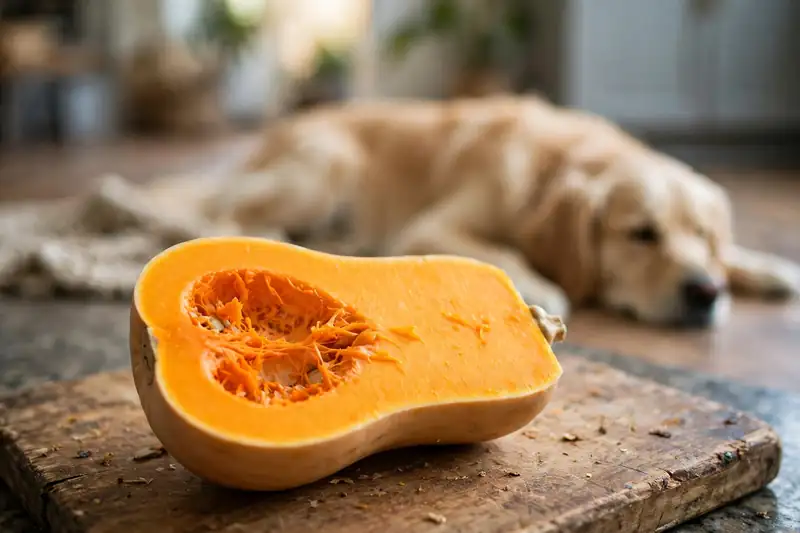
Raw butternut squash is not poisonous, but it is a bad idea. The flesh is dense and fibrous, hard for a dog to chew and harder to digest. A dog that crunches through a chunk of raw squash may end up with vomiting, gas, or loose stool a few hours later.
Cooking softens the fibers and makes the nutrients easier for your dog to absorb. The AKC squash guidance from Dr. Jerry Klein says dogs have the easiest time digesting squash that has been steamed or roasted. Bake it until a fork slides through, or steam cubes for about 15 to 20 minutes.
Unlike zucchini, which dogs can eat raw in small amounts because it is soft and mostly water, butternut is a dense winter squash. It needs heat. If your dog stole a piece of raw squash off the counter, it is not an emergency, but watch for stomach upset and do not repeat it.
Skin, seeds, and stringy bits: what to remove
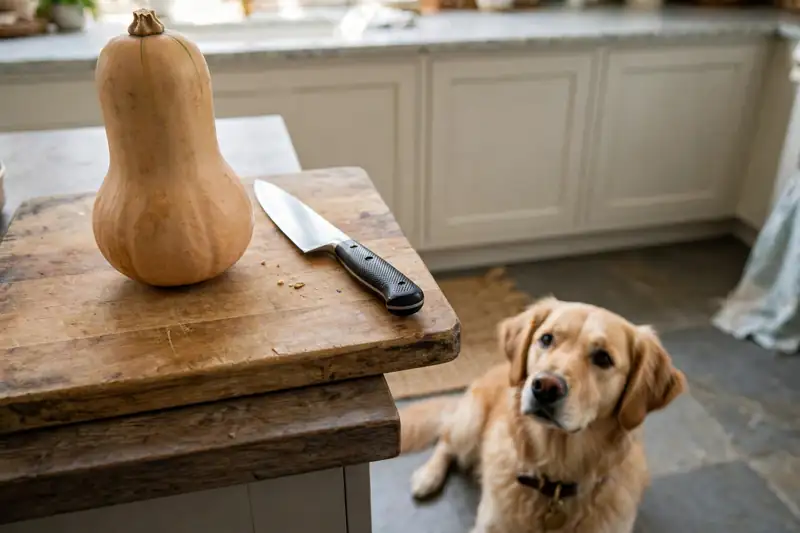
Before the squash goes in the dog’s bowl, three things come off: the skin, the seeds, and the stringy pulp from the center. The skin is tough and waxy. A dog’s digestive system does not break it down well, and large swallowed pieces can irritate the gut or, in a small dog, contribute to a blockage. Peel it completely.
The seeds carry two risks. They are a choking hazard, especially for small dogs and puppies, and swallowed whole seeds can add to a blockage if enough of them pile up. Scoop them out and throw them away where your dog cannot fish them out of the trash. The stringy center pulp is not dangerous, but it is fibrous and adds nothing. Scrape it out along with the seeds for a cleaner, safer serving.
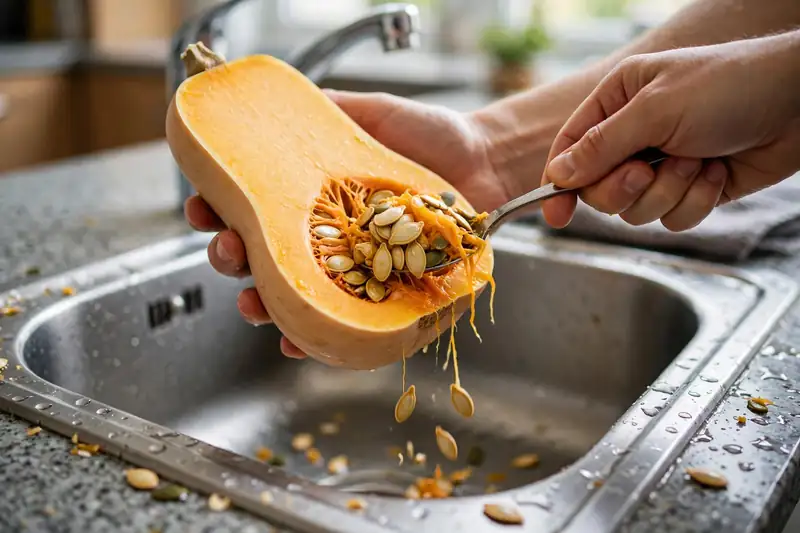
The prep is simple. Halve the squash lengthwise, scoop the seed cavity clean with a spoon, peel the halves, and you are left with plain flesh ready to cook. Note that pumpkin seeds are the only squash seeds sometimes given to dogs, and even those only ground or finely crushed, never whole.
How to prepare butternut squash for your dog
The prep takes about ten minutes of hands-on time. Cut the squash in half lengthwise. Scoop out the seeds and the stringy pulp, and discard them in a bin your dog cannot reach. Peel both halves. Cut the flesh into cubes or mash it after cooking, depending on what your dog handles best.
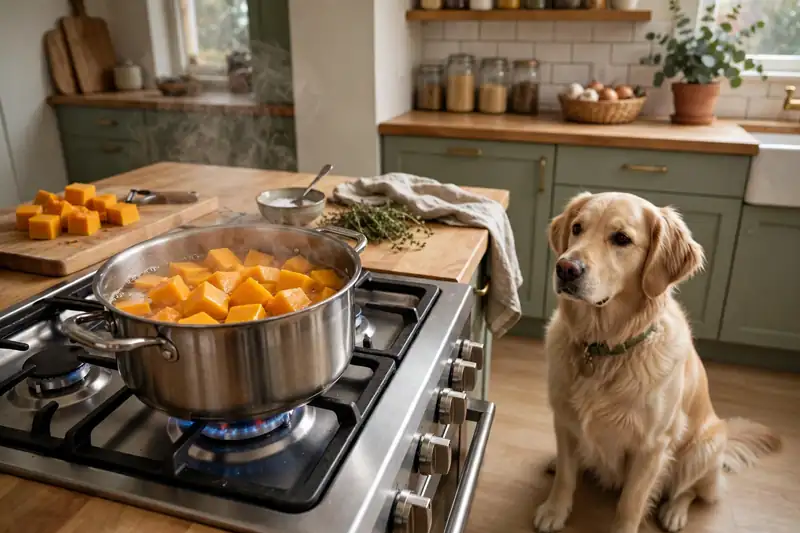
For cooking, pick whichever method is easiest. Steam cubes for about 15 minutes, boil and drain well, or bake until a fork slides through. No oil is needed for the dog’s share. If you roast a tray for the family with oil and herbs, set aside the dog’s plain portion first.
After cooking, let the squash cool to room temperature. Mash it or cut it into pieces your dog can manage. A big dog can handle inch-sized cubes, while a small dog or puppy does better with mashed or pea-sized pieces. Store leftovers in the fridge for up to four days, or freeze small portions in an ice cube tray for easy treats later.
One caution: dogs are excellent counter thieves. Keep the dog out of the kitchen while a tray of cooling squash cubes sits out, since a stolen handful can cause stomach upset, and the seasoned human portions nearby are worse.
How much butternut squash can a dog eat?
Treat butternut squash like any other treat: keep it to about 10 percent or less of your dog’s daily calories. Squash is light, but a dog’s stomach still has limits, and too much fiber at once can cause gas and loose stool.
A practical starting point is one or two tablespoons for a small dog, two or three tablespoons for a medium dog, and up to a quarter cup for a large dog, given a few times a week rather than every day. Start with less on the first try to see how your dog’s stomach handles it, and cut back if stool gets soft.
Frequency matters as much as size. Squash is a sometimes food. A spoonful on top of dinner a few times a week is plenty. Feeding it daily in large amounts crowds out the balanced nutrition in the dog’s regular food, which is formulated to deliver the right mix of protein, fat, and micronutrients. If your dog is on a weight plan, count the squash as part of the daily treat allowance.
Seasonings and add-ins that are not safe for dogs
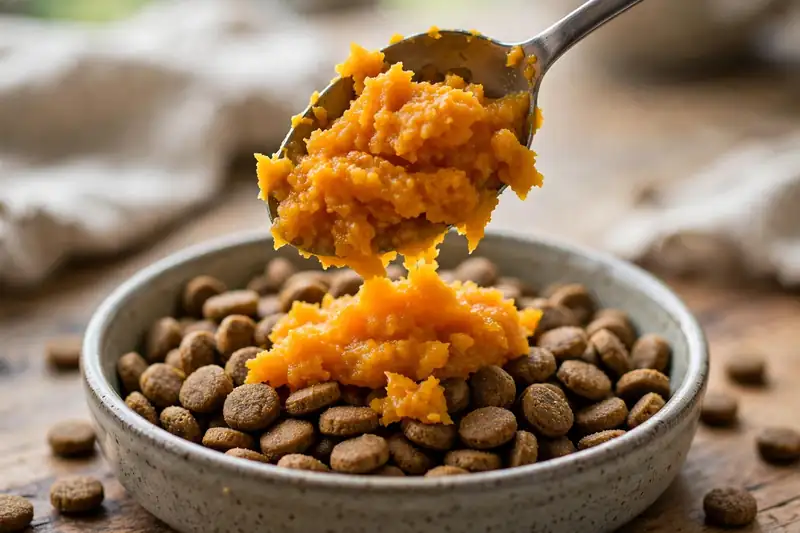
This is where butternut squash goes from safe to risky. The squash itself is fine. What people put on it is the problem: butter, oil, salt, brown sugar, marshmallows, or pie spices make it a food for humans only. None of those belong in the dog’s bowl.
Onion and garlic are the two big ones. Both are toxic to dogs and can damage red blood cells. A squash dish made with onion powder or fresh garlic has to stay completely away from the dog. Read our guide on garlic for dogs for how little it takes to be a problem.
Nutmeg shows up in squash soup and pumpkin pie spice blends, and it contains myristicin, which is toxic to dogs in larger amounts. It is never worth adding to the dog’s share on purpose.
Xylitol is another hidden danger. Sugar-free pie filling and some low-sugar desserts use this sweetener, and even small amounts can cause a dangerous drop in a dog’s blood sugar. The VCA overview of xylitol poisoning in dogs explains the dose. Read the label before sharing any dessert.
Plain is the rule. If you are not sure the dish is free of these ingredients, the answer is no. Set aside the dog’s portion before you season the human batch, and there is nothing to worry about.
Butternut squash vs pumpkin and other squash
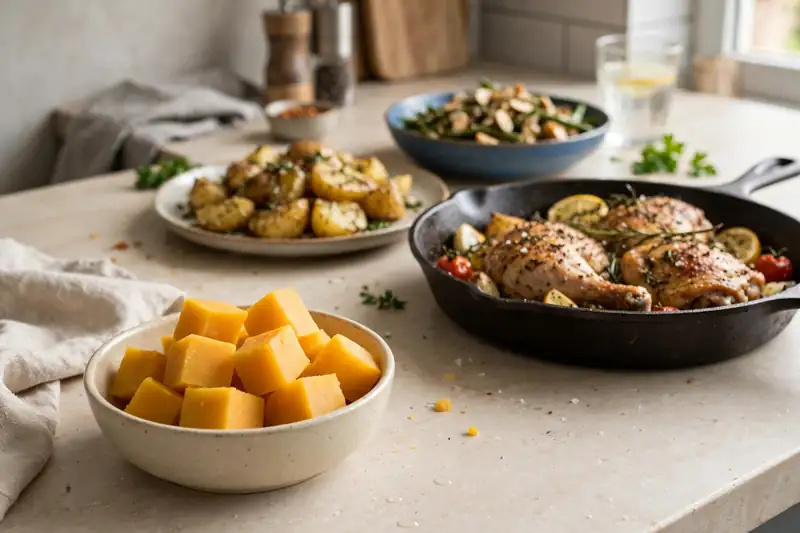
All common squash varieties are safe for dogs when cooked, peeled, seeded, and served plain. Butternut, pumpkin, acorn, zucchini, and yellow squash all clear the bar. They differ in texture and nutrition, not safety, and the AKC counts butternut among the best dog-friendly picks.
| Squash | Notable traits | Dog feeding notes |
|---|---|---|
| Butternut | Sweet, smooth, high in fiber and vitamin A | Peel, deseed, cook until soft; mash or cube |
| Pumpkin | Very high in fiber, commonly used for digestion | Use plain cooked or canned 100% pumpkin, never pie filling |
| Acorn | Mild, drier flesh | Same prep rules as butternut |
| Zucchini | Soft, mostly water, easy to digest | Can be fed raw or cooked in small amounts |
| Yellow squash | Similar to zucchini | Cook lightly, serve plain |
Pumpkin gets the most attention because vets often recommend plain canned pumpkin for mild digestive upset, and our pumpkin guide for dogs goes deeper there. Sweet potatoes are a close cousin with the same rules: cooked, plain, no skin.
Ornamental gourds and decorative mini pumpkins are the exception. They are not food, and some varieties can irritate a dog’s stomach. If it came from a craft store or a porch display rather than the produce aisle, it is not a treat.

Puppies, senior dogs, and dogs with health conditions
Puppies can eat butternut squash, with a few adjustments. Their stomachs are sensitive to new foods, so start with a single teaspoon of mashed, plain squash and wait a day before offering more. Puppies also chew everything, so cut pieces small enough to swallow safely and supervise the meal.
Senior dogs often do well with squash. The soft texture is easy on older teeth, and the fiber helps slow digestion. If your dog has kidney disease or eats a prescription diet, check with the vet first, since squash contains potassium that some diets restrict.
Dogs with diabetes can usually have small amounts. The fiber slows how quickly sugar enters the blood, which helps. A quick vet check on where squash fits the meal plan avoids guesswork.
Dogs with known food allergies tolerate squash well in most cases. It is not a common allergen. Still, any new food can cause a reaction in a sensitive dog, so introduce it slowly, watch for itching or stomach upset over the next day or two, and stop if anything looks off.
Signs of trouble and when to call your vet
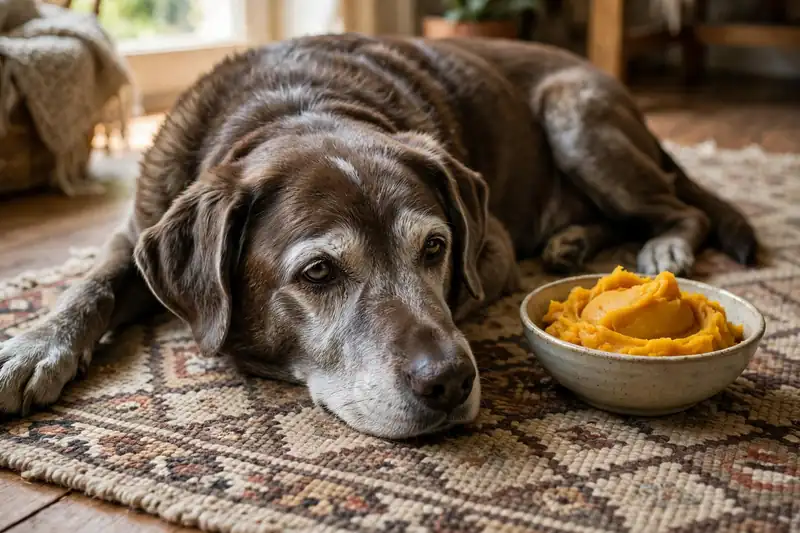
Plain butternut squash causes trouble in three ways: too much, raw, or stolen. A large amount at once can bring on vomiting, gas, and diarrhea from the fiber load. Raw squash can do the same through sheer indigestibility. A dog that raids the trash for peels, seeds, or stringy scraps risks an irritated stomach or a blockage.
Most of the time, mild stomach upset from too much squash passes on its own within a day. If your dog is vomiting, hold back food for a few hours, then offer a bland diet for dogs before returning to normal meals. Make sure water stays available.
Call your vet for repeated vomiting, watery or bloody diarrhea, a painful or swollen belly, repeated straining, or a lethargic dog that refuses food. Those can signal a blockage from swallowed skin or seeds, or a reaction to something else eaten alongside. The ASPCA Animal Poison Control line is the backup when your vet’s office is closed.
Prevention covers most of it. Cook the squash, peel it, remove the seeds, keep portions small, and keep peels and scraps out of reach. Do that, and butternut squash stays firmly in the safe-treat column.

Frequently asked questions about butternut squash for dogs
Owners usually ask about the skin, seeds, raw squash, and how butternut compares with pumpkin. The answers below cover the questions that come up most often. For anything unusual, your vet’s judgment beats any general article, so ask when in doubt.
Can dogs eat butternut squash skin?
No. The skin is tough, waxy, and hard to digest. Large swallowed pieces can irritate the stomach or contribute to a blockage in small dogs. Peel the squash fully and keep peels out of the dog’s reach.
Can dogs eat butternut squash seeds?
No. The seeds are a choking hazard and can add to a blockage risk if swallowed in quantity. Scoop them out along with the stringy pulp before cooking, and dispose of them where your dog cannot find them. If your dog ate a few seeds, watch for choking and stomach upset, and call your vet if symptoms appear.
Can dogs eat raw butternut squash?
They should not. Raw butternut squash is not toxic, but the dense, fibrous flesh is hard to chew and digest, and can cause vomiting, gas, and diarrhea. Always cook it until soft before serving.
Is butternut squash or pumpkin better for dogs?
Both are good. Pumpkin is the one vets reach for most often for digestive support, and plain canned pumpkin is easy to keep on hand. Butternut squash has a sweeter taste and smooth texture that many dogs prefer as a treat. Either works as long as it is plain, cooked, and served in small amounts.
Can dogs eat frozen or canned butternut squash?
Plain frozen squash is fine once it is cooked until soft and cooled. Plain canned butternut squash works too, but read the label: it should list only squash, with no added sugar, salt, spices, or xylitol. Avoid squash soup, seasoned purees, and anything labeled as pie filling.
Will butternut squash help my dog’s digestion?
The fiber adds bulk to stool and supports regular digestion, which suits dogs prone to mild constipation. It is not a laxative, and it will not fix ongoing digestive problems. Repeated constipation or straining needs a vet visit.
Can dogs eat butternut squash soup?
Only if the soup was made plain, with no onion, garlic, salt, butter, cream, or nutmeg. Most squash soups contain at least a few of those. A bowl of plain mashed squash with warm water added makes a safer homemade version if your dog likes a soupy texture.
Butternut squash is an easy win for dog owners who like sharing healthy food. Peel it, deseed it, cook it soft, keep it plain, and keep the portion small. Do those five things and most dogs get a sweet, fiber-rich treat with nothing to worry about. When in doubt about a seasoned dish, the dog’s portion stays separate, and the family batch stays with the family. The AKC guide to human foods dogs can and cannot eat is a good bookmark for checking the next food the same way.
*Disclaimer: This article is for general information only and is not veterinary advice. Every dog is different, and dogs with health conditions, puppies, and nursing dogs may need different guidance. If you are unsure, or if your dog shows symptoms after eating butternut squash, contact your veterinarian.*