As of late 2026, no active Fromm dog food recall sits on the FDA’s public list. The most recent was posted August 21, 2026, when Fromm Family Foods voluntarily recalled two canned dog foods, Turkey Pate and Milo’s Meatloaf Pate, after customer complaints about possible metal contamination. Before that came a 2021 recall of four Four-Star Shredded Entree canned recipes for potentially elevated vitamin D, and a first-ever recall in 2016 of three Fromm Gold canned dog foods for inadequate vitamin and mineral levels. This guide covers each recall with product names, lot codes, and dates from the official notices, explains the dangers, and shows you how to check your own cans.

Is there a Fromm dog food recall right now?
As of early November 2026, no new Fromm recall appears on the FDA’s public recall list. The latest Fromm notice is the voluntary recall from August 21, 2026, covering two canned dog foods for possible metal contamination. If you buy Fromm cans now, compare the lot code on the can against that notice before opening them.
Recall news travels badly. A headline about one recalled lot gets shared for months, and owners of completely different Fromm products worry they need to throw out their dog’s food. Fromm’s recalls have always been narrow. The 2026 recall covered two specific canned products with two specific lot codes. No Fromm dry kibble has ever been recalled, and Fromm stated that no other products were affected.

The August 2026 recall in detail
On August 21, 2026, Fromm Family Foods issued a voluntary recall of two wet canned dog foods after receiving consumer complaints about possible metal contamination, and the FDA posted the company announcement the same day. This is the recall that most current search results about Fromm refer to.
The affected products were Fromm Turkey Pate Wet Dog Food in 12.2 oz cans, UPC 072705118700, lot code EP2A3306 551006, and Fromm Diner Classics Milo’s Meatloaf Pate Wet Dog Food in 12.5 oz cans, UPC 072705132324, lot code EP2A3306 551029. Both carried a best-by date of March 2029. The recall covered 3,852 cases of the Turkey Pate and 1,973 cases of Milo’s Meatloaf Pate, distributed in the United States and Canada. Fromm reported that no illnesses or injuries had been reported when the notice went out.
If you still have either product with those lot codes, do not feed it. Return it to the store for a refund, and keep the can or a photo of the label until the return is done. Metal in canned food is a physical hazard: a fragment can cut a dog’s mouth, lodge in the throat, or tear or block the intestines. Canning lines sometimes shed metal from worn equipment, and companies recall the lot rather than gamble on which cans are clean.
The 2021 recall: elevated vitamin D in Shredded Entree
On October 1, 2021, Fromm voluntarily recalled about 5,500 cases of Four-Star Shredded Entree canned dog food after its own testing found potentially elevated vitamin D. The company isolated the error and added corrective steps, and the FDA published the notice, later marking the recall completed and terminated.
Four recipes were affected, all in 12 oz cans with a best-by date of 08/2024: Shredded Beef in Gravy (UPC 7270511876), Shredded Chicken in Gravy (UPC 7270511880), Shredded Pork in Gravy (UPC 7270511878), and Shredded Turkey in Gravy (UPC 7270511883). The cans went to neighborhood pet stores nationwide, and Fromm stated no other products were affected and no illness or injury reports had come in.
Those cans are long past their best-by date by now, so the value of this history is the symptom pattern. Vitamin D excess does its damage quietly over days, and knowing what to watch for helps you respond faster if any dog food, from any brand, ever turns out to be the problem.
The 2016 recall: Fromm Gold canned dog food
Fromm’s first recall came on March 18, 2016. The company recalled all lots of three 12 oz Fromm Gold canned dog foods: Chicken Pate (code 11893), Chicken and Duck (code 11895), and Salmon and Chicken Pate (code 11891). The cans had shipped to distributors between December 2015 and February 2016, and the reason was inadequate levels of vitamins and minerals.
Low vitamin and mineral content is a slower-burn problem than excess vitamin D or metal. A dog eating an under-fortified food does not get sick overnight; the deficiency shows up over weeks. That is also why this recall was easy to miss. It was small, it was old, and nobody’s dog fell ill the day the cans shipped.
The 2016 recall set the tone Fromm has kept since. The company found the issue itself, announced it voluntarily, and limited the recall to the affected lots. The pattern is consistent across all three recalls: narrow scope, voluntary action, no reported illnesses at the time of announcement.
Why the recalled foods were dangerous for dogs
The two recalls harm dogs in different ways. The 2021 vitamin D recall was a nutritional problem that builds up quietly over days, while the 2026 metal recall was a physical hazard that can injure a dog in a single meal.
Excess vitamin D
Vitamin D helps dogs absorb calcium and phosphorus, but dogs store the excess in fat tissue and the liver instead of flushing it out in urine. An over-fortified food lets vitamin D accumulate until it poisons the dog.
The symptoms listed for the 2021 recall were vomiting, loss of appetite, increased thirst, increased urination, excessive drooling, and weight loss. At very high levels, vitamin D toxicity raises blood calcium, which damages the kidneys and can lead to kidney failure. If your dog has known kidney issues, our guide to kidney disease in dogs explains what those changes look like day to day.
Metal fragments
Metal in canned food injures rather than poisons. A sharp piece can cut the gums, tongue, or throat, or travel into the gut and puncture or block the intestines. A blockage is a surgical emergency, and a perforation can be fatal if missed.
Watch for repeated vomiting, abdominal pain or a tense belly, drooling or pawing at the mouth, refusal to eat, lethargy, and bloody stool. Bloody diarrhea in dogs has many causes, but after a recalled can it points at internal injury and needs same-day veterinary care. Do not try to make your dog vomit. With metal, vomiting can drag a sharp fragment back up through the throat and cause the injury you were trying to prevent.

How to check whether your cans are affected
Checking a can takes about a minute once you know where to look. Start with the product name and size, because recalls almost always cover specific recipes and can sizes rather than the whole brand. In the 2026 Fromm recall, only the 12.2 oz Turkey Pate and the 12.5 oz Milo’s Meatloaf Pate were affected. Every other Fromm product, including all dry foods, was outside the recall.
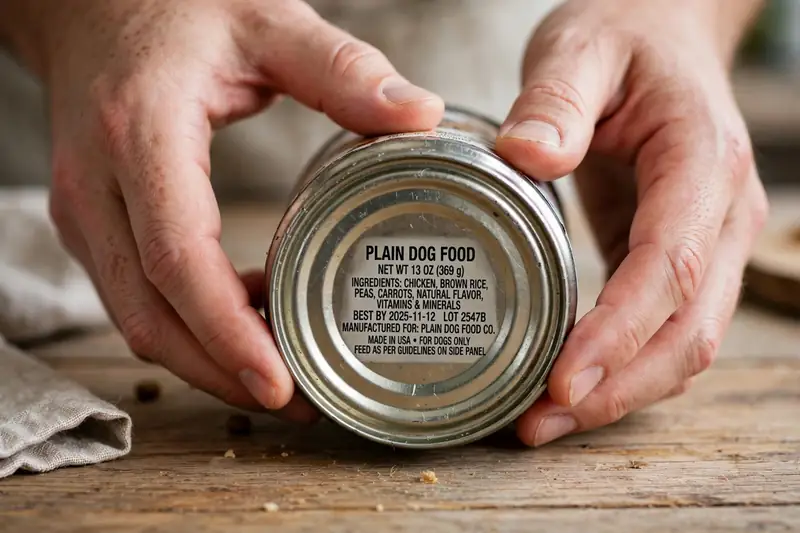
Next, find the lot code. On canned dog food it is usually stamped on the bottom of the can or printed on the lid, sometimes as a string like EP2A3306 551006. Then find the UPC on the side label and the best-by date. Compare all three against the official notice. One matching field is not enough. The lot code defines the recall, since it identifies the exact production run.
Save the evidence before you throw anything out. Photograph the front label, the lot code, the UPC, and the best-by date, and keep the can until you have returned it. If your dog got sick, keep a sample of the food in a sealed bag in the freezer. Vets and regulators can test it, and that sample is what turns a suspicion into a confirmed case.
What to do if your dog ate a recalled product
First, stop feeding the product. Put the can aside, switch to something safe immediately, and do not finish the case to avoid waste. A case of dog food costs nothing next to a vet bill.
Second, watch your dog closely for 48 to 72 hours. For the 2026 metal recall, watch for mouth injuries, drooling, vomiting, belly pain, and bloody stool. For a vitamin D type recall, watch for appetite loss, vomiting, increased thirst and urination, and weight loss. Write down what you see and when. A simple log with times makes the vet visit shorter and more useful.
Third, call your vet and describe the product, the lot code, how much your dog ate, and the symptoms you are seeing. If it is after hours, the ASPCA Animal Poison Control line is the resource most vets point owners toward for urgent guidance. Do not induce vomiting unless a vet or poison control professional tells you to, and never for suspected metal contamination.
While your dog recovers, keep feeding gentle. A short period of plain, easy food helps an irritated gut settle. Our bland diet for dogs guide covers the standard plain boiled chicken and rice approach, and a little chicken broth can keep a reluctant dog drinking. Return the recalled product to the retailer for a refund, and report the incident to the FDA.

How to switch to a safe food without upsetting your dog
A recall forces a sudden change, and sudden diet changes commonly cause vomiting and diarrhea in dogs. Transition gradually over seven to ten days: start with roughly three parts old safe food to one part new, shift the ratio every couple of days, and stretch it longer if your dog’s stomach is already irritated.
Match the replacement to your dog’s size, age, and health. Small breeds have different calorie and kibble-size needs, which our guide to the best dog food for small dogs breaks down in detail. During the switch, keep treats simple and familiar so you can tell whether any reaction comes from the new food. Plain options from our list of human foods dogs can eat work well for this.
Watch the stool during the transition. Slightly soft stool for a day or two is normal; persistent diarrhea, vomiting, or refusal to eat is not. If your dog develops stomach inflammation, the signs match our guide to gastroenteritis in dogs. The FDA Center for Veterinary Medicine is a solid reference for the feeding principles behind a proper transition.

How to catch the next recall early
Recalls reward the owners who hear about them first. The most reliable recall source is the FDA itself. Its recalls and withdrawals page for animal and veterinary products carries every company announcement the agency publishes, and the August 2026 Fromm notice appeared there the day it was issued. Bookmark it and check it when you hear recall rumors, instead of trusting a screenshot shared in a group chat.
One more thing belongs in a complete history. In June 2019, the FDA named Fromm as one of 16 pet food brands appearing frequently in reports of dilated cardiomyopathy in dogs eating certain diets. That was an investigation, not a recall, and the FDA called the issue complex with multiple possible factors. It is not a reason to treat current Fromm products as recalled.
Frequently asked questions about the Fromm dog food recall
The questions below cover what owners ask most: whether a recall is active, which products were pulled, what the health risks were, and what to do with cans in the pantry. When in doubt, your vet’s advice beats any article, including this one.

Is there a current Fromm dog food recall?
As of early November 2026, no new Fromm recall is posted on the FDA’s public list. The latest is the August 21, 2026 voluntary recall of two canned products, Turkey Pate and Milo’s Meatloaf Pate, for possible metal contamination. Verify against the FDA’s recall page rather than social media posts.
Which Fromm products were recalled in 2026?
Two canned dog foods: Fromm Turkey Pate Wet Dog Food, 12.2 oz cans, UPC 072705118700, lot EP2A3306 551006; and Fromm Diner Classics Milo’s Meatloaf Pate, 12.5 oz cans, UPC 072705132324, lot EP2A3306 551029. Both had a best-by date of March 2029. No dry foods were affected.
Was Fromm recalled for vitamin D?
Yes, in 2021. On October 1, 2021, Fromm recalled about 5,500 cases of Four-Star Shredded Entree canned dog food in four recipes, beef, chicken, pork, and turkey in gravy, after its own testing found potentially elevated vitamin D. The 12 oz cans carried a best-by date of 08/2024, and the FDA later marked the recall completed and terminated.
What should I do if my dog ate recalled Fromm food?
Stop feeding the product and keep the can with its lot code. Watch your dog for 48 to 72 hours for vomiting, appetite loss, mouth injuries, bloody stool, or unusual thirst and urination, and log what you see. Call your vet with the product name, lot code, amount eaten, and symptoms. Do not induce vomiting, especially if metal is suspected.
Can too much vitamin D hurt my dog?
Yes. Dogs store excess vitamin D in fat and liver instead of excreting it, so an over-fortified food lets it build to toxic levels. Signs include vomiting, loss of appetite, increased thirst and urination, drooling, and weight loss, and severe cases can cause kidney failure. Early veterinary treatment usually leads to a good recovery.
Is Fromm safe to feed now?
The recalls have all been narrow, voluntary, and limited to specific canned lots, with no dry food ever recalled and no illnesses reported at the time of each announcement. If you keep feeding the brand, check lot codes against the FDA notice before opening new cans and keep an eye on recall alerts.
How do I check if my Fromm can is recalled?
Match three things against the official FDA notice: the exact product name and can size, the lot code stamped on the can bottom or lid, and the UPC and best-by date. The lot code defines the recall. Photograph the label and keep the can until you return it to the retailer.
Fromm’s recall record is short but worth knowing. Three voluntary recalls since 2016, each limited to specific canned lots, each announced before any owner reported a sick dog, and no dry food ever involved. Keep the FDA recall page bookmarked, check lot codes before you open a can, and act fast if your dog eats a recalled product.