

Pill pockets are soft treats with a built-in pouch: drop the pill in, pinch it shut, and hand it to the dog. For many owners they turn a twice-daily wrestling match into a non-event. But they are not foolproof. Dogs learn, pills differ, and technique matters more than the product. This guide covers how to use pill pockets correctly, which medications should never go inside one, the tricks that defeat suspicious dogs, and the alternatives when pockets fail.
What are pill pockets for dogs?
Pill pockets are commercial soft treats shaped with a hollow center designed to hold a pill or capsule. You place the medication inside, squeeze the opening closed to seal it, and give it like any treat. The best-known brand is Greenies Pill Pockets, available in sizes for capsules and tablets and in flavors like chicken and peanut butter.

The design solves the main problem with hiding pills in food: coverage. A pill wrapped in cheese can work loose; a pill inside a sealed pocket stays hidden until it is swallowed. They work best for dogs that gulp treats without much chewing, since the pill goes down before the dog investigates. For careful chewers, they are less reliable, because one bite into a bitter pill teaches the dog to distrust every pocket that follows. They are a convenience product, not a medical one. The pocket does nothing to the medication itself. It just delivers it past a suspicious tongue. Used correctly, they save time and stress for both ends of the leash.
How to use pill pockets correctly
Drop the pill into the pouch, pinch the top firmly closed so no pill edge shows, and give it promptly. Mold the pocket snugly around the pill so it feels like one solid treat rather than a treat with a suspicious lump. Give it with a little enthusiasm, the way you would offer any good treat.

The details decide success. Choose the right pocket size: a tablet pocket for tablets, a capsule pocket for capsules. A pill swimming in an oversized pocket feels wrong in the mouth and invites investigation. Seal it well. An unsealed pocket can open on the way down the throat or on the floor, leaving a naked pill the dog will not touch twice. Handle the pocket as little as possible after loading it, and do not let the dog watch you assemble it if it is the suspicious type. Timing matters too: pill pockets dry out once opened, so load and give within a few minutes rather than prepping the morning dose the night before. After the dog swallows, check the mouth. Lift the lips, look under the tongue, and watch for the cheek-pouch trick where the pill gets parked for later spitting.
The decoy-chaser trick that actually works
The most reliable technique is a three-treat sequence: give an empty treat first, then the loaded pill pocket, then immediately offer a third tasty treat as a chaser. The dog, eager for the chaser, swallows the pocket quickly instead of chewing it thoughtfully. This beats the single-pocket method for suspicious dogs.
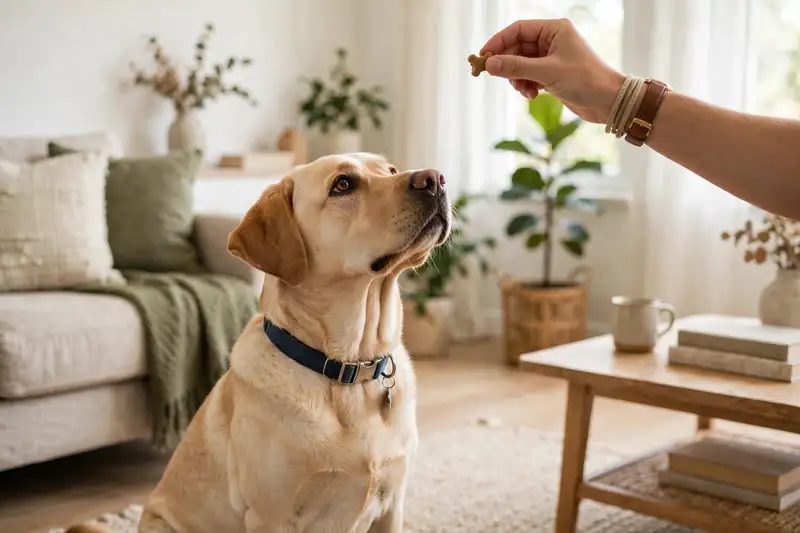
The psychology is simple. The first treat sets the pattern: treats are coming fast, no need to inspect. The loaded pocket arrives while the dog is in gulping mode. The chaser, offered the instant the pocket is taken, creates urgency to swallow and move on. Keep the chaser visible but just out of reach while the dog takes the pocket. Use something high-value for the chaser, a bit of cheese or meat, since it does the heavy lifting. This sequence also helps with dogs that have learned to eat the treat and spit the pill: there is no pause in which to perform the separation. Practice the rhythm with empty pockets first if your dog is new to the game. Once the pattern is set, loading the real pill changes nothing from the dog’s perspective.
Which pills should NOT go in a pocket
Never hide a pill in food without checking with your vet or pharmacist first. Some medications must be given on an empty stomach, some have coatings that must stay intact, and some are dangerous if the dog tastes a broken pill. Time-release, enteric-coated, and chemotherapy drugs all need special handling.

This is the safety section, and it matters more than any trick. A pill designed for an empty stomach may barely work when buried in a treat. Enteric coatings protect the drug from stomach acid or protect the stomach from the drug; chewing through one defeats the design. Some medications taste so bitter that one bad experience ruins pilling for weeks. Chemotherapy drugs and certain hormonal medications pose handling risks to you as well as the dog, and your vet will give specific instructions. The rule is boring and absolute: when a new prescription comes home, ask “can this go in food?” before the first dose. Your vet or the pharmacist knows which of your dog’s medications are pocket-safe and which need the direct-to-throat method or a different formulation entirely.
Pill pocket sizes and flavors
Pill pockets come in two sizes, capsule and tablet, and in dog sizes from small to large. Common flavors include chicken, peanut butter, and hickory smoke, plus grain-free options. Match the pocket size to the pill first and the dog second: the pill must fit fully inside with the top pinched shut.
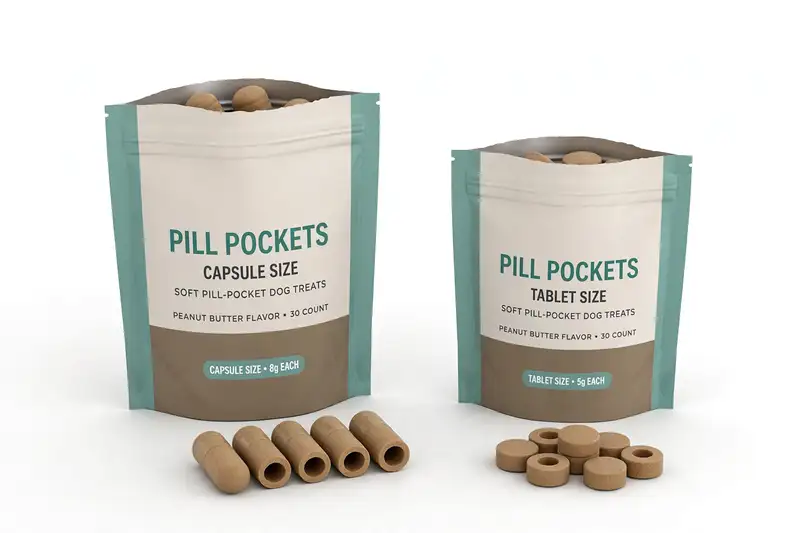
A large dog taking a tiny pill still wants the smaller pocket, because a snug fit hides better than a cavernous one. For very large pills or multiple pills, you may need the large-dog pocket regardless of the dog’s size. Flavor choice is about motivation. Most dogs prefer the chicken or peanut butter versions; picky dogs may need you to test which flavor they will gulp fastest. The grain-free line exists for dogs with grain sensitivities. Note that flavors are palatants, not nutrition, and the pockets are treats with calories, which matters for dogs on strict diets or in multi-pill households. Three pockets a day for a small dog is a real calorie addition. Factor it in or ask your vet about lower-calorie hiding options.
Are pill pockets healthy? Ingredients
Pill pockets are treats, not health food. The leading brand lists ingredients like chicken, wheat, and glycerin, with flavorings and preservatives. They are fine as a delivery vehicle but add calories, sodium, and ingredients that sensitive dogs may react to. Dogs with chicken, wheat, or soy allergies should check the label carefully or use a single-ingredient alternative.

Keep perspective: the pocket is a tool, and a few treats a day is a fair trade for getting medication into the dog reliably. But read the label if your dog has food sensitivities. The AKC specifically notes that dogs with food allergies can react to pill pocket ingredients, so this is not a theoretical concern. Chicken is one of the more common dog allergens, and it is the flagship flavor. Wheat-sensitive dogs need the grain-free version or a different hiding food entirely. For dogs on prescription diets, ask the vet whether the pocket’s ingredients conflict with the diet’s purpose. A hydrolyzed-protein diet paired with a chicken-flavored pocket is self-defeating. In those cases, the vet may approve hiding pills in a small ball of the prescription canned food instead.
What to do when your dog outsmarts them
Dogs learn. The dog that gulped pockets happily for a month may start dissecting them with surgical precision. When that happens, rotate your hiding foods, change the sequence, and never let the dog see you load the pill. Warm the pocket slightly in your hand so it smells stronger, and keep the whole routine fast and cheerful.
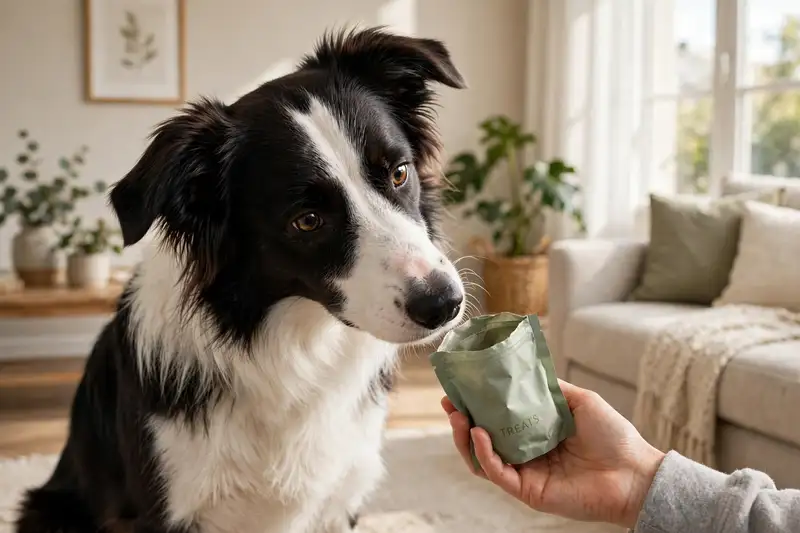
The escalation usually follows a pattern: first the dog eats around the pill, then it eats the pocket and spits the pill, then it refuses pockets entirely. Do not keep pushing a method the dog has decoded. Switch to a different vehicle for a while: a meatball of canned food, a wrap of deli turkey, a blob of peanut butter. The novelty resets the suspicion. Vary the timing too. Dogs that get pilled at 8 AM sharp start bracing at 7:55. Randomize within the allowed window. And watch your own behavior: looming over the dog, chasing it around the room, or acting guilty telegraphs that something is up. Matter-of-fact and quick wins. If the dog has fully cracked every food trick, move to the pill device method in the next section rather than fighting a losing battle.
DIY alternatives that work as well
A pea-sized ball of cream cheese, a smear of xylitol-free peanut butter, a wrap of plain deli meat, a meatball of canned food, or a spoonful of cottage cheese all hide pills well. Pick the one your dog gulps fastest. All must be xylitol-free and used only if the medication may be taken with food.

Each has trade-offs. Cream cheese molds beautifully around pills and most dogs love it; our cream cheese guide covers portions and the pill-hiding trick specifically. Peanut butter is the classic for a reason, but the xylitol check is non-negotiable; see our peanut butter guide for the label rules. Cottage cheese works for dogs that like it, with our cottage cheese guide covering the details. Canned food meatballs are ideal for dogs on prescription diets, since you can use their own food. Deli meat should be plain, low-sodium, and free of onion and garlic flavoring. Whatever you choose, keep the portion small. The goal is a single gulp, not a meal, and the decoy-chaser sequence works with any of these vehicles.
Pill guns and manual pilling
When food tricks fail or the medication cannot go in food, a pill device places the pill at the back of the tongue without risking your fingers. Manual pilling means tilting the head up, dropping the pill behind the tongue’s hump, closing the mouth, and stroking the throat until the dog swallows. Ask your vet for a demo first.

The pill gun sounds intimidating and is actually gentler than fingers for most owners. Load the pill in the tip, open the dog’s mouth, place the tip past the tongue hump, and push the plunger. Follow with a small treat and praise. Manual pilling uses the same anatomy: the pill must land behind the hump at the back of the tongue to trigger the swallow reflex. Too far forward and the dog spits it out; too far back and you trigger gagging. The throat stroke and a gentle blow on the nose encourage swallowing. Watch for the lip-lick that signals success, then check the mouth to confirm. Both methods get easier fast. The first attempt is awkward for everyone. By the fifth, it is routine. Your vet’s demo is worth more than any written description, so ask for one at the appointment where the medication is prescribed.
Making medication time stress-free
Keep sessions short, upbeat, and consistent. Always follow the pill with praise and a small reward so medication time predicts good things. Never chase, corner, or punish a reluctant dog. If pilling becomes a daily battle, ask your vet about compounded flavored liquids, chewable formulations, or long-acting injections that remove the daily fight entirely.

Dogs read the room. If you dread pilling, the dog dreads it too, and each bad session makes the next one harder. Build a positive pattern: pill, then the best treat of the day, then play or a walk. The dog starts anticipating the reward instead of the pill. For long-term medications, this conditioning pays off enormously. And know when to change the game instead of forcing it. Compounding pharmacies can turn many pills into chicken-flavored liquids or chews. Some medications come in long-acting injections given at the vet. Transdermal options exist for certain drugs. A ten-minute conversation with your vet about formulations can end months of daily struggle. The goal was never to win the wrestling match. It was to get the medicine in, calmly, every time.
Pill pockets work brilliantly until they don’t, and now you know the full playbook: right size, sealed shut, decoy-chaser sequence, and a rotation of backup vehicles for clever dogs. For the food-based alternatives, our cream cheese guide, peanut butter guide, and cottage cheese guide cover portions and safety, and the AKC’s pilling tips are a solid video-free reference for the manual technique.
Frequently Asked Questions
Do pill pockets work for all dogs?
No. They work best for dogs that gulp treats without careful chewing. Methodical chewers often bite into the pill, taste the bitterness, and learn to distrust pockets. Suspicious dogs may need the decoy-chaser sequence, rotating hiding foods, or a pill device instead.
Can I put any pill in a pill pocket?
No. Always check with your vet first. Some medications must be given on an empty stomach, some have coatings that must stay intact, and time-release or chemotherapy drugs need special handling. Never assume a new prescription is pocket-safe.
What size pill pocket should I buy?
Match the pocket to the pill first: capsule pockets for capsules, tablet pockets for tablets, sized so the pill fits fully inside with the top pinched shut. A snug fit hides better than an oversized pocket, even for large dogs taking small pills.
Why does my dog spit out the pill but eat the treat?
The dog has learned to separate them, usually after biting into a bitter pill once. Switch hiding foods for a while to reset the suspicion, use the decoy-chaser sequence to encourage fast swallowing, and keep the routine quick and upbeat.
Are Greenies Pill Pockets safe for dogs with allergies?
Check the label. They contain ingredients like chicken and wheat that can trigger dogs with those sensitivities. The AKC advises consulting your vet if your dog has food allergies. Grain-free versions or single-ingredient alternatives like plain meat may suit sensitive dogs better.
How many pill pockets per day is too many?
They are treats with calories, so count them in the daily treat budget. A dog on three-times-daily medication gets three pockets a day, which is meaningful for a small dog. Ask your vet about lower-calorie hiding options if the count climbs.
Can I make my own pill pockets?
Yes. Small balls of cream cheese, xylitol-free peanut butter, canned dog food, or plain deli meat all work. Keep portions pea-sized for a single gulp, verify the medication may be taken with food, and double-check that peanut butter is xylitol-free.
This article is general information only and is not a substitute for veterinary advice. Always confirm with your vet that a medication may be given with food before hiding it in a treat.


5 thoughts on “Pill Pockets for Dogs: How to Hide Pills Without the Fight”