Limited Ingredient Dog Food: A Simple Guide for Sensitive Dogs

Limited ingredient dog food is a diet built from a short list of inputs, usually one protein and one carbohydrate, so a sensitive dog meets fewer things that can set it off. It suits dogs with food allergy, food intolerance, or a touchy stomach. The short list also makes it easier to find the trigger when a vet runs a food trial.
This guide explains what counts as limited ingredient, how to read the label, how a trial works, and where these diets fall short. It also covers grain free risks and the point where a vet should step in.
What is limited ingredient dog food?
Limited ingredient dog food is a diet that keeps the recipe short on purpose, usually one animal protein and one carbohydrate, plus the vitamins and minerals a dog needs. Fewer inputs mean fewer suspects when a dog itches or has loose stool.

A normal kibble can hold chicken, beef, lamb, wheat, corn, soy, and egg in one bag. When a dog reacts, the owner cannot tell which input caused it. A limited ingredient diet strips the recipe down to a single novel protein, such as salmon, duck, lamb, or venison, and one carb, such as sweet potato, rice, or potato. If the dog improves, the vet has a short list to work from. The AKC guide to food allergies in dogs explains how food allergy differs from intolerance and why a short recipe helps.
There is a catch that few brands print on the bag. The term “limited ingredient” has no legal definition in pet food rules, so one brand may use six inputs while another uses twelve and both claim the same label. That is why the ingredient list on the back matters more than the words on the front.
How does limited ingredient dog food help allergies?
Limited ingredient dog food helps allergies by cutting the number of proteins a dog meets each day, which lowers the chance that the bowl holds a trigger. Most food allergies in dogs trace back to a protein such as chicken or beef. A diet built on a protein the dog has never eaten gives the immune system nothing to attack.

A novel protein is one the dog has little or no past exposure to, such as venison, rabbit, kangaroo, or duck. Because the dog never met it before, the immune system has no memory of it as a threat. That is why the protein choice matters more than the brand name. A diet built on chicken helps no dog that reacts to chicken.
The diet also helps dogs that are not truly allergic. Some dogs react to an input with gut upset but no immune response, and vets call that an intolerance. A short recipe calms the gut in the same way, by removing the input that caused the trouble. A limited ingredient diet works by taking such common proteins out of the bowl for a while.
How do you pick a limited ingredient dog food?
Pick a limited ingredient dog food by reading the full ingredient list, choosing one protein your dog has never eaten, and checking that the carb is also new to the dog. The protein should be named first, the list should stay short, and the food should carry an AAFCO complete and balanced statement for the dog’s life stage.

Look for a single named source, such as salmon, lamb, or duck, and avoid recipes that add a second meat or egg. Chicken fat is an exception, since fat carries almost no protein. Fish suits many sensitive dogs, as our salmon skin guide explains.
Then check the carbohydrate. Sweet potato, rice, and potato are common choices, and the carb should be one your dog has not eaten often. Owners who already feed sweet potatoes or rice as treats should pick a different carb. Finally, scan the rest of the list for hidden extras such as dried egg, milk, or mixed meat meals, and skip recipes that hide them near the end.
What should you look for on the label?
Look for a short ingredient list with one named protein first, one carbohydrate, no egg, dairy, or mixed meat meals, and an AAFCO statement that the food is complete and balanced. The label should also name the maker and give a calorie statement, so you can feed the right amount without guessing.
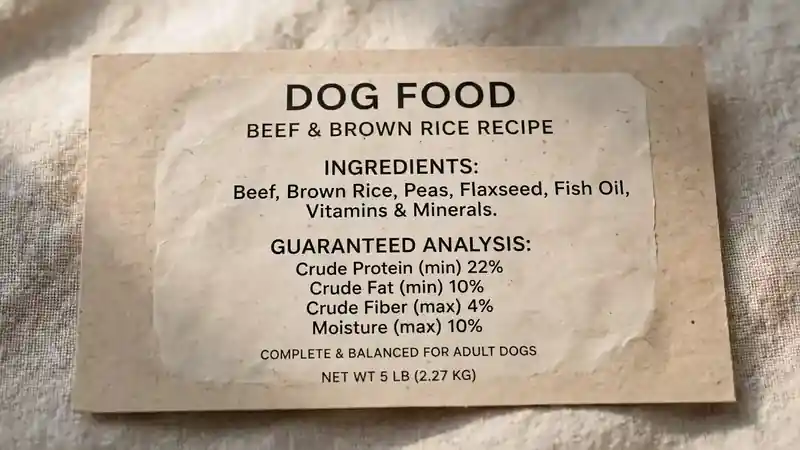
The first five inputs tell most of the story. If the first input is a named meat, the recipe leads with protein. If the first inputs are grains and meals with vague names, the recipe is padded. Watch for split inputs, where one carb appears twice under two names. Peas, pea flour, and pea protein in one recipe can add up to more legume than the label suggests at first glance.
The guaranteed analysis gives protein, fat, fiber, and moisture, but it says nothing about quality. A food can hit the numbers with poor inputs. The calorie statement matters more for daily use. Ask the vet to read the label with you before the first bag.
How does a food trial with limited ingredient dog food work?
A food trial with limited ingredient dog food means feeding only that food for 8 to 12 weeks, with no other food, treats, table scraps, or flavored medicine. The vet then checks whether itch, ear trouble, or loose stool fades. If signs improve, the old food returns for a short challenge to confirm that food was the cause.

The rules sound harsh because the test only works when the diet is the only input. One biscuit from a neighbor, one flavored chew, or one stolen bite can restart the reaction and blur the result. Feed the trial dog apart from other pets and warn the family. The VCA guide to elimination diet trials explains both phases and why the trial needs at least eight weeks.
Improvement often shows by week four or five, with the full picture clear by week eight or twelve. If the dog improves, the vet brings back the old food and watches for a flare. If the dog does not improve, the vet may switch to a hydrolyzed prescription diet, since over the counter foods can carry trace amounts of common allergens from shared factory lines.
Is grain free limited ingredient dog food safe?
Grain free limited ingredient dog food can suit dogs with a confirmed grain allergy, but it needs a vet talk first, because the FDA investigated a possible link between grain free diets and dilated cardiomyopathy, a serious heart condition. A grain inclusive limited ingredient diet is the safer default.

The concern came from reports of dogs on grain free diets rich in peas, lentils, and potatoes that developed heart trouble. The link is not proven, yet it is strong enough that vets now ask owners to think twice before picking grain free without a reason. A dog with a true grain allergy still needs one, but the vet should pick it.
Grain inclusive limited ingredient diets use rice, oatmeal, or barley as the single carb. Oatmeal suits many sensitive dogs, and rice is gentle on the gut. The Merck guide to digestive disorders in dogs explains why a vet should sort the cause before the owner picks a diet style.
How do you switch a dog to limited ingredient dog food?
Switch a dog to limited ingredient dog food over 7 to 10 days by mixing a small share of the new food into the old food and raising the share each day. A slow switch limits stomach upset and helps a picky dog accept a plainer taste. The trial clock starts only once the old food is fully gone.

A plain schedule works for most dogs. Start with one part new food to three parts old food for two or three days, then move to half and half, then three parts new to one part old, then all new. Watch the stool at each step. If loose stool shows up, hold at the current mix for an extra day or two before moving on. Soaking the kibble in warm water can help a dog that refuses it.
Do not add toppers during the switch or the trial. A spoon of yogurt or a splash of broth can carry a protein that breaks the test. If the dog skips meals for more than a day, call the vet instead of adding food from the table. The vet may suggest a wet version of the same recipe.
What are the limits of limited ingredient dog food?
Limited ingredient dog food has real limits: the label has no legal definition, over the counter recipes can carry trace allergens from shared factory lines, and a short recipe cannot prove which input caused the trouble. It is a first step for mild cases, not a full diagnosis for a dog with severe allergy.

Cross contamination is the limit owners miss most. A factory that runs chicken kibble on the same line in the morning can leave traces in a lamb formula made that afternoon. Prescription diets are made under stricter controls, which is why vets trust them for a true trial. A dog that fails on it may have failed because of traces, not the recipe.
The diet also tells you little on its own. If the dog improves, you know the old food held a trigger, but you do not know which input it was. Only the challenge phase, where single proteins return one at a time, names the culprit. The PetMD guide to food for dogs with allergies explains why prescription diets beat over the counter options when the answer must be certain.
When should a vet step in instead?
A vet should step in when itch, ear infections, vomiting, or weight loss persist past a proper trial, when the dog has bloody stool, or when the dog is a puppy, a senior, or a dog with a chronic disease. A vet can run a hydrolyzed diet trial and rule out causes that food cannot fix.

Food is only one cause of itch. Fleas, dust mites, pollen, and skin infection can look just like a food allergy, and a dog can carry two causes at once. A vet checks the skin, ears, and stool before blaming the bowl. Blood and saliva allergy panels often flag inputs in healthy dogs and match poorly with real symptoms.
A hydrolyzed prescription diet is the next step when a limited ingredient trial fails or when the case is severe. The protein is broken into pieces the immune system cannot read, so the trial gives a cleaner answer. The vet may also test whether the dog can return to a simple diet built around a safe protein.
Frequently asked questions about limited ingredient dog food for dogs
Owners ask the same questions when they first pick up a bag with a short label. The answers below cover the trial, the cost, and the daily rules that keep the test honest. Read them before the first bag, since one small mistake can waste weeks of work and force the trial to start over.

What is the best limited ingredient dog food for allergies?
There is no single best food, because the right one depends on which protein your dog has never eaten. A salmon and sweet potato recipe suits a dog that never ate fish, while a venison recipe suits a dog that ate fish for years. Ask the vet to pick the protein from the dog’s full food history. The best food has a single novel protein, a single new carb, and a short list.
How long does limited ingredient dog food take to work?
Many owners see less scratching by week four or five, but a fair trial runs 8 to 12 weeks. Skin heals slowly, and the immune system needs time to quiet down. If nothing changes by week eight, tell the vet instead of switching brands on your own. A failed trial still gives the vet useful facts about what did not work.
Is limited ingredient dog food good for sensitive stomachs?
Yes, for many dogs. A short recipe removes common gut irritants and gives the stomach fewer inputs to handle. Dogs with soft stool or gas often firm up within two weeks on a simple diet. If vomiting, bloody stool, or weight loss shows up, the problem may sit deeper than food, and the vet should check the dog. A stomach that does not settle on a simple diet needs a vet workup.
Can puppies eat limited ingredient dog food?
Some limited ingredient diets carry an all life stages label and suit puppies, but many are made for adults. Puppies grow fast and need exact calcium and calorie levels, so check the label for the life stage statement before feeding one. If a puppy shows allergy signs, the vet should pick the diet and set the amount. Never feed a puppy a home made elimination diet without a vet plan.
Does limited ingredient mean grain free?
No. Limited ingredient means a short recipe, and that recipe can hold grains or skip them. Many limited ingredient diets use rice or oatmeal as the single carb. Grain free versions use potato, sweet potato, or legumes instead. Unless the vet has confirmed a grain allergy, a grain inclusive diet is the safer pick.
Can my dog eat treats on a limited ingredient diet?
Only treats that match the trial food. Normal treats, chews, and table scraps can carry a protein that breaks the test. Use treats made from the same protein and carb as the diet, or skip treats and use pieces of the kibble as rewards. Flavored medicines need a swap to unflavored forms too, so ask the vet before the trial starts.
Limited ingredient dog food is a useful first step when a dog’s skin or stomach points to the bowl. Read the label, pick a protein the dog never met, run a clean trial, and let the vet read the result.