
Dog Eye Opaque: Why Your Dog's Eyes Look Cloudy
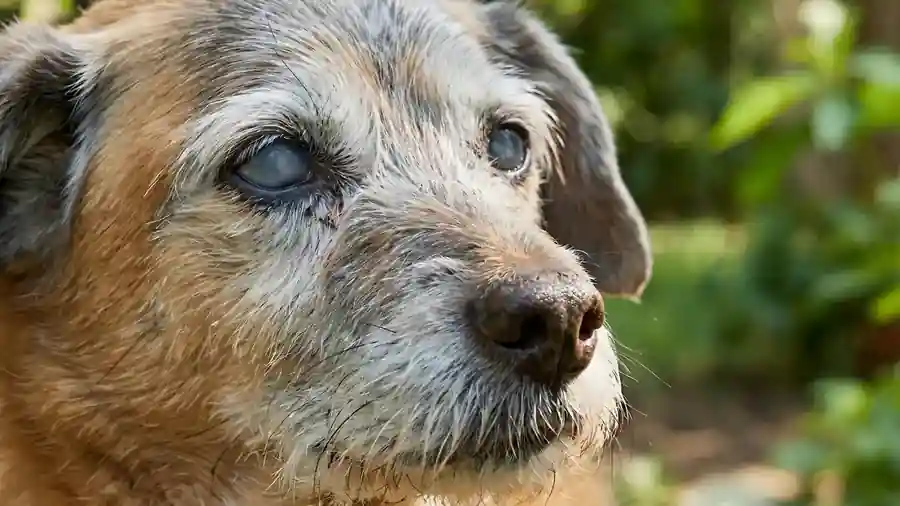
A dog eye opaque with a smooth blue-gray haze in both eyes is often nuclear sclerosis, a normal aging change that rarely harms vision. A white, milky cloudiness can mean a cataract, and a sudden cloudy eye with redness or pain can mean glaucoma or an ulcer, which needs a vet the same day. Only an eye exam can tell these causes apart.
What does a cloudy eye look like in a dog?
A cloudy eye in a dog looks hazy, milky, blue-gray, or white. The look depends on the cause. A smooth blue-gray haze across both pupils points to aging of the lens. A dense white patch points to a cataract. A blue-white film on the front of one eye points to swelling of the cornea.
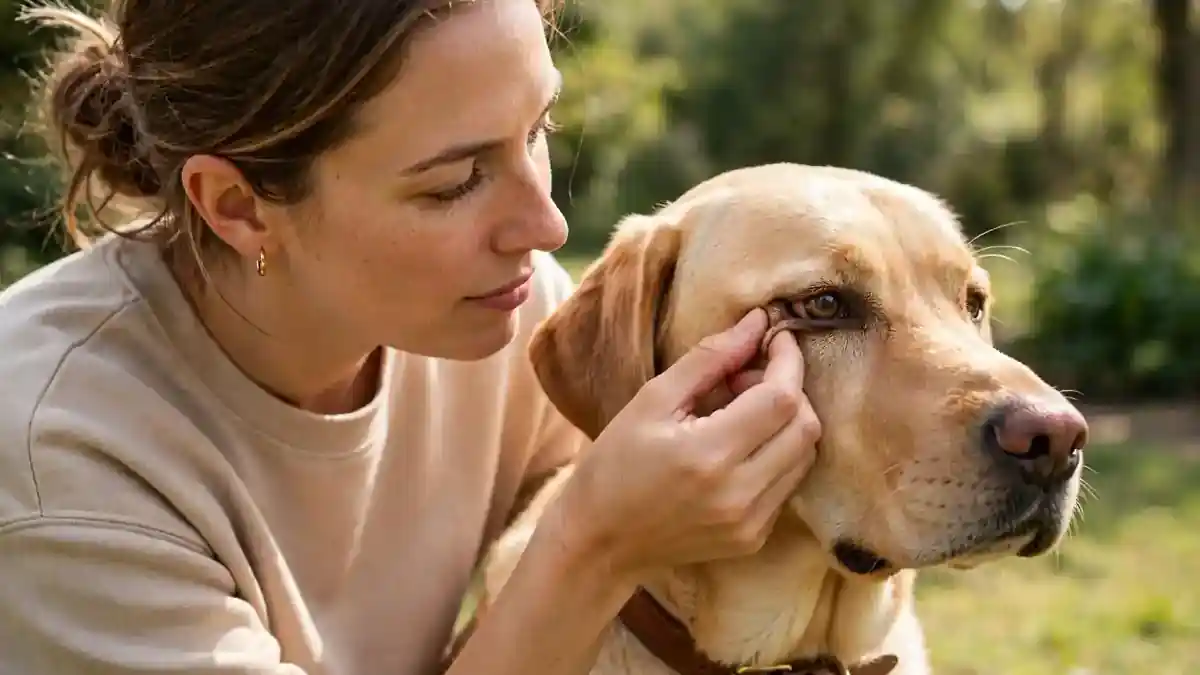
Owners notice cloudiness in different light. Bright sun can make a mild haze look worse, and a dim room can hide it altogether. A flash photo can help: a dog with nuclear sclerosis still shows the green-yellow eye shine, because light passes through the haze and bounces off the back of the eye. That photo check is a rough clue only, and it never replaces an exam.
Note which eye looks cloudy and how fast it changed. A haze that grows slowly in both eyes over months fits aging. A cloudiness that shows up in one eye overnight fits injury, ulcer, or glaucoma.
It needs same-day care. Write down the date you first saw it, and take a photo in the same light each week, because a vet can judge the speed of change from a dated photo series.
Nuclear sclerosis: the normal aging haze
Nuclear sclerosis is a normal hardening of the lens center that gives both eyes a smooth bluish-gray haze, and it rarely harms vision. The lens keeps adding fibers through life, and the older fibers pack tighter in the center, which scatters light. Dogs with nuclear sclerosis can still see well enough to walk and play and find their food bowl.

The haze usually shows up around six or seven years of age, and it grows slowly from there. Cornell University College of Veterinary Medicine states the point plainly: lenticular sclerosis will not make dogs blind, and a dog with it may miss fine detail while still seeing well enough to get around. How old is my dog matters here, because a blue-gray haze in a twelve-year-old dog means something different from the same haze in a two-year-old dog.
Nuclear sclerosis needs no treatment. No drop, supplement, or diet clears it. No surgery fixes it either, because it is not a disease.
The vet still needs to confirm it, because a cataract can hide behind the same look. The two need different plans. A vet exam with a slit lamp, a microscope that lights the lens in a thin slice, tells them apart in minutes.
Cataracts: when cloudiness blocks vision
A cataract is an opacity in the lens, where lens proteins clump and turn cloudy. It blocks light from reaching the retina. Small cataracts may not change vision at all. A cataract that covers the whole lens blinds that eye. Inherited disease is the most common cause. Diabetes can also cause cataracts, along with eye injury and inflammation.
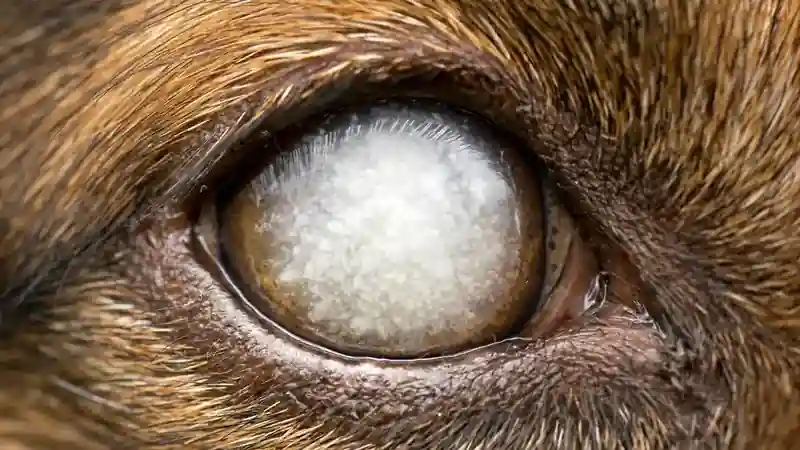
Hereditary cataracts run in many breeds, and they can show up in young dogs between one and five years old. Poodles and Cocker Spaniels sit on the breed lists that eye specialists watch. Boston Terriers and Labradors do too, along with Golden Retrievers and Siberian Huskies.
A dog with a hereditary cataract should not breed, because the trait passes to pups.
Diabetes drives the fastest cataracts. High blood sugar floods the lens, and sugar turns into sorbitol inside the lens, which draws water in and swells the lens fibers. A diabetic dog can go from a clear lens to a mature cataract in weeks, which is why a vet checks the eyes at every diabetes visit.
Vets grade cataracts in four stages: incipient and immature, then mature and hypermature. VCA notes that a cataract covering less than 30 percent of the lens rarely dims vision. A cataract at 100 percent blinds the affected eye. A hypermature cataract can inflame the eye from inside and raise eye pressure, which is why even a blind eye needs monitoring.
Glaucoma: the painful emergency behind a cloudy eye
Glaucoma is a rise in pressure inside the eye. It is a painful emergency that can blind a dog fast. Fluid inside the eye drains out steadily, and glaucoma starts when the drain blocks and fluid builds up. The eye looks cloudy and blue. The white turns red and the pupil grows large. The eyeball may bulge.
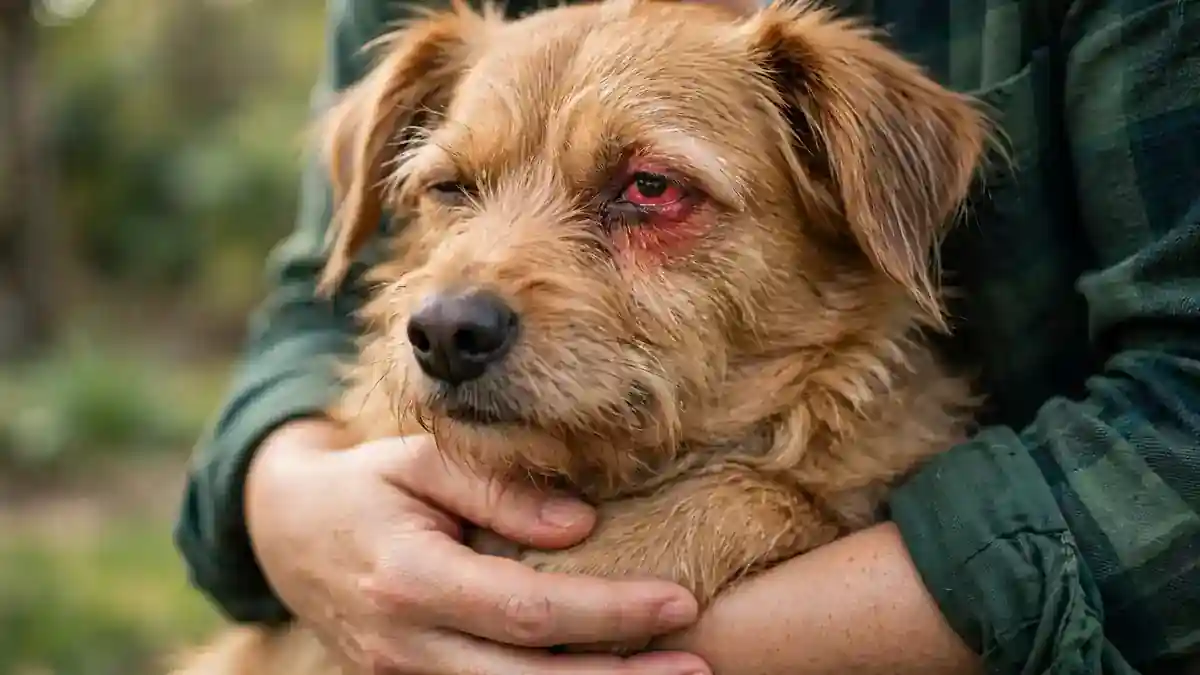
Pain is the sign owners miss most. A dog with acute glaucoma may paw at its eye and hide. Refusing food and flinching from touch around the head can follow. The eye may water.
The dog may bump into furniture on the affected side. VCA Canada calls acute glaucoma an emergency, and the reason is speed. High pressure can damage the optic nerve and the retina within a day or two. The damage does not reverse.
Primary glaucoma runs in breeds with a narrow drainage angle, and it can strike a healthy eye without warning. Secondary glaucoma follows another eye problem, and uveitis, a cataract, or a shifted lens can block the drain.
Treatment aims to drop the pressure fast. Emergency drops lower pressure within hours, and surgery may follow when drugs cannot hold it down. A sudden cloudy eye with redness, squinting, or a bulging look needs an emergency vet visit, not a wait until morning.
Uveitis and corneal problems that cloud the eye
Uveitis is inflammation inside the eye. It causes pain and redness, plus squinting and cloudiness, with a small pupil. Corneal problems cloud the eye from the front. An ulcer, swelling, dry eye, or corneal dystrophy can each turn the clear front window milky. Each cause needs a different treatment, which is why a cloudy eye never gets a home remedy.
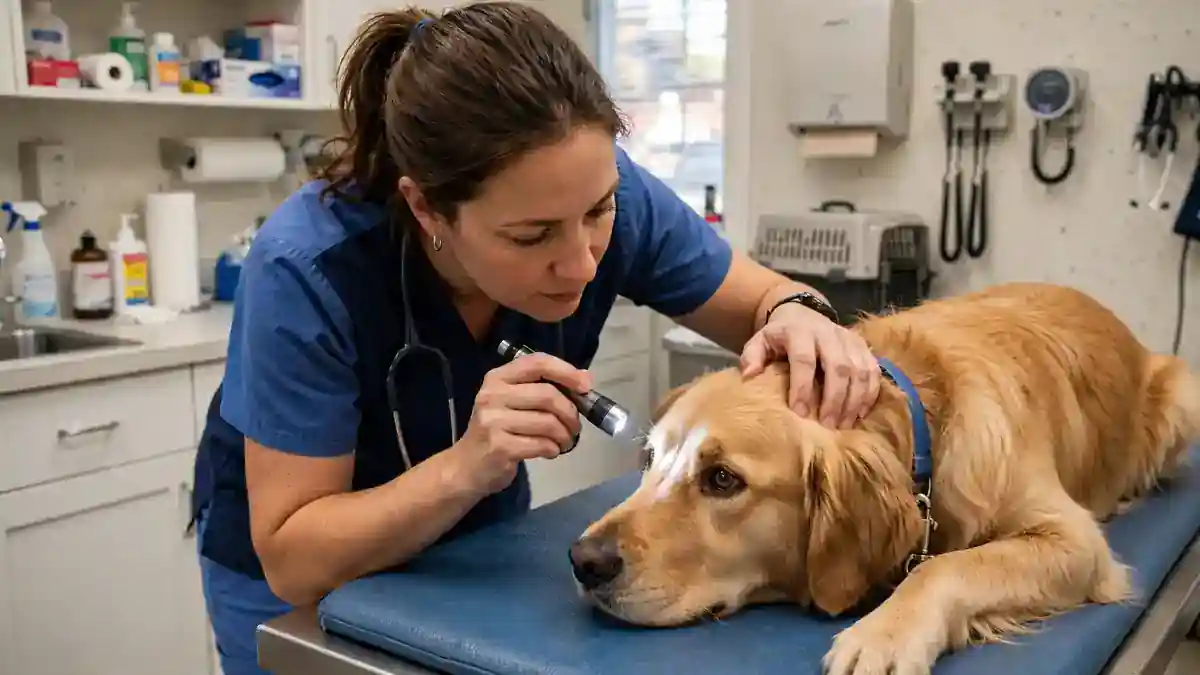
Uveitis inflames the uvea, the middle layer of the eye that holds the iris and the ciliary body. Signs include severe pain and intense redness. A shut eye and a dislike of bright light can follow.
VCA notes that eye pressure runs low in uveitis and high in glaucoma. A pressure test tells the two apart. Causes include infection and immune disease.
Trauma and tumors can also cause it. The vet hunts for the cause with blood tests and a full exam. Treatment uses anti-inflammatory eye drops, and the goal is to stop the inflammation before it scars the drain and causes glaucoma.
A corneal ulcer is a scratch or sore on the clear front surface. It clouds the eye in a patch rather than across the whole lens. Dogs with ulcers squint and tear.
Rubbing the eye follows. Ulcers need vet care fast, because a deep ulcer can rupture the eye.
Dry eye, or keratoconjunctivitis sicca, dries the cornea and leaves a dull film with thick discharge. Corneal dystrophy lays down fat or mineral deposits in the cornea, and it often runs in families and affects both eyes. Both conditions cloud the front of the eye rather than the lens, and a vet can see the difference with a dye test and a slit lamp. Cornell canine cataracts guide covers the lens causes in depth, and the VCA uveitis guide covers the inflammation side, and the two together show why one symptom can hide many diseases.
How does a vet tell cataracts from nuclear sclerosis?
A vet tells cataracts from nuclear sclerosis with an eye exam, a slit lamp, and a pressure test. The slit lamp lights the lens in a thin slice, and the vet watches whether light passes through or stops at a white opacity. A pressure test rules out glaucoma, and a look at the retina checks whether surgery could restore vision.
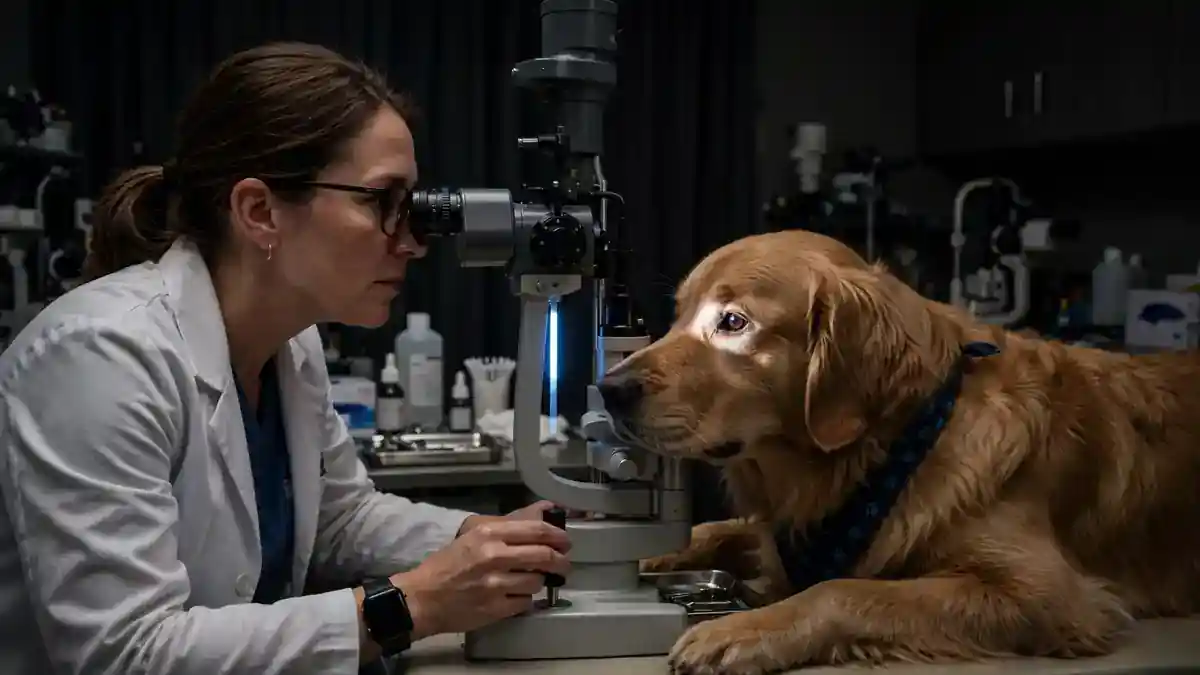
The exam runs in a set order. The vet checks vision with a menace test, then a hand moving toward the eye to see whether the dog blinks. A maze test with objects on the floor follows.
Then comes the slit lamp, which shows the lens layers and the depth of the opacity. Then comes tonometry, the pressure test, which reads high in glaucoma and low in uveitis. A dilated exam follows, where drops widen the pupil so the vet can see the retina and the back of the eye.
Can cataracts in dogs be treated?
Surgery is the only treatment that removes a cataract. The operation is called phacoemulsification. The surgeon breaks the cloudy lens into small pieces with ultrasound and removes them. A clear artificial lens goes in the capsule next. VCA reports a success rate of 90 to 95 percent for typical candidates, with improved vision and a better quality of life.
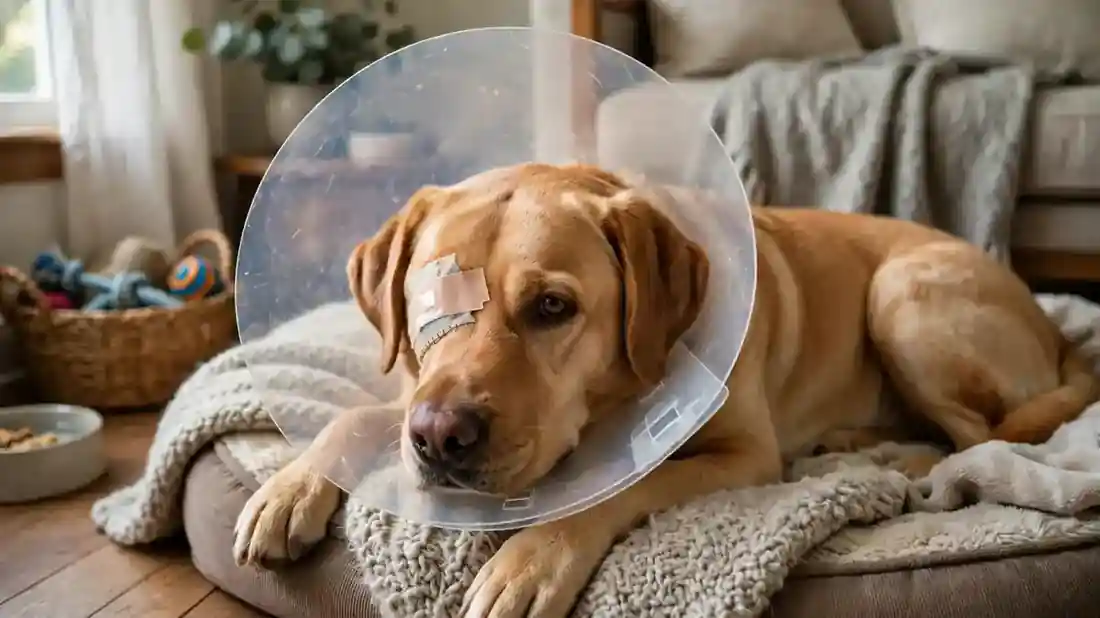
No drop, diet, or supplement dissolves a cataract. Products that claim to clear a cloudy lens have no evidence behind them, and the money spent on them delays the exam that matters. Anti-inflammatory eye drops can help a dog with a cataract that will not have surgery, because the drops calm the inflammation that leaks from the lens and lower the risk of glaucoma. The drops do not touch the cataract itself, and the lens stays cloudy.
Vets prefer to operate before the cataract turns mature, because an older cataract is harder to remove and more likely to inflame the eye. A diabetic dog needs stable blood sugar before surgery, and a dog with uveitis needs the inflammation calm first. The eye must also pass a retina test, because a new lens cannot help a retina that no longer works.
What should you do at home when you spot cloudiness?
Book a vet exam when you spot cloudiness. Treat sudden cloudiness with redness, squinting, or a bulging eye as an emergency. Do not put any drop in the eye, and do not rub the eye. Keep the dog calm and keep the room dim. Note the date and the eye, plus any other signs for the vet.
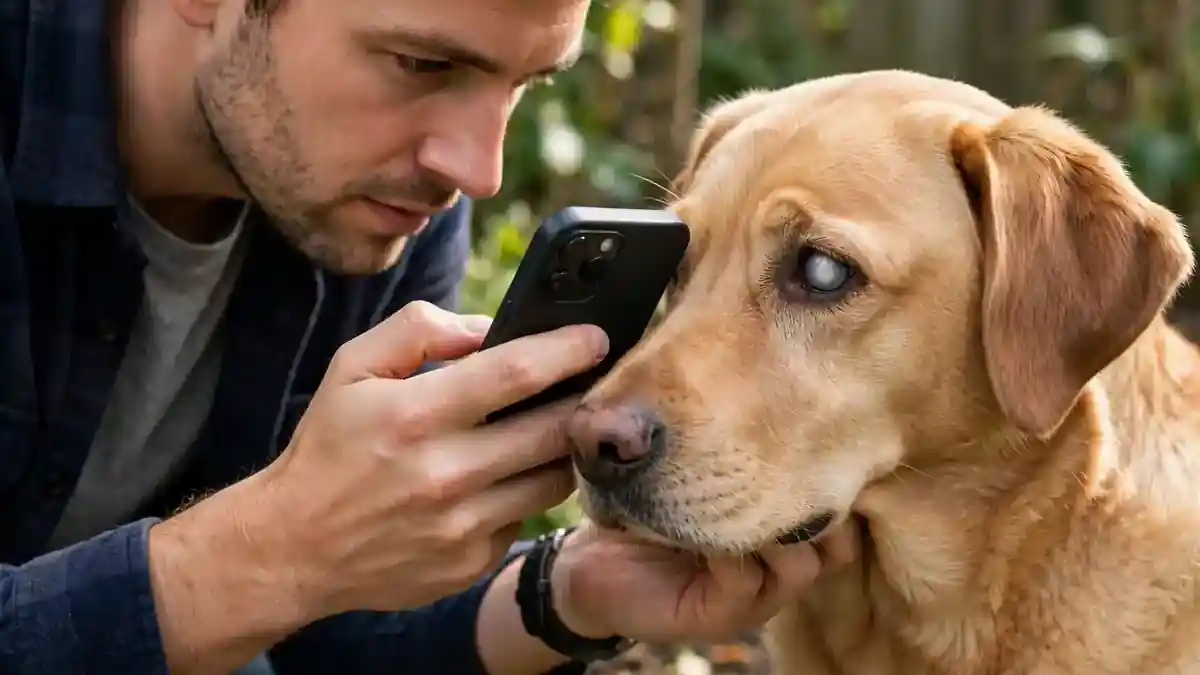
Home care means watching for changes until the appointment. Note whether the dog bumps into furniture, hesitates at stairs, or misses a tossed treat. Note whether the eye waters and whether the dog paws at it.
Also note whether the cloudiness covers one eye or both. A short note with dates helps the vet judge speed, and speed is the clue that separates aging from emergency.
Do not use human eye drops. A red-eye drop can raise pressure, and a steroid drop can worsen an ulcer. A cone can stop a dog from rubbing a painful eye while you drive to the clinic, and a dark quiet room can ease light sensitivity.
The same-day checklist
Call the emergency vet the same day when cloudiness appears suddenly, when the eye looks red, when the dog squints or paws at the eye, when the eyeball looks larger than the other one, or when the dog cannot see and bumps into walls. Book a routine visit within days when a slow blue-gray haze grows in both eyes of a senior dog with no pain and no redness. The gap between those two lists is the difference between an emergency and a checkup.
How to help a dog that is losing vision
A dog that is losing vision copes well when the home stays the same, because dogs map a house by smell and sound. Keep furniture in place and keep food and water bowls where they always were. Rugs at stairs and doorways help too. Talk to the dog before touching it. Approach from the side it can see.

Dogs lean on smell and hearing more than sight. A dog that cannot see well can still follow a voice and a scent trail. The feel of a rug under its paws helps too.
What colors can dogs see matters less than most owners think, because dogs never relied on color the way people do. Smell leads and hearing follows. Vision ranks third for most dogs, which is why a blind dog can still find the back door and the food bowl.
Safety needs a few changes. Block stairs with a gate and fence a pool. Keep sharp furniture corners covered. Walk the dog on a leash, even in a fenced yard at first, until the dog maps the space.
A walking vest with a handle lets you guide the dog through doorways. A bell on your shoe lets the dog track you. How long do dogs live varies by size and breed, and a dog that loses vision late in life can still enjoy years of good life with a steady routine.
Food can support eye health in a small way. Can dogs eat carrots is a common question, and carrots carry vitamin A, which supports normal vision. Can dogs eat blueberries brings antioxidants into the bowl, and fish oil for dogs adds omega-3 fats. None of these foods clears a cataract, and a vet should check the diet before any supplement joins it.
Frequently asked questions about dog eye opaque
Owners ask the same six questions about cloudy eyes in almost every senior dog visit. The answers below use the VCA and Cornell guidance, and each one still ends the same way: an eye exam gives the answer that a photo cannot.
Is a cloudy eye always a cataract?
No, a cloudy eye is often nuclear sclerosis, a normal aging change that rarely harms vision. Cataracts and glaucoma can also cloud an eye. Uveitis can too, along with corneal ulcers and dry eye. Only a vet exam with a slit lamp and a pressure test can tell which cause fits your dog.
Can cloudy eyes in dogs be reversed?
Nuclear sclerosis cannot be reversed, and it needs no treatment. A cataract can only be removed by surgery, and no drop or supplement clears it. Glaucoma and uveitis can improve with treatment, and an ulcer can heal with vet care, so the outlook depends on the cause.
When should I worry about my dog's cloudy eye?
Worry the same day when cloudiness appears suddenly, when the eye is red, when the dog squints or paws at it, when the eyeball looks larger, or when the dog bumps into things. A slow blue-gray haze in both eyes of a senior dog with no pain is less urgent, and it still needs a routine exam.
Can a dog go blind from a cataract?
A cataract that covers the whole lens blinds that eye, and a cataract that covers less than 30 percent of the lens rarely dims vision. A hypermature cataract can cause inflammation and glaucoma, which can blind the eye faster. Surgery can restore vision when the retina still works.
Do cataracts hurt dogs?
A cataract itself does not hurt, and a dog with a simple cataract may show no pain at all. Pain comes from the complications. Uveitis and glaucoma both hurt. A dog that squints, hides, or flinches from touch around a cloudy eye needs a vet visit the same day.
How much does cataract surgery cost for a dog?
Surgery often runs into thousands of dollars per eye. The total depends on the clinic and the region, plus the aftercare. Ask the ophthalmologist for a written estimate that covers the operation and the drops, plus the cone and the recheck visits before you decide.
A dog eye opaque with a blue-gray haze is often just age, and a white cloudy lens is often a cataract, and a sudden red cloudy eye is an emergency until a vet says otherwise. Book the visit, note the date the cloudiness started, and keep the home steady while the dog waits for answers. The VCA cataracts guide and the VCA glaucoma guide both end on the same point: cloudiness is a sign, not a diagnosis, and the vet exam turns the sign into a plan.


