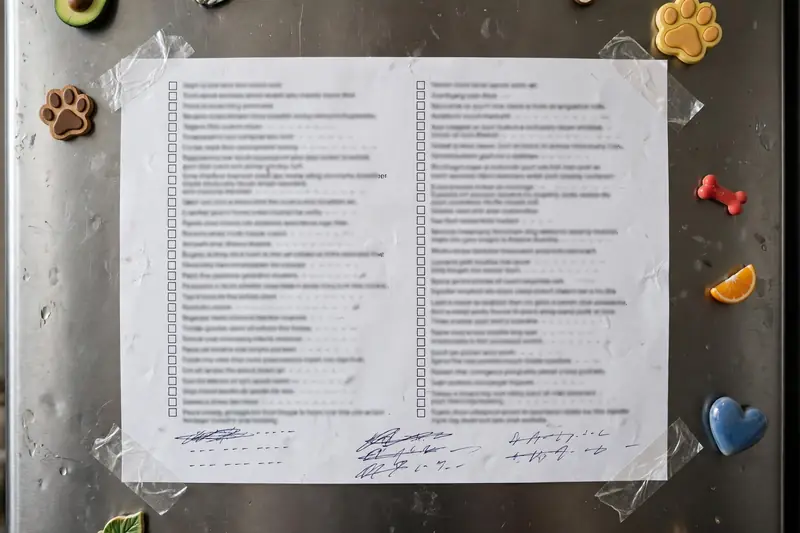
Search results for a toxic foods for dogs pdf return dozens of handouts, and most of them are either outdated, bloated with 40 items, or missing the two ingredients that send the most dogs to the emergency vet. A single printed page on your fridge works better than any of them. This guide gives you the 12 foods that actually belong on that page, the symptoms that matter, the emergency numbers to write next to them, and the print settings that make the list readable in a panic.

Why a short fridge list beats a long PDF
A short printed list on the fridge gets used in an emergency. A 40-item PDF saved on your phone does not. Poisoning moves fast, and nobody scrolls through a document while their dog is vomiting. Twelve foods cover nearly every real emergency: chocolate, xylitol, grapes and raisins, onions, garlic, macadamia nuts, alcohol, raw yeast dough, caffeine, cooked bones, nutmeg, and moldy food. Everything else on the long lists is either a duplicate, a rare exposure, or a mild stomach upset dressed up as a toxin.
Veterinary poison data backs the shortlist approach. The ASPCA’s people-foods page and the Pet Poison Helpline both see the same handful of culprits again and again: chocolate exposures, xylitol from sugar-free products, grape and raisin ingestion, and allium vegetables hiding in cooked food. Long lists feel thorough. Short lists get read.
The 12 foods on the printable list
These 12 foods cause almost every serious food-poisoning case in dogs, so they earn the limited space on a one-page handout. The table below is the printable core: food, what makes it dangerous, and the signs to watch for. Print this section, add your vet’s number at the bottom, and the page is done.

| Food | Why it is dangerous | Watch for |
|---|---|---|
| Chocolate | Theobromine and caffeine; darker means worse | Vomiting, restlessness, tremors, seizures |
| Xylitol (birch sugar) | Triggers massive insulin release | Weakness, collapse, vomiting within 30 minutes |
| Grapes and raisins | Can cause sudden kidney failure; no safe dose | Vomiting, lethargy, no appetite within a day |
| Onions | Damages red blood cells | Weakness, pale gums, rapid breathing |
| Garlic | Same damage as onion, about 5 times more potent per gram | Weakness, pale gums, dark urine |
| Macadamia nuts | Toxin still unidentified; hits nerves and muscles | Hind-leg weakness, tremors, fever within 12 hours |
| Alcohol | Dogs are far more sensitive to ethanol than people | Wobbling, slow breathing, collapse |
| Raw yeast dough | Expands in the stomach and ferments into alcohol | Swollen belly, retching, weakness |
| Caffeine | Coffee grounds, tea bags, energy drinks | Restlessness, fast heartbeat, tremors |
| Cooked bones | Splinter and can perforate the gut | Vomiting, bloody stool, belly pain |
| Nutmeg | Myristicin causes neurological signs | Hallucinations, disorientation, seizures |
| Moldy food | Mycotoxins from spoiled food or compost | Tremors, seizures, agitation |
Two items usually missing from viral handouts deserve a note. Chives and leeks belong to the same allium family as onions and garlic and carry the same red-blood-cell risk, so list them with the onion row rather than giving them their own. And baby food and gravy often contain onion powder, which is more concentrated than fresh onion. A handout that only says “onions” misses the form most dogs actually eat.
Xylitol: the one most printouts underplay
Xylitol kills more dogs per exposure than any other item on a kitchen shelf, and most printable lists bury it in the middle. The sugar substitute hides in sugar-free gum, mints, some peanut butters, protein bars, chewable vitamins, and even toothpaste. Labels now call it “birch sugar,” which sounds natural and safe. It is neither, for a dog.
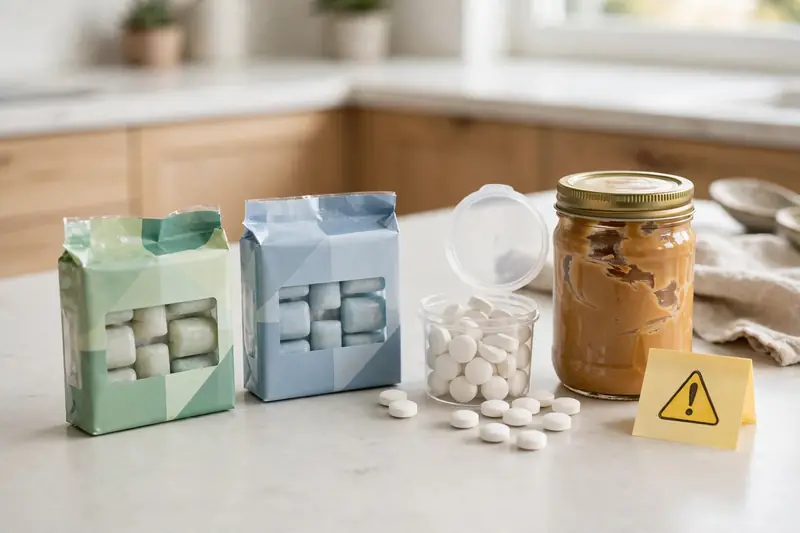
A dog’s body reads xylitol as real sugar and dumps insulin in response. Blood sugar crashes within 10 to 60 minutes, and larger doses injure the liver over the next 12 to 72 hours. The FDA warns that xylitol is dangerous for dogs and urges owners to check ingredient labels on anything sugar-free. One stick of gum can poison a small dog. Print xylitol at the top of the list, not the middle. Bold it. It earns the emphasis.
The practical fix is boring and effective. Keep sugar-free products in a closed cabinet, never on a counter or in a purse a dog can reach. Read the label on every peanut butter jar before it becomes a treat stuffer. If a houseguest chews sugar-free gum, the gum stays in their bag, not on the coffee table.
Chocolate: the type matters more than the amount
Baking chocolate and cocoa powder can poison a dog with a few squares, while milk chocolate takes a whole bar to do the same damage. Theobromine concentration is the whole story. Cocoa powder carries roughly 2,850 mg of theobromine per 100 grams, which makes it the most dangerous form in a normal kitchen. Dark chocolate sits well below that but still far above milk chocolate. White chocolate has almost none; it is a fat and sugar problem, not a poisoning risk.

Dogs metabolize theobromine slowly, so the stimulant builds up and overstimulates the heart and brain. Vomiting and restlessness arrive first, then tremors, then seizures in bad cases. A 20-pound dog that eats two ounces of baking chocolate is in real danger, while the same dog would need close to a pound of milk chocolate to reach a similar dose. Those numbers are why the type belongs on the printed list next to the word chocolate.
Seasonal spikes are predictable. Emergency vets see chocolate cases surge around Halloween, Christmas, Valentine’s Day, and Easter, when bowls of candy sit at dog height. The fridge list earns its keep in December. Tape it up before the holidays, not after the first incident.
Grapes and raisins: there is no safe dose
Any grape or raisin ingestion counts as an emergency, because researchers have never found a dose that is reliably safe. Some dogs eat a handful with no effect. Others develop acute kidney failure from a few grapes. The toxic compound stayed unidentified for years; current research points to tartaric acid, which also explains why cream of tartar and tamarind show up in case reports.
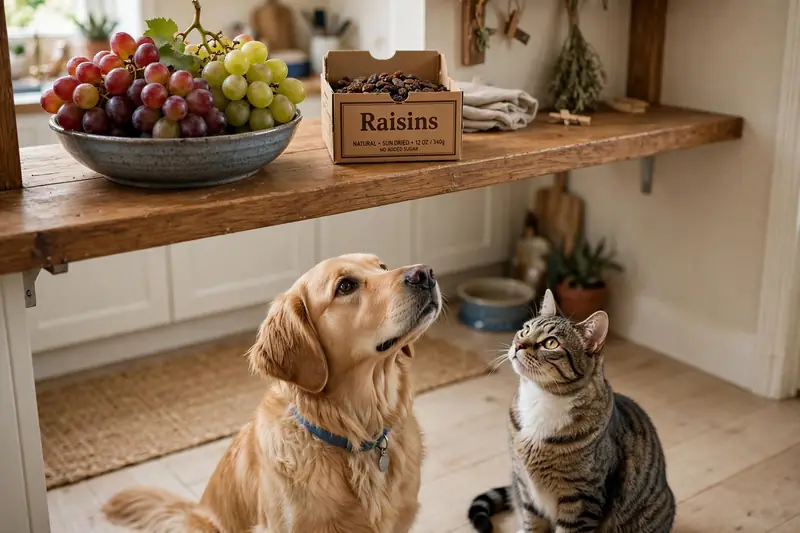
Kidney signs take 24 to 72 hours to appear, which tricks owners into waiting. Vomiting and lethargy start first, appetite drops, and urination changes follow. By the time a dog stops drinking, the kidneys are already failing. The delay is the danger. Call the vet the moment you find the empty punnet, not the next morning.
Hidden sources catch people off guard. Trail mix, fruitcake, oatmeal raisin cookies, raisin bread, and some granola bars all carry the same risk. Currants and sultanas count too, and the grape and raisin guide lists the hidden sources like trail mix. The printed list should say “grapes, raisins, currants, sultanas” on one line so nobody assumes the dried ones are safer. They are more concentrated, not less.
The onion and garlic problem in cooked food
Most onion and garlic poisonings come from cooked human food, not from a dog eating a raw onion off the counter. Gravy, stock, baby food, seasoned meat, and takeout leftovers carry onion and garlic powder, and the powdered forms are more concentrated than the fresh vegetables. A dog that steals a plate of seasoned leftovers gets a bigger allium dose than one that chews a raw onion slice.

Alliums destroy red blood cells and cause hemolytic anemia. Garlic runs about five times more toxic per gram than onion, as the garlic safety guide explains. Symptoms lag by a day or more: weakness, pale gums, fast breathing, sometimes dark urine. Owners connect it to the meal only if they know the lag exists, which is exactly the kind of detail a fridge list should carry in small print. For a deeper look at the numbers, the onion toxicity guide breaks down how much causes harm by dog size, and the onion safety guide covers the symptoms to watch for.
The fix is a kitchen habit, not a lecture. Cook the dog’s portion before the onion goes into the pan, or set plain meat aside first. Read seasoning-blend labels; onion powder hides in blends that do not say onion on the front. And the old myth that a little garlic repels fleas needs to die. It does not repel fleas, and the dose adds up over time.
What most printable lists get wrong
Viral toxic-food handouts copy each other, so the same three errors survive from list to list. First, they list avocado as a top-tier poison. Avocado flesh causes vomiting and diarrhea at worst in dogs; persin’s real victims are birds and large livestock. The pit is a choking and blockage hazard, which is the honest warning. Second, they list “dairy” as toxic. Most adult dogs are lactose intolerant, which means gas and loose stool, not poisoning. Third, they skip alcohol entirely, even though dogs are far more sensitive to ethanol than humans and a spilled cocktail is a realistic exposure.

Outdated lists create a second problem. A handout from 2014 will not mention birch sugar as a xylitol alias, will not flag the tartaric acid research on grapes, and may still list foods the evidence has softened on. Check the date on any PDF before you print it. If the list predates 2020, build your own from the 12 items above instead.
One more gap: almost no handout mentions that cooked bones are a mechanical danger, not a chemical one. They splinter and perforate. Raw bones carry their own risks, but the printed warning that saves dogs is the cooked one, because cooked bones arrive via table scraps, which arrive via guests who do not know the rule.
Turning the list into a printable one-pager
Print the 12-item table above at 100 percent scale on one page, add two phone numbers at the bottom, and tape it inside a kitchen cabinet door. Chrome and Edge both print web pages cleanly: press Ctrl+P (or Cmd+P on a Mac), set margins to narrow, and tick “background graphics” off so it prints in plain black text. One page, large type, no color needed. Lamination is overkill; a sheet protector from a dollar store survives kitchen steam for years.

Cabinet door beats fridge front for one reason: guests read it while looking for a glass. Tape the list inside the cabinet where the dog treats live, so anyone reaching for a treat sees the warnings first. Print a second copy for the pet sitter’s folder. Sitter emergencies are common because sitters do not know the household rules, and a printed page removes the need to explain everything from memory.
Digital backup still helps. Save the page as a PDF on your phone for the dog park or the in-laws’ house, where the fridge list cannot follow. But the printed copy is the primary tool. Phones die, screens lock, and search results in a panic surface sponsored junk. Paper works when nothing else does.
If your dog eats something on the list
Call your vet or poison control first, then act. Do not wait for symptoms and do not guess at home treatment. The VCA’s poisoning guidance stresses that the right response depends on what was eaten, how much, and how long ago. Have three facts ready when you call: the exact food and amount, your dog’s weight, and the time of ingestion. The empty package helps more than your memory of it.

The ASPCA Animal Poison Control Center runs at (888) 426-4435 and charges a consultation fee. Write that number on the printed list now, plus your own vet’s number and the nearest emergency clinic. Most owners look these up mid-panic. Do not induce vomiting unless the vet says so; some substances cause more damage coming back up, and the timing window matters. The vomiting induction guide covers when it helps and when it harms, but the phone call comes first, always.
After the call, watch and record. Note the time of every symptom: vomiting, drooling, wobbling, lethargy. Vets use the timeline to judge severity, and “he threw up twice around 8” beats “he seems sick.” Keep the dog calm and still; a panicked dog that runs around absorbs some toxins faster. Then follow the professional’s instructions to the letter.
Frequently asked questions about toxic food lists for dogs
Owners usually ask whether an official PDF exists, how often to update the list, and what to do about foods that are not on it. The answers below cover the practical side of keeping the list useful.

Is there an official ASPCA toxic foods for dogs PDF?
The ASPCA publishes a web page on people foods to avoid, not a printable PDF handout. Several vet clinics and trainers offer their own PDFs, but they vary in quality and date. Building the one-page list from the 12 items above gives you a current, vet-aligned handout without relying on a stranger’s document.
Should puppies get a different list?
The dangerous foods are the same, but puppies earn extra caution for two reasons. Their small body weight means a smaller dose causes harm, and they chew everything. Keep the same list, add a line about keeping purses, backpacks, and low shelves clear, and expect the puppy to test every rule on the page.
How often should I update the printed list?
Once a year is plenty unless a new risk appears. Xylitol aliases changed (birch sugar), grape research advanced (tartaric acid), and product formulations shift. When you update, check the date on your sources and replace the sheet. A 2020 list is already missing label changes.
What about foods that are not on the list?
Absence from the list does not mean safe. It means not a top-12 emergency. The safe human foods guide covers what dogs can eat day to day, and anything unfamiliar deserves a quick check before it goes in the bowl. When in doubt, the phone call is cheaper than the emergency visit.
Can I share my printed list with other dog owners?
Yes, and you should. Dog parks, training classes, and neighborhood groups all benefit from a current handout. Just keep the emergency numbers local to your area on shared copies, or leave the number lines blank so each owner fills in their own vet.
Does the list change for small vs large dogs?
The foods stay the same; the dangerous amounts shrink with body weight. A single piece of sugar-free gum threatens a Chihuahua and barely registers for a Labrador. The printed list works for every size because the rule is the same: if it is on the list, it does not go in the dog, regardless of breed.
A printed list will not stop a determined counter-surfer. It stops the slower, more common disaster: a guest, a sitter, or a teenager handing the dog something dangerous out of kindness. Twelve foods, two phone numbers, one page on the cabinet door. That is the whole system, and it works because it is simple enough to survive a real emergency.
Disclaimer: This article is for general information only and is not veterinary advice. If your dog eats something potentially toxic, contact your veterinarian or the ASPCA Animal Poison Control Center at (888) 426-4435 immediately. Do not induce vomiting unless a veterinary professional instructs you to.