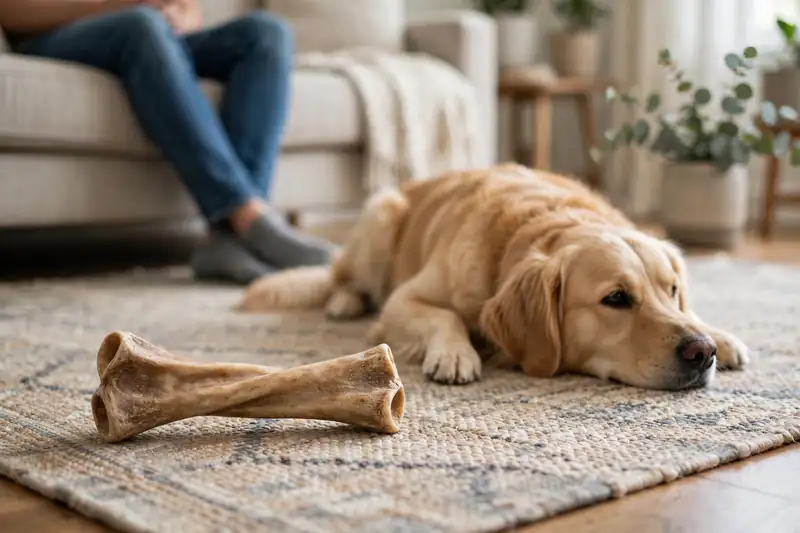
Rawhide chews sit in nearly every pet aisle, and nearly every dog owner has wondered whether they are safe. You will hear both extremes: that rawhide is a perfectly fine chew, and that it is a vet visit waiting to happen. The American Kennel Club lands in the middle, saying the short answer to whether rawhide is safe for dogs is “it depends.” So is rawhide bad for dogs? For gentle chewers under supervision, it can be a reasonable treat. For power chewers who rip off chunks, it carries real risks of choking and intestinal blockage. This guide breaks down what rawhide actually is, where the dangers lie, and how to decide for your dog.
Is rawhide bad for dogs?
Not automatically, but it is not risk-free either. Rawhide is dried animal hide, usually from cattle, and its safety depends mostly on your dog’s chewing style. Gentle chewers who gnaw slowly and never swallow chunks generally do fine. Strong chewers who tear off large pieces face choking and intestinal blockage risks that can become emergencies.

That chewing-style distinction is the whole story. The AKC puts it plainly: rawhides are meant to break down into tiny, soft pieces over time, but strong chewers can break off large chunks that pose a choking hazard or cause intestinal blockage if swallowed. Both scenarios are potentially life-threatening. So the question is less “is rawhide bad” and more “is rawhide bad for my dog, the way my dog chews.” Watch your dog with a chew for a few sessions and you will have your answer.
The supervision rule
No dog should get rawhide unsupervised. That single rule prevents most of the worst outcomes, because you can step in the moment a piece gets small enough to swallow or a chunk breaks off.
What rawhide actually is
Rawhide is a byproduct of the leather industry. Hides from cattle, and sometimes horses, are split at the tannery. The tougher outer layer becomes leather. The softer inner layer gets cleaned, treated, pressed, and shaped into the bones, rolls, chips, and twists sold as dog chews.

The journey from slaughterhouse to pet aisle is longer than most owners realize. The AKC explains that fresh hides are packed in high-salt brines to slow decay, and most rawhide is manufactured overseas, which means weeks to months can pass before those brined hides reach a tannery for final processing. There the hides are soaked, treated with lime to separate fat from skin, dehaired through chemical and physical steps, and rinsed again. Knowing this matters because it explains two of the main concerns: digestibility and contamination. You are not buying a simple dried treat. You are buying a heavily processed animal product, and quality varies a lot between manufacturers.
Thicker is better
When you do buy rawhide, the AKC advises choosing thicker pieces. They take longer to chew down, which keeps the dog in the safe gnawing zone and away from the swallow-a-chunk zone.
The choking risk
Choking is the most immediate rawhide danger. As a dog chews, the rawhide softens and swells. A strong chewer can bite off a piece large enough to lodge in the throat on the way down. This is the scenario vets warn about most urgently, because a blocked airway gives you minutes, not hours.

Know the signs. A choking dog paws at its mouth, gags repeatedly, drools heavily, and may panic. If you see this during a chew session, act immediately: open the mouth carefully and try to remove the obstruction if you can do so safely, and get to a vet or emergency clinic fast. Prevention is far better. Match the chew size to your dog, take the rawhide away once it is small enough to swallow, and never leave a chewing dog alone. The take-away moment feels early. It is supposed to.
Size matching matters
A chew that is too small for your dog is a choking hazard from the first bite. When in doubt, go bigger. A large rawhide for a medium dog is safer than a medium rawhide for the same dog.
Intestinal blockage: the bigger worry
If a swallowed chunk makes it past the throat, the next danger is further down. Large pieces of rawhide do not break down the way food does. They can lodge in the stomach or intestines and block the passage of everything else. Intestinal blockage is a surgical emergency.

The signs usually show up hours after the swallowing incident, which makes this tricky. Watch for repeated vomiting, loss of appetite, lethargy, abdominal pain or bloating, and straining without producing stool. Any of these after a chew session warrants a prompt vet visit, and do not wait to see if it passes on its own. Treatment for a full obstruction often means endoscopy or surgery, with recovery stretching over a week or more. That is a heavy price for a chew.
Partial blockages are still serious
Even a piece that does not fully block the intestine can cause partial obstruction, pain, and vomiting. “It seemed to pass” is not a diagnosis. When in doubt, call the vet.
Why rawhide is hard to digest
Here is the core of the problem. Rawhide is not easily digested, the AKC says so directly. A dog that swallows a chunk is swallowing something closer to a small piece of leather than a snack. The digestive system cannot break it down the way it breaks down food.

Swallowed pieces have to travel through the whole tract in roughly the shape they went down in. Small, well-chewed bits usually pass without drama. Larger pieces can sit in the stomach for a long time. The AKC notes that undigested rawhide can linger in a dog’s stomach for months, causing gastrointestinal discomfort along the way. This is why the gentle chewer versus power chewer distinction matters so much. A gentle chewer produces tiny, soft fragments that pass. A power chewer produces chunks that do not.
Digestible does not mean nutritious
Some newer chews are marketed as digestible rawhide or rawhide alternatives. More digestible is genuinely safer for blockage risk, but it does not make the chew a health food. Treat all chews as extras, not nutrition.
Chemical and bacterial contamination
Rawhide’s long, multi-step manufacturing chain creates contamination concerns. The AKC points to the salt brines, lime treatments, and chemical dehairing involved in processing. Over the years, there have been recalls tied to chemical residues, including a 2017 recall over a quaternary ammonium compound used to clean food processing equipment.

Bacterial contamination is the more common issue. Because rawhide is an animal product handled through many steps, it can carry Salmonella or E. coli if hygiene slips anywhere along the chain. This is a risk to your dog and to the humans handling the chews, so wash your hands after handling them. Choosing where your rawhide comes from helps. The AKC notes that American-made rawhides can be harder to find and pricier, but the manufacturing oversight is generally tighter. Read labels, buy from reputable brands, and skip anything that smells off or looks discolored.
Rinse before serving
The AKC suggests fully rinsing a rawhide in water before giving it to your dog. It is a small step that washes away surface residues from processing and packaging.
Dogs who should skip rawhide entirely
Some dogs should not get rawhide at all. Power chewers top the list. If your dog can break off large chunks with little effort, the AKC says plainly that rawhide is not the chew for them. Take it away and choose something else.
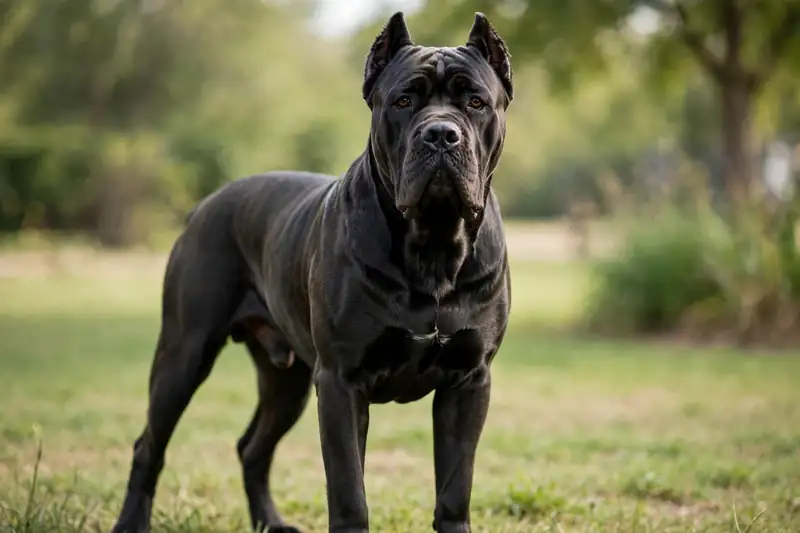
Puppies are another group to be careful with. Young dogs chew enthusiastically and unpredictably, and their smaller throats and intestines leave less margin for error. Dogs with sensitive stomachs or a history of gastrointestinal trouble tend to do poorly with a hard-to-digest chew. Dogs that gulp rather than chew, the ones who try to swallow everything as fast as possible, are poor candidates too. And any dog that has already had a choking scare or blockage should be moved permanently to safer alternatives. There are too many good options to keep gambling.
The two-session test
Give rawhide twice under close watch. If your dog gnaws calmly and never produces chunks, it may be fine. If pieces start breaking off, you have your answer and a reason to switch.
How to offer rawhide more safely
If your dog is a gentle chewer and you decide rawhide stays on the menu, a few habits keep the risk low. Always supervise. Choose a chew appropriately sized or slightly oversized for your dog. Take it away once it is small enough to swallow whole.
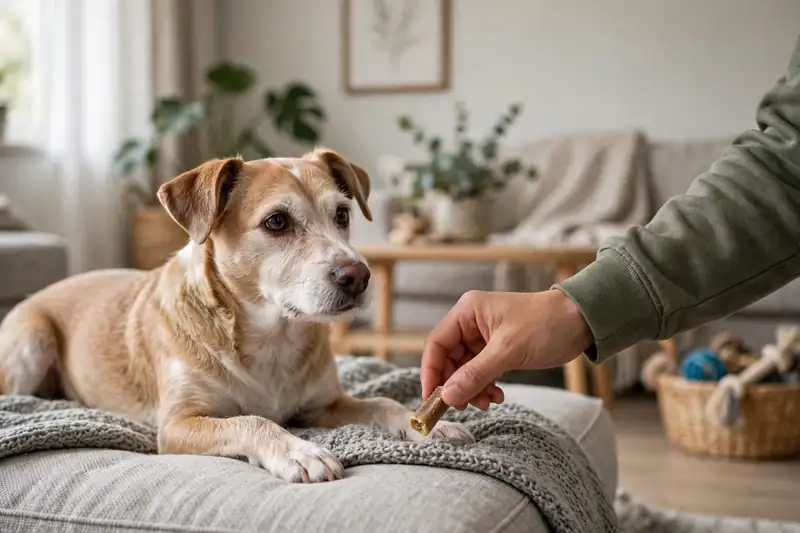
Buy thicker rawhides rather than thin pressed sheets, since they last longer and break down more slowly. Rinse the chew before serving. Store unused chews where the dog cannot self-serve, because a dog left alone with a bag of rawhide will not pace itself. And keep chew sessions reasonably short rather than letting the dog work a rawhide down to a nub in one sitting. None of these steps makes rawhide risk-free. They move a gentle chewer from low risk to lower risk, which is the best any chew protocol can do.
The trash rule
Throw removed pieces in a trash can your dog cannot open. Dogs are remarkably good at retrieving a confiscated chew, and a trash raid can deliver the exact chunk you were trying to prevent.
Safer chew alternatives
If rawhide does not suit your dog, the alternatives have never been better. Bully sticks are a favorite: single-ingredient, fully digestible, and long-lasting, though they do have a smell that owners either tolerate or do not. Yak cheese chews harden into a long-lasting chew and soften as the dog works them.
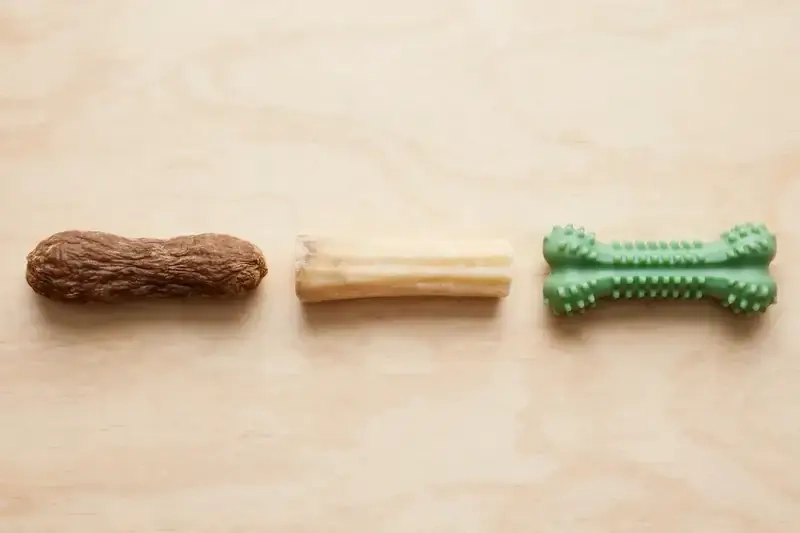
Dental chews with the Veterinary Oral Health Council seal clean teeth while being designed to break down safely. Some manufacturers now make rawhide-free chews that mimic rawhide’s texture using digestible ingredients like rice and chicken. Frozen carrots, stuffed Kongs, and rubber chew toys fill the enrichment role without any ingestion risk at all. Every one of these still deserves supervision and size matching. There is no chew you can hand over and forget. But for power chewers and worriers, switching categories removes the specific risks that make rawhide controversial.
Rotate, do not just replace
Different chews exercise different chewing motions and keep the novelty alive. Rotating two or three safe options beats relying on a single chew type.
What to do if your dog swallowed a big piece
Stay calm and gather information. Note when it happened, roughly how big the piece was, and how your dog is acting now. Call your veterinarian right away and describe all three. Do not try to make your dog vomit unless your vet specifically tells you to.

Your vet may advise monitoring at home if the piece was small and your dog is acting normally, or may want to see the dog promptly for x-rays. Either way, watch closely over the next 24 to 48 hours for vomiting, appetite loss, lethargy, abdominal pain, or straining. Those signs mean the situation has escalated and needs hands-on care. Keep a bland, easy meal ready in case your vet recommends resting the stomach; our guide to bone broth for dogs covers a gentle option. And use the scare as a decision point. A dog that swallows chunks has told you exactly what kind of chewer it is.
Rawhide is not poison, and it is not harmless. It is a processed chew whose safety lives and dies on the dog holding it. Gentle chewers, supervised, with the chew taken away at the right moment, can enjoy it without trouble. Power chewers, gulpers, and puppies are better served by the alternatives. Know your dog’s style, respect the take-away moment, and you will land on the right side of the “it depends.” For the bigger picture on treat safety, our guide to what human food dogs can eat covers the foods dogs meet most often.
Frequently Asked Questions
Is rawhide digestible for dogs?
Not easily. The AKC states directly that rawhides are not easily digested, which is why swallowed chunks can cause obstructions. Tiny, well-chewed fragments usually pass, but larger pieces can linger in the stomach for months or get stuck.
Can puppies have rawhide?
It is risky. Puppies chew unpredictably, have smaller airways and intestines, and are more likely to bite off pieces they cannot handle. Most vets suggest waiting until you know your dog’s adult chewing style, and choosing puppy-specific chews in the meantime.
Are bully sticks safer than rawhide?
Generally yes. Bully sticks are single-ingredient and fully digestible, so they break down in the stomach instead of passing through in chunks. They still require supervision and proper sizing, but they remove rawhide’s specific blockage profile.
How long should a rawhide chew session last?
There is no official number, but shorter is safer. Letting a dog work a rawhide down to a swallowable nub in one sitting is exactly how trouble starts. Take the chew away while it is still clearly too big to swallow, and discard the remainder.
What are signs of intestinal blockage in dogs?
Repeated vomiting, loss of appetite, lethargy, abdominal pain or bloating, and straining without producing stool. These signs can appear hours after the dog swallowed something. Any of them after a chew session means call your vet promptly.
Is American-made rawhide safer?
Often, yes. The AKC notes that American-made rawhides are harder to find and pricier, but manufacturing oversight is generally tighter than with imported products. Whatever the origin, buy from reputable brands and check for recalls.
Can rawhide clean my dog’s teeth?
Chewing does provide some mechanical cleaning action, and the AKC mentions rawhide can help promote oral health. But it is not a substitute for brushing or veterinary dental care, and chews with the Veterinary Oral Health Council seal are designed for the job.
This article is general information only and is not a substitute for veterinary advice. If your dog has a health condition, is on a prescription diet, or you are unsure about any chew or treat, check with your veterinarian first.