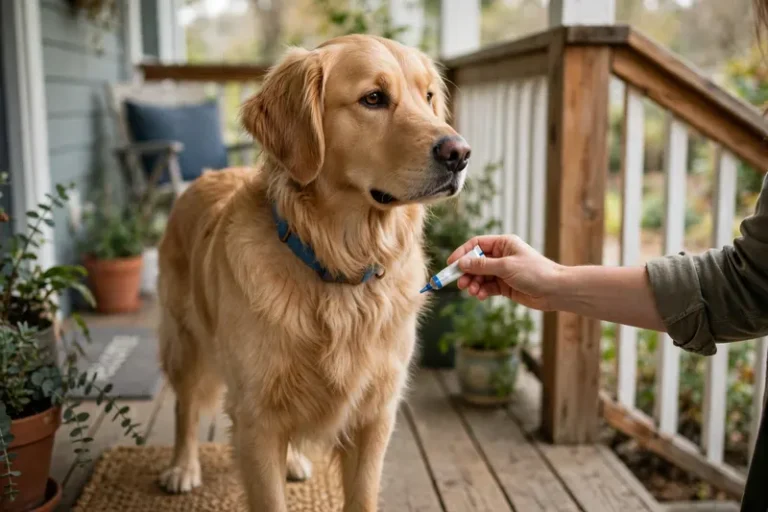
Famotidine for dogs is the same medicine sold to people as Pepcid. Veterinarians prescribe it for acid reflux, gastritis, stomach ulcers, and vomiting linked to excess stomach acid. It is sold over the counter, which tempts owners to dose it themselves, but the right drug, dose, and timing depend on the dog and the diagnosis. This guide explains what famotidine does, the dosing ranges veterinary references publish, how to give it, and the product versions to avoid.
What is famotidine?
Famotidine is a histamine H2 blocker, a medicine that reduces how much acid the stomach produces. People know it as Pepcid or Pepcid AC. It is not approved by the FDA for use in animals, but veterinarians commonly prescribe it as an extra-label drug. That means your vet sets the dose; the human package directions do not apply to dogs.

Extra-label use is routine in veterinary medicine and does not mean the drug is experimental for dogs. It means the manufacturer never sought animal approval, so professional judgment fills the gap. Famotidine comes as tablets in 10, 20, and 40 mg strengths, plus oral powder and an injectable form used in clinics. Only plain famotidine tablets belong in your dog’s medicine plan. Combination products with extra ingredients, flavored chewables, and anything listing a sweetener ending in “itol” are out. The Merck Veterinary Manual covers famotidine among its ulcer treatments and confirms the same class of cautions you will read below.
Why vets prescribe famotidine for dogs
Vets reach for famotidine when stomach acid is part of the problem. Common reasons include acid reflux, gastritis, stomach or intestinal ulcers, esophagitis, and vomiting from stomach irritation. It is also used alongside NSAID painkillers, which can irritate the stomach lining, and in dogs with chronic kidney disease, where high gastrin levels drive extra acid production.

Famotidine treats the acid, not the underlying disease. A dog vomiting from pancreatitis, a blockage, or an infection needs the real cause addressed, and famotidine alone will not do it. That is why vets pair the prescription with diagnostics, diet changes, or other drugs rather than handing it out as a general stomach settler. If your dog has been vomiting for more than a day, has bloody vomit or stool, refuses food, or seems painful, those are vet-visit signs, not home-dosing signs. Famotidine works best as one piece of a plan your veterinarian built around a diagnosis.
How famotidine works in a dog’s stomach
Famotidine blocks histamine H2 receptors on the acid-producing cells of the stomach lining. With those receptors blocked, the cells release less acid. It does not neutralize acid that is already there the way an antacid like Tums does. It turns down the faucet instead of mopping up the sink. Effects begin within one to two hours of a dose.

Because it works upstream of acid production, timing matters more than with simple antacids. The drug needs to be in the bloodstream before the stomach ramps up acid for a meal, which is why vets say to give it on an empty stomach about 30 to 60 minutes before feeding. Food in the stomach can blunt its effect, so dosing it on top of dinner wastes the dose. One more nuance worth knowing: famotidine can lose punch with continuous daily use. The Merck Veterinary Manual notes that tachyphylaxis, a fading response to repeated doses, has been reported with short-term continuous use in dogs and cats, sometimes within about ten days.
Famotidine dosage for dogs: what the references say
Veterinary references publish a range, not a single number, and your vet chooses within it. Commonly cited dosing is 0.25 to 0.5 mg per pound every 12 to 24 hours, matching the Merck Veterinary Manual’s 0.5 to 1 mg per kilogram. Never calculate from an online chart alone; the condition changes the dose.

To see how the math works, a 20-pound dog at the standard range lands around 5 to 10 mg per dose, roughly half to one 10 mg tablet. A 50-pound dog lands around 12.5 to 25 mg. But weight is only one input. Esophagitis, ulcer treatment, and add-on therapy for conditions like mast cell tumors use different points in the range, and your vet may start low and adjust. Tablets should not be crushed into food without asking, since mixing with food can reduce effectiveness. The critical sentence bears repeating: the published range informs the conversation with your vet; it does not replace it.
How to give famotidine: timing and form
Give famotidine on an empty stomach, 30 to 60 minutes before the first meal, unless your vet says otherwise. Most dogs take the small tablet easily, and a pill pocket or dab of plain peanut butter helps reluctant ones. If the dog vomits the pill on an empty stomach, ask your vet about giving it with a small treat.

Keep a simple routine: same time, same dose, and note how the dog responds. Give the dose, wait the half hour, then feed the meal. If you miss a dose, give it when you remember unless it is nearly time for the next one; never double up. Store tablets at room temperature away from moisture, and check expiry dates, since an old tablet from the back of the cabinet is not a treatment plan. Dogs that need liquid formulations or injections get those through the veterinary clinic. And keep every medication out of paw’s reach. A bottle of tablets left on a nightstand is a poisoning waiting to happen.
Which products are safe and which to avoid
Buy plain famotidine, the generic, or original-strength Pepcid AC with famotidine as the only active ingredient. Avoid Pepcid Complete and any chewable or flavored version, because these often contain xylitol or other artificial sweeteners that are dangerous to dogs. Read the full ingredient panel on every box, every time you buy.

This is the most important shopping rule in this guide. Xylitol is the same sweetener that makes some nut butters lethal to dogs, and it hides in products marketed as tasty or complete. A label that says “sugar-free” or “great taste” deserves extra suspicion. Also skip combination antacids that add calcium carbonate, magnesium hydroxide, or simethicone unless your vet specifically chose that product. Those extras change what the drug does and how it is dosed. When in doubt, bring the box to your vet or pharmacist and ask them to confirm the single active ingredient before the first dose.
Side effects to watch for
Famotidine is usually well tolerated, and most dogs show no side effects at all. The ones reported are mild: temporary loss of appetite, vomiting, diarrhea, or tiredness. Allergic reactions are rare but serious, with facial swelling, hives, or difficulty breathing. Stop the drug and call your vet immediately if any of those appear.

Watch the dog for a day or two after starting. A little drowsiness that fades is one thing; persistent vomiting, bloody stool, pale gums, a racing heart, or collapse are another and need urgent care. Overdose is uncommon but possible with sloppy measuring, especially in tiny dogs where a fraction of a tablet matters. Keep the packaging so you can tell the vet exactly what and how much was given if something goes wrong. Most side-effect stories trace back to the wrong product, the wrong dose, or a dog that should never have received the drug in the first place, which circles back to the vet-first rule.
Dogs who should not take famotidine
Dogs allergic to famotidine or other H2 blockers must not take it. Use caution, and a vet’s explicit approval, in dogs with heart, kidney, or liver disease, and in pregnant or nursing dogs, where safety is not fully established. Tell your vet about every other medication your dog takes, since interactions exist.
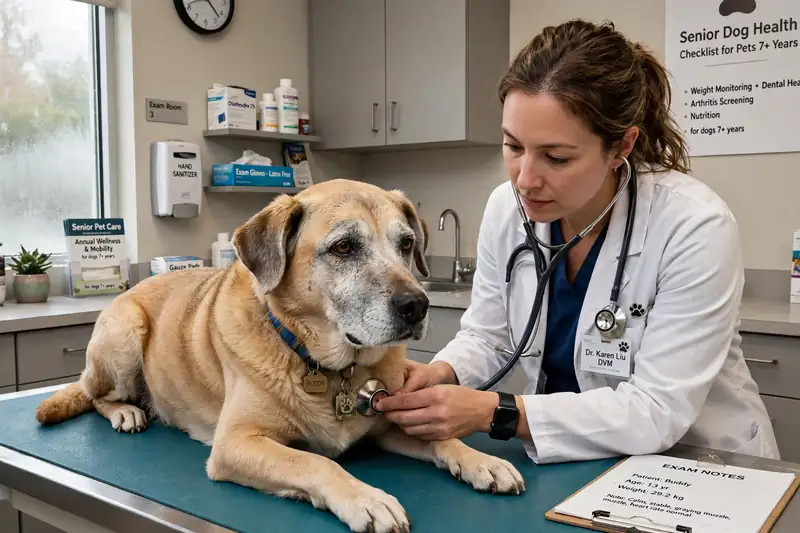
Kidney and liver disease change how drugs are cleared from the body, so a standard dose can hit harder or linger longer in these dogs. Famotidine is known to interact with certain drugs, and your vet checks the full list against the dog’s chart before prescribing. Senior dogs often take several medications at once, which makes that review even more important. Puppies get weight-based dosing with extra care, since small bodies leave little margin for error. If your dog has a chronic condition, the decision is never just about the stomach; it is about the whole patient, and only the vet seeing that patient can make it.
How long can a dog stay on famotidine?
Famotidine suits short courses best, often a week or two around an acute stomach problem. With continuous daily use it can become less effective, a fading response the Merck Veterinary Manual flags after roughly ten days. Long-term use needs a vet’s supervision, with check-ins to confirm it is still helping and still needed.

The right stopping point depends on the diagnosis. A dog with mild gastritis may need only a few days alongside a bland diet. A dog with a diagnosed ulcer may need a longer, structured course with rechecks. What you should not do is keep refilling it indefinitely because the dog “seems better with it.” Masking a chronic problem with an acid reducer delays the diagnosis of whatever is wrong. If symptoms return every time you stop the drug, that is information, not a reason to restart on your own. Take that pattern back to your vet and ask what the next diagnostic step is.
When famotidine is not enough: see the vet
Call your vet promptly if vomiting continues past 24 to 48 hours, if there is blood in vomit or stool, if the dog refuses food or water, shows belly pain, or becomes lethargic. These signs point to conditions famotidine cannot fix: blockages, pancreatitis, infections, or bleeding ulcers. Do not keep dosing while the dog gets worse.

Think of famotidine as a tool for confirmed acid problems, not a general anti-vomit drug. Repeated vomiting dehydrates a dog fast, and small dogs and puppies dehydrate fastest of all. Bloody or coffee-ground-looking vomit, black tarry stool, a swollen painful abdomen, or collapse are emergency signs that skip the phone queue and go straight to the clinic. Write down when symptoms started, what the dog ate, every medication given with times, and bring the famotidine box. That timeline is the most useful thing you can hand a veterinarian.
Famotidine earns its place in the medicine cabinet, but only with a veterinarian directing it. Get the diagnosis, use plain tablets, time the dose before meals, and watch the dog. For stomach-soothing foods that pair well with recovery, our guide to chicken broth for dogs covers the gentle option vets reach for. And since famotidine often travels with pain medication, our carprofen dosage guide explains the NSAID whose stomach effects make acid control necessary.
Frequently Asked Questions
Can I give my dog Pepcid without calling the vet?
You should not. Famotidine is sold over the counter, but the dose, timing, and whether it suits your dog’s condition are veterinary decisions. The wrong product, especially a chewable containing xylitol, can seriously harm a dog.
How much famotidine can I give my dog?
Published references cite 0.25 to 0.5 mg per pound every 12 to 24 hours, but your vet sets the exact dose for your dog’s weight and condition. Do not calculate from an online chart alone.
How fast does famotidine work in dogs?
It begins reducing acid within one to two hours of a dose. Visible improvement in the dog may take longer, often 12 to 24 hours. If nothing changes in a day or two, call your vet.
Can dogs take famotidine every day?
Short courses are typical, and effectiveness can fade with continuous daily use after about ten days. Long-term use needs veterinary supervision with regular check-ins.
Is Pepcid Complete safe for dogs?
No. Pepcid Complete and similar chewables often contain xylitol or other sweeteners that are dangerous to dogs. Use only plain famotidine tablets or generic equivalents.
What are the side effects of famotidine in dogs?
Most dogs have none. Mild effects can include appetite loss, vomiting, diarrhea, or tiredness. Rare allergic reactions cause facial swelling, hives, or breathing trouble and need immediate veterinary care.
Can puppies take famotidine?
Only under direct veterinary guidance with careful weight-based dosing. Small bodies leave little margin for error, so never estimate a puppy dose yourself.
This article is general information only and is not a substitute for veterinary advice. Never give your dog any medication without your veterinarian’s direction for that specific dog and condition.