Can Dogs Eat Papaya? Safety, Seeds, and Serving Guide
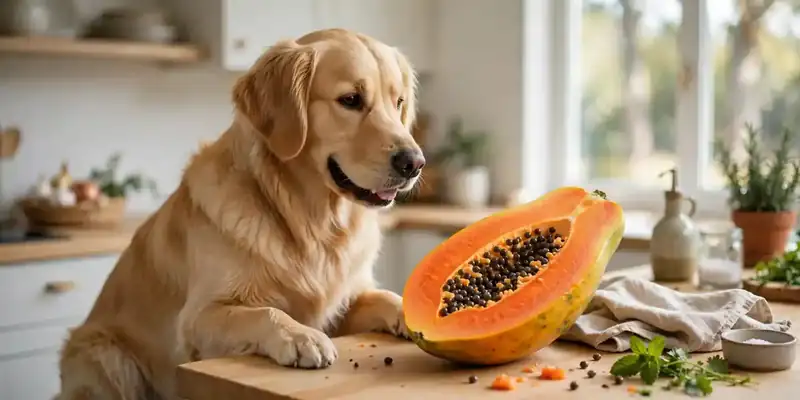
Yes, dogs can eat papaya when the fruit is ripe, peeled, seeded, and cut into small cubes. The orange flesh is safe for most adult dogs in a small amount, and it brings fiber, vitamins, and water. The skin and seeds stay out of the bowl every time, since the skin can block the gut and the seeds hold trace cyanide compounds. Keep papaya as an occasional treat, not a daily food.
This guide covers the parts that change the answer: which parts are safe, how much fits your dog’s size, how to peel and seed the fruit, and which dogs should skip it. With the right prep, it is a simple tropical treat.
Can dogs eat papaya?
Yes, dogs can eat papaya when the fruit is ripe, peeled, seeded, and cut into cubes. The flesh is safe for most dogs in a small amount, and it brings fiber, vitamins, and water. Never serve the skin, seeds, leaves, or unripe fruit, since those parts can upset the gut or block it. Keep portions small.
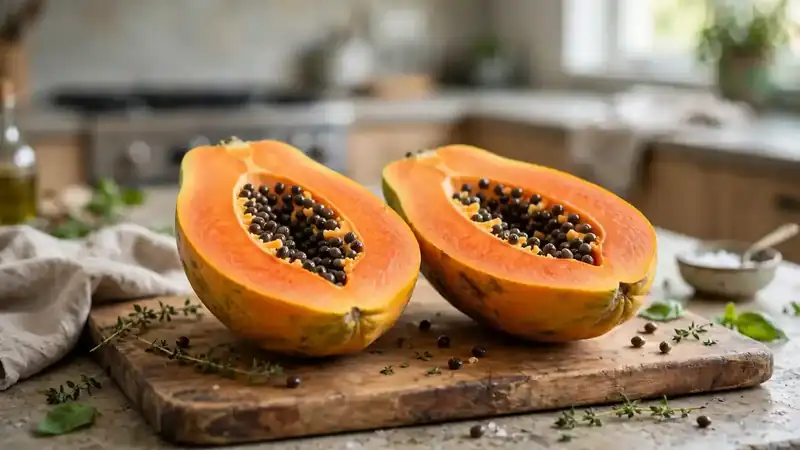
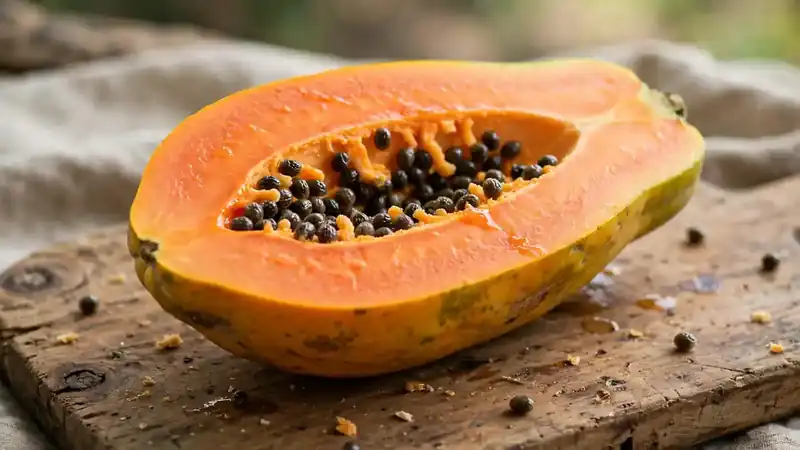
The PetMD papaya guide says papaya is safe for dogs to eat and even a healthy treat when fed in moderation, with the skin and seeds removed. Ripe means the skin has turned golden orange and the flesh gives a little when pressed. Green fruit is unripe, and its latex sap can irritate a dog’s mouth and gut.
Papaya is one of the gentler tropical fruits for dogs. Its ripe flesh holds no compound known to poison dogs, which sets it apart from grapes, cherries, and citrus rinds. The danger sits in the parts around the flesh, and the prep steps in this guide take those parts out of the picture. A few cubes suit most dogs, and a whole papaya does not.
What nutrients does papaya offer dogs?
Papaya offers dogs fiber, vitamin A, vitamin C, vitamin E, vitamin K, potassium, calcium, magnesium, and the enzyme papain. The orange flesh is rich in vitamins A and C, and it holds water. Papain is an enzyme that breaks down protein, and it gives papaya its reputation as a digestive aid.
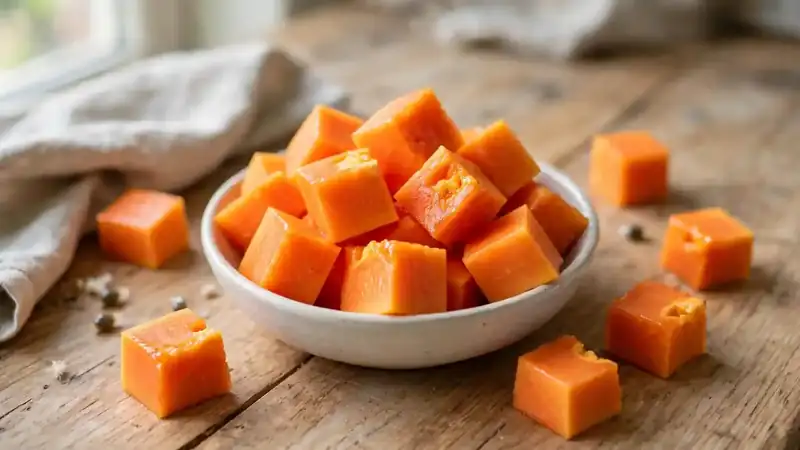
Vitamin A supports vision, skin, and coat health, while vitamin C supports immune function and wound healing. Vitamin E works as an antioxidant that supports skin and circulation, and vitamin K helps blood clot. Potassium supports muscle and nerve function, and fiber helps the gut move food along. These nutrients look strong on paper, yet the serving is so small that a dog gets only a trace.
The honest limit matters here. A dog that eats a few cubes gets a small bonus, not a meaningful dose of any vitamin. A complete dog food already covers these nutrients, so papaya adds variety rather than filling a gap. Owners who want real nutrition should look at the dog’s main food. Papaya earns its place as a pleasant extra, not a health food.
Why must papaya seeds and skin come off?
Papaya seeds and skin must come off because the skin can block the gut and the seeds carry a double risk. The skin is tough, waxy, and hard to digest, so a swallowed piece can cause vomiting, diarrhea, or a blockage. The seeds are hard enough to choke a small dog, and they hold trace cyanide compounds plus irritant chemicals.
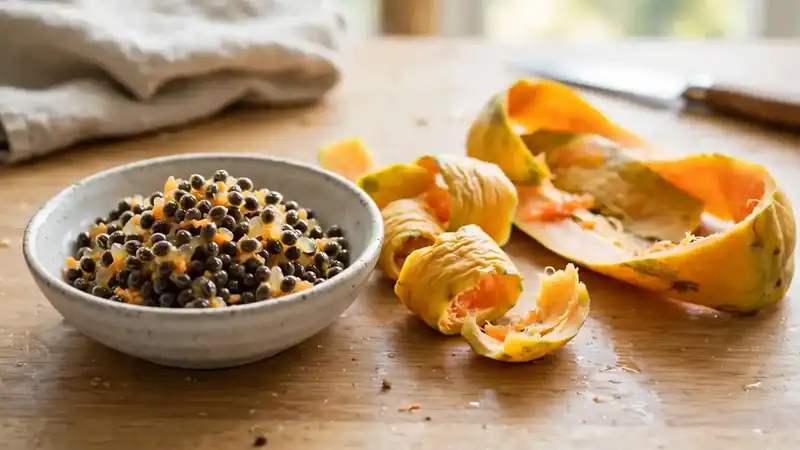
Papaya seeds hold small amounts of cyanogenic glycosides, the same family of compounds found in apple seeds and stone fruit pits. Chewing releases those compounds, and the body turns them into cyanide, which blocks cells from using oxygen. A few stray seeds will not poison a large dog, yet a dog that eats many seeds can face gut pain, vomiting, and worse. The Merck Veterinary Manual page on cyanide poisoning in animals treats plants with cyanogenic compounds as a poisoning risk, and papaya seeds sit in that group.
Seeds also hold benzyl isothiocyanate, a compound that irritates the gut lining. That gives seeds two separate ways to hurt a dog, and either one is reason enough to scoop them out. Skin carries latex compounds that can irritate skin and upset the gut when swallowed. Scoop the seeds, peel the skin, and serve only the flesh.
How much papaya can a dog eat?
Serving size depends on body weight. Extra small dogs get one or two pieces, small dogs get three to four, medium dogs get five to six, large dogs get seven to eight, and extra large dogs get up to ten. Offer papaya once or twice a week, inside the 10 percent treat rule.

These serving sizes come from the PetMD papaya guide, which sets portions by body weight rather than by guess. The bands run from under 20 pounds for extra small dogs up to over 91 pounds for extra large dogs, with small at 21 to 30, medium at 31 to 50, and large at 51 to 90. A small piece means a cube about half an inch across. Ten pieces add up to no more than a quarter cup, which shows how small the portions stay even for a big dog.
Start with half the amount for your dog’s size on the first try. Offer one cube, wait a day, and watch the stool, appetite, and energy. Loose stool or extra gas means the gut was not ready. Dogs that handle one cube well can move up to the full amount for their size. Dogs with diabetes or extra weight need smaller amounts still, and a vet can set the number.
How do you prepare papaya for dogs?
Pick a ripe papaya with golden orange skin, wash it, cut it in half, scoop out all the seeds, peel off the skin, and cut the flesh into half inch cubes. Serve the cubes plain, with no sugar, cream, or topping. Offer them by hand or mixed into the regular food.
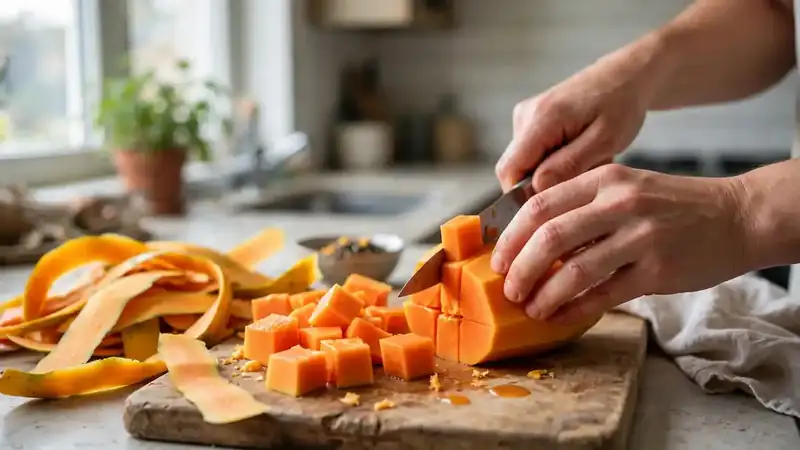
Ripeness is the first check. A ripe papaya smells sweet at the stem end, gives a little when pressed, and shows orange or yellow skin. An unripe papaya stays firm and green, and its flesh tastes bitter. Cut the fruit lengthwise, scoop the seed cavity clean, and check that no seeds hide in the flesh. Peel with a knife, since the skin clings tight to ripe flesh.
Cut the flesh into cubes no wider than a thumbnail for a large dog and no wider than a pea for a small dog. Small cubes stop a dog from gulping a large piece whole, and they let the owner count the portion with ease. Fresh papaya is the only form worth sharing, and frozen or canned forms fail the test, as the next sections show.
Can dogs eat unripe papaya?
Dogs should not eat unripe papaya. Green papaya holds latex sap that can irritate the mouth, throat, and gut, and its flesh is hard, bitter, and hard to digest. The skin of unripe fruit also carries more latex compounds than ripe skin.
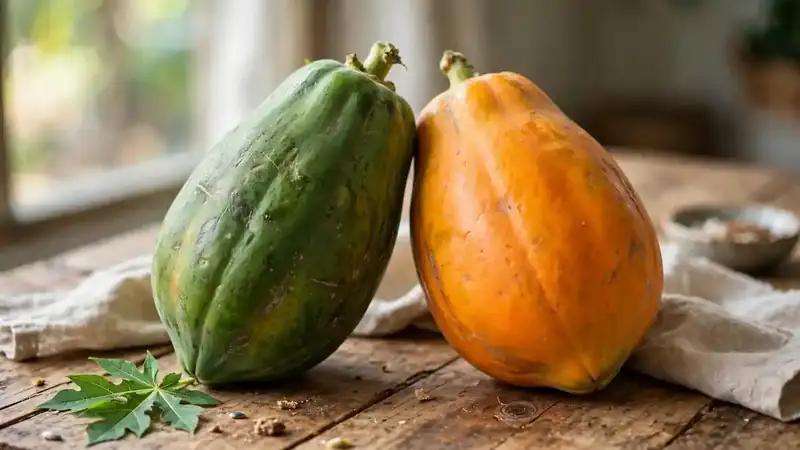
Unripe papaya oozes a milky sap when cut, and that sap holds papain precursors and latex proteins that can sting the mouth and upset the stomach. A dog that bites into green papaya may drool, paw at its mouth, or refuse food, and a larger piece can cause vomiting and diarrhea. The fruit softens as it ripens, and the latex load drops with it.
Ripeness is easy to check at home. Look for skin that has turned mostly yellow or orange, press the fruit gently and feel a slight give, and sniff the stem end for a sweet scent. A papaya that is still green and rock hard needs days on the counter before it is ready. When in doubt, wait a day or two, since a ripe papaya is worth the wait.
Can dogs eat dried papaya?
Dogs should not eat dried papaya. Drying pulls the water out and leaves the sugar behind, so a small handful of dried papaya carries far more sugar than the same weight of fresh fruit. Most store bought dried papaya also adds sugar on top.
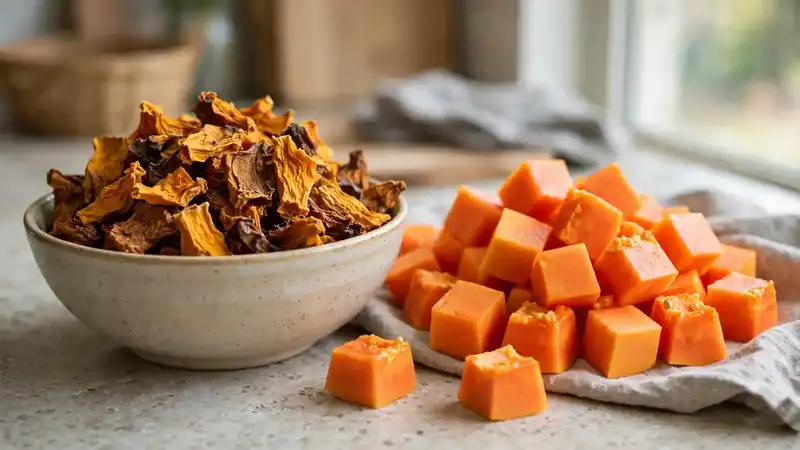
Fresh papaya holds about 8 grams of sugar per 100 grams, while unsweetened dried papaya can hold 60 to 70 grams per 100 grams. That gap shows why a few dried pieces can upset a small dog’s stomach and push blood sugar up fast. Sweetened dried papaya sold as candy is worse still, and it may carry sulfites.
Canned papaya fails the same test. Cans often pack the fruit in syrup, and some use xylitol as a sweetener, which is toxic to dogs and needs emergency care. Papaya juice, papaya yogurt, and papaya candy carry the same added sugar problem. Fresh ripe flesh is the only papaya worth sharing.
Which dogs should skip papaya?
Dogs with diabetes, extra weight, pancreatitis, a sensitive gut, or a history of intestinal blockage should skip papaya or eat it only with a vet’s approval. Puppies under six months and dogs on a prescription diet also need a vet check first.

Sugar and fiber are the reasons for most of these limits. Papaya is lower in sugar than many fruits, yet the sugar still adds up for a dog with diabetes, and the fiber can loosen stool in a sensitive gut. A dog that carries extra weight gains nothing from sweet treats, even low calorie ones, when the portion creeps up. Dogs with pancreatitis react badly to rich foods, and while papaya is not fatty, a sweet treat can still upset an inflamed gut.
Dogs that gulp food face a different risk, since a large cube or a stray seed can lodge in the throat. Puppies have small guts and fast dehydration, so a new food that causes diarrhea hits them harder. The ASPCA list of people foods to avoid feeding pets covers the sweeteners and rich foods that hide in processed fruit. A vet who knows the dog can say yes or no in one visit.
What is papain and does it help dogs?
Papain is an enzyme in papaya that breaks down protein, and it gives papaya its reputation as a digestive aid. The enzyme is real, yet no vet source prescribes papaya for gut trouble, so owners should not feed papaya to fix digestion. The enzyme is a feature of the fruit, not a reason to serve it.
Papain works in a lab dish and in human digestion, where it helps break protein into smaller pieces. In a dog, a few cubes of papaya deliver a tiny amount of the enzyme, and the dog’s own gut already makes stronger protein digesting enzymes. A dog with gut trouble needs a vet and a proper diet, not a fruit. Feeding papaya for digestion can backfire, since the fiber and sugar can loosen stool and make gut trouble worse.
The AKC guide to fruits and vegetables dogs can and cannot eat treats fruit as an occasional extra, not a remedy, and papaya fits that frame. The decision to share papaya should rest on the dog’s health, size, and taste, not on the enzyme.
Frequently asked questions about papaya for dogs
The questions below cover the details owners ask most about papaya: puppies, daily feeding, seeds, skin, canned fruit, and diabetes. Each answer starts with the short version, then gives the practical detail you need to act on it with confidence.
Can puppies eat papaya?
Puppies can eat one tiny cube of plain ripe papaya flesh after six months of age, but a vet check comes first. Puppy diets are balanced for growth, and new foods can trigger diarrhea that dehydrates a small pup fast. Offer one pea sized cube once, watch the stool for a day, and keep treats under 10 percent of daily calories.
Can dogs eat papaya every day?
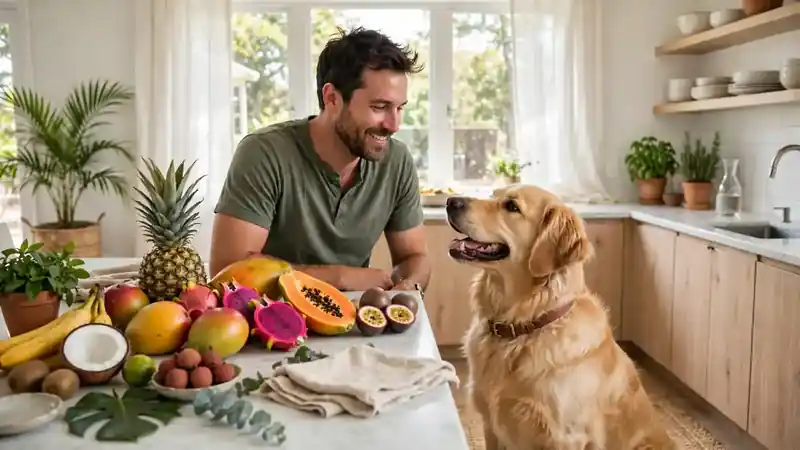
Dogs should not eat papaya every day. Daily feeding piles up sugar and fiber, and it can cause loose stool, weight gain, and a higher blood sugar load over time. Once or twice a week in a small amount gives variety without that buildup. Rotate papaya with other dog safe fruits across the week, such as mango, pineapple, and bananas.
Can dogs eat papaya seeds?
Dogs should not eat papaya seeds. The seeds are hard enough to choke a small dog, and they hold trace cyanide compounds plus benzyl isothiocyanate, which irritates the gut lining. Scoop out every seed before serving. A few seeds eaten by accident need a vet call if the dog vomits or seems unwell.
Can dogs eat papaya skin?
Dogs should not eat papaya skin. The skin is tough, waxy, and hard to digest, so a swallowed piece can cause vomiting, diarrhea, or a blockage that needs vet care. Peel the fruit fully before cutting the flesh, and throw the peel in a bin the dog cannot reach.
Can dogs eat canned papaya?
Dogs should not eat canned papaya. Cans often pack the fruit in syrup, and some use xylitol as a sweetener, which is toxic to dogs and needs emergency vet care. Canned fruit also carries more sugar than fresh papaya and may hold preservatives. Fresh ripe papaya, peeled and seeded, is the only form worth sharing.
Can dogs with diabetes eat papaya?
Dogs with diabetes should skip papaya unless a vet approves a small amount. Papaya is lower in sugar than many fruits, yet its natural sugar can push blood glucose up, and the fiber can loosen stool. A vet who knows the dog’s insulin plan can set a safe portion or pick a lower sugar fruit, such as cantaloupe in a small amount.
Papaya flesh earns its place as an occasional tropical treat, not a daily food. Ripe peeled cubes in a small amount suit most healthy adult dogs, while the skin, seeds, unripe fruit, and dried or canned forms cause the problems owners want to avoid. Pick a golden orange fruit, scoop out every seed, and peel the skin. Dogs with diabetes, extra weight, or a sensitive gut need a vet’s word first. When in doubt, skip the share and offer a plain treat the dog already tolerates, such as apples without seeds or watermelon flesh without rind or seeds.