Heartworm prevention for dogs means a prescription preventive given year round, plus a heartworm blood test every 12 months, because one missed month can leave a dog open to infection. The disease comes from a mosquito bite, takes about six months to mature, and can kill if left untreated. Prevention costs far less than treatment, hurts far less, and works when the routine holds. This guide covers how the disease works, the test, the products, and the mistakes that leave dogs unprotected.

What is heartworm disease?
Heartworm disease is a serious and potentially fatal infection caused by the parasite Dirofilaria immitis. Adult worms live in the heart, lungs, and blood vessels around the lungs, where they grow up to a foot long and live five to seven years.
As they grow, they damage the vessel walls, force the heart to work harder, and cut blood flow. Left untreated, the disease leads to lung disease, heart failure, and death.
Early infection often causes no signs at all, which is why the disease is dangerous. A dog can look and act healthy while worms quietly grow inside. By the time coughing, tiredness, and weight loss appear, the infection is usually advanced. The American Heartworm Society calls the disease a serious threat in every state, and its guidelines form the backbone of this article. Treatment exists, but it is long, costly, and hard on the dog, which is why prevention is the whole point.

How do dogs get heartworms?
Dogs get heartworms from the bite of an infected mosquito, and that is the only way. A mosquito picks up tiny larvae, called microfilariae, when it feeds on an infected animal. Inside the mosquito the larvae mature for about two weeks, then pass into the next dog the mosquito bites.
The larvae then migrate through the dog’s body and settle in the heart and lungs, where they take about six months to grow into adults.
Heartworms do not spread directly from dog to dog, and they do not spread from dogs to people. A dog cannot catch them from another dog’s cough, bowl, or bedding. Only the mosquito carries them, which is why mosquito season sets the risk, and why indoor dogs are not safe either. Mosquitoes get inside houses, and a single bite is enough. The Cornell University vet school explains the life cycle in full, including why the six month maturation window shapes testing and treatment.

Why year-round prevention beats seasonal dosing
The American Heartworm Society recommends prevention 12 months a year, and the FDA agrees. Mosquitoes do not keep a calendar. Warm spells in winter, indoor mosquitoes, and travel to warmer places all create risk outside the summer months. Seasonal dosing leaves gaps, and a gap of one missed month can allow an infection to take hold.
The society sums its advice up as Think 12: test every 12 months, and give prevention 12 months a year.
Year round dosing also removes the hardest part of seasonal dosing, which is guessing when the season starts and ends. Owners who stop in autumn and restart in spring often restart late, because mosquitoes appear before the first warm weekend. A monthly chew or topical given on the same date all year is simpler to remember than a start and stop schedule. The cost of twelve doses is small next to treatment, and the routine is the protection.

The test first: how heartworm testing works
Every dog over 7 months old needs a heartworm test before starting prevention, and every dog needs one once a year after that, even on year round prevention. The main test is a blood antigen test, which detects proteins from adult female worms.
Vets now also recommend a microfilaria test, which looks for the tiny larvae in the blood, because about one in five infected dogs has no microfilariae to find. Both tests together catch more infections than either one alone.
Tests cannot detect an infection until about five to six months after the bite, because the worms must mature first. Puppies under 7 months can start prevention without a test, then be tested six months after the first visit, again six months later, and yearly after that. Adult dogs that were never on prevention need a test before the first dose, then retests at six and twelve months. After any lapse in prevention, the vet tests right away and again six months later. The test is a small blood draw, usually done during a routine visit.

Types of heartworm preventives
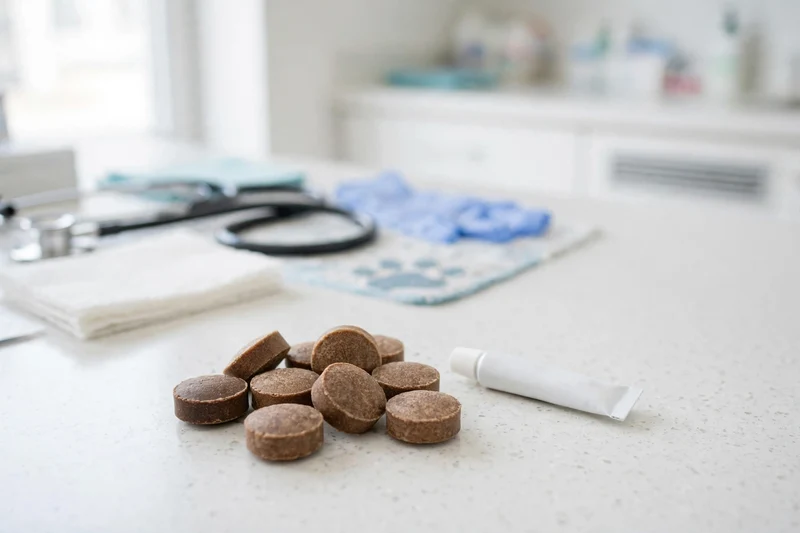
All heartworm preventives in the United States are prescription only, and all of them belong to the macrocyclic lactone class. They come in three forms. Monthly chewable tablets are the most common, and most dogs take them as treats. Monthly topical liquids go on the skin between the shoulder blades and suit dogs that refuse tablets.
A pill pocket can help a picky dog swallow a chew whole. Injections last six or twelve months and suit owners who struggle with monthly dosing, though the dog still needs a vet visit for each shot.
These drugs work by killing heartworm larvae that entered the dog in the past month, before they can mature. They do not kill adult worms, and they do not work backward: a dose given today cannot undo an infection from five months ago. That is why the test comes first and the schedule stays monthly. The AKC heartworm prevention tips list the same three forms and stress that every one of them needs a vet prescription.
Heartgard, Interceptor, Trifexis, and Revolution compared
Four names come up in almost every heartworm conversation, and they differ in what else they cover. Heartgard Plus is a monthly beef flavored chew with ivermectin and pyrantel. It prevents heartworms and treats roundworms and hookworms. Interceptor Plus is a monthly chew with milbemycin oxime and praziquantel.
It prevents heartworms and treats roundworms, hookworms, whipworms, and tapeworms, the widest worm panel of the four.
Trifexis is a monthly chew with spinosad and milbemycin oxime. It prevents heartworms, treats roundworms, hookworms, and whipworms, and kills fleas, but it does not cover ticks or tapeworms. Revolution is a monthly topical with selamectin. It prevents heartworms, treats roundworms and hookworms, and covers fleas, ticks, ear mites, and sarcoptic mange. None of the four kills adult heartworms, and none works without a prescription. The right choice depends on the dog’s flea and tick needs, worm exposure, and health history, and the vet makes that call.

Starting puppies on prevention
Puppies should start heartworm prevention by 8 weeks of age. The American Heartworm Society sets that start point because puppies can meet infected mosquitoes from their first weeks outdoors, and the preventive is safe at that age. Puppies under 7 months can start without a heartworm test, since an infection would still be too young to detect.
The vet then tests at six months after the first visit, again six months later, and yearly after that.
Weigh the puppy at every visit, because the dose band changes fast in a growing dog. A chew bought for a 10 pound puppy underdoses a 25 pound adolescent, and an underdosed chew is a gap in protection. Keep the puppy on the same monthly date as the adult dogs in the house, and set a reminder that survives busy weeks. A puppy that starts prevention at eight weeks and never misses a dose has never had an open window, and that is the goal.

What happens when a dose is missed
A missed dose is the most common way prevention fails, and it happens to careful owners too. If you remember within a few days, give the dose at once and return to the normal monthly date. Do not double up.
If weeks have passed, give the dose, call the vet, and expect a heartworm test now and another one six months later. The second test matters because larvae from the gap may still be too young to detect on the first.
Do not try to make up for a missed month with extra doses or a different product. The preventive kills larvae from the past month, and a late dose cannot reach larvae that have already grown past the vulnerable stage. If the restart dose brings on diarrhea, call the vet rather than reaching for a home remedy. The fix is a system: a phone alarm on the same date each month, a full year of doses bought at once, and clinic reminders. Dogs that vomit a chew shortly after dosing may not have absorbed it, so call the vet about re-dosing rather than guessing. For mild stomach upset after the vet rules out anything serious, a bland diet for a day or two is the usual recovery path.

What happens without prevention
Without prevention, an infected dog faces months of treatment that is harder than the disease’s early stages suggest. The standard protocol starts with a month of doxycycline, an antibiotic that kills bacteria living inside the worms, plus a monthly preventive to kill young larvae.
About two months after diagnosis, the dog gets the first melarsomine injection, the only FDA approved drug that kills adult heartworms, deep into the back muscles. Two more injections follow a month later, 24 hours apart.
The hardest part is rest. After the injections, the dog needs strict exercise restriction for six to eight weeks, because dying worms can block blood flow to the lungs if the heart pumps hard. That means leash walks only, no running, no jumping, no playing, for a dog that may feel better and want to move. The American Heartworm Society does not recommend slow kill, which means prevention alone for years while adult worms die naturally, because the damage keeps growing meanwhile. Signs of bloat and other emergencies can look similar to late heartworm distress, so any dog with a swollen belly and labored breathing needs a vet at once.

Myths that leave dogs unprotected
Indoor dogs still need prevention. Mosquitoes enter houses, and one bite is enough. Winter does not end the risk, because warm spells wake mosquitoes and indoor heating keeps them alive. Natural remedies do not prevent heartworms: no herb, oil, or diet kills larvae, and the American Heartworm Society and the FDA both warn against relying on them.
A dog that had heartworms once can get them again, because treatment gives no lasting immunity.
Another myth says a healthy looking dog cannot have heartworms. Early infection causes no signs, and the first sign is often a mild cough the owner blames on allergies. The last myth is that prevention is only for dogs in the south. Cases have been reported in all 50 states, and the disease keeps spreading to new areas as dogs travel and wildlife carries it. Capstar kills adult fleas fast, but it is not a heartworm preventive, and confusing flea products with heartworm products leaves the real gap open. The VCA guide to heartworm disease in dogs covers the same myths and the testing schedule in plain language.

Frequently asked questions about heartworm prevention for dogs
Can indoor dogs skip heartworm prevention?
No, indoor dogs still need prevention. Mosquitoes get inside houses, and a single bite can infect a dog. The American Heartworm Society recommends year round prevention for every dog, indoor or outdoor.
How often should my dog be tested for heartworm?
Every 12 months, even on year round prevention. Puppies under 7 months start without a test and are tested six months after the first visit, again six months later, and yearly after that.
What if my dog misses a monthly dose?
Give it as soon as you remember, do not double up, and call the vet. After a lapse, the vet usually tests right away and again in six months, because larvae from the gap may be too young to detect at first.
Are natural heartworm preventives effective?
No natural product has been proven to prevent heartworm disease. Herbs, oils, and diets do not kill heartworm larvae. Only prescription preventives in the macrocyclic lactone class are proven to work.
Can a dog get heartworms twice?
Yes, a treated dog can get heartworms again. Treatment does not give lasting immunity. A treated dog needs year round prevention after recovery, just like any other dog, or the next mosquito bite starts the cycle again.
Does heartworm prevention also kill fleas and ticks?
Some products do and some do not. Trifexis and Revolution cover fleas, and Revolution also covers ticks. Heartgard Plus and Interceptor Plus do not. Gastroenteritis and other stomach upsets can follow any new medicine, so watch the dog after the first dose of a new product and call the vet if vomiting repeats.
Heartworm prevention is one of the simplest bargains in dog care: a monthly chew or a yearly shot, a blood test once a year, and a disease that can kill never gets a foothold. The dogs that get heartworms are almost never the dogs whose owners did not care. They are the dogs whose owners stopped for winter, missed a month, or trusted a natural remedy that never worked. Set the reminder, keep the test yearly, and let the vet pick the product. Twelve doses a year is a small price for a heart that stays clear.
Disclaimer: This article is for information only and is not a substitute for veterinary advice. Heartworm preventives are prescription drugs. Your vet sets the product and dose by weight and condition, and only a blood test can confirm whether a dog is heartworm free.