The best flea treatment for dogs is the one that fits your dog: Bravecto for owners who forget monthly doses, Simparica Trio for dogs that also need heartworm cover, and Seresto for owners who want eight months from one step. No single product wins for every dog. This comparison weighs six leading products on coverage, duration, age and weight limits, and cost factors, then recommends by situation. For how each type works, see our guide to flea treatment for dogs.

How to read this comparison
This comparison judges six products on the same four points: what parasites they cover, how long one dose lasts, the minimum age and weight, and what drives the cost. Coverage means fleas, ticks, and any extras like heartworm or intestinal worms. Duration means how often you dose. Cost factors mean prescription fees, dose size, and how many pets you treat.
Age and weight limits decide whether a puppy can use it. Every product here is FDA approved or EPA registered, and every one has real world trade offs. A product that covers the most parasites is not the best pick for a dog with a seizure history. A cheap monthly topical is not cheap if the dog swims it off every week. Read the product sections first, then the head to head table, then the picks by situation.
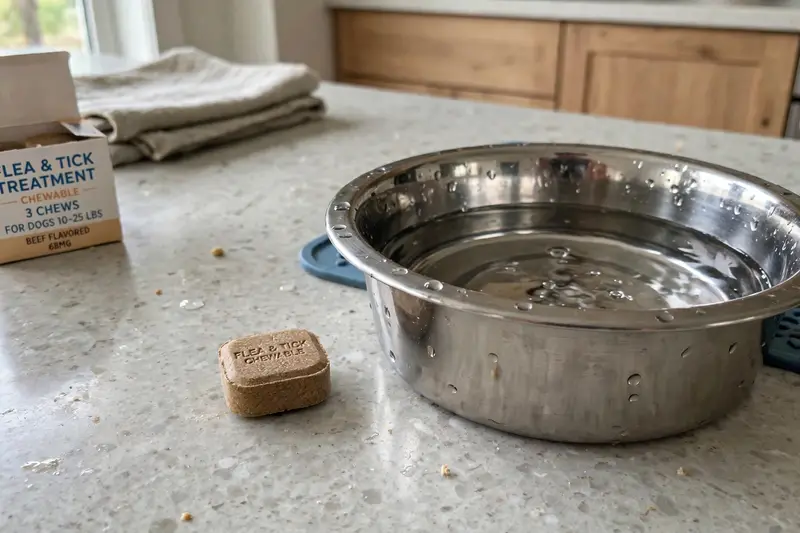
Bravecto: the 12 week chew
Bravecto is a fluralaner chewable that protects against fleas and ticks for about 12 weeks per dose, and it suits owners who forget monthly dosing. One chew every three months means four doses a year instead of twelve. A topical version exists for dogs that refuse tablets.
Fleas start dying within hours, and the chew comes in a flavored tablet most dogs eat as a treat. Bravecto covers fleas and several tick species, but it covers no heartworm or intestinal worms, so most dogs need a separate heartworm preventive. It needs a prescription, and the vet screens the dog first. Bravecto belongs to the isoxazoline class, so dogs with a seizure history need a vet conversation before starting it. The FDA approval notice for Bravecto Quantum describes a vet administered fluralaner injection that protects for 8 to 12 months, for dogs six months and older. That injection is the longest lasting option on the market, and it removes dosing from the owner entirely.

NexGard: the monthly standard
NexGard is an afoxolaner chewable given once a month, and it is the most prescribed oral flea and tick treatment in veterinary medicine. One soft beef flavored chew protects for 30 days against fleas and several tick species, including the black legged tick, the American dog tick, the lone star tick, the brown dog tick, and the longhorned tick.
It also prevents Lyme disease by killing black legged ticks before they transmit the bacteria. NexGard suits dogs eight weeks and older weighing at least four pounds, and it needs a prescription. It covers no heartworm or intestinal worms, so it pairs with a separate heartworm preventive. It is an isoxazoline, so the seizure conversation applies here too. NexGard wins on simplicity: one chew a month, no mess, no washing off, and a flavor most dogs take willingly. It loses to Bravecto on dosing frequency and to Simparica Trio on breadth, since it covers only external parasites.

Simparica Trio: the all in one
Simparica Trio is a monthly chewable that covers fleas, five tick species, heartworm, roundworms, and hookworms in a single dose, and it is the broadest oral option here. It combines sarolaner, moxidectin, and pyrantel in one pork liver flavored chew. Fleas start dying within four hours, and nearly all adult fleas die within eight hours.
It suits puppies eight weeks and older weighing at least 2.8 pounds. Simparica Trio suits owners who want one product instead of two or three. It replaces a separate heartworm preventive and a dewormer for most dogs, which can save money and missed doses. It needs a prescription and a negative heartworm test before starting, since giving a heartworm preventive to a heartworm positive dog carries risks. It is not labeled for breeding, pregnant, or nursing dogs. As an isoxazoline, it carries the same seizure caution as NexGard and Bravecto. For a healthy dog that needs full cover, it is the strongest single product in this comparison.

Frontline Plus: the over the counter topical
Frontline Plus is a monthly topical spot-on, and it is the best known over the counter option in this comparison. It combines fipronil and (S)-methoprene to kill adult fleas on contact, plus flea eggs and larvae, and it covers ticks as well. No prescription is needed, and the price per dose runs lower than the prescription chewables.
It suits healthy adult dogs with light flea pressure and owners who want no vet visit. Frontline Plus loses ground in two ways. Frequent bathing or swimming can shorten its coverage, since it sits on the skin rather than in the blood. Fipronil resistance has also been reported in some regions, so a dog that still carries fleas after correct use may need a different class. It covers no heartworm or intestinal worms. Apply it to the skin between the shoulder blades, keep the dog dry for a day, and keep treated dogs away from cats until it dries. For low exposure dogs in dry homes, it remains a solid budget pick.

Seresto: the eight month collar
Seresto is a collar that protects against fleas and ticks for up to eight months from a single step, and it is the longest lasting over the counter option here. It releases imidacloprid and flumethrin in low steady doses across the skin, killing fleas and ticks on contact. No monthly remembering, no pills, and no messy application.
The per month cost works out low, since one collar covers most of the year. Seresto suits forgetful owners, dogs that refuse pills, and owners who dislike monthly chores. It suits multi pet homes too, since the cost math favors a collar over twelve monthly doses. Fit matters: the collar should sit snug enough that two fingers fit underneath, and the extra length gets trimmed. Check the fit every few weeks on growing puppies. Some dogs develop skin irritation under the collar, and the collar must come off before baths if the label says so. For owners who want to set it and forget it, Seresto is hard to beat.
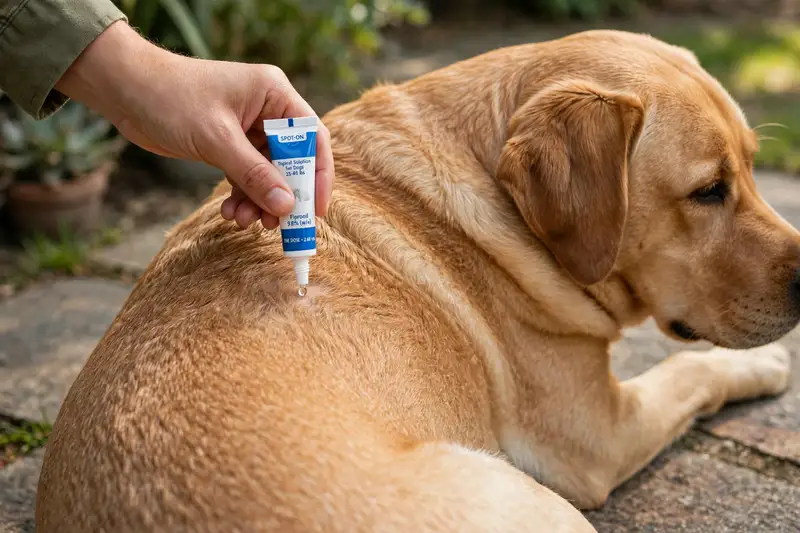
Advantage II: the flea only topical
Advantage II is a monthly topical spot-on that kills fleas in all life stages, and it is the simplest product in this comparison. It combines imidacloprid and pyriproxyfen to kill adult fleas, eggs, and larvae, and it needs no prescription.
It suits dogs that need flea control only, with no tick pressure in the area. It also suits owners who want a cheap monthly topical without a vet visit. Advantage II covers no ticks, no heartworm, and no intestinal worms, so it fits a narrow job. Dogs in tick country need a separate tick product, which erases the savings. Its sister product, Advantage Multi, adds moxidectin for heartworm, roundworms, hookworms, and mange, but it still covers no ticks. Advantage II wins when fleas are the only problem and the budget is tight. It loses the moment ticks, heartworm, or worms enter the picture, since stacking separate products costs more than one broad chewable.

Head to head: coverage, duration, and limits
The table below lines up the six products on the same points, so the differences stand out at a glance. Coverage shows fleas, ticks, and extras. Duration shows how often you dose. Limits show the minimum age and weight where the label states them, and the prescription column shows whether a vet visit is needed.
| Product | Type | Fleas | Ticks | Extras | Duration | Prescription |
|---|---|---|---|---|---|---|
| Bravecto | Oral chew | Yes | Yes | None | 12 weeks | Yes |
| NexGard | Oral chew | Yes | Yes | None | 30 days | Yes |
| Simparica Trio | Oral chew | Yes | Yes | Heartworm, roundworms, hookworms | 30 days | Yes |
| Frontline Plus | Topical | Yes | Yes | Eggs, larvae | 30 days | No |
| Seresto | Collar | Yes | Yes | None | 8 months | No |
| Advantage II | Topical | Yes | No | Eggs, larvae | 30 days | No |
Read the table by situation, not by row count. Simparica Trio covers the most parasites, Bravecto lasts the longest per dose, Seresto lasts the longest without a prescription, and Advantage II costs the least per month for flea only control. The right row depends on the dog, not the table. The VCA guide to flea control in dogs makes the same point: safety is a match between the product and the animal.
Best pick by situation
The best flea treatment for dogs changes with the situation, so pick from the dog, not from the shelf. Forgetful owners do best on Bravecto, with four doses a year, or Seresto, with one collar for eight months. Swimmers and daily bathers do best on an oral chewable, since topicals wash off.
Puppies do best on a product the vet clears for their age and weight, and Simparica Trio and NexGard both start at eight weeks. Dogs with a seizure history should avoid the isoxazoline class, which covers Bravecto, NexGard, and Simparica Trio. The FDA warned in 2018 that these products have been linked to tremors, ataxia, and seizures in some dogs, including animals with no prior history. For those dogs, Frontline Plus, Advantage II, or Seresto are the safer conversation starters, and the vet makes the final call. Tight budgets favor Seresto for long cover or Frontline Plus for monthly cover. Homes with cats must avoid permethrin products and keep treated dogs away from cats until topicals dry. Natural options have weak evidence behind them, and some are unsafe: our guides on whether peppermint oil is safe for dogs and whether diatomaceous earth is safe for dogs explain the risks. Multi pet homes save the most with one broad product per animal, dosed on the same day.
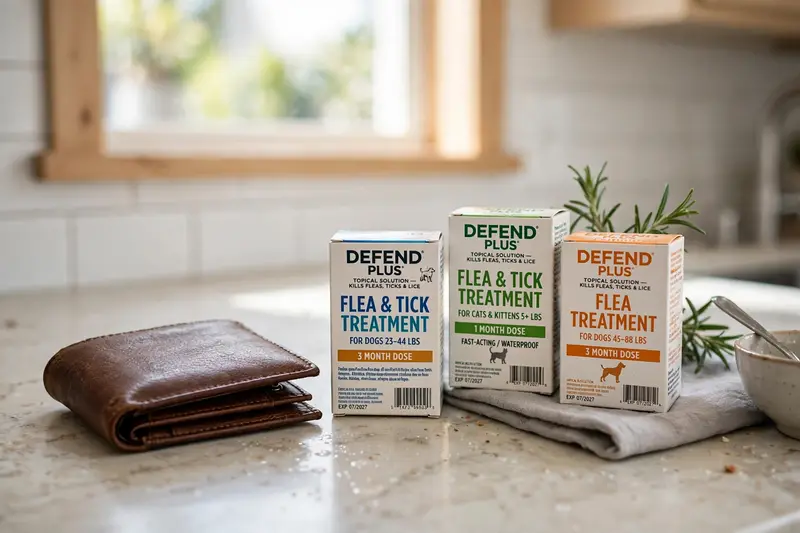
Cost factors: what drives the price
Flea treatment cost depends on more than the price on the box, and the cheapest dose is rarely the cheapest year. Prescription products cost more per dose than over the counter ones, and they need a vet exam to start. Larger dogs cost more, since doses scale with weight.
Multi pet homes multiply every cost, so one broad product per animal often beats stacking two cheap ones. Duration changes the math too. A 12 week chew costs more per dose than a monthly chew, but it needs four doses a year instead of twelve. An eight month collar looks expensive on the shelf and cheap per month once you divide it out. Missed doses cost money as well: a lapsed month lets fleas breed, and clearing an infestation costs more than preventing one. The AKC guide to flea pills for dogs notes the same trade off between convenience and price. Compare the yearly total, not the single dose, and ask the vet about rebates and multi month packs before you buy.

Frequently asked questions about the best flea treatment for dogs
Which flea treatment works fastest?
Capstar works fastest, killing fleas within 30 minutes, but it lasts less than a day. Our guide on whether Capstar is safe for dogs covers its limits. Among long lasting products, Simparica Trio starts killing fleas within four hours, and the other oral chewables follow within a few hours.
Which flea treatment is best for puppies?
The best puppy product is the one the vet clears for the puppy’s age and weight. Simparica Trio and NexGard both start at eight weeks, with weight minimums on the label. Young puppies have few options, so the vet should pick.
Which flea treatment is safest for dogs with seizures?
Dogs with a seizure history should avoid the isoxazoline class, which includes Bravecto, NexGard, and Simparica Trio. Frontline Plus, Advantage II, and Seresto are the usual alternatives to discuss with the vet, and the vet makes the final call.
Can I switch flea treatments?
Switching is common, and the vet can set the timing. Do not overlap two products on the same day unless the vet says so, since the combined dose can overwhelm a small dog. Tell the vet what the dog took and when.
Is the most expensive flea treatment the best?
Price tracks convenience and breadth, not quality. A broad monthly chew costs more than a flea only topical, and a 12 week chew costs more per dose than a monthly one. The best product is the one that covers the dog’s parasites, fits the budget for a full year, and gets dosed on time.
Do I need flea treatment in winter?
Fleas survive indoors through winter, so year round treatment beats seasonal treatment in most regions. The AKC guide to the best flea and tick prevention for dogs recommends year round prevention, since ticks can turn active again as early as February. Ask the vet about local flea and tick seasons.
The best flea treatment for dogs is a decision, not a brand. Simparica Trio covers the most ground in one chew. Bravecto asks the least of your memory. NexGard sets the monthly standard. Frontline Plus and Advantage II keep costs down without a prescription. Seresto stretches one step across eight months. Match the product to the dog’s age, weight, health, and home, and the right answer usually picks itself. The wrong answer is the one that sits in the cupboard while the fleas breed, so pick one, dose it on time, and keep it going all year.
Disclaimer: This article is for general information only and is not veterinary advice. If your dog has a seizure history, is pregnant, or reacts badly to a flea product, contact your veterinarian promptly.