A chunk of raw potato just rolled off your cutting board and your dog got to it first. Dogs should not eat raw potatoes: raw and green potatoes carry solanine, a natural toxin that causes vomiting, weakness, tremors, and worse. The hard chunks also pose a choking and blockage risk, especially for small dogs that gulp. If your dog just ate raw potato, skip the home remedies and call your vet, particularly if the potato was green or sprouting.

Raw potatoes sit at the intersection of two separate dangers, and most owners only know about one of them. The toxin gets the headlines, but the physical chunk sends dogs to surgery too. This guide covers both: how solanine works, why green potatoes are the real hazard, the symptoms and their timing, exactly what to do, and the cooked version that is actually safe. Keep the list of human foods dogs can eat handy for the rest of the kitchen.
Can dogs eat raw potatoes? The direct answer
No, dogs should not eat raw potatoes. Raw potatoes contain solanine, a glycoalkaloid toxin that concentrates in the skin, in any green flesh, and in sprouts, leaves, and stems. Raw potato starch is also hard for dogs to digest, and firm raw chunks can choke a dog or block the intestines. Green or sprouting raw potatoes are the most dangerous of all and should never be offered.
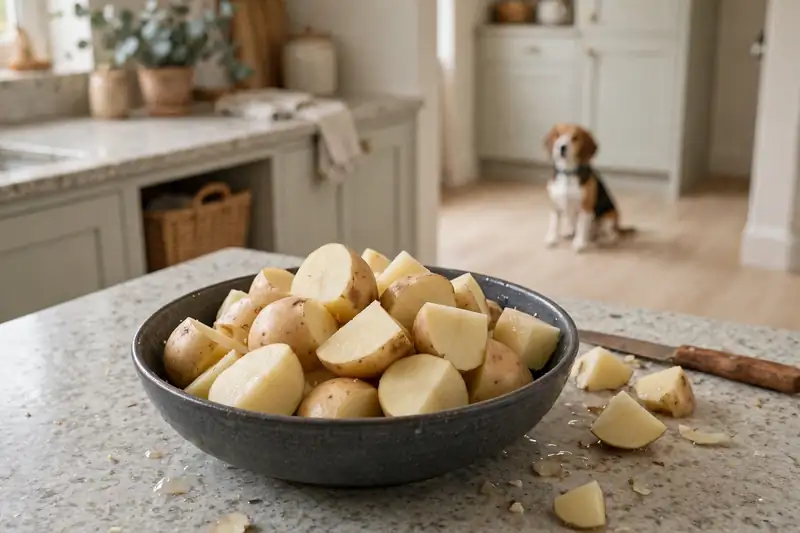
One nuance matters. A single small piece of normal, non-green raw potato that a large dog steals will often pass without drama beyond mild stomach upset. That does not make raw potato safe. It makes it a gamble where the stakes rise with greenness, sprouting, and small body weight. The safe answer stays no, and the safe potato is always peeled, fully cooked, and plain.
Solanine: the toxin in raw potatoes
Solanine is a steroidal glycoalkaloid that potatoes produce as a natural defense against being eaten. It concentrates in actively growing tissue: the sprouts, the leaves, the stems, the peel, and any flesh that has turned green. The white flesh of a normal potato carries far less. Cooking and peeling reduce glycoalkaloid levels considerably, though they do not erase them entirely.

Toxicology sources put the danger in concrete terms. Roughly 0.2 to 0.3 grams of solanine per kilogram of body weight can poison a dog, and green or sprouted potatoes hold two to three times the solanine of normal ones. Here is the complicating fact: veterinary toxicologists have never established a confirmed safe solanine dose for dogs, and the research gap is the reason caution wins. No no-observed-adverse-effect level exists in the research, because the evidence base is too thin. That absence of a safety threshold is itself the reason caution wins. Nobody can tell you the amount that is fine, so the only defensible portion of raw potato is none.
Solanine attacks on two fronts. It disrupts cell membranes in the gut, producing the digestive signs, and it inhibits an enzyme called acetylcholinesterase, which opens the door to the neurological signs at higher doses. Tomatoes and eggplant carry the same glycoalkaloid family, with the same green-parts rule. The ASPCA lists Solanum species, the genus that includes the common potato, as toxic to dogs, with solanine identified as the key agent.
Green potatoes: the most dangerous kind
Greening is the warning color. When a potato sits in light, it produces chlorophyll (the green) and solanine (the toxin) together, as a defense against being eaten. A visibly green potato has almost certainly accumulated elevated solanine, and greened potatoes have a documented history of poisoning livestock. The same chemistry applies to your dog.
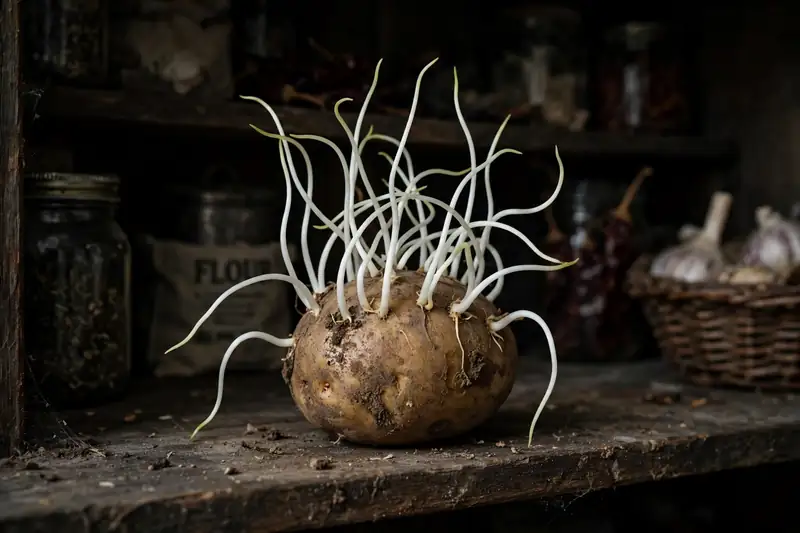
The numbers make the risk concrete. Normal raw potato flesh carries modest solanine, while green or sprouted tissue can reach levels several times higher. One veterinary source notes that a quarter of a green potato can poison a small dog. That is not a lot of potato, and it is easy to miss when a green-tinged chunk drops off the cutting board and a ten-pound dog gulps it before you turn around.
Green potatoes stay dangerous even after cooking. Heat reduces solanine, but it does not reliably destroy the high levels in green tissue, so a cooked green potato is still unsafe. The rule is absolute: cut away small green spots generously, and discard the whole potato if the greening runs deep or sprouts are growing. When in doubt, the trash wins. Potatoes are cheap, and vet visits are not.
Raw starch and choking: the other two risks
Solanine is only half the story. Raw potato starch resists digestion, so even a non-green raw chunk can ferment uncomfortably in the gut and produce gas, cramping, and loose stool. Dogs digest cooked starch well, but raw starch is a different substance to their enzymes. A dog that steals raw potato often pays with a miserable night even when solanine never enters the picture.

Choking is the urgent physical risk. Raw potato chunks are firm, dense, and exactly the wrong shape for a gulping dog. A piece can lodge in the throat or the esophagus, and swallowed chunks can cause an intestinal blockage that needs surgery to resolve. Small dogs and fast eaters face the highest risk, but any dog can choke on the wrong piece. This is why “he eats raw vegetables all the time” is not reassurance. Carrot sticks yield to teeth. Raw potato does not.
Symptoms of solanine poisoning in dogs
Solanine poisoning announces itself through the gut first. Watch for drooling, vomiting, diarrhea, loss of appetite, and belly pain. At higher doses, neurological and cardiac signs join in: weakness, drowsiness, confusion, tremors, dilated pupils, and a slowed heart rate. These are the signs that turn a wait-and-see situation into an emergency.

Timing varies, which is why owners get confused. Symptoms can start within 30 minutes of eating or stay delayed up to 48 hours. A dog that seems fine on the evening of the theft can deteriorate the next day, so the watching period runs a full two days, not an evening. Do not let a calm first few hours talk you out of the vet call.
Severity tracks dose. Dose tracks greenness and body weight, which is why a Chihuahua and a Labrador face very different situations from the same stolen chunk. A large dog that ate one normal raw chunk faces a different situation from a small dog that ate a sprouting green potato. You will rarely know the exact dose, which is why the vet needs the details: roughly how much, how green, how long ago, and how much the dog weighs. Guessing low is a common mistake. Report what you saw, not what you hope.
My dog ate raw potato: what to do now
Call your vet right away, especially if the potato was green, sprouting, or eaten in quantity. Describe what happened: the approximate amount, whether any green or sprouts were visible, when it happened, and your dog’s weight. Your vet will advise whether to come in, watch at home, or head to an emergency clinic.

Do not induce vomiting at home unless your vet specifically tells you to. Vomiting a sharp or large chunk can injure the esophagus on the way back up, and solanine itself can irritate the throat. Activated charcoal, hydrogen peroxide, and other internet remedies are vet decisions, not home experiments. The safest home action is the phone call, followed by quiet observation.
While you wait for guidance, keep the dog calm and withhold food for a few hours if vomiting has started. Once the vet clears it, a bland diet for a day or two often settles the stomach. Save any remaining potato, including the skin or sprouts, so the vet can see exactly what was eaten. Note the time of ingestion. If your vet is unreachable, call the ASPCA Animal Poison Control Center or the Pet Poison Helpline. Both charge a consultation fee, and both are worth it when the alternative is guessing.
Raw vs cooked: what heat actually changes
Cooking transforms the potato in two ways that matter. Heat breaks down raw starch into digestible form, which ends the fermentation and cramping problem. Peeling plus cooking also drops solanine to low levels in normal, non-green potatoes. That combination is why plain boiled potato is a safe treat while raw potato is not.

What heat does not do is rescue a green potato. Solanine survives cooking well enough that green or sprouted potatoes remain unsafe after boiling or baking. Peeling removes most solanine because the toxin sits concentrated just under the skin, and discarding green patches removes most of the rest, but neither step fixes a potato that greened through. Green means gone, cooked or not.
The AKC’s potato guidance draws the same line: peeled, fully cooked, plain potatoes are fine in small amounts, while raw, green, and sprouted potatoes are not. PetMD’s reviewers agree, adding that potato skins concentrate solanine even after cooking. The consensus across veterinary sources is unusually clear on this one, which makes the rule easy to trust. Our full potato guide covers every form beyond raw.
Skins, sprouts, and the potato plant
The most dangerous parts of the potato are not the parts people eat. Sprouts, flowers, peel, and any green areas of the tuber carry the highest glycoalkaloid concentrations, and the plant’s leaves and stems are more toxic still. Dogs encounter these in gardens, compost piles, and trash bags, not on dinner plates.

Backyard potato patches deserve respect. Dogs dig, and a dug-up potato plant offers leaves, stems, and small green tubers in one appealing package. Fence the vegetable bed or supervise garden time during the growing season. Compost piles full of peelings and sprouting potatoes attract curious noses, so keep the bin lidded or fenced. Kitchen trash with potato peelings needs a lid the dog cannot nose open.
Sprouted potatoes in the pantry are a quieter hazard. Eyes grow into sprouts in a dark cupboard, and a dog that counter-surfs can find them. Check stored potatoes regularly and discard any that have sprouted or greened. The five-second pantry check beats the emergency vet visit every time.
The safe version: plain cooked potato
The safe potato is peeled, fully cooked, plain, cooled, and cut small. Boil or bake a normal, non-green potato with nothing added: no butter, no salt, no oil, no garlic, no onion. Boiled is the best choice, since it is bland, soft, and easy to portion. Baked flesh, scooped from the skin, works the same once the skin and toppings are gone.

Portions stay small. One feeding guide suggests about 20 grams of plain cooked potato for a 10-pound dog and about 65 grams for a 50-pound dog, kept inside the 10 percent treat allowance. The VCA’s feeding guidelines set that ceiling for all treats. Serve potato as an occasional snack, not a daily side, since it is mostly starch and displaces the balanced nutrition in your dog’s food.
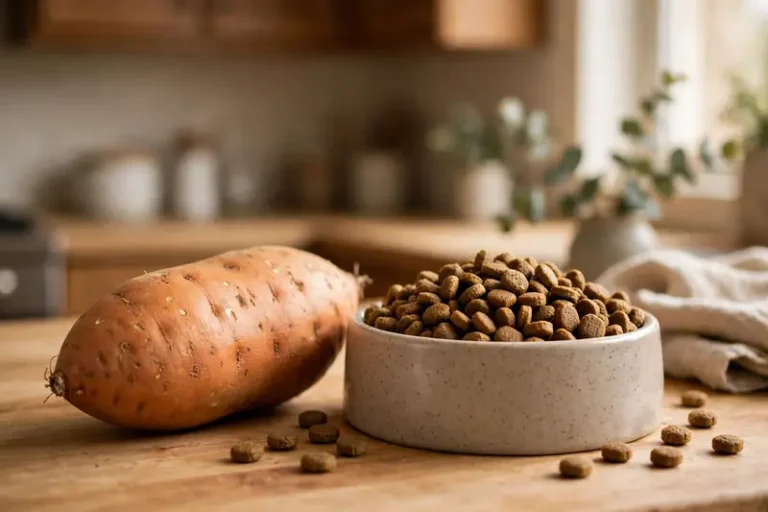
Fries, chips, wedges, hash browns, and loaded mashed potatoes are not the safe version. The fat, salt, and seasonings in fried and loaded forms cause more harm than the potato itself, and garlic or onion in the seasoning turns a treat into a toxin delivery system. Our guide to cooked potatoes for dogs ranks every common form from safest to never. Sweet potatoes are worth knowing about too: they carry no solanine at all, which makes them the calmer choice for frequent sharing.
Puppies and small dogs face higher risk
Small body weight multiplies every potato risk. The toxic solanine dose scales with kilograms, so a chunk that a Labrador shrugs off can poison a Chihuahua. Small dogs also choke more easily on firm chunks and have less room in the gut for a blockage to pass. Owners of little dogs should treat every dropped potato chunk as urgent until proven otherwise.
Puppies add inexperience to the equation. Young dogs explore with their mouths, chew less carefully, and gulp faster than adults. A puppy that finds a sprouting potato in the garden is in more danger than an adult that finds the same potato, and the puppy’s smaller body leaves less margin. Keep puppies out of the vegetable bed entirely, and sweep the kitchen floor after potato prep when a puppy is in the house.
For both groups, prevention beats treatment by a wide margin. Store potatoes in a closed pantry or high shelf, never in a low open bin. Peel over the trash or a bowl, not over the floor. Take peelings straight outside. These are thirty-second habits, and they remove the two most common ways small dogs meet raw potatoes: the dropped chunk and the trash raid.
Frequently asked questions about dogs and raw potatoes
Can dogs eat raw potato peels?
Keep peels away from dogs. Peels concentrate solanine, especially when green or sprouting, and raw peels combine the toxin risk with the choking risk. They belong in the secured trash, not in the dog.
Are cooked potato skins safe for dogs?
Skip them. Potato skins hold more solanine than the flesh even after cooking, and the safe serving is peeled flesh only. Scoop baked potato from the skin and discard the skin.
Can dogs eat raw sweet potatoes?
Sweet potatoes are a different plant with no solanine, so the toxin question does not apply. Still cook them before serving. Raw sweet potato is hard to digest and can cause the same stomach upset and choking issues as raw white potato.
How long after eating raw potato do symptoms appear?
Anywhere from 30 minutes to 48 hours. Gastrointestinal signs usually come first, with neurological signs following at higher doses. Watch a full two days after the ingestion, not just the first evening.
Will one small piece of raw potato hurt my dog?
A single small piece of normal, non-green raw potato often causes nothing worse than mild stomach upset in a medium or large dog. Green, sprouting, or large amounts change the picture completely. When the potato’s condition is unknown, call your vet rather than guessing.
Can dogs eat potato chips or fries?
Skip the fried versions. Chips and fries add heavy salt and fat to the potato, and the seasonings often include garlic or onion powder. They offer nothing a dog needs and plenty it should avoid. A spoonful of plain boiled potato is the treat; the fried versions stay with the humans.
Raw potatoes earn their no. The solanine is real, green ones can poison, and the chunks can choke or block. None of that argues against potatoes entirely. Peel them, cook them plain, keep the portions small, and the same vegetable becomes a harmless occasional treat. The difference between poison and snack is preparation, and preparation is entirely in your hands.
Disclaimer: This article is for general information only and is not veterinary advice. Every dog is different, and suspected solanine poisoning is always a veterinary matter. If your dog eats raw or green potato and shows symptoms, contact your veterinarian or an animal poison control line promptly.