Eggplant is a nightshade, cousin to tomatoes and potatoes, and that family name sits behind both the worry and the actual risk. Dogs can eat small amounts of cooked eggplant served without seasoning, since the ripe purple flesh is not toxic, while the leaves, stems, and unripe green fruit carry the solanine that makes nightshades dangerous. Cooking softens the flesh and lowers the toxin load, which is why every safe serving starts with heat. PetMD’s veterinary reviewers put it plainly: a few small bites of plain cooked eggplant are fine for healthy adult dogs on occasion, with moderation doing all the work.

The confusion around eggplant comes from half-remembered warnings about nightshades. Deadly nightshade can kill, and the family name spooks owners into treating every relative the same. Eggplant deserves a calmer look. The ripe fruit your family eats is low risk. The green parts of the plant are the problem, and they never belong in a dog’s bowl. This guide covers the solanine question, safe preparation, exact portions, and the dogs that should skip eggplant entirely. Keep the list of human foods dogs can eat nearby if you share table vegetables often.
Can dogs eat eggplant? The direct answer
Yes, dogs can eat eggplant when it is ripe, cooked plain, and served in small amounts. The purple flesh of a ripe eggplant is not toxic to dogs. Keep every green part of the plant away from your dog: leaves, stems, flowers, and unripe green fruit all carry higher solanine, the natural toxin behind the nightshade warnings.
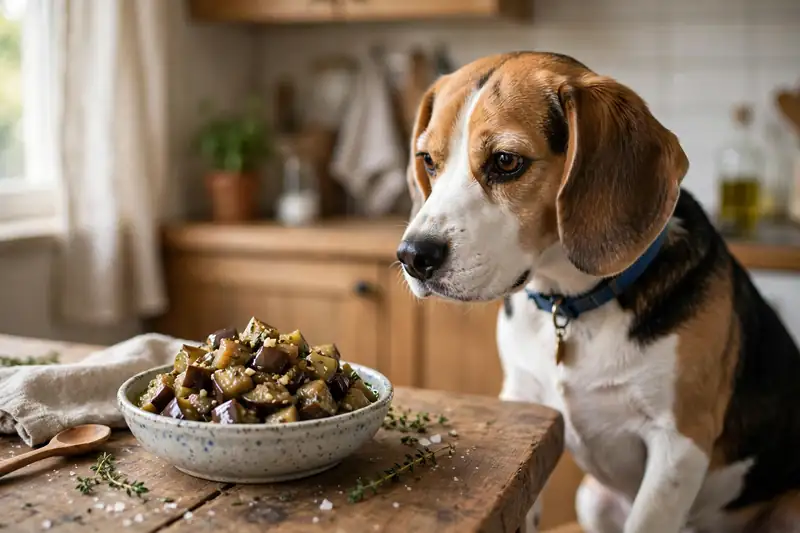
Three conditions decide safety, and all three must hold. The eggplant must be cooked, it must be plain, and the green parts must be gone before cooking starts. Miss any one of them and the answer changes. Eggplant is never a necessary food. Your dog’s complete diet covers every nutrient it needs. Treat eggplant as an occasional vegetable snack with real fiber behind it, not a dietary staple.
Dogs often greet new vegetables with suspicion, and eggplant’s soft, unfamiliar texture can put them off at first. A sniff and a walk-away is a normal reaction, not a verdict. Mix a tiny cube into the regular meal. Try again another day. Most dogs accept a new vegetable by the third or fourth offering, and there is no reason to force it if yours never takes to eggplant.
Nightshades and solanine: what the worry actually is
Eggplant belongs to the nightshade family (Solanaceae), the plant group that includes tomatoes, potatoes, and peppers. Nightshades produce glycoalkaloids, bitter defensive compounds that discourage animals from eating the plant. Solanine is the best known of them. Solanine concentrates in green, growing tissue and stays low in ripe fruit, which is why the plant’s leaves are dangerous and its ripe flesh is not.
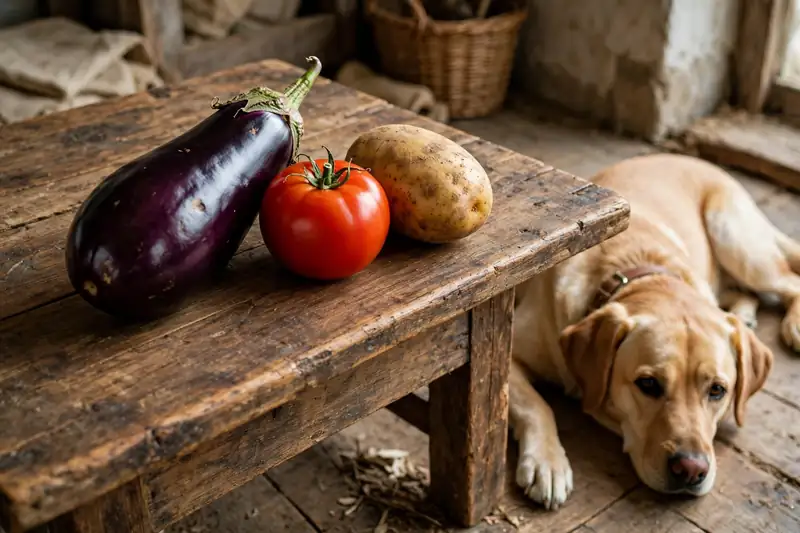
The ASPCA’s listing for the tomato plant, a close nightshade relative, names solanine as the toxic principle and notes that the ripe fruit is the least concerning part. Eggplant follows the same pattern. Veterinary toxicology sources describe the same split across the whole nightshade family: meaningful solanine sits in leaves, stems, sprouts, and unripe fruit, while the ripe flesh that humans actually eat carries only traces. Tomatoes follow the same rule in a dog’s diet, and potatoes carry their own version of the solanine question.
Solanine poisoning in dogs brings gastrointestinal signs first: drooling, vomiting, diarrhea, and belly pain. At higher doses, neurological signs like weakness, tremors, or confusion can follow. Reaching those doses from ripe cooked eggplant flesh alone would take an enormous amount, far beyond any treat portion, which is why the flesh earns its safe verdict. The green parts are a different story, and the next section maps exactly where the line sits.
Ripe flesh vs green parts: where the solanine sits
Solanine levels follow ripeness and plant part, not the vegetable’s name. Ripe purple flesh holds the least solanine of any part of the plant. Green leaves, stems, flowers, and unripe green fruit hold the most. The skin sits between the two: technically edible, but tougher to digest and slightly higher in solanine than the flesh, so peeling is the safer habit.
Shop with ripeness in mind. A ripe eggplant feels heavy for its size, with smooth, glossy skin that springs back lightly when pressed. Dull skin, brown spots, or a green tinge near the stem signal an underripe fruit with more solanine. Those go back on the shelf. The stem cap and any green calyx get cut away and discarded, never chopped into the dog’s portion.
Seeds need no special handling. The small soft seeds inside ripe eggplant are not toxic and are too soft to pose a choking hazard. Some owners scoop them out from habit, but the step is optional. What matters is the flesh: purple, ripe, peeled, and headed for the pot.
Raw vs cooked: why cooking matters
Cooked eggplant is the only eggplant worth serving to a dog. Heat softens the tough fibers, makes the flesh digestible, and lowers solanine levels. Raw eggplant is harder to digest and carries more solanine, so a large raw serving can bring vomiting or diarrhea. Small accidental tastes of raw flesh rarely cause more than mild, passing upset.

The same cooked-only logic applies to potatoes, eggplant’s nightshade cousin. Both vegetables arrive from the garden carrying defensive compounds, and both become safe through the same humble step: thorough cooking. Nobody needs to memorize toxin chemistry. Peel it, cook it soft, serve it plain, and the science takes care of itself.
Steaming, baking, or boiling all work. Roasting works too, as long as the cubes go in plain with no oil. The test is texture. The flesh should mash easily with a fork, and if it still resists, it needs more time on the heat. Undercooked eggplant keeps the spongy bite that bothers dog stomachs, so patience at the stove is part of the safety routine.
How to prepare eggplant for your dog
Peel the eggplant, cut the flesh into small cubes, and steam, bake, or boil it plain until completely soft. Serve it cooled, with no oil, salt, garlic, onion, or sauce. Discard the stem, the cap, the leaves, and any green or unripe sections before the cooking starts.

Cut the cubes small, pea-size for little dogs and thumbnail-size for large ones. Eggplant turns slippery when cooked, and slippery cubes slide down fast in a gulpy dog. Small pieces remove the choking question entirely. Cook the dog’s portion separately from the family dish, because the garlic, oil, and salt that make eggplant delicious for humans are exactly what make it unsuitable for dogs. Eggplant parmesan, fried eggplant, and baba ganoush all fail on oil, cheese, garlic, or tahini seasonings, and the ASPCA’s people-foods list names garlic and onion among the items that never belong in a dog’s bowl.
Cooked eggplant keeps in a sealed container in the fridge for three to four days. Discard leftovers that smell sour or feel slimy, the same standard you would use for your own food. Reheat gently or serve at room temperature, never straight from the fridge in a cold lump that a finicky dog will reject.
How much eggplant can dogs eat
Keep eggplant inside the 10 percent treat allowance. PetMD’s portion guide suggests up to one teaspoon of plain cooked eggplant for extra-small dogs (2 to 20 pounds), two tablespoons for small dogs, and three tablespoons for medium dogs, two to three times a week. Large dogs can handle a few tablespoons on the same schedule.

| Dog size | Safe amount | Frequency |
|---|---|---|
| Extra-small (2 to 20 lbs) | Up to 1 teaspoon | Two to three times a week |
| Small (21 to 30 lbs) | Up to 2 tablespoons | Two to three times a week |
| Medium (31 to 50 lbs) | Up to 3 tablespoons | Two to three times a week |
| Large (over 50 lbs) | 3 to 4 tablespoons | Two to three times a week |
The VCA’s feeding guidelines set the 10 percent ceiling for all treats, and vegetables count toward it. The first serving should be smaller than the chart: one tiny cube, then a full day of watching. Eggplant’s fiber is gentle, but every dog is an individual, and a new vegetable can loosen stool even at safe amounts. Broccoli offers similar fiber with less prep fuss, and rotating among a few safe vegetables keeps any single one from dominating the treat budget.
Oxalates and kidneys: who should skip eggplant
Dogs with kidney disease or a history of calcium oxalate bladder stones should skip eggplant. The vegetable contains oxalates, compounds that can contribute to stone formation in susceptible dogs and interfere with calcium absorption. Healthy dogs handle normal treat amounts without trouble, but a dog with kidney issues gets new foods only on the vet’s word.

This is the one hard no in an otherwise permissive guide. Kidney diets are carefully balanced by veterinary nutritionists, and even small additions can shift mineral ratios that matter. Owners of stone-forming breeds, including miniature schnauzers, shih tzus, and Yorkshire terriers, should mention eggplant at the next vet visit before offering any. A quick question now beats a blocked bladder later, and that is not an exaggeration for breeds that form stones young.
Nightshade sensitivity and the allergy question
A true eggplant allergy is uncommon in dogs, but nightshade sensitivity is real for some animals. Dogs that have reacted to tomatoes or potatoes deserve extra caution with eggplant, since the same plant family is involved. Itching, skin irritation, or digestive upset after a first taste means eggplant leaves the menu for that dog.

One claim deserves a clear verdict. Some corners of the internet say nightshades worsen arthritis, and owners of stiff senior dogs ask about it. That idea comes from human diet debates, and no solid evidence supports it in dogs. Treat it as unproven rather than a reason to fear the vegetable. The verified reasons to skip eggplant are kidney disease, stone history, and an observed bad reaction, not joint rumors.
Watch the first serving like a test, because that is what it is. Offer one small cube and check the dog over the next 24 hours: normal energy, normal stool, no scratching, no face rubbing. A clean test means the portion chart applies. Any reaction means the experiment ends, and the vet hears about it at the next visit.
Eggplant in the garden: the real-world risk
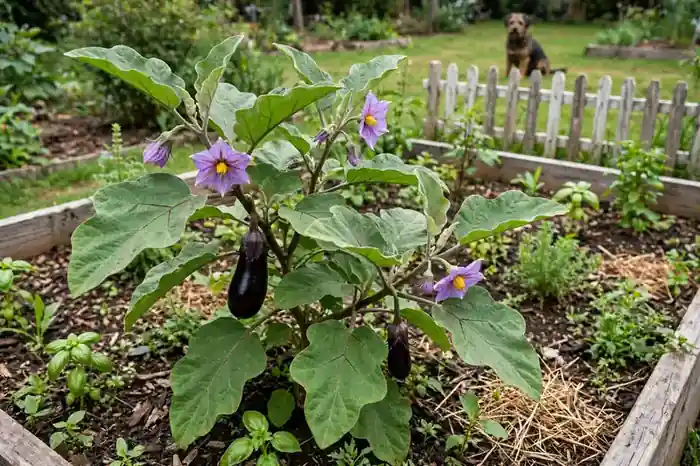
Garden eggplant plants pose the biggest real-world risk, because the whole plant carries solanine except the ripe fruit. Dogs that graze in vegetable beds can chew leaves, stems, or flowers without anyone noticing. A fenced bed is the simplest fix, and it protects the harvest at the same time.

Fallen leaves and pruned stems deserve the same caution as the living plant. Dogs explore compost piles with their mouths, and a pile of eggplant trimmings looks like a buffet to a curious nose. Bag trimmings and keep the compost bin lidded or fenced. Teach a solid leave-it for anything green and leafy. Reward the disengage. The training pays off across every toxic plant in the yard, not just this one.
Container gardeners get an easier version of the problem. A potted eggplant on a patio table sits at nose height for most dogs, which is exactly the wrong height. Move pots to raised stands or behind a barrier during the growing season. The ripe fruit hanging on the plant is the safe part. A dog cannot be trusted to harvest selectively.
When to call the vet
Call your vet if your dog eats eggplant leaves, stems, or a large amount of unripe fruit, or shows repeated vomiting, weakness, tremors, or breathing difficulty. A few cubes of plain cooked flesh need nothing more than normal watching. Save the poison control number in your phone before you need it, since mid-panic lookups waste the minutes that matter.

Do not induce vomiting at home unless your vet specifically tells you to. For mild stomach upset after a first taste, a bland diet for a day or two often settles things. Signs that mean a visit rather than home watching include blood in vomit or stool, extreme tiredness, and repeated retching. When in doubt, the call costs nothing and buys certainty.
Frequently asked questions about dogs and eggplant
Can dogs eat raw eggplant?
Raw eggplant is best avoided. It is harder to digest and carries more solanine than the cooked flesh. A small stolen taste rarely causes more than mild upset, but there is no reason to serve it raw when cooking is quick and makes it safer.
Can dogs eat eggplant skin?
The skin is technically edible but not recommended. It is tougher to chew, tastes bitter, and carries slightly more solanine than the flesh. Peeling takes seconds and removes the whole question.
Are eggplant seeds safe for dogs?
The seeds are safe. The small soft seeds inside ripe eggplant are not toxic and are too soft to pose a choking hazard. Leave them in or scoop them out, whichever you prefer.
Can dogs eat eggplant parmesan?
Skip the parmesan. The dish is breaded and fried, then layered with cheese and sauce. The oil, dairy, salt, and often garlic make it unsuitable. Serve the dog plain cooked cubes instead.
Can puppies eat eggplant?
Older puppies can have tiny amounts of very soft cooked eggplant. Keep portions smaller than an adult’s, and skip it for puppies under eight weeks or any puppy with ongoing digestive trouble unless your vet agrees.
My dog ate eggplant leaves. What should I do?
Call your vet. Note roughly how much was eaten and when. Watch for drooling, vomiting, diarrhea, or lethargy over the next day. Do not wait for severe symptoms with plant ingestions, since early guidance changes the outcome.
Cook the purple flesh, skip everything green, and eggplant becomes one of the calmer vegetables in the dog-treat rotation. Peel it, cube it small, keep the portions modest, and let the ripe fruit do what it does: add a little fiber and variety to a diet that was already complete without it.
Disclaimer: This article is for general information only and is not veterinary advice. Every dog is different, and dogs with kidney disease, bladder stones, or other health conditions may need different guidance. If your dog shows symptoms after eating eggplant, contact your veterinarian.