
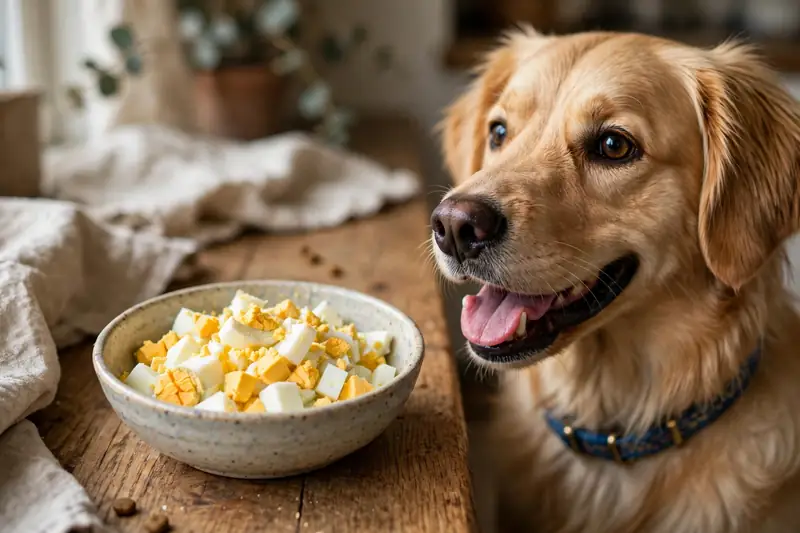
Can dogs eat raw eggs? Technically they can swallow one, but they should not be fed them, the risks outweigh any benefit, and cooking removes every concern while keeping all the nutrition. Raw eggs can carry salmonella, and raw egg whites contain avidin, a protein that interferes with biotin absorption over time. A plain cooked egg, on the other hand, is one of the genuinely good treats you can offer: cheap protein, easy to prepare, and most dogs love it. This guide explains the raw-egg risks plainly, then shows the safe way to share eggs.
The salmonella risk
The headline concern with raw eggs is bacterial. Salmonella can live on eggshells and, less commonly, inside the egg itself. In dogs, salmonellosis can cause fever, vomiting, diarrhoea, lethargy, and loss of appetite. The American Kennel Club’s guidance is direct: stick to cooked eggs for dogs.
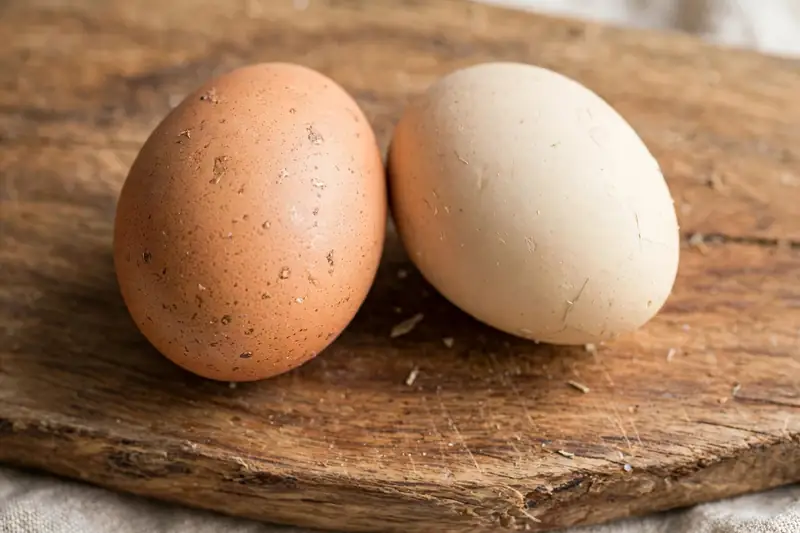
Dogs are somewhat hardier than humans here, their stomach acid is more acidic, which neutralizes some ingested bacteria, but “hardier” is not “immune.” Puppies, seniors, pregnant dogs, and immunocompromised dogs have thinner margins, and the risk extends beyond the dog: infected dogs shed salmonella in their stool, exposing the humans in the household, especially children and anyone immunocompromised. Handling raw eggs for the dog creates the same cross-contamination pathways as handling them for yourself.
There is no nutritional payoff that justifies this. Nothing in a raw egg is lost by cooking it that matters to a dog, which brings us to the second concern.
Avidin and biotin: the quieter problem
Raw egg whites contain avidin, a protein that binds biotin (vitamin B7) and prevents the body from absorbing it. Biotin supports digestion, metabolism, and skin and coat health. The AKC explains: “[Raw eggs] contain an enzyme that ties up biotin and prevents absorption of biotin into the body.”
In practice, biotin deficiency from raw eggs requires regular feeding of raw whites over an extended period, a single stolen egg will not cause it. But that is exactly the pattern some raw-feeding routines create: a raw egg cracked over the bowl every morning, whites included, day after day. Cooking neutralizes avidin completely, which is one more reason the cooked egg wins on every axis.
Signs of biotin deficiency, dry skin, dull coat, lethargy, are vague enough to be missed or blamed on other causes, which makes the slow-build nature of this risk worth knowing about.
Why cooked eggs are genuinely good
Strip away the raw debate and eggs are excellent dog food in miniature. The AKC calls them “a great source of nutrition,” high in protein, fatty acids, and vitamins that support a dog inside and out. Specifically, eggs supply:

- Complete protein with all essential amino acids, useful for muscle maintenance.
- Healthy fats including linoleic acid for skin and coat.
- Vitamins A, D, E, K, B12, riboflavin, and folate, plus minerals like iron and selenium.
- Choline, important for brain and liver function.
The yolk holds most of the fat and fat-soluble vitamins; the white is nearly pure protein. One large egg runs roughly 70-78 calories (USDA FoodData Central), meaningful in a small dog’s day, trivial in a large one’s. Eggs even have a functional role: vets sometimes use plain cooked egg to help settle mild stomach upset, as part of a bland recovery diet.
How to cook eggs for dogs
Every method works as long as it is plain and fully cooked:
- Hard-boiled: the simplest and easiest to portion. Boil, cool, peel, chop.
- Scrambled: cook in a dry non-stick pan with no butter, oil, salt, or milk.
- Poached: fine, as long as the white is fully set.
- Fried: only if truly dry-fried with no oil or butter, usually more trouble than it is worth.
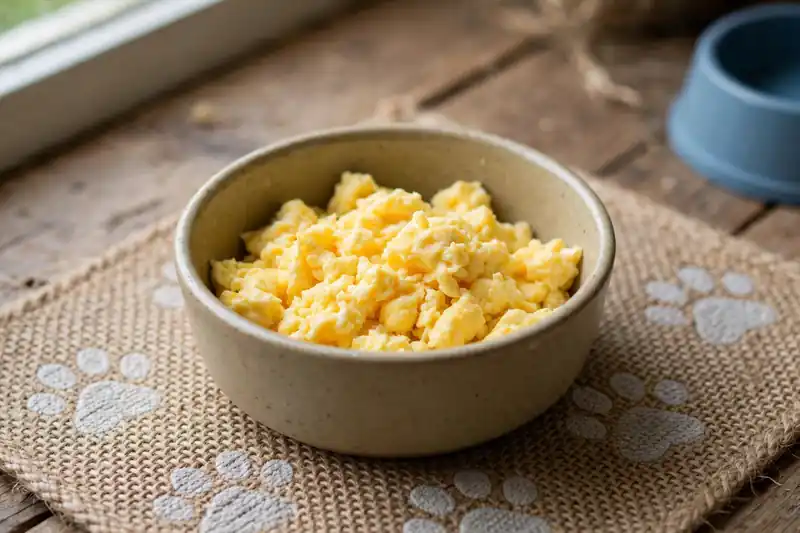
What ruins an egg for dogs: butter, oil, salt, cheese, hot sauce, and any seasoning. A diner-style scrambled egg is a different food from a plain one. Cook the dog’s egg separately, or set their portion aside before you season yours.
Eggshells deserve a note: some owners feed ground eggshells as a calcium supplement. Only do this with explicit veterinary guidance, sharp fragments can irritate the gut, and most dogs on complete diets do not need extra calcium. Do not improvise mineral supplementation.
How much egg is safe
Eggs are calorie-dense for their size, so the 10% treat rule bites harder than people expect. A large egg at ~75 calories is more than a whole day’s treat allowance for a 25-pound dog. Practical portions:
- Small dogs: a quarter of an egg, chopped, a couple of times a week.
- Medium dogs: half an egg as an occasional treat.
- Large dogs: one whole egg occasionally, not daily.

Think of egg as a high-value training reward or meal topper, not a side dish. If egg becomes routine, subtract the calories from the main meal rather than stacking them on top, the AKC warns that too many eggs push dogs over their calorie target and toward obesity. Puppies can have tiny amounts (a quarter egg or less), but their growth diet stays the priority.
Dogs who should be careful
Most healthy dogs handle plain cooked egg beautifully, but check with your vet first if any of these apply:
- History of pancreatitis or fat sensitivity: eggs carry meaningful fat, mostly in the yolk. Whites-only is an option some vets suggest, ask yours.
- Egg allergy: uncommon but real. Signs include vomiting, diarrhoea, itchiness, or skin flare-ups after egg meals. The AKC notes egg allergies can show as GI or skin signs.
- Overweight dogs or calorie-restricted plans: the calorie density demands strict portions.
- Chronic digestive issues: introduce slowly, watch the stool.

Dogs with medical conditions should not get eggs at all until the vet weighs in, the “eggs are natural so they must be fine” instinct skips the fact that natural foods still have calories, fat, and allergens.
Eggs in commercial dog food
You will find egg, usually listed as “dried egg product” or “egg”, in many quality kibbles and treats. There is a reason: eggs are among the most biologically valuable proteins available, meaning dogs use their amino acids efficiently. Manufacturers use cooked, processed egg, which sidesteps every raw-egg concern in this guide.
This also answers a common worry: “my dog’s food already has egg, is extra egg too much?” For most dogs, no, a treat-sized portion on top of an egg-containing kibble is fine inside the 10% allowance. The exception is dogs with diagnosed egg allergies, for whom even the kibble’s egg content matters, another reason allergy suspects need vet-guided elimination diets rather than guesswork.
What if your dog eats a raw egg
Do not panic, context decides the response:
- A single raw egg in a healthy adult dog: usually nothing happens. Watch for vomiting or diarrhoea over the next 24-48 hours; mild, brief upset sometimes follows and resolves on its own.
- Raw eggs plus shell fragments: watch for signs of mouth or throat irritation, though most pass uneventfully.
- Call your vet if: vomiting or diarrhoea persists beyond a day, there is blood in vomit or stool, your dog becomes lethargic or feverish, or the dog is a puppy, senior, pregnant, or immunocompromised.
- Hygiene: clean the area, wash your hands, and be mindful of stool for a few days (salmonella shedding).
A pattern of raw-egg feeding is a different conversation from a one-off theft, if someone in the household has been cracking raw eggs over the bowl daily, stop the habit and mention it at the next vet visit so biotin status can be considered.
Quail, duck, and other eggs
Chicken eggs are the default, but the same rules cover every egg:
- Duck eggs: larger and richer, more calories and fat per egg, so halve the portions you would give of chicken egg. Same cooking rules.
- Quail eggs: tiny and charming; a whole quail egg is roughly a fifth of a chicken egg. Fine cooked plain as a training treat, but fiddly to peel, most owners skip them.
- Goose or turkey eggs: very large; treat as multiple chicken eggs for portion math.
Whatever the bird, raw carries the same bacterial and avidin concerns, and cooked plain is the safe preparation. Exotic eggs are a novelty, not a nutritional upgrade, a chicken egg does the job.
Raw feeding and eggs: where they fit
Raw-feeding advocates often include raw eggs, citing the intact enzymes and “natural” nutrition. The veterinary counterweight: cooking neutralizes both the avidin and the pathogens while leaving the protein, fats, and micronutrients essentially intact. There is no demonstrated benefit to raw that survives cooking’s removal of two real risks.
If you follow a raw diet formulated with a veterinary nutritionist, follow their egg protocol, some include lightly cooked eggs as the compromise. If you are assembling raw meals from internet recipes, the egg question is one more reason to get professional formulation rather than improvising.
The honest summary: eggs are wonderful for dogs; raw eggs are an unnecessary gamble. Cook them plain, portion them honestly, and you get one of the cheapest, most nutritious treats in the kitchen, no bacteria, no biotin worries, no drama.
For the same plain-only, small-portion thinking across the foods dogs meet most often, see our wider guide to what human food dogs can eat. For another protein-rich treat prepared the safe way, see our shrimp guide.
Frequently Asked Questions
Can dogs eat raw egg whites specifically?
No, the whites are where both problems live: salmonella risk and avidin, the biotin-binding protein. If you are separating eggs for the dog, cook the whites fully; better yet, serve the whole egg cooked.
Are cooked eggs good for dogs every day?
They can be, in small portions for larger dogs, but most dogs do better with egg a few times a week. A whole daily egg is too many calories for small and medium dogs; keep it inside the 10% treat allowance.
Can puppies eat eggs?
Yes, plain, fully cooked, in tiny amounts (a quarter egg or less for small pups). Raw eggs are a harder no for puppies, whose immune systems handle bacteria less robustly than adults’.
Do eggs help a dog’s coat?
The fatty acids and biotin (once avidin is neutralized by cooking) support skin and coat health, which is why eggs have a reputation as coat-conditioners. They supplement good nutrition, they do not fix a poor diet.
Can dogs eat eggshells?
Only with veterinary guidance. Finely ground shells can supply calcium in specific formulated diets, but sharp fragments and unnecessary supplementation make DIY shells a bad idea for most owners.
What is the safest way to cook eggs for dogs?
Hard-boiled: no added fat, easy to portion, fully cooked through. Scrambled in a dry pan is a close second. Avoid all butter, oil, salt, and seasonings.
My dog ate a raw egg, will he get salmonella?
Probably not, most healthy adult dogs handle a single raw egg without illness. Watch for vomiting, diarrhoea, or lethargy over 48 hours and call your vet if symptoms persist or your dog is very young, old, or immunocompromised.
Can dogs eat deviled eggs?
No, or more precisely, not the deviled part. Deviled eggs add mayonnaise, mustard, salt, and sometimes paprika or relish: fat, salt, and seasonings that disqualify them. A plain hard-boiled egg gives the dog everything good with none of the picnic problems.
Should I worry about cholesterol in eggs for my dog?
No, dogs process dietary cholesterol very differently from humans, and there is no reason to limit eggs for cholesterol in a healthy dog. Calories are the real budget item: an egg’s 70-ish calories still count inside the 10% treat allowance. The cholesterol question is a human worry that does not transfer to canine nutrition.
This article is general information only and is not a substitute for veterinary advice. If your dog has a health condition, is on a prescription diet, or you are unsure about any food, check with your veterinarian first.



1 thought on “Can Dogs Eat Raw Eggs? Salmonella, Biotin & the Cooked Fix”