

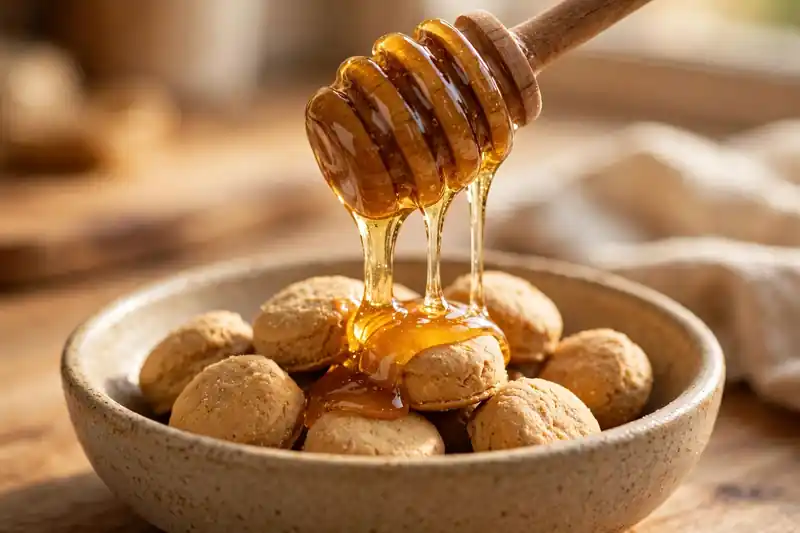
So, can dogs have honey? Yes — if your dog is a healthy adult, a tiny amount of plain honey is generally safe as an occasional treat. The American Kennel Club puts it plainly: small amounts are generally fine for healthy adult dogs, but honey is mostly sugar, so there is little reason to make it a regular habit.
That short answer covers the whole story, but the details matter. Whether honey is fine for your dog comes down to age, health, portion size, and — most importantly — what else is in the jar or product. This guide covers safe portions, the dogs that should never have honey, the raw-versus-pasteurised question, and the one hidden ingredient that turns a harmless treat into an emergency.
How Much Is Safe?
Honey is a treat, not a food group. A good rule is to keep all treats, honey included, within 10% of your dog’s daily calories — and honey should be a rare part of that 10%, not a daily habit. Once or twice a week at most is plenty.
| Dog size | Occasional portion |
|---|---|
| Small (under 20 lbs) | ¼ teaspoon |
| Medium (20–50 lbs) | ½ to 1 teaspoon |
| Large (over 50 lbs) | 1 teaspoon |
Start with even less than the table suggests the first time — a single drop or a thin smear — and watch your dog for 24 hours. Some dogs get a soft stomach from a new sweet food, and a small first taste tells you how yours handles it. If the stool loosens or your dog vomits, skip honey and mention it to your vet.
Two cautions go with every portion. First, honey is sticky sugar, so it feeds the bacteria that cause plaque. If you give honey, keep up with tooth brushing or a vet-approved dental routine. Second, honey adds up fast: a teaspoon has roughly 20 calories, which is a meaningful chunk of a small dog’s daily budget.
Which Dogs Should Never Have It
Puppies under 12 months: never. Raw honey can carry spores of Clostridium botulinum, the bacterium that causes botulism. PetMD explains that these spores usually pass through a healthy adult dog without causing illness, but puppies, senior dogs, and dogs with weakened immune systems can develop botulism from honey. Botulism is a medical emergency — it causes progressive muscle weakness and can affect breathing — so this rule has no exceptions.
Diabetic or overweight dogs: also never. Honey is concentrated sugar, and even a small amount can spike blood sugar and add weight. The AKC is clear that obese or diabetic dogs should not eat honey.
Dogs with a bee-sting allergy: ask your vet first. Honey is a bee product, and a dog that reacts to bee stings may also react to honey. The same goes for any dog on a restricted or prescription diet — check with your vet before adding anything new.

Raw or Pasteurised — Does It Matter?
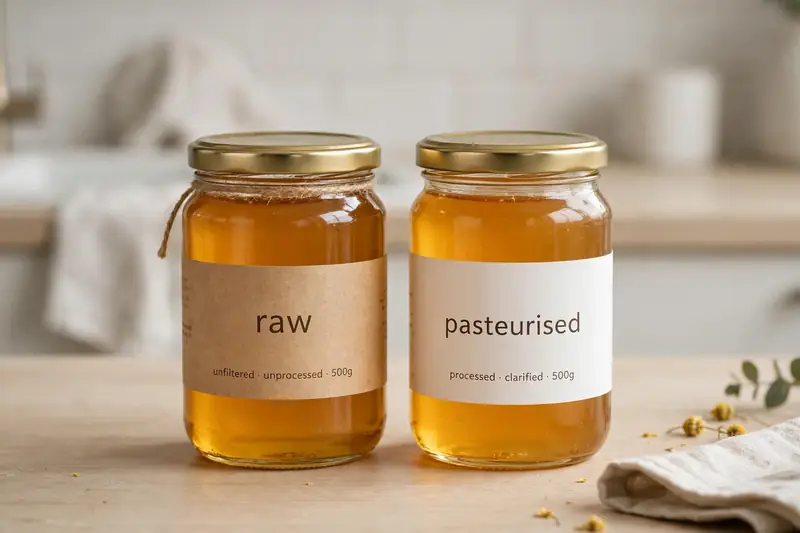
For a healthy adult dog, either is fine in a small amount. Raw honey keeps its natural enzymes and trace pollen, while pasteurised honey has been heat-treated. Neither version is a health food for dogs at these tiny portions, so choose whichever plain, pure honey you already buy.
What pasteurisation does not do is make honey safe for puppies. Botulism spores are tough and can survive heat, which is why the puppy rule applies to all honey, not just raw. The same applies to senior dogs and dogs with compromised immune systems.
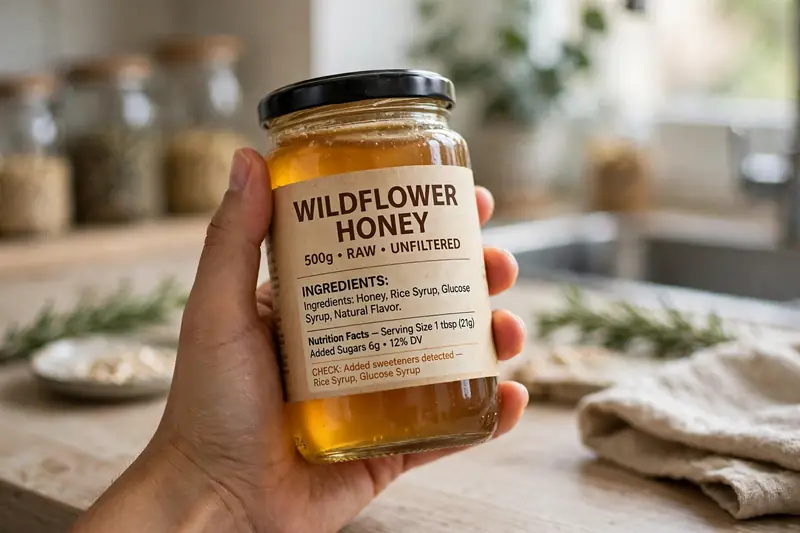
Whatever you choose, the label should say one thing: honey. Nothing else. If the jar lists added sugars, syrups, flavourings, or sweeteners, put it back.
The Xylitol Warning in Honey Products
This is the most important section in this guide. Pure honey itself is not toxic to adult dogs — but many honey-flavoured syrups, blends, and “sugar-free” honey products contain xylitol, a sweetener that is extremely toxic to dogs. The AKC warns that xylitol can cause a rapid, dangerous drop in blood sugar, and higher exposures can damage the liver.
Xylitol hides under other names too: birch sugar, wood sugar, and birch bark extract. Before any honey product reaches your dog, read the full ingredient list. If you see xylitol or any of those names — or the words “sugar-free” or “diet” on a honey-style product — do not give it to your dog.
If your dog does eat something containing xylitol, treat it as an emergency: contact your vet or an emergency clinic immediately, or call the ASPCA Animal Poison Control Center. Do not wait for symptoms, and do not try to induce vomiting unless a vet tells you to.
Easy Ways to Serve It
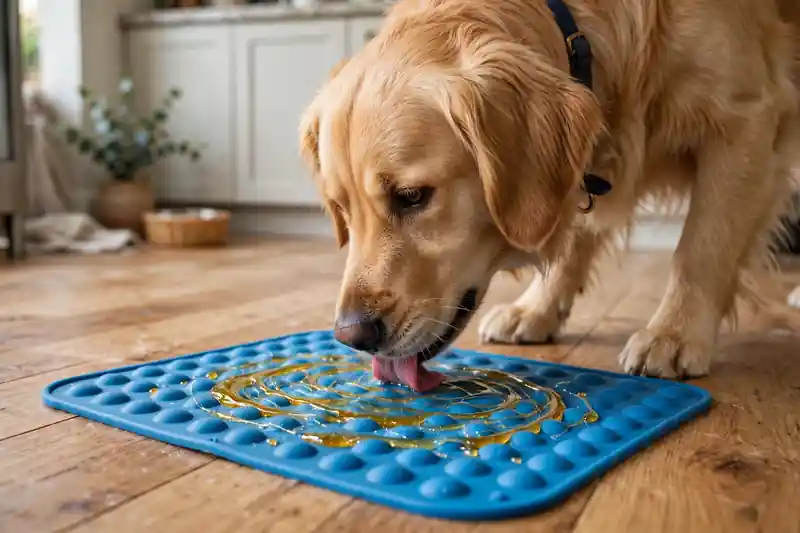
A tiny drizzle over your dog’s regular food is the simplest option. A thin smear on a lick mat is another good one — it slows your dog down and makes a quarter-teaspoon feel like a real treat. You can also freeze the smeared lick mat for a longer-lasting cool treat on a warm day.
What not to do: pour honey over everything, give it daily, or use it to sweeten homemade treats in large amounts. Honey belongs in the “once in a while” category, alongside other sweet extras. If your dog enjoys sweet flavours, plain fruit pieces — like blueberries — are a lower-sugar everyday alternative.
Keep the jar in a closed cabinet, out of reach. Dogs that learn where the sweet stuff lives have a talent for helping themselves, and half a jar of honey is a stomach-ache waiting to happen — or worse, for a diabetic dog.
Does Honey Help Allergies or a Cough?
You may read that local honey eases seasonal allergies, or that a spoonful soothes kennel cough. Be honest about the evidence: there is no solid proof that honey relieves allergies in dogs, and it should never replace prescribed allergy treatment or a vet visit.
A small amount may coat and soothe a mildly irritated throat for a short time, and some vets do suggest it in specific situations. But honey does not treat kennel cough, infection, or any illness. If your dog is coughing, sneezing, or showing allergy symptoms, see your vet first — honey is, at most, a comfort measure your vet approves, not a remedy.
The same honesty applies to “immune-boosting” claims. At a quarter-teaspoon once a week, honey delivers almost no nutrition that a balanced dog food doesn’t already provide. Its only real job is to be an enjoyable rare treat.
What If Your Dog Eats Too Much?
A little more than planned usually means a stomach upset — vomiting, diarrhoea, or a soft stool for a day. Offer water, keep the next meal plain, and call your vet if the upset lasts more than a day or your dog seems unwell.
A large amount is a different matter, especially for a small dog or a diabetic one: call your vet for advice rather than guessing. And if the product contained xylitol, skip the wait entirely — that is an emergency, as described above.
For a broader look at which human foods are safe to share — and which are dangerous — see our pillar guide to human food for dogs.
FAQ
Can puppies have honey?
No. Puppies under 12 months should never have honey of any kind, because raw honey can carry botulism spores and their immune systems cannot handle them. This applies to raw and pasteurised honey alike.
Can diabetic dogs have honey?
No. Honey is concentrated sugar and can spike blood sugar, so diabetic and overweight dogs should not have it at all.
Is raw honey better than pasteurised honey for dogs?
For a healthy adult dog, both are acceptable in small amounts. Pasteurised honey is the more cautious choice in a home with an older or unwell dog, but neither is safe for puppies or immunocompromised dogs.
Can dogs have honey every day?
No. Keep it to once or twice a week at most, in the small portions listed above. Daily honey adds sugar and calories most dogs do not need, and the sticky sweetness is bad for their teeth over time.
Is Manuka honey better for dogs?
There is no solid evidence that Manuka honey gives dogs any extra benefit when eaten. It is far more expensive than plain honey, and for a dog it is an unnecessary luxury, not a better treat.
What should I do if my dog eats a honey product containing xylitol?
Treat it as an emergency. Contact your vet or an emergency clinic immediately, or call the ASPCA Animal Poison Control Center. Do not wait for symptoms to appear.
This article is for general information only and is not a substitute for veterinary advice. If your dog is a puppy, diabetic, overweight, immunocompromised, or has any health condition, ask your veterinarian before offering honey or any new food.
Sources: