

Can dogs eat shrimp? Yes — but only when it is fully cooked, plain, peeled, and served in small pieces as an occasional treat. Shrimp itself is not toxic to dogs, and prepared the right way it can be a lean, protein-rich snack. The trouble starts with how shrimp is usually served to people: raw, fried, breaded, or covered in butter, garlic, and seasoning. Those versions are not safe for dogs. This guide covers what makes shrimp safe, how much suits your dog’s size, and the warning signs to watch for after the first taste.
Is Shrimp Good for Dogs?
As an occasional treat, shrimp has a lot going for it. It is high in lean protein and low in fat, calories, and carbohydrates, so it does not load a dog’s diet with extra energy the way many fatty treats do. It also brings useful nutrients: vitamin B12, which supports metabolism and nerve health; niacin, which helps with energy metabolism; phosphorus, which supports healthy bones; antioxidants; and omega-3 fatty acids, which support skin and coat health.
There is one catch, and it is the reason portions matter. Shrimp is high in cholesterol and also carries a fair amount of sodium. Dogs handle cholesterol differently from people, but frequent or large servings can still push cholesterol intake up and upset a sensitive stomach. That is why shrimp works best as a rare treat, not a regular part of meals — a small bonus on top of a balanced diet, never a replacement for it.
How to Prepare Shrimp Safely
Preparation is what makes the difference between a safe treat and a risky one. Follow these steps every time:
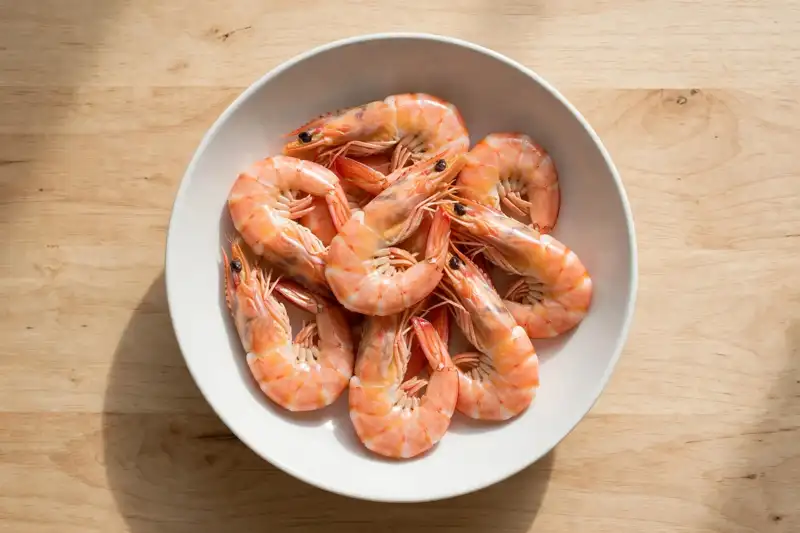
- Cook it fully. Steaming is the method the AKC prefers, and boiling, baking, or plain grilling work too. The shrimp should be opaque and firm all the way through. If any part still looks grey or translucent, it is not done.
- Peel it completely. Remove the shell, the legs, and the tail. Shells are sharp and largely indigestible, and tails are a choking hazard — especially for small dogs.
- Devein it. Take out the dark vein running along the back. That vein is the shrimp’s intestinal tract and can carry bacteria.
- Cut it into small pieces. Even a whole medium shrimp can be too much in one bite for a small dog. Bite-size pieces are safer and easier to digest.
- Serve it plain and cool. No salt, no butter, no oil, no garlic, no onion, no seasoning, and no sauce. Let the shrimp cool to room temperature before offering it.

Do not share shrimp from your own plate if it was cooked for people. Restaurant shrimp, shrimp cocktail, and takeaway dishes almost always carry seasoning, butter, or sauces that dogs should not have. If you want to share, cook a few plain pieces separately before you season the rest.
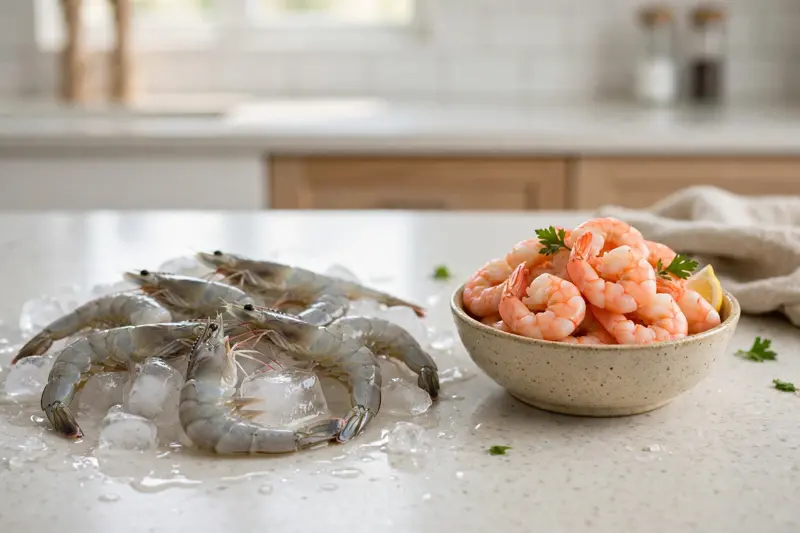
When you buy shrimp for your dog, plain is the only requirement that matters. Fresh or frozen both work, as long as the shrimp has nothing added — frozen shrimp is often sold raw and unseasoned, which is fine once you cook it fully. Skip anything pre-marinated, pre-seasoned, or sold as part of a ready meal, and check the ingredients on the pack for salt, butter, garlic, or flavourings. Peeled and deveined shrimp saves you a step, but unpeeled shrimp is fine too as long as you remove the shell, tail, and vein yourself before serving.
How Much Shrimp Can a Dog Have?
Keep servings small and infrequent. PetMD‘s portion guide for medium shrimp is a useful starting point:
| Dog’s weight | Medium shrimp per serving |
|---|---|
| 2–20 lb | Half a shrimp |
| 21–30 lb | One shrimp |
| 31–50 lb | Two shrimp |
| 51–90 lb | Three shrimp |
| Over 90 lb | Up to four shrimp |
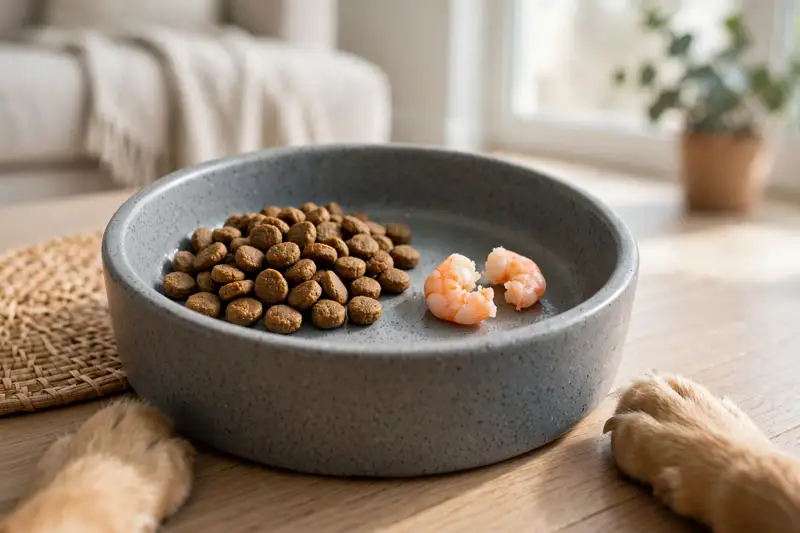
Treats of any kind should stay within about 10% of your dog’s daily calories, and shrimp should be an occasional treat rather than a daily one. When you offer shrimp for the first time, start with just a tiny piece and watch your dog for a day before giving a full portion. If your dog has a sensitive stomach, a weight problem, or an ongoing health condition, ask your vet first — portion needs vary, and a vet can set a limit that fits your dog.
Risks to Watch For
Raw shrimp. Uncooked shellfish can carry bacteria and parasites that cause shellfish poisoning. Signs include vomiting, diarrhea, nausea, and abdominal pain. If your dog eats raw shrimp and shows any of these symptoms, contact your vet right away.
Shells and tails. These are the most common physical danger. Shells can choke a dog or irritate and block the gut, and tails are hard and sharp when broken. Always check the piece you are serving for leftover shell fragments before you hand it over.
Allergy or intolerance. Shellfish allergy is uncommon in dogs, but it does happen, and a food intolerance can show up on the very first taste. Watch for itching, hives, swelling of the face or ears, vomiting, or diarrhea. If you notice any of these, stop feeding shrimp and call your vet.

Cholesterol and sodium. Both are high in shrimp, which is another reason to keep servings small and rare rather than routine. Dogs with a history of pancreatitis, heart conditions, or obesity should only have shrimp if their vet agrees.
Seasonings and cooking methods. Garlic and onion are toxic to dogs, and butter, oil, and heavy sauces can trigger stomach upset. Fried, breaded, coconut, tempura, and sautéed shrimp all add fat and ingredients that dogs do not need — skip them entirely.
Shrimp is just one of many human foods dogs can eat — see the full guide for what else is safe.
Frequently Asked Questions
Are shrimp tails safe for dogs?
No. Tails are hard, sharp when broken, and difficult to digest. They are a choking hazard, especially for small dogs. Remove the tail before serving.
Can dogs eat fried or tempura shrimp?
No. Frying adds fat, and breading and batter usually carry salt, seasoning, and sometimes garlic or onion. Tempura and coconut shrimp fall in the same group. Only plain cooked shrimp is suitable.
Is raw shrimp safe for dogs?
No. Raw shrimp can carry harmful bacteria and parasites. Always cook shrimp fully before offering any to your dog.
How often can a dog have shrimp?
As an occasional treat only, not every day. Stick to the portion guide above, keep treats within about 10% of daily calories, and skip shrimp entirely if your dog reacted badly the first time.
Can puppies eat shrimp?
A tiny piece of plain, fully cooked shrimp is generally considered safe for puppies, but puppies have sensitive stomachs, so start smaller than the guide suggests and watch for any reaction. When in doubt, ask your vet first.
What should I do if my dog swallowed a shrimp shell?
Watch closely for choking, gagging, vomiting, straining, loss of appetite, lethargy, or abdominal pain. Small fragments often pass, but a blockage is serious — contact your vet promptly if you notice any of these signs, and do not wait for it to resolve on its own.
Disclaimer: This article is for general information only and is not veterinary advice. Every dog is different, and dogs with health conditions, puppies, and seniors may need different guidance. If you are unsure, or if your dog shows symptoms after eating shrimp, contact your veterinarian.
Sources: