
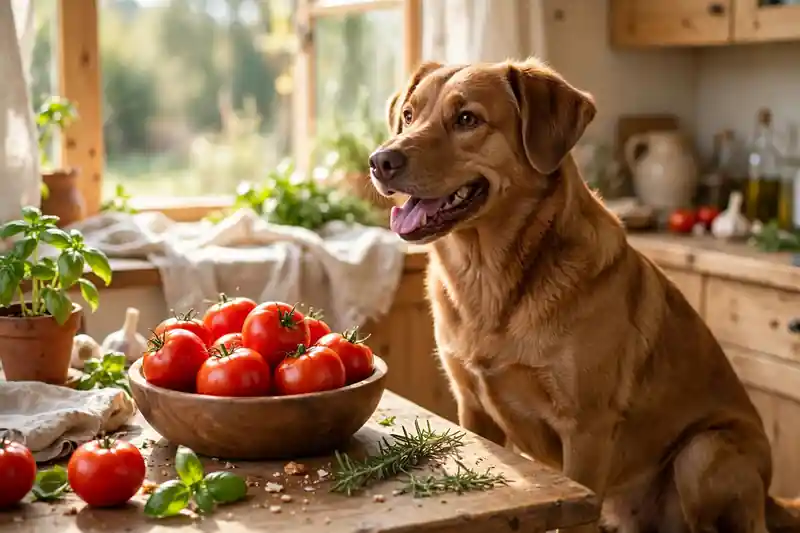
Yes — can dogs eat tomatoes? The short answer is yes, but with a strict condition: only the ripe, red flesh, only in small amounts, and only as an occasional treat. The rest of the plant is a different story, and that distinction is the whole point of this guide.
The ripe-only rule
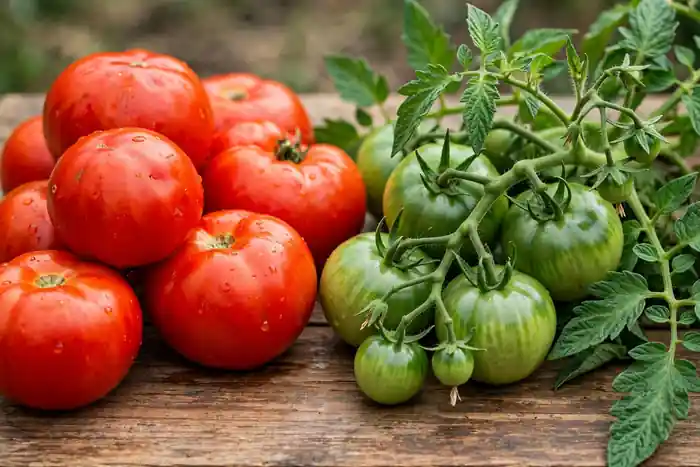
Tomatoes belong to the nightshade family, and the plant protects itself with compounds called solanine and tomatine. These are concentrated in the green parts of the plant — the stems, leaves, vines, and unripe green fruit. As the fruit ripens from green to red, tomatine levels drop sharply, which is why the fully ripe flesh is considered non-toxic while the green parts are not.
That is why veterinary sources draw the line exactly where they do. The American Kennel Club states that ripe tomatoes are non-toxic to dogs in small amounts, but that dogs should never ingest the leaves and stems and should avoid young, green tomatoes. PetMD puts it the same way: when fed in moderation, dogs can eat ripe tomatoes safely, while young, green tomatoes can be harmful.
Safe parts vs. parts to avoid
| Part | Safe for dogs? |
|---|---|
| Fully ripe, red flesh | Yes, in small amounts |
| Unripe, green tomatoes | No |
| Stems, leaves, vines, flowers | No |
| Tomato sauce, soup, salsa, ketchup | No |
| Canned tomatoes with added salt or seasoning | No |
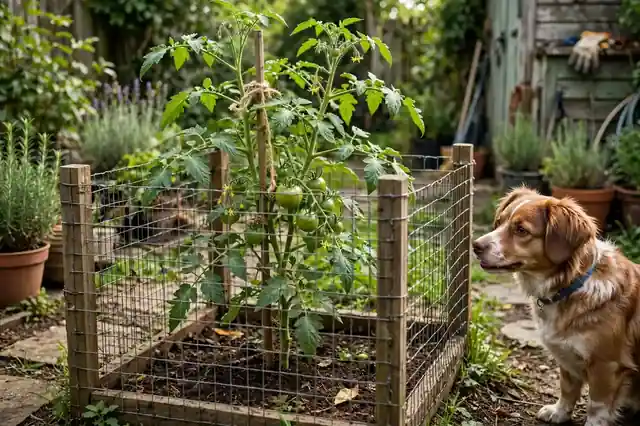
If you grow tomatoes at home, this table matters more than any other section. Dogs that get into a vegetable garden are the ones most likely to chew on vines or snatch a green tomato off the plant, so fencing off the patch is the simplest prevention there is.
How much is safe
Treats of every kind, tomatoes included, should stay within about 10% of your dog’s daily calories. The rest of their nutrition should come from a balanced dog food, not from extras.
As a rough guide for ripe tomato pieces:
- Small dogs: a bite or two, or a single cherry tomato cut in half.
- Medium dogs: a few small pieces.
- Large dogs: a few slices or a small handful of pieces.
Tomatoes are an occasional snack, not a daily habit. When you offer them for the first time, start with one small piece and watch how your dog reacts over the next day before offering more. Too much at once, even of ripe tomato, can mean loose stools or gas, and the natural acidity can bother dogs with sensitive stomachs.
How to serve them safely
Preparation is simple, and every step has a reason:
- Pick fully ripe fruit. Deep red all over, with no green patches near the stem.
- Wash it well to remove dirt and pesticide residue.
- Remove the stem, leaves, and any green bits completely.
- Cut it into bite-size pieces suited to your dog’s size, so there is nothing to choke on.
- Serve it plain. No salt, no dressing, no seasoning of any kind.
Plain cooked ripe tomato, with nothing added, is not a problem in itself — but there is rarely a reason to cook it for a dog, and cooking usually means other ingredients get involved. Fresh, raw, ripe pieces are the simplest safe option.
Cherry tomatoes and grape tomatoes
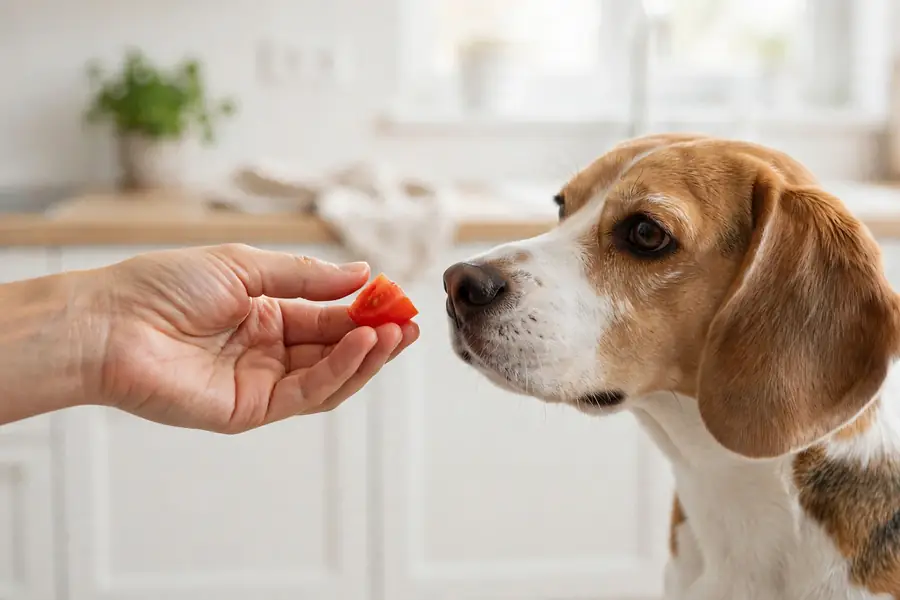
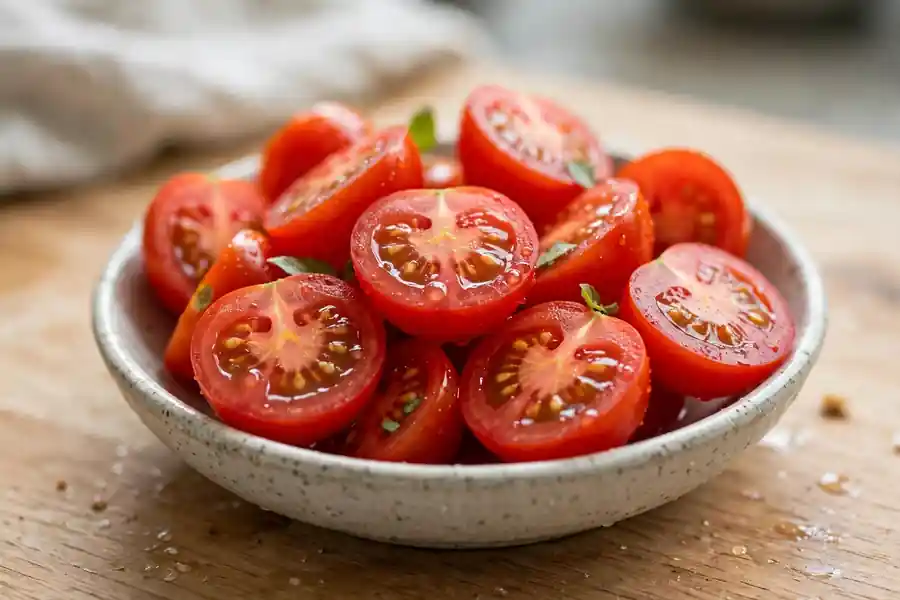
Small round varieties follow the same rule with one extra step: cut them in half. A whole cherry tomato is just the right size to be a choking hazard, especially for small dogs. Once halved, a fully ripe cherry or grape tomato is fine as an occasional bite — but a green or half-ripe one is not, so check the colour before you share.
Why sauces, soups, salsa and ketchup are out
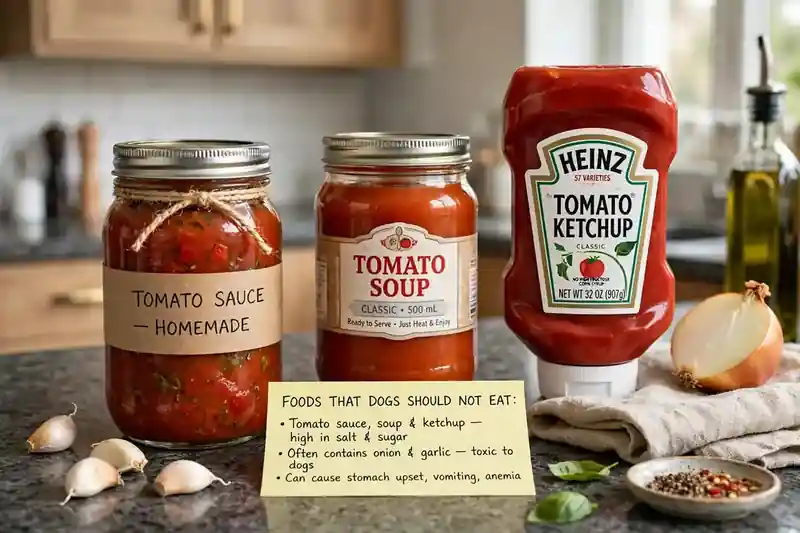
This is where most owners get caught out, because the problem is rarely the tomato itself. Prepared tomato products usually carry ingredients that are genuinely harmful to dogs: garlic and onion, which are toxic; salt and sugar in large amounts; and in some ketchups, xylitol, which is dangerous. Salsa adds peppers and seasoning on top of that. So the rule is straightforward — skip the jar, the tin and the bottle, and stick to fresh fruit you prepared yourself.
Signs something is wrong
A small amount of ripe tomato almost never causes trouble beyond mild stomach upset. Green tomatoes or plant material are a different matter, and the signs to watch for include vomiting, diarrhoea, drooling, lethargy, weakness, loss of coordination, tremors, dilated pupils, and a slow or irregular heart rate. Serious poisoning is rare and usually needs a large amount of green plant material, but small breeds and puppies are at greater risk from smaller amounts because of their size.
If your dog has eaten a meaningful amount of green tomatoes, stems or leaves — or is showing any of the symptoms above — call your veterinarian straight away. You can also contact the ASPCA Animal Poison Control Center on 888-426-4435. Note down roughly how much was eaten and your dog’s weight before you call, as both help the vet judge the risk.
Dogs who should skip tomatoes
Most healthy adult dogs can handle a small piece of ripe tomato, but a few should sit this one out. Dogs with acid reflux or chronic digestive problems may find the acidity irritating, and PetMD notes that dogs with sensitive stomachs or kidney disease may be more sensitive. Allergic reactions are uncommon, but watch for itching, hives, swelling or difficulty breathing after a first taste — swelling or breathing difficulty is an emergency, not a wait-and-see. And if your dog is on a prescription diet, check with your vet first, since many such diets leave no room for extras.
The honest summary is this: ripe tomato flesh is a safe, low-calorie, occasional snack with some useful nutrients — vitamin C, vitamin A, potassium and the antioxidant lycopene. It is also completely unnecessary. Your dog does not need tomatoes, and if you would rather skip them altogether, as the AKC itself suggests as the cautious option, your dog loses nothing. If you do share, share ripe, plain and small — and keep the plant itself out of reach.
If you are checking other everyday foods for safety, our wider guide to what human food dogs can eat covers the same ripe-only, plain-only thinking across the foods dogs meet most often.
Frequently Asked Questions
Can dogs eat tomatoes every day?
No. Tomatoes should be an occasional treat only, kept within the 10% treat allowance. Daily feeding adds acidity and calories for no nutritional benefit your dog cannot get from their regular food.
Can dogs eat green tomatoes?
No. Green, unripe tomatoes contain much higher levels of solanine and tomatine than ripe fruit, and they are the part most likely to cause vomiting, diarrhoea or worse. This includes green cherry tomatoes and fried green tomatoes.
Can dogs eat tomato sauce or ketchup?
No. Sauces, soups, salsa and ketchup almost always contain garlic, onion, salt or sugar, and some ketchups contain xylitol. The additives are the danger, even when the tomato base itself is ripe.
Can dogs eat cherry tomatoes?
Yes, if they are fully ripe, served plain, and cut in half first. Keep the portion small, and skip any that are still green or attached to stems and leaves.
My dog ate some tomato plant leaves — what should I do?
Do not panic over a single nibble, but do not ignore it either. Watch closely for vomiting, diarrhoea, drooling, weakness or wobbliness, and call your vet if a meaningful amount was eaten or any symptoms appear. Keep the dog away from the plant in the meantime.
This article is general information only and is not a substitute for veterinary advice. If your dog has a health condition, is on a prescription diet, or you are unsure about any food, check with your veterinarian first.
Sources: