
If your veterinarian has suggested trazodone for your dog, you probably want to know one thing before that first pill goes down: what could it do to my dog? It’s a fair question. Trazodone is one of the most widely prescribed calming medications in veterinary medicine, and for most dogs it’s remarkably gentle — but like any drug, it carries side effects worth understanding.
This guide walks through exactly what to expect: the mild reactions that are common and usually harmless, the serious ones that call for an emergency vet visit, and the long-term effects tied to daily use. You’ll also learn how dosing, drug interactions, and your dog’s own health shape the risk — so you can give trazodone with confidence instead of worry.
What Is Trazodone for Dogs and Why Do Veterinarians Prescribe It?
Trazodone is an antidepressant that belongs to a class of medications called serotonin antagonist and reuptake inhibitors, or SARIs. It works by raising serotonin activity in the brain, which helps steady mood and take the edge off fear and stress. Although it was originally developed and FDA-approved as a human medication, veterinarians prescribe it off-label for dogs — a common and well-accepted practice for many human drugs used in pets.

Vets reach for trazodone most often when a dog needs help staying calm through a specific stressful event or a stretch of enforced rest. Typical reasons include:
- Situational anxiety — vet visits, grooming appointments, car or plane travel, and moving to a new home
- Noise phobias — fireworks, thunderstorms, and other loud, unpredictable sounds
- Separation anxiety — distress when left alone
- Post-surgical recovery and cage rest — keeping a healing dog quiet enough to avoid reinjury
- Generalized anxiety — ongoing, everyday nervousness, usually paired with behavior training
It comes as a standard tablet in 50, 100, 150, and 300 mg strengths. Extended-release versions exist but aren’t recommended for dogs, since they can’t be split or dosed reliably. The old brand names — Desyrel, Oleptro, and others — have been discontinued, so what your dog receives today is almost always generic trazodone.
What Are the Most Common Side Effects of Trazodone in Dogs?
Here’s the reassuring part: most dogs handle trazodone well. Research shared through the Veterinary Information Network suggests roughly 80% of dogs experience no unwanted effects at all, and when side effects do show up, they’re usually mild and short-lived.
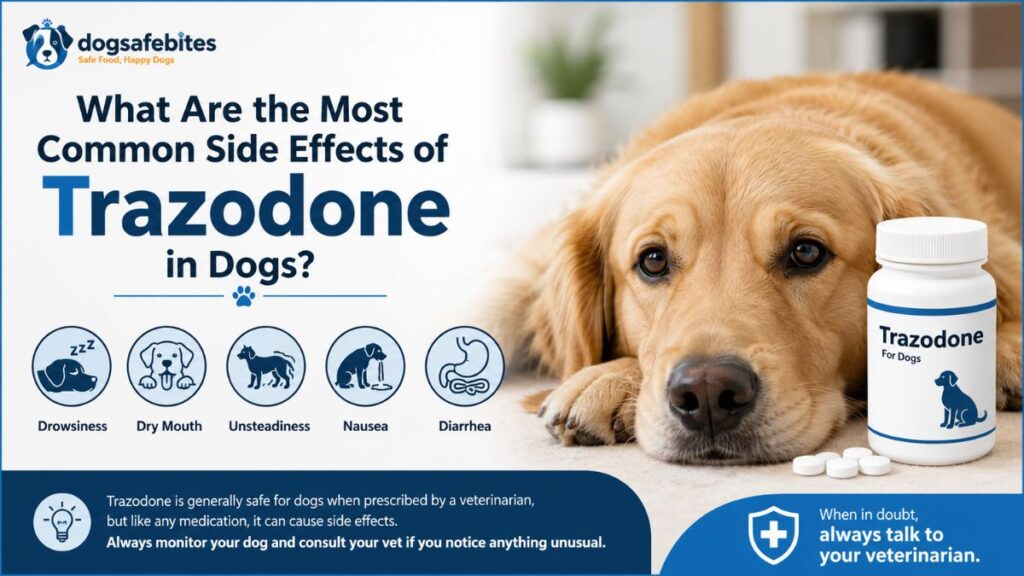
The most common reaction is drowsiness — which, to be fair, is often the whole point. A calm, sleepy dog is exactly what you want during a thunderstorm. The line to watch is between “relaxed” and “overly sedated.” Beyond sleepiness, owners most often notice:
| Common side effect | What you might notice |
| Sedation / drowsiness | Sleepy, quiet, less responsive but still rousable |
| Incoordination (ataxia) | Wobbly, stumbling, “walking drunk” |
| Digestive upset | Vomiting, diarrhea, or nausea |
| Appetite changes | Reduced appetite, or unusually pushy food-seeking |
| Watery or squinty eyes | Mild eye irritation |
The wobbly gait deserves a special mention. A lightly sedated dog can misjudge stairs, furniture, or the edge of a couch, so keep your dog on ground level and away from ledges until you see how they respond. Minor stomach upset often settles on its own, and giving the tablet with a small meal or treat usually helps. These reactions tend to fade within about a day as the medication clears the body.
Which Trazodone Side Effects in Dogs Require Immediate Veterinary Attention?
Serious reactions are uncommon, but recognizing them quickly matters. The most important one to know is serotonin syndrome — a dangerous, potentially life-threatening buildup of serotonin that’s usually triggered by an overdose or by combining trazodone with other serotonin-raising drugs.
Warning signs of serotonin syndrome and other severe reactions include:
- High body temperature or fever
- Muscle tremors, twitching, or rigidity
- Severe agitation, restlessness, or disorientation
- Rapid heart rate and heavy panting or difficulty breathing
- Drooling, dilated pupils, and vomiting or diarrhea
- Seizures, collapse, or, in the worst cases, coma
A few other red flags call for urgent care too: signs of an allergic reaction (facial swelling, hives, trouble breathing), an irregular heartbeat, or — in male dogs — a persistent erection that won’t resolve, a rare reaction called priapism that needs prompt treatment.
If you see any of these, stop giving trazodone and contact your veterinarian, the nearest emergency clinic, or an animal poison control line right away. In the U.S., the ASPCA Animal Poison Control Center (888-426-4435) and the Pet Poison Helpline (855-764-7661) are available around the clock. Bring the medication bottle with you — knowing the exact strength and how much your dog took helps the team act fast.
How Long Do Trazodone Side Effects Last in Dogs?
For a single dose, trazodone is relatively short-acting. The calming effect generally lasts up to about 12 hours, and the drug clears a healthy dog’s system within roughly 24 hours. Most mild side effects — the grogginess, the wobble, the upset stomach — ease off on the same timeline as the medication wears off.
Two situations can stretch that window. First, dogs with liver or kidney disease process the drug more slowly, so both the benefits and any side effects may linger longer. Second, dogs who have taken trazodone daily for weeks or months shouldn’t stop suddenly. Abrupt withdrawal can bring on rebound anxiety, agitation, and trouble sleeping. If your dog is coming off long-term trazodone, your vet will usually taper the dose down gradually rather than quitting cold turkey.
Trazodone Dosage for Dogs: How Proper Dosing Affects Side Effects
Dosing is where most avoidable side effects begin. Trazodone has a wide safety margin, but that also means the “right” dose varies a lot from dog to dog, based on weight, the reason for use, other medications, and how each individual responds.

As a general reference — never a substitute for your vet’s instructions:
| Use | Typical range* | Notes |
| Daily / long-term anxiety | ~2–5 mg per kg | Lower, steady dosing; may take weeks for full effect |
| Situational / one-time events | ~5–10 mg per kg | Higher; given 1–2 hours before the trigger |
| Maximum single dose | Often capped near 300 mg | Regardless of body weight |
*Published ranges are broad — some sources cite roughly 2 to 19.5 mg/kg per day — which is exactly why dosing should be set by a veterinarian for your specific dog.
The principle vets follow is “start low, go slow.” Beginning at a modest dose and increasing gradually over days to weeks lets your dog’s body adjust and helps pinpoint the smallest effective amount, which keeps side effects to a minimum. Giving too much at once tends to cause heavy sedation, low blood pressure, and, at the extreme, serotonin syndrome. Never double up on a missed dose, never give doses closer together than your vet directs, and never adjust the amount on your own.
Can Trazodone Cause Behavioral Changes or Sedation in Dogs?
Sedation is the behavioral change owners notice first, and in most cases it’s the intended one — a dog that’s settled and calm rather than frantic. When sedation becomes excessive, though (a dog that’s hard to wake or can barely stand), it usually signals the dose is too high and warrants a call to your vet.
The change that catches owners off guard is the opposite reaction. In a small number of dogs, trazodone causes what’s called paradoxical excitement, or disinhibition — instead of calming down, the dog becomes more anxious, agitated, hyperactive, or even uncharacteristically aggressive. It’s uncommon, but if your dog seems more wound up rather than less, stop the medication and talk to your veterinarian about an alternative.
It also helps to set the right expectation: trazodone reduces anxiety, but it doesn’t teach a dog to feel safe. For lasting improvement with chronic anxiety, vets typically combine it with behavior modification and training rather than leaning on the pill alone.
Trazodone Drug Interactions: Medications and Supplements Dog Owners Should Avoid
Because trazodone raises serotonin, its biggest risks come from being combined with other drugs and supplements that do the same thing. Stacking them is the classic route to serotonin syndrome. That’s why your vet needs a complete list of everything your dog takes — including over-the-counter supplements and “calming” chews.
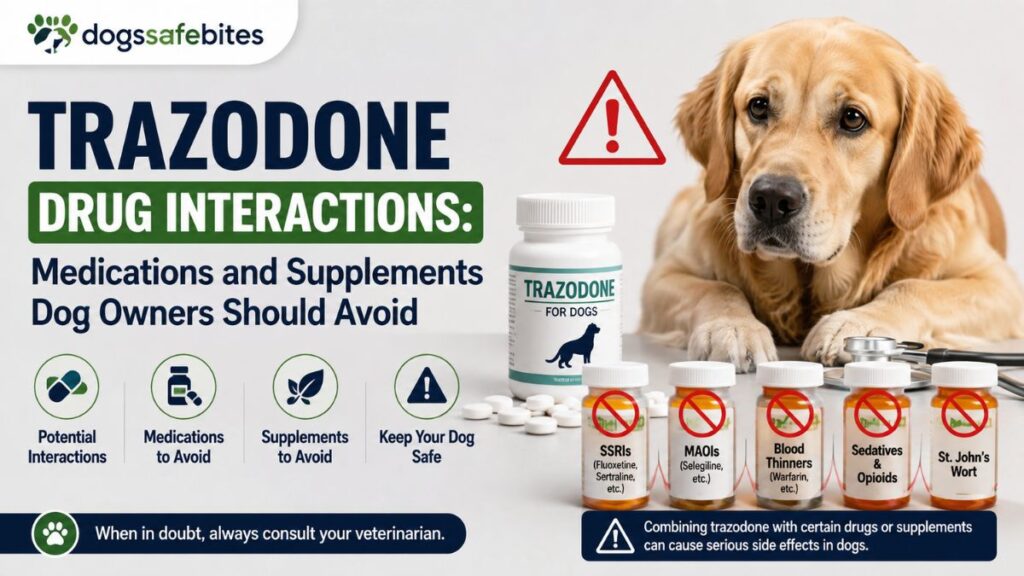
| Category | Examples | Why it matters |
| MAO inhibitors | Selegiline (Anipryl); amitraz in some tick collars/dips | Should never be combined — high risk of severe serotonin syndrome |
| Other antidepressants | Fluoxetine, sertraline, clomipramine, amitriptyline | Serotonin syndrome risk; sometimes combined, but only at reduced doses under supervision |
| Other serotonergic drugs | Tramadol, buspirone | Add to the overall serotonin load |
| Supplements | St. John’s Wort, SAMe, L-tryptophan, 5-HTP | Raise serotonin; often hidden in calming products |
| Certain antifungals | Ketoconazole | Can raise trazodone blood levels |
| NSAIDs & blood thinners | Carprofen, meloxicam, anticoagulants | May increase bleeding risk |
| Blood pressure meds | Various antihypertensives, diuretics | Can push blood pressure too low |
Not every combination is off-limits. Vets often pair trazodone with sedatives like gabapentin, benzodiazepines, or opioids on purpose — after surgery, for example — because the added calm is the goal. The difference is that these combinations are chosen and monitored by your veterinary team, not stumbled into at home.
Are Certain Dogs More Likely to Experience Trazodone Side Effects?
Yes. Some dogs are simply more sensitive, and a few shouldn’t take trazodone at all. It’s generally avoided in dogs with liver, kidney, or heart failure, in those with angle-closure glaucoma, and in any dog with a known allergy to the medication.
Extra caution applies to:
- Senior dogs, whose slower metabolism can intensify or prolong the effects
- Dogs with liver or kidney disease, who clear the drug less efficiently
- Pregnant or nursing dogs, since high doses have shown effects on developing puppies in studies — used only when the benefit clearly outweighs the risk
- Dogs already on serotonin-affecting medications, who face a higher serotonin syndrome risk
- Very small dogs, where precise dosing leaves little margin for error
If your dog falls into one of these groups, it doesn’t automatically rule trazodone out — it just means your vet will weigh the decision carefully and may start at a lower dose with closer monitoring.
What Should You Do If Your Dog Experiences Side Effects After Taking Trazodone?
Your response depends on how severe the signs are. For mild effects — a bit of grogginess, a wobbly walk, or minor stomach upset — the usual approach is to keep your dog comfortable and safe. Limit access to stairs and high furniture so a sedated dog can’t fall, offer a small meal to settle the stomach, make sure fresh water is available, and note when the symptoms started and how long they last. If mild effects drag on past 24 hours or seem to be getting worse, check in with your vet.
For anything in the serious category — tremors, seizures, high fever, collapse, difficulty breathing, severe agitation, or a suspected overdose — treat it as an emergency. Stop the medication, don’t give the next dose, and call your veterinarian, an emergency clinic, or a pet poison control line immediately. Bring the pill bottle so the team knows the exact product, strength, and amount involved. Whatever the situation, resist the urge to change the dose yourself; adjustments should always come from your veterinarian.
Final Thoughts
Trazodone earns its place as a go-to calming medication for good reason: it’s effective, flexible, and gentle for the large majority of dogs. Most side effects are mild — a little drowsiness, a wobbly step, an occasional upset stomach — and they usually clear within a day. The reactions that truly matter, like serotonin syndrome, are uncommon and most often stem from too high a dose or a risky drug combination, both of which are largely preventable.
The safest path is simple. Give trazodone exactly as your vet prescribes, keep them informed about every other medication and supplement your dog takes, watch for the warning signs above, and keep an animal poison control number handy just in case. Do that, and trazodone can help your dog get through fireworks, vet visits, or a long recovery with far less stress — for both of you.
Frequently Asked Questions About Trazodone Side Effects in Dogs
How quickly does trazodone start working in dogs?
It usually takes effect within about 1 to 3 hours, which is why situational doses are given 1–2 hours before a known stressor.
Is it normal for my dog to seem “drunk” on trazodone?
Yes — mild wobbliness and grogginess are common. Just keep your dog off stairs and ledges until it passes.
Can trazodone kill a dog?
Deaths are very rare and almost always linked to serotonin syndrome from overdose or drug combinations. At vet-directed doses, it’s considered safe.
Can I give my dog trazodone every day?
Yes, vets prescribe it daily for chronic anxiety — but it needs ongoing supervision, and you shouldn’t stop it abruptly after long-term use.
Does trazodone cause long-term damage?
There’s no strong evidence of lasting harm at proper doses. The main long-term concern is withdrawal if daily use is stopped suddenly.
Can trazodone be given with gabapentin?
Often, yes — vets frequently combine them for stronger calming, especially after surgery, with expected added sedation.
What should I do if I accidentally give too much?
Contact your vet or a pet poison control line right away, and have the bottle handy so they know the strength and amount your dog took.