Few sounds are as unsettling as watching your dog shake its head over and over, then dig frantically at one ear with a back paw, refusing to stop even when you call its name. For dog owners, this is often the first sign that something isn’t right — an infection brewing, wax building up, or an irritant causing real discomfort. Ear problems in dogs are one of the most common reasons for veterinary visits, particularly among breeds with floppy ears, allergies, or a love of swimming. Left untreated, minor irritation can quickly progress into a painful infection that spreads deeper into the ear canal. Knowing when and how to use ear drops for dogs can mean the difference between a quick recovery and a chronic, recurring problem.
The right ear drops for dogs — whether prescribed by a vet or chosen for routine maintenance — can soothe irritation, clear infection, and keep your dog’s ears healthy for the long term. But with so many products on shelves and online, from medicated treatments to gentle cleansers, choosing correctly isn’t always straightforward. This guide walks through exactly what ear drops do, when your dog actually needs them, and what’s typically behind the itching, odor, or wax buildup in the first place. By the end, you’ll know how to read the signs your dog is giving you and respond with confidence instead of guesswork.
What Are Ear Drops for Dogs and When Should They Be Used?
Ear drops for dogs are liquid or gel-based formulas applied directly into the ear canal to treat infection, relieve itching, break down wax, or simply keep the ear clean and dry. They’re not a single category of product — the term covers everything from prescription antibiotics to gentle, plant-based cleansers you might use once a week after a bath. Understanding which type you’re dealing with is the first step to using them correctly, because a product designed for maintenance won’t touch an active bacterial infection, and a strong medicated drop isn’t something you want to use on a perfectly healthy ear “just in case.”
Most ear drops fall into three broad categories, and each serves a different purpose in a dog’s ear care routine.
Medicated (Therapeutic) Ear Drops
These are formulated to treat a specific, diagnosed problem — typically a bacterial infection, a yeast overgrowth, or an ear mite infestation. They usually contain a combination of an antibiotic, an antifungal, and sometimes a mild steroid to reduce inflammation and pain. A vet will prescribe these after examining the ear canal, and often after taking a swab to identify exactly what’s causing the problem. Consider a Cocker Spaniel with a history of recurring yeast infections: the vet might prescribe a drop containing miconazole and hydrocortisone, applied twice daily for one to two weeks, because that combination targets the yeast while calming the inflamed tissue lining the canal.
Cleansing and Preventive Ear Drops
These are milder, non-medicated solutions used to flush out debris, dissolve excess wax, and dry residual moisture after bathing or swimming. They often contain ingredients like witch hazel, aloe, or mild acids that create an environment where bacteria and yeast struggle to multiply. A Labrador that swims every weekend at the lake is a textbook candidate for a weekly cleansing routine — not because there’s an infection, but because trapped moisture in a floppy ear is exactly the kind of environment infections love to start in.
Combination and Multi-Symptom Formulas
Some over-the-counter products blend gentle antimicrobial ingredients with soothing agents, marketed for everyday itching or mild irritation that isn’t yet a full-blown infection. These sit somewhere between medicated and purely cleansing drops, and they’re best used for mild cases or as a bridge before a vet visit — not as a substitute for proper diagnosis when symptoms are severe or persistent.
| Type of Ear Drop | Main Purpose | Typical Use Case |
| Medicated (therapeutic) | Treats diagnosed infection or mites | Prescribed after vet exam, short-term course |
| Cleansing/preventive | Removes wax, dries moisture | Weekly maintenance, post-swim or post-bath |
| Combination/multi-symptom | Mild itching or early irritation | Occasional use, not a replacement for diagnosis |
Ear drops should be used the moment you notice a genuine change in your dog’s ear — not as a routine habit applied to every dog regardless of need. Over-cleaning healthy ears can actually strip away the natural wax barrier that protects against infection, so timing and purpose matter just as much as the product itself.
Common Signs Your Dog May Need Ear Drops
Dogs can’t tell you their ear itches, so they communicate it through behavior — and these behaviors are usually consistent enough that owners learn to recognize the pattern quickly once they know what to look for.
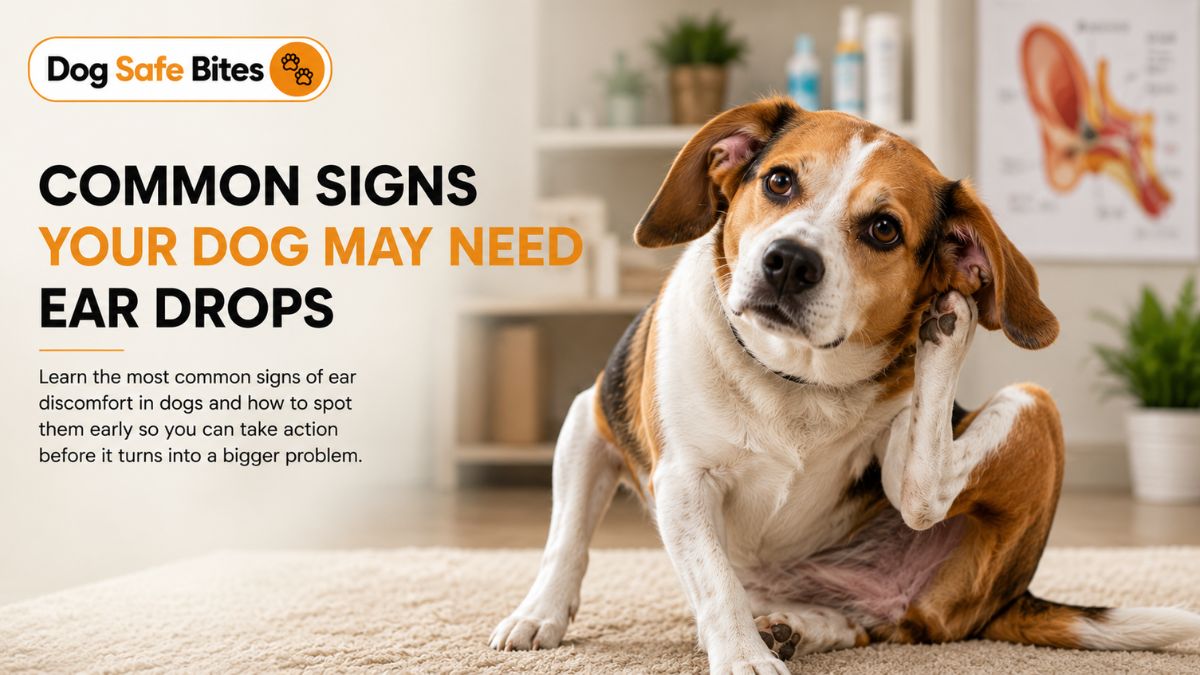
Head shaking and pawing are usually the earliest signs. A dog with an irritated ear will shake its head more than usual, sometimes tilting it to one side and holding it there, or repeatedly scratching at the ear with a hind paw. If you notice your dog rubbing the side of its face along the carpet or furniture, that’s often another version of the same complaint — an attempt to relieve itching or pressure it can’t scratch directly.
Odor is one of the clearest giveaways. A healthy dog ear has little to no smell. A yeasty, sweet, or musty odor coming from the ear almost always points to yeast overgrowth or bacterial infection, and it’s usually noticeable even before you look inside.
Discharge and wax changes tell you a lot about what’s going on. Small amounts of light brown wax are normal. Dark brown or black, coffee-ground-like debris often signals ear mites, particularly in puppies or dogs that spend time around other animals. Yellow or greenish discharge, sometimes with a foul smell, is more typical of bacterial infection. A useful mini-scenario: a rescue dog that recently came from a shelter environment starts scratching one ear and you notice dark, gritty debris — this pattern is common enough with mites that many vets will treat presumptively while also confirming with a quick microscope check.
Redness, swelling, or heat inside the visible part of the ear canal usually means inflammation is already underway. If you gently lift the ear flap and the skin looks inflamed or the dog flinches when you touch near the ear, that’s a signal the problem has progressed beyond mild irritation.
Sensitivity and behavior changes round out the picture. Dogs in ear pain often resist having their head touched, become unusually irritable, or seem less interested in play. In more advanced infections, a dog may hold its head tilted persistently, lose balance slightly, or show signs of discomfort while eating, since jaw movement can put pressure on an inflamed ear canal.
When It’s Simple Wax Buildup vs. When It’s Something More
Not every itchy ear needs medication. A dog that shakes its head once or twice after a bath, with no odor and only a light amount of wax, is probably just dealing with normal moisture and will be fine with a gentle cleanse. The line gets crossed when you see a combination of signs — odor plus discharge, or persistent scratching that doesn’t ease up after a day. That combination is the cue to bring in either a targeted ear drop or a vet visit, rather than waiting to see if it resolves on its own.
What Causes Ear Infections and Ear Irritation in Dogs?
To choose the right ear drops for dogs, it helps to understand why ear problems happen in the first place — because the underlying cause often determines which product will actually work.
Ear anatomy is the starting point. Unlike the relatively straight human ear canal, a dog’s ear canal is L-shaped, running vertically before turning horizontally toward the eardrum. This shape is great for protecting the inner ear from debris, but it also means moisture, wax, and discharge don’t drain out easily — they pool at the bend, creating a warm, dark, humid environment where yeast and bacteria multiply rapidly.
Allergies are one of the most common underlying triggers, and they’re often underestimated by owners. Both environmental allergies (pollen, dust mites, mold) and food allergies can cause chronic low-grade inflammation in the skin lining the ear canal, which then becomes the perfect breeding ground for secondary yeast or bacterial infections. This is why some dogs seem to get an ear infection every few months despite regular cleaning — the ear drops treat the infection, but the allergy driving it never gets addressed.
Moisture retention explains why swimmers and dogs bathed frequently are at higher risk. Water trapped in the canal after a swim or bath softens the skin and creates ideal conditions for microbial growth, especially in breeds with narrow or hairy ear canals.
Ear mites (Otodectes cynotis) are highly contagious parasites that are especially common in puppies, kittens, and dogs from multi-pet households or shelters. They cause intense itching and the characteristic dark, crumbly discharge mentioned earlier.
Foreign bodies, such as grass awns, foxtails, or small debris, can lodge in the canal during outdoor activity, particularly in dogs that spend time in tall grass or wooded areas during summer. These often cause sudden, severe irritation in one ear only, which is a useful clue — infections can affect either ear, but a foreign body almost always causes a one-sided, sudden-onset problem.
Breed predisposition plays a real role too. Breeds with floppy, low-hanging ears — Cocker Spaniels, Basset Hounds, Bloodhounds — have reduced airflow to the canal, trapping heat and moisture. Breeds with excess ear canal hair, like Poodles and some terrier types, face a similar issue where hair traps debris and moisture against the skin.
Hormonal conditions, including hypothyroidism, can alter skin oil production and immune response in ways that make some dogs more prone to recurring ear infections, particularly in middle-aged and senior dogs.
Over-cleaning or improper cleaning rounds out the list and is worth mentioning because it’s entirely owner-driven. Cleaning ears too often, using cotton swabs that push debris deeper, or using products that are too harsh can damage the protective wax layer and irritate the skin, ironically making infections more likely rather than less.
| Cause | Typical Trigger Situation | Common Sign |
| Allergies (food/environmental) | Recurring infections, seasonal pattern | Chronic redness, recurring odor |
| Moisture retention | Swimming, frequent bathing | Odor and softened skin after water exposure |
| Ear mites | Puppies, multi-pet households | Dark, crumbly discharge, intense itching |
| Foreign body | Outdoor time in grass/woods | Sudden, one-sided irritation |
| Breed anatomy | Floppy or hairy ears | Recurring buildup, reduced airflow |
| Hormonal imbalance | Middle-aged/senior dogs | Chronic, hard-to-clear infections |
Understanding which of these is actually behind your dog’s symptoms is what separates a quick fix from a repeat trip to the vet. A cleansing drop will do little for an allergy-driven infection, and a medicated antibiotic drop won’t solve a problem that keeps coming back because of trapped moisture or an unaddressed food sensitivity. Matching the ear drop to the actual cause — rather than reaching for whatever’s on the shelf — is what makes treatment genuinely effective instead of a temporary patch on a recurring issue.
Types of Ear Drops for Dogs: Prescription vs. Over-the-Counter Options
Once you understand what’s causing the problem, the next decision is where the right product actually comes from — a vet’s prescription pad or the pet store shelf. This distinction matters more than most owners realize, because the two categories aren’t just different in strength; they’re built for entirely different situations.

Prescription ear drops are formulated to treat a confirmed diagnosis. A vet typically reaches this point after examining the ear with an otoscope and, in many cases, taking a swab to check under a microscope for the specific type of yeast, bacteria, or mite involved. Products like triple-antibiotic combination drops (often containing an antibiotic, an antifungal, and a steroid in one formula) fall into this category, and they’re not available without a vet’s involvement for good reason — using the wrong active ingredient on the wrong organism can let an infection linger and even make it harder to treat later. Take a dog with a resistant bacterial infection that hasn’t responded to a general OTC cleanser after a week: this is exactly the scenario where a prescription product, chosen based on a swab result, becomes necessary rather than optional.
Over-the-counter ear drops, by contrast, are designed for situations that don’t require a targeted diagnosis — general cleaning, wax dissolving, drying moisture after a swim, or managing very mild, early-stage irritation. Brands sold at pet stores or online typically use gentler antimicrobial ingredients such as boric acid, salicylic acid, or natural extracts, which are safe for regular use but not strong enough to clear an established infection on their own. A dog that gets occasional light ear odor after weekly baths, with no discharge or visible inflammation, is a reasonable candidate for an OTC cleansing product used as a preventive habit.
The line between the two isn’t always obvious to an untrained eye, which is part of why so many ear problems get mismanaged at home. A mild-looking ear can still harbor a yeast infection that OTC products won’t fully clear, while a dog owner might reach for a strong prescription-style product bought online without realizing the ear actually just needs cleaning, not medicating. As a general rule: if there’s odor, discharge, visible redness, or your dog is clearly in pain, that’s a prescription conversation with a vet. If the ear looks and smells normal and you’re simply maintaining hygiene, an OTC option is usually sufficient.
How to Choose the Best Ear Drops for Your Dog’s Specific Condition
Choosing the right ear drop isn’t about picking the best-reviewed product online — it’s about matching the formula to what’s actually happening inside your dog’s ear. A few factors consistently make the difference between a product that works and one that just delays the real fix.
Start with an accurate diagnosis, not a guess. This is the single biggest factor in successful treatment. Two dogs can show almost identical symptoms — head shaking, scratching, mild odor — yet one has a yeast overgrowth and the other has a bacterial infection, and each responds to different active ingredients. A vet visit that includes a simple ear swab removes the guesswork entirely, and it’s especially worth doing for a dog experiencing ear issues for the first time or for any infection that hasn’t improved within a few days of home care.
Match the ingredients to the problem. Antifungal ingredients like miconazole or clotrimazole target yeast. Antibiotics such as gentamicin or neomycin target bacteria. Pesticide-based ingredients handle mites. Steroids reduce swelling and itching but don’t treat the underlying organism at all — they’re often included alongside an antimicrobial rather than used alone. A dog with both bacterial and yeast involvement, which happens more often than owners expect, typically needs a combination formula rather than a single-purpose one.
Consider your dog’s individual sensitivities. Some dogs react to specific preservatives or fragrances in certain formulas, developing contact irritation that mimics the very symptoms you’re trying to treat. If a product seems to make things worse rather than better within the first day or two, that’s usually a sign of sensitivity rather than treatment failure, and it’s worth switching formulas rather than continuing the course.
Factor in breed and ear structure. A Bulldog with narrow ear canals may need a thinner, more penetrating formula, while a Bloodhound with a large, deep canal might benefit from a product designed to coat and stay in place longer. Puppies, senior dogs, and dogs with a ruptured or uncertain eardrum status need extra caution — certain ingredients are ototoxic, meaning they can damage hearing if they reach the middle ear through a perforated eardrum, which is exactly why a vet check before starting any medicated drop matters for dogs with a history of chronic or severe infections.
Think about ease of use and course length. A nervous or large dog may do better with a long-lasting gel-based formula that only needs to be applied once every few days, compared to a liquid drop requiring twice-daily application for two weeks. Realistically, the “best” ear drop is also the one you’ll actually be able to apply consistently — a highly effective product used inconsistently will underperform a slightly simpler one used correctly every time.
How to Apply Ear Drops to Dogs Safely: A Step-by-Step Guide
Even the right product won’t work well if it’s applied incorrectly, and a nervous, wriggling dog can make the process feel harder than it needs to be. A calm, consistent method makes a real difference for both the dog’s comfort and the treatment’s effectiveness.
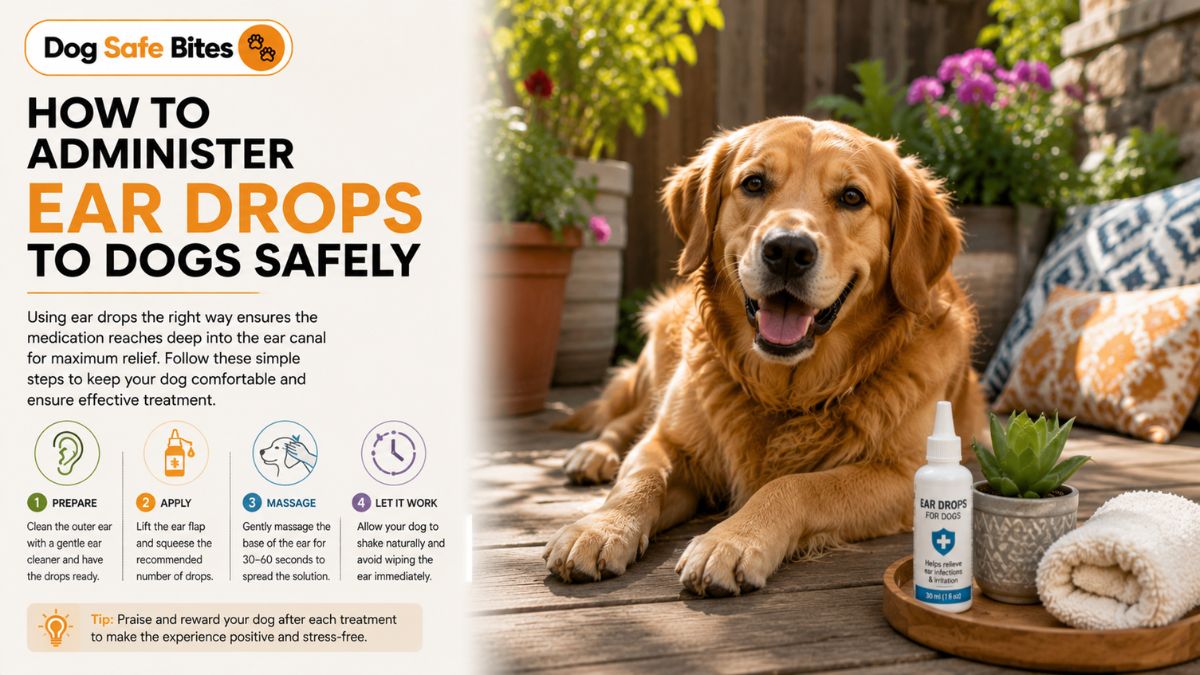
- Gather everything first. Have the ear drop bottle, cotton balls or gauze, and treats ready before you bring your dog over. Fumbling for supplies mid-application only adds to a dog’s anxiety.
- Warm the drops if they’ve been refrigerated. Cold liquid dripped straight into an already sensitive ear can startle a dog unnecessarily. Rolling the bottle between your hands for a minute or holding it briefly in a warm palm is usually enough.
- Choose a calm setting and position your dog securely. A small dog can be held in your lap; a larger dog does better sitting with its back against your legs so it can’t back away easily. Speak in a steady, reassuring tone throughout.
- Lift the ear flap gently and look inside before applying anything, just to confirm you’re treating the right ear and that nothing looks dramatically different from your last check.
- Apply the prescribed number of drops without letting the applicator tip touch the ear. Touching the tip to the skin can transfer bacteria back into the bottle, contaminating future doses.
- Massage the base of the ear for about 20–30 seconds. This is the step most owners rush, but it’s what actually works the medication down into the canal rather than leaving it pooled near the opening. A soft squelching sound during massage is completely normal and actually a good sign that the drop is reaching where it needs to.
- Let your dog shake its head. This isn’t a step to prevent — it’s the dog’s natural way of bringing excess liquid and loosened debris up and out of the canal.
- Wipe away visible debris from the outer ear with a cotton ball, working only where you can see, never pushing a swab or cotton tip down into the canal itself, which risks packing debris deeper or injuring the eardrum.
- Reward immediately. A treat right after each application builds a positive association over the course of treatment, which matters considerably if you’re doing this twice daily for two weeks — a cooperative dog on day ten is far easier than a dog that’s learned to dread the process.
For dogs that are especially anxious or hard to handle alone, having a second person gently steady the body while you manage the ear and applicator makes the whole process faster and less stressful for everyone involved.
Potential Side Effects and Safety Precautions When Using Ear Drops for Dogs
Ear drops are generally very safe when matched correctly to the condition and used as directed, but they’re still active medical products, and a few precautions are worth keeping in mind.
Mild, short-term reactions are fairly common and usually not a concern. Some dogs shake their heads more vigorously right after application, or scratch briefly as the liquid moves through the canal. Slight redness on the first day or two, especially in an ear that was already inflamed, is also typical as the tissue responds to treatment. These effects usually settle within the first few days as the underlying infection starts to clear.
Watch for signs that suggest something beyond a normal reaction. Worsening redness or swelling after several days of treatment, new bleeding, a sudden and pronounced head tilt, loss of balance, or visible pain when the ear is touched are all reasons to stop the product and contact a vet rather than pushing through the full course. These signs can indicate either an allergic reaction to an ingredient or, less commonly, that the eardrum is compromised in a way that makes certain ingredients unsafe.
Never use human ear drop products on a dog. Formulations made for human ears are often the wrong pH, wrong concentration, or contain ingredients that are irritating or unsafe for canine skin, and they’re not designed with a dog’s L-shaped, deeper canal in mind.
Complete the full course even if symptoms improve early. This is one of the most common mistakes owners make. Symptoms like odor and itching often fade well before the infection is fully cleared, and stopping early is a major reason infections come back within a few weeks, sometimes more resistant to treatment the second time around.
Check eardrum status before using strong medicated drops, particularly for chronic or recurring cases. A vet can confirm whether the eardrum is intact using an otoscope. Certain antibiotics and antiseptics are ototoxic and can cause permanent hearing damage if they pass through a ruptured eardrum into the middle ear — this is precisely why self-diagnosing a severe, long-standing infection with an over-the-counter product carries real risk, and why a vet exam is worth the visit rather than skipped.
Store products properly and check expiration dates. Many ear medications need to be kept at room temperature or refrigerated depending on the formula, and using an expired product can mean reduced effectiveness at best and irritation at worst.
Used thoughtfully — the right product, applied correctly, for the full recommended course — ear drops remain one of the safest and most effective tools for keeping a dog comfortable and infection-free. The precautions above aren’t reasons to avoid them; they’re simply what separates careful, informed use from the trial-and-error approach that leads so many ear problems to become recurring ones.
When Should You Take Your Dog to the Veterinarian for Ear Problems?
Not every itchy ear needs a vet visit, but knowing where that line sits is what keeps a manageable issue from turning into a painful, drawn-out one. Home care and over-the-counter cleansing genuinely work for mild, early-stage irritation — the kind with no odor, no discharge, and only occasional scratching. Once symptoms move beyond that, professional care stops being optional and starts being the faster, safer route.
A first-time ear problem is worth a diagnosis, not a guess. If your dog has never had ear issues before and suddenly starts showing symptoms, a vet visit early on tells you exactly what you’re dealing with — bacteria, yeast, mites, or something else — so you’re treating the actual cause from day one instead of cycling through products by trial and error.
No improvement after a few days of home treatment is a clear signal to stop guessing. If you’ve been using a cleansing or mild OTC product for three to five days and the odor, scratching, or discharge hasn’t eased at all, the ear likely needs something stronger than what’s available without a prescription.
Certain signs mean “go now” rather than “wait and see.” A dog that suddenly tilts its head and can’t straighten it, loses balance, walks in circles, or has visible blood or a very foul, sudden odor coming from the ear needs same-day attention. Consider an older dog that abruptly develops a head tilt along with unsteady walking — this combination can point to an inner ear or vestibular problem, which is a different level of urgency than routine outer-ear irritation and shouldn’t be managed at home.
Recurring infections are a pattern worth investigating, not repeatedly treating. A dog that gets an ear infection every couple of months, even with proper treatment each time, likely has an underlying driver — commonly allergies or a hormonal issue — that needs to be identified and managed separately from the ear itself. Continuing to treat only the symptom without addressing the root cause tends to keep the cycle going indefinitely.
Visible swelling that closes off the canal, intense pain when the ear is touched, or a suspected foreign object are also situations where a vet’s tools — proper lighting, an otoscope, and sometimes sedation for a thorough look — make a real difference that home inspection simply can’t match.
As a simple gauge: mild, occasional, odor-free irritation is usually fine to manage at home with a gentle cleanser. Anything involving pain, smell, discharge, behavioral change, or a pattern of repeat infections is worth a professional look before reaching for another bottle off the shelf.
Frequently Asked Questions About Ear Drops for Dogs
Can I use human ear drops on my dog?
No — human formulas have the wrong pH and ingredient concentrations for a dog’s ear and can cause irritation or worsen the problem.
How often should I clean my dog’s healthy ears?
Once a week is usually enough for most dogs, though swimmers or floppy-eared breeds may benefit from cleaning after every swim or bath.
How long does it typically take for ear drops to start working?
Most infections show noticeable improvement in itching and odor within three to five days, though the full course should still be completed.
Are ear drops painful when applied to an infected ear?
They shouldn’t cause sharp pain, though a dog may still react to the sensation of liquid and massage, especially if the ear is already inflamed.
Can I buy medicated ear drops without a vet visit?
Some mild antimicrobial products are available over the counter, but true prescription-strength treatments require a vet’s diagnosis and prescription.
Why does my dog shake its head so much right after I apply the drops?
This is a normal reflex that helps move the liquid through the canal and isn’t a sign that something went wrong.
Can an ear infection come back after finishing treatment?
Yes, especially if the underlying cause — like allergies or trapped moisture — wasn’t addressed alongside the infection itself.
Key Takeaways for Using Ear Drops for Dogs Safely and Effectively
Bringing everything together, a few core principles make the biggest difference in how well ear drops actually work for your dog:
- Identify before you treat. A quick vet exam or swab tells you whether you’re dealing with yeast, bacteria, mites, or simple wax buildup, and that answer should guide which product you reach for.
- Match the product to the problem, not the price tag or packaging. Cleansing drops maintain healthy ears; medicated drops treat diagnosed infections. Using one in place of the other rarely ends well.
- Technique matters as much as the product. Warming the drops, massaging the base of the ear, and letting your dog shake its head are what actually get the treatment where it needs to go.
- Always finish the full course, even once symptoms look resolved, to avoid the infection returning in a more stubborn form.
- Know the red flags — bleeding, head tilt, loss of balance, or no improvement after several days — and treat them as a reason to see a vet rather than switch products again.
- Address recurring causes, not just recurring symptoms. If infections keep coming back, the real fix usually involves allergies, ear anatomy, or another underlying factor rather than a different drop.
Treated this way, ear care becomes a routine part of keeping your dog comfortable rather than a stressful, repeated scramble every time symptoms show up.
Caring for a dog’s ears doesn’t require guesswork once you understand what’s actually going on inside that narrow, L-shaped canal. From recognizing the first head shake to choosing between a gentle cleanser and a prescription treatment, each step builds toward the same goal: catching problems early and treating them correctly the first time. Ear drops for dogs, used with the right diagnosis and proper technique, resolve the vast majority of infections and irritation without complication. The details — timing, ingredients, application method — are what turn a good product into an effective treatment.
At the end of the day, your dog’s ears are telling you something every time they shake their head or paw at their ear, and learning to listen to that signal early is the real skill here. A little consistency with cleaning, a willingness to see a vet when symptoms cross the line, and careful application at home will keep most dogs comfortable for years without a single serious ear problem.