When a dog stops eating, shakes their head at a smelly ear, or keeps licking a wound that won’t close, most owners land on the same question: does this need antibiotics? Sometimes the answer is yes, and the right drug is the difference between a quick recovery and a seriously ill dog. Just as often the answer is no — and reaching for antibiotics anyway does nothing for your dog while making future infections harder to treat.
This guide covers how antibiotics work in dogs, which infections genuinely call for them, how veterinarians decide which drug to prescribe, the side effects worth watching for, and how to give a course properly so it works the first time.
How Antibiotics Work in a Dog’s Body
Antibiotics kill bacteria or stop them multiplying while leaving your dog’s own cells largely alone. That selective action is what makes them so valuable — and it’s also why they do nothing at all against viruses, fungi, or parasites.
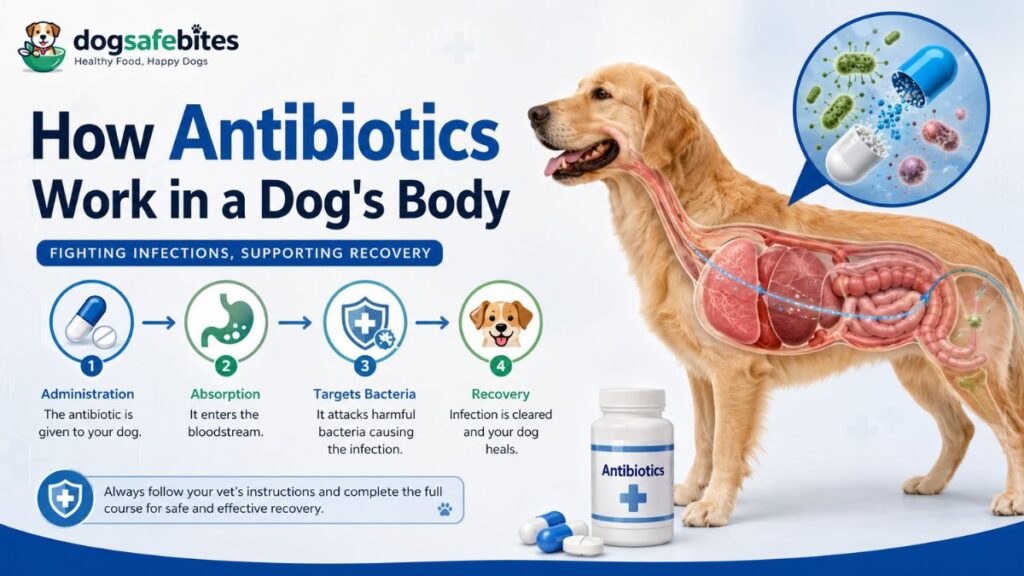
Different classes attack bacteria in different ways. Penicillins and cephalosporins break down the bacterial cell wall so the cell collapses. Fluoroquinolones damage bacterial DNA and block replication. Macrolides such as azithromycin and tetracyclines such as doxycycline bind to the bacterial ribosome and shut down protein production. Aminoglycosides like gentamicin and amikacin also disrupt protein synthesis, but hit harder and carry more risk.
Because bacterial species differ in what they’re vulnerable to, matching drug to organism matters enormously. Canine bladder infections are usually E. coli; skin infections are most often Staphylococcus pseudintermedius. This is also why a good vet runs diagnostics instead of handing over a bottle at the door — antibiotics given for a viral cough or a yeast-driven ear do nothing for the dog, disturb the gut flora, and push bacteria in your household and community further toward resistance.
Bacterial Infections in Dogs That Commonly Need Antibiotics
Not every infection needs a systemic antibiotic, and a growing number are better handled with topical treatment alone. These are the conditions vets treat most often.
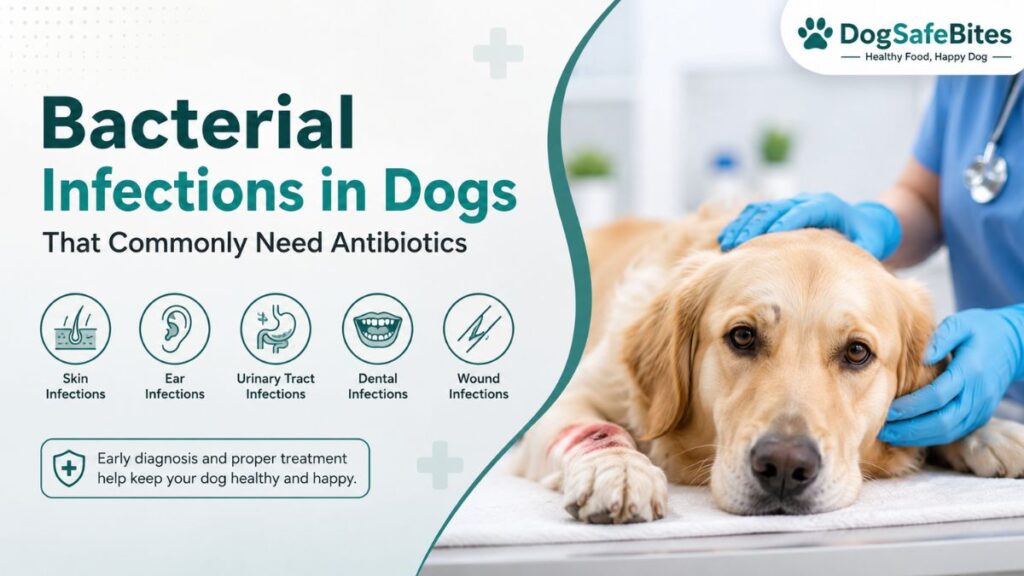
| Infection | What you’d typically notice | Antibiotic approach |
| Otitis externa (outer ear infection) | Head shaking, scratching, foul odor, brown or yellow discharge | Usually medicated ear drops; oral antibiotics only for deep or middle-ear involvement |
| Pyoderma (bacterial skin infection) | Pustules, crusts, circular scabs, redness, itching, hair loss | Topical antiseptics for surface cases; oral antibiotics for deeper infection |
| Bacterial cystitis (UTI) | Straining, frequent squatting, indoor accidents, blood in urine | Oral antibiotics, ideally guided by a urine culture |
| Dental abscess | Swelling under the eye, bad breath, dropping food, a draining tract | Antibiotics reduce swelling, but extraction or root treatment is the actual cure |
| Wound and surgical site infection | Heat, swelling, pus, persistent licking | Oral antibiotics, plus cleaning and drainage where needed |
| Bacterial pneumonia | Wet productive cough, fever, labored breathing, lethargy | Oral or injectable antibiotics, often for several weeks |
| Osteomyelitis (bone infection) | Persistent lameness, swelling and pain over a bone or old surgical site | Prolonged, usually culture-guided treatment |
| Bacterial gastroenteritis | Severe or bloody diarrhea, vomiting, fever | Only when the dog is systemically ill or testing confirms a treatable pathogen |
Two of these deserve extra clarity. Kennel cough — more accurately canine infectious respiratory disease complex — involves both viruses and bacteria, including Bordetella bronchiseptica. Most otherwise-healthy dogs recover without antibiotics, and treatment is reserved for dogs with fever, a poor appetite, or signs of pneumonia. Likewise, most canine diarrhea resolves with supportive care and a bland diet; current evidence suggests routine antibiotics for simple diarrhea prolong gut disruption rather than speeding recovery.
Signs Your Dog May Need Antibiotic Treatment
Only a veterinarian can confirm a bacterial infection, since these symptoms overlap heavily with viral, fungal, allergic, and hormonal problems. Still, knowing what to look for helps you judge when a visit is warranted.
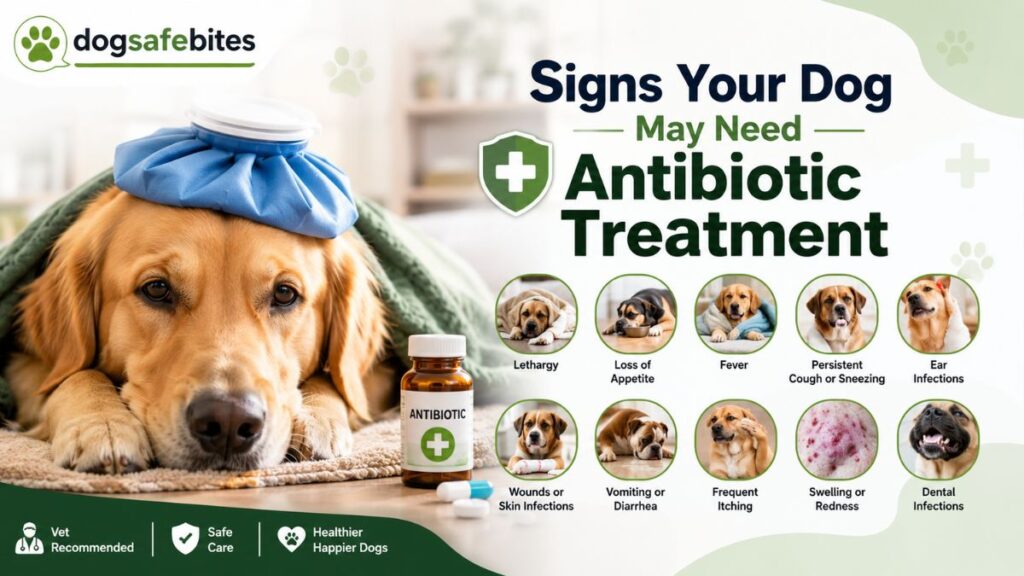
Localized signs appear at the site itself: ear odor and discharge, crusting or pustules on the skin, an incision turning red and warm, or a wound your dog won’t stop licking. Urinary infections show up as straining, frequent small urinations, house-training lapses, or blood-tinged urine; respiratory ones as a productive cough, nasal discharge, or increased breathing effort.
Systemic signs mean the infection is affecting the whole dog. A healthy dog’s temperature sits between 101°F and 102.5°F, so anything above 103°F is a fever. Lethargy, a dropped appetite, or a normally sociable dog turning withdrawn or snappy all count — as does repeated vomiting, or diarrhea with blood in it.
Timing is a useful filter. A dog who seems off for an afternoon and bounces back rarely needs medication. Symptoms that persist past 24–48 hours, or visibly worsen, deserve a proper examination. Blood work, urinalysis, cytology, or a bacterial culture is what tells your vet whether antibiotics are actually the answer.
Common Antibiotics Prescribed for Dogs
| Class | Common examples in dogs | Frequently used for | Key cautions |
| Penicillins | Amoxicillin, amoxicillin-clavulanate (Clavamox) | Skin, soft tissue, dental and urinary infections | Generally well tolerated; avoid with a known penicillin allergy |
| Cephalosporins | Cephalexin, cefpodoxime, cefovecin (injection) | Pyoderma, wounds, urinary infections | Mild stomach upset is the usual complaint |
| Fluoroquinolones | Enrofloxacin, marbofloxacin, ciprofloxacin | Resistant urinary, respiratory, bone and deep tissue infections | Can damage developing cartilage in growing puppies; may lower the seizure threshold |
| Tetracyclines | Doxycycline, minocycline | Tick-borne disease, respiratory and some resistant skin infections | Follow with water or food to protect the esophagus; increases sun sensitivity |
| Macrolides | Azithromycin, erythromycin | Some respiratory and soft tissue infections; useful when beta-lactams aren’t an option | Digestive upset is common |
| Sulfonamides | Trimethoprim-sulfadiazine, trimethoprim-sulfamethoxazole | Urinary infections, certain skin and protozoal conditions | Linked to dry eye, joint inflammation and blood cell changes on long courses |
| Nitroimidazoles | Metronidazole | Anaerobic and dental infections, some intestinal disease | Overused for routine diarrhea; neurological signs possible at high doses |
| Aminoglycosides | Gentamicin, amikacin | Serious, resistant infections in hospitalized dogs | Can affect the kidneys and hearing; requires monitoring |
Injectables have their place too. A dog too nauseated to keep tablets down, or one hospitalized with a severe infection, may receive antibiotics by injection to reach useful tissue concentrations quickly. Long-acting injections such as cefovecin help when a dog is genuinely impossible to pill at home, though most vets prefer oral therapy where the dog will accept it.
One note on human “last resort” antibiotics: drugs such as linezolid and vancomycin are deliberately reserved for multidrug-resistant human infections, and veterinary stewardship guidelines discourage their use in pets. A resistant canine infection is far more likely to be managed with culture-guided topical therapy, surgical drainage, and careful selection from the drugs above.
How Veterinarians Choose the Right Antibiotic
Prescribing well is a process of elimination, not a reflex.
Culture and sensitivity testing is the gold standard. A urine sample, ear swab, or wound sample goes to a lab where the bacteria are grown and tested against a panel of drugs. Results take a few days, so vets often start a sensible first-choice antibiotic and adjust when the report arrives. That first choice isn’t a guess — certain infections are caused by predictable organisms, and published data tells vets which drug is most likely to work while cultures are pending.
The individual dog narrows it further. Age matters — fluoroquinolones are avoided in growing puppies. Pregnancy, liver and kidney function, current medications, breed sensitivities, and past reactions all shape the decision. A dog with reduced kidney function may need both a different drug and a different dose.
Local resistance patterns carry more weight every year. If E. coli in your region routinely shrugs off amoxicillin, your vet will factor that in before the culture returns.
Tissue penetration and spectrum shape the final call. Some drugs concentrate well in bone or prostate tissue while others never reach useful levels there at any dose, and broad-spectrum options cover more organisms at the cost of wiping out beneficial bacteria and accelerating resistance. Good practice means the narrowest drug that still reaches the infection.
Cost counts too. An antibiotic you can’t afford to finish is worse than an affordable one you complete, so say so if price is a concern.
Giving Antibiotics Safely and for the Right Length of Time
Keep the intervals even. “Twice daily” means every twelve hours, not breakfast and bedtime. Steady blood levels are what kill bacteria; erratic dosing gives survivors a chance to adapt. Phone alarms work better than memory.
Follow the food instructions. Some antibiotics sit better on a full stomach. The bigger issue is mineral binding: fluoroquinolones and tetracyclines bind to calcium, magnesium, iron and aluminum, so dairy, antacids and mineral supplements should be separated from the dose by a couple of hours.
Make dosing painless. Pill pockets, a smear of cream cheese, or a small meatball of canned food hide most tablets. Liquids go in by oral syringe, aimed at the cheek pouch rather than the throat. Never crush or split a tablet without checking first — some coatings exist for a reason.
Complete the course your vet prescribed. Dogs usually feel better within a few days, long before the bacteria are cleared, and stopping early is the classic route to relapse. Modern guidelines have moved toward shorter, more precise courses — an uncomplicated bladder infection may need only three to five days, while bone infections run for weeks. The duration on the label is a clinical decision, so follow it exactly rather than shortening or extending it yourself.
If a dose is missed, give it as soon as you remember unless the next one is nearly due — in that case, skip it and carry on as normal. Never double up.
Watch for progress. Most dogs improve clearly within 48 to 72 hours: less pain, less discharge, better appetite, no fever. If nothing has changed by then, or your dog is worse, call your vet rather than waiting out the bottle. That usually means a different drug is needed, not more of the same.
Store it properly. Room temperature, away from humidity and sunlight, in the original labeled container. Some reconstituted liquids need refrigeration and expire quickly — check the label.
Side Effects Worth Watching For
Most dogs finish a course with no trouble at all, but knowing which reactions are ordinary and which are urgent saves a great deal of worry.
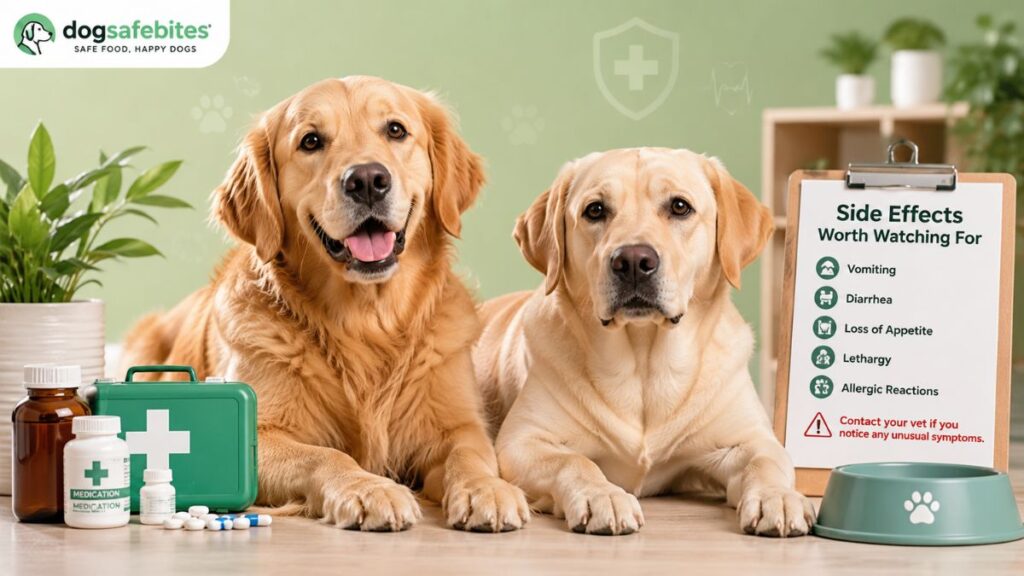
Digestive upset is by far the most common: soft stool, mild nausea, a temporarily fussy appetite. It happens because the drug disrupts normal gut bacteria along with the target, and it usually settles once the course ends. Severe vomiting, or diarrhea with blood in it, is a reason to call.
Allergic reactions are uncommon but real. Mild itching or a rash warrants a call to the clinic; facial swelling, hives, drooling, difficulty breathing, or collapse are emergencies. Tell your vet about any previous drug reaction so they can prescribe from a different class.
Class-specific effects are worth knowing. Sulfonamides can cause dry eye and joint inflammation on longer courses. Fluoroquinolones may trigger tremors or, rarely, seizures in susceptible dogs, and are avoided in growing puppies because of cartilage risk. Tetracyclines increase sun sensitivity on thinly haired areas like the nose and ear flaps. Aminoglycosides can affect the kidneys and hearing, which is why they stay in the hospital setting with monitoring. High or prolonged doses of metronidazole can produce wobbliness or a head tilt.
Yeast overgrowth sometimes follows a long course, since antibiotics remove competing bacteria but not yeast. Renewed ear itching, a musty odor, or red irritated paws after treatment are typical signs.
Antibiotic-associated diarrhea occasionally turns severe when Clostridium species overgrow the disrupted gut. Watery or bloody diarrhea with lethargy needs same-day veterinary attention.
Drug interactions are a genuine risk. Fluoroquinolones combined with NSAIDs may increase seizure risk, and several antibiotics interact with heart, seizure, or immune-suppressing medications. Give your vet a complete list of everything your dog takes, supplements included.
Probiotics are often suggested alongside antibiotics. Evidence in dogs is mixed but broadly favorable for reducing loose stool — use a veterinary product and give it a few hours apart from the antibiotic dose.
Can Dogs Take Human Antibiotics?
Some antibiotic compounds are identical across human and veterinary medicine, which is exactly why the leftover box in the bathroom cabinet feels tempting. Using it without veterinary direction is still a bad idea.
Dosing doesn’t translate. Dogs metabolize many drugs at different rates than people, and the correct dose depends on weight, drug, infection site and organ function — not on a rough scaling of a human tablet. Too little fails and breeds resistance; too much causes harm.
Formulation is a second problem. Some human liquid medications and chewables contain xylitol, which is dangerously toxic to dogs even in small amounts, and combination products may include ingredients dogs should never receive.
The biggest problem is the missing diagnosis. Without an examination you’re guessing whether the problem is even bacterial. Amoxicillin won’t touch a yeast infection, a viral cough, a food allergy, or a bladder stone — and while you wait for it to work, the real problem advances.
Supporting Your Dog Through Treatment
Antibiotics do the heavy lifting, but recovery goes more smoothly with a few basics. Keep fresh water available, particularly if the medication is causing loose stool, and encourage eating with slightly warmed food if appetite is down. Scale back running and rough play until the course is finished, keep wounds clean and protected from licking with a recovery collar if needed, and keep ears dry after baths or swimming.
A short daily note on appetite, energy and symptoms makes the recheck far more useful — and do attend that recheck if one was recommended. Urinary and skin infections in particular often need follow-up testing to confirm they’ve genuinely cleared rather than merely gone quiet.
Conclusion
Antibiotics are among the most valuable tools in veterinary medicine and among the easiest to misuse. Used correctly — for a confirmed bacterial infection, at the right dose, for the duration your vet specifies — they resolve infections that would otherwise cause real damage. Used casually, they cost money, upset your dog’s digestion, and make the next infection harder to treat.
Your part is straightforward: get a diagnosis before treating, give every dose on time, watch for reactions and report anything unusual, finish the course exactly as prescribed, and return for the recheck. Do those five things and you give your dog the best possible chance of a clean, complete recovery.
Frequently Asked Questions
Can I buy antibiotics for my dog over the counter?
No. True antibiotics require a veterinary prescription. Over-the-counter products containing antibacterial ingredients are topical antiseptics — useful on a minor scrape, useless against an established infection.
How quickly should my dog improve?
Most dogs look noticeably better within 48 to 72 hours, with full resolution taking the length of the course. No change after three days usually means the drug isn’t right for the bacteria involved.
Can I stop early if my dog seems fine?
No. Feeling better isn’t the same as being clear of infection, and stopping early is a common cause of relapse. If you think the course is too long or too short, ask your vet rather than adjusting it yourself.
What if my dog vomits right after a dose?
Call your clinic rather than automatically repeating it. They may advise giving future doses with food, splitting the dose, or switching drugs.
Do probiotics help during antibiotic treatment?
They may reduce loose stool. Choose a veterinary-formulated product and give it a few hours apart from the antibiotic.
Can I switch to a different antibiotic I already have at home?
No. Switching without a diagnosis risks choosing something ineffective or interacting with your dog’s other medications. Any change should come from your vet.