How to Safely Switch Dog Foods (And Avoid Toxic Ingredients)
Choosing to upgrade your dog’s diet is one of the best decisions you can make for their long-term health. Whether you are transitioning a puppy to adult food, moving away from a brand with poor ingredients, or moving to fresh foods, a sudden change can shock your dog’s digestive system.
Changing your dog’s diet requires a balance of patience and a sharp eye for what is actually inside that new bag of food. Here is your ultimate safety-first guide to transitioning your dog’s food without the digestive drama.
1. Why Safely Changing Your Dog’s Food Matters
Unlike humans, who thrive on a varied daily diet, dogs develop specific gut bacteria designed to break down the exact food they eat every single day. When you suddenly swap out their regular kibble for a brand-new formula, it compromises canine gut health because their digestive tract simply doesn’t have the right enzymes ready to process it.
This sudden shift often leads to acute gastroenteritis (inflammation of the stomach and intestines). This results in vomiting, severe gas, and a very unhappy pup.
2. The Golden Rule: A 7-Day Dog Food Transition Schedule
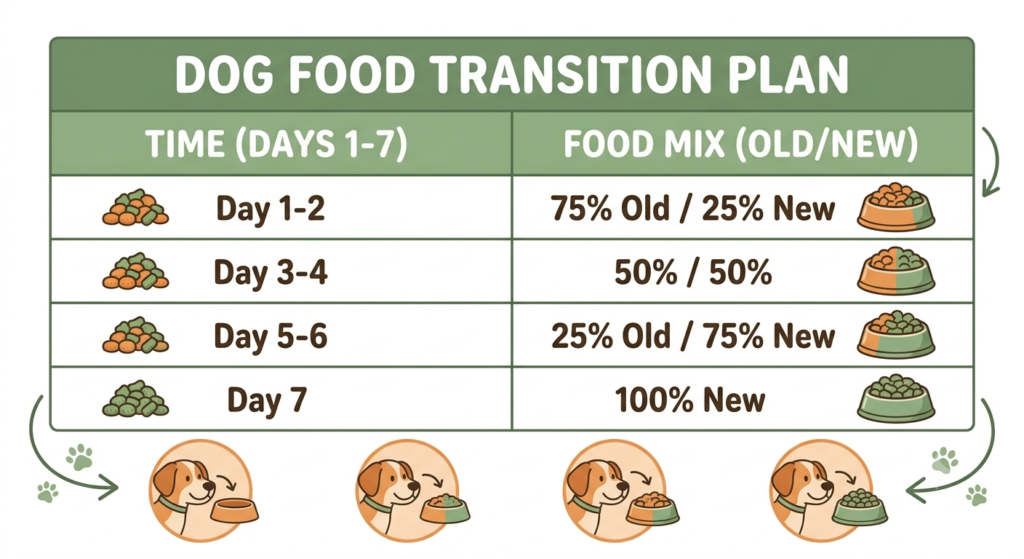
To prevent digestive shock, you must introduce new food gradually. The safest strategy is a week-long step-down method where you slowly alter the ratios of old food to new food.
The 7-Day Dog Food Transition Schedule:
- Days 1 & 2: Feed 75% old food mixed with 25% new food.
- Days 3 & 4: Feed 50% old food mixed with 50% new food.
- Days 5 & 6: Feed 25% old food mixed with 75% new food.
- Day 7: Feed 100% new food completely.
3. Signs of a Switching Dog Food Diarrhea or Stomach Upset
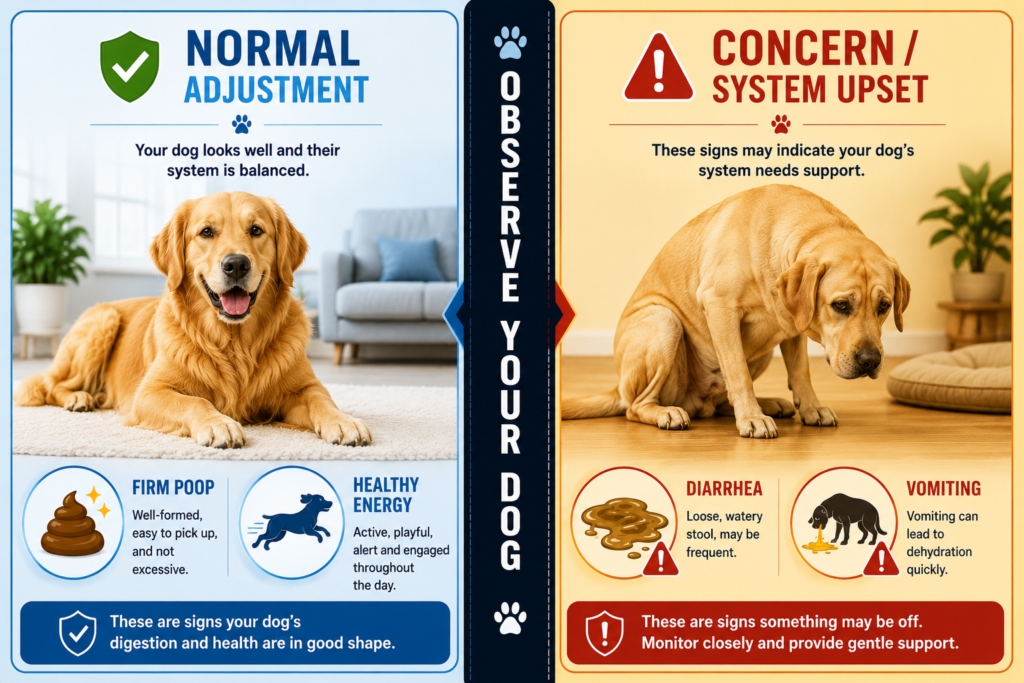
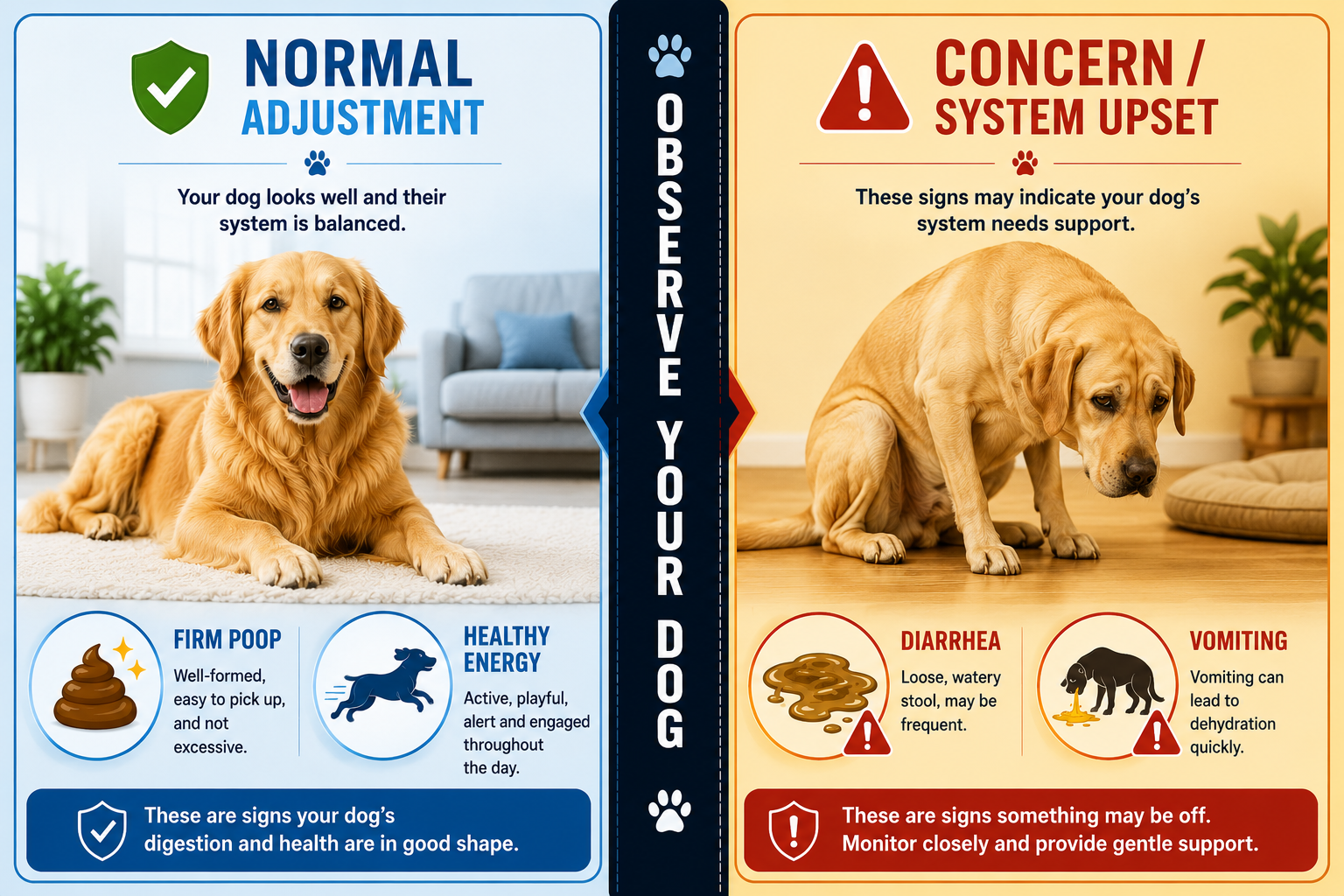
During a diet change, a little bit of mild looseness in their stool can happen. However, there is a clear line between mild adaptation and a genuine issue. Keep an eye out for switching dog food diarrhea that lasts more than 24 to 48 hours, or is accompanied by mucus or blood.
If severe diarrhea occurs, pause the transition immediately. Switch your pup to a temporary, gut-soothing bland diet for dogs—such as plain boiled chicken breast and white rice—until their stool firms up before trying again.
4. How to Mix Old and New Dog Food for Picky Eaters
Some clever dogs will pick through the bowl, eating only the delicious new kibble and spitting the old food onto the floor. To stop this, try mixing the old and new food together thoroughly in a container beforehand rather than just layering it.
If they are still separating it, adding a tablespoon of warm water or low-sodium bone broth (make sure it has no onions or garlic!) can coat the pieces and force them to eat the blend evenly.
5. Toxic Preservatives in Dog Food to Look Out For
While learning how to switch food is important, knowing what you are feeding them is even more critical. Many budget commercial foods use chemical preservatives to extend shelf life for years.
When reading labels, look out for BHA (Butylated Hydroxyanisole) and BHT (Butylated Hydroytoluene), which are chemical antioxidants linked to liver issues. Another major red flag is Ethoxyquin, a preservative originally manufactured as a pesticide that is still found in some low-quality fish-meal pet foods.
6. Unhealthy Dog Food Ingredients Hidden on the Label
The ingredient list on a dog food bag is organized by weight before cooking. Manufacturers often hide low-quality ingredients using tricky wording.
Watch out for ambiguous terms like “animal digest” or “meat meal” without a specified animal source (e.g., “chicken meal” is fine, but generic “meat meal” could be anything). Additionally, avoid artificial dyes like Red 40, Yellow 5, and Blue 2. Dogs do not care what color their food is, and these artificial additives have been tied to behavioral issues and allergies.
7. Red Flags: How to Read a Dog Food Label Like a Pro
To protect your dog, ignore the beautiful pictures of whole chickens on the front of the bag—that’s just marketing. Flip to the back. Look for a statement confirming the food meets AAFCO nutrient profiles (Association of American Feed Control Officials) to ensure it is nutritionally complete.
The first three to five ingredients should always be recognizable, high-quality whole proteins (like deboned chicken, beef, or salmon). Watch out for “ingredient splitting.” This is when a brand lists “corn gluten meal,” “ground corn,” and “flour” separately so that corn doesn’t appear as the primary ingredient, even though corn makes up the bulk of the food when added together.
8. Is Human Food Safe for Dogs to Use as Mix-Ins?
Many pet parents like to spruce up dry kibble by adding whole, human foods as toppers. Adding fresh foods can boost your dog’s nutrition, but only if done safely.
The golden safety rule is that fresh toppers should never make up more than 10% of your dog’s total daily calorie intake. Adding too much unbalanced human food can throw off the strict calcium-to-phosphorus ratios that dogs need to keep their bones strong.
9. A Quick Safe Human Food for Dogs Chart
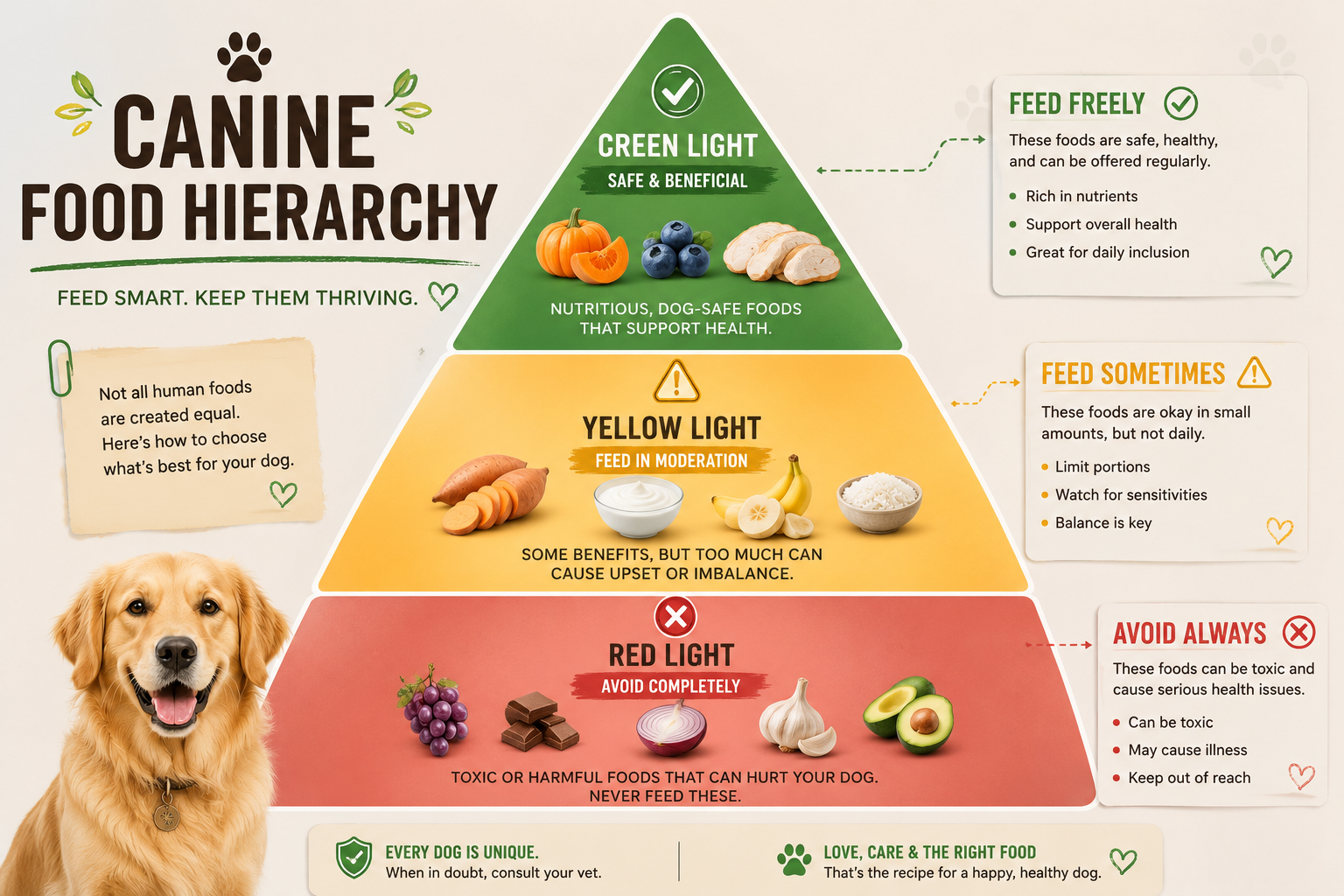
Before scraping your dinner plate into your dog’s bowl, verify what is actually safe. Use this quick reference guide to keep toxic treats out of reach.
| Safe & Healthy (Green Light) | Use with Caution (Yellow Light) | Highly Toxic (RED LIGHT) |
| Plain Pumpkin Puree (Great for digestion) | Apple Slices (Must remove seeds and core) | Grapes & Raisins (Can cause kidney failure) |
| Blueberries (Packed with antioxidants) | Cucumber Skin (Safe, but hard to digest for small pups) | Onions & Garlic (Destroys red blood cells) |
| Lean Boiled Chicken (No bones, no seasoning) | Cheese (Fine as a treat, but high in fat/lactose) | Xylitol (Artificial sweetener found in peanut butter) |
10. When to Call the Vet During a Diet Change
Most minor stomach upsets clear up within a day of adjusting food ratios. However, you should call your veterinarian immediately if your dog displays any of these severe safety warning signs:
- Vomiting that occurs multiple times in a single day.
- Stool that looks like black tar or contains bright red blood.
- Extreme lethargy where your dog refuses to get up or drink water.
- Signs of allergic reactions, such as facial swelling or hives.
1. Frequently Asked Questions (FAQ Schema Block)
✨How long does it take for a dog to adjust to new food?
Most dogs will completely adjust to a new food within 7 to 10 days if you follow a gradual transition schedule. However, dogs with highly sensitive stomachs or chronic gut issues may take up to two or three weeks to fully adapt to a brand-new protein source.
✨Can I switch my dog’s food cold turkey if the old food is making them sick?
Generally, no. Switching “cold turkey” (abruptly changing food overnight) almost always causes severe diarrhea or vomiting, which can make it harder to tell if the dog is sick from the old food or just reacting to the sudden change. The only exception is if your veterinarian explicitly tells you to switch immediately due to a severe allergic reaction or a sudden product recall.
✨Why is my dog pooping more after changing food?
An increase in bowel movements usually happens for two reasons: fiber content and ingredient quality. If your new food has higher fiber, it naturally speeds up digestion. However, if you switched to a lower-quality food with lots of heavy fillers (like corn or wheat), your dog’s body can’t absorb those ingredients, resulting in more waste passing right through them.
✨What should I do if my dog refuses to eat the new food?
If your pup is turning their nose up at the new blend, try warming it up! Adding a splash of warm water or low-sodium canine bone broth coaxes out the aromas, making it much more appetizing. You can also temporarily slow down the transition, keeping the mix at 90% old food and 10% new food for a few extra days until they accept the scent.
✨Is it safe to rotate my dog’s food brands often?
Once a dog is fully grown and has a healthy gut, practicing a “rotational diet” (switching flavors or formulas every few months) can actually be beneficial. It prevents boredom and exposes them to a wider variety of nutrients. However, you should still use a mini 3-to-4-day transition period whenever you switch between different brands to avoid shocking their system.